
Toyota bZ3 Battery: Complete Guide

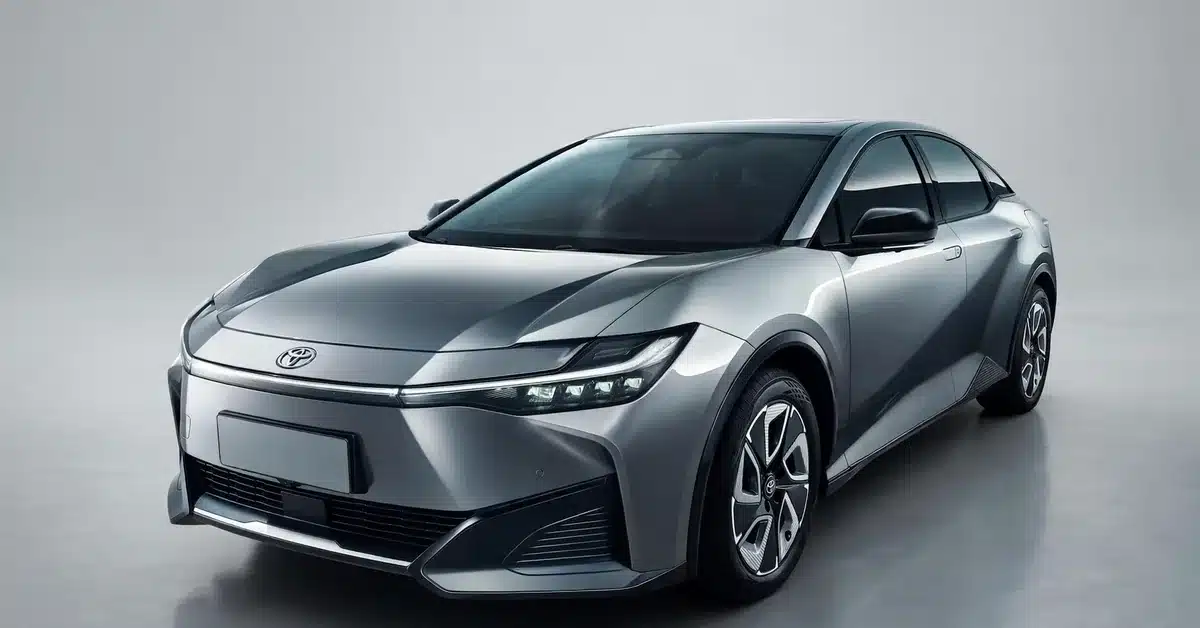
Checked against FAW Toyota’s published specifications, BYD FinDreams component records, and Chinese-market reporting through the 2026 Smart Home Edition launch (December 2025). All range figures are CLTC; the bZ3 is sold only in China.
The Toyota bZ3 is the answer to a trivia question with real engineering inside it: what happens when the world’s most cautious carmaker needs an electric sedan for China, fast — and buys the heart of it from BYD? The result, built by FAW Toyota in Tianjin since March 2023, runs on BYD’s Blade LFP battery, BYD’s motor and BYD’s control electronics, wrapped in a Toyota body on Toyota’s e-TNGA platform.
It is sold only in China, rated only on China’s CLTC cycle, and priced from ¥109,800 in its current form — and it is also, quietly, one of the most instructive EVs on sale anywhere, because it shows exactly which parts of an electric car Toyota decided it could not yet build better itself.
The bZ3 offers two BYD Blade LFP packs: 49.92 kWh (517 km CLTC) and 65.28 kWh (616 km CLTC). DC charging peaks at 70 kW (small pack) / 90 kW (large), AC at 6.6 kW, via China’s GB/T port. Battery warranty in China: 10 years / 200,000 km. The car is China-only — the US got the bZ4X instead.
Key figures: 135 / 180 kW motors · 30–80% in ~27 min (maker figure) · from ¥109,800 (2026 edition)
The Specifications
Two packs, two motors, one driven axle — the full verified sheet, with the numbers the old version of this page never had.
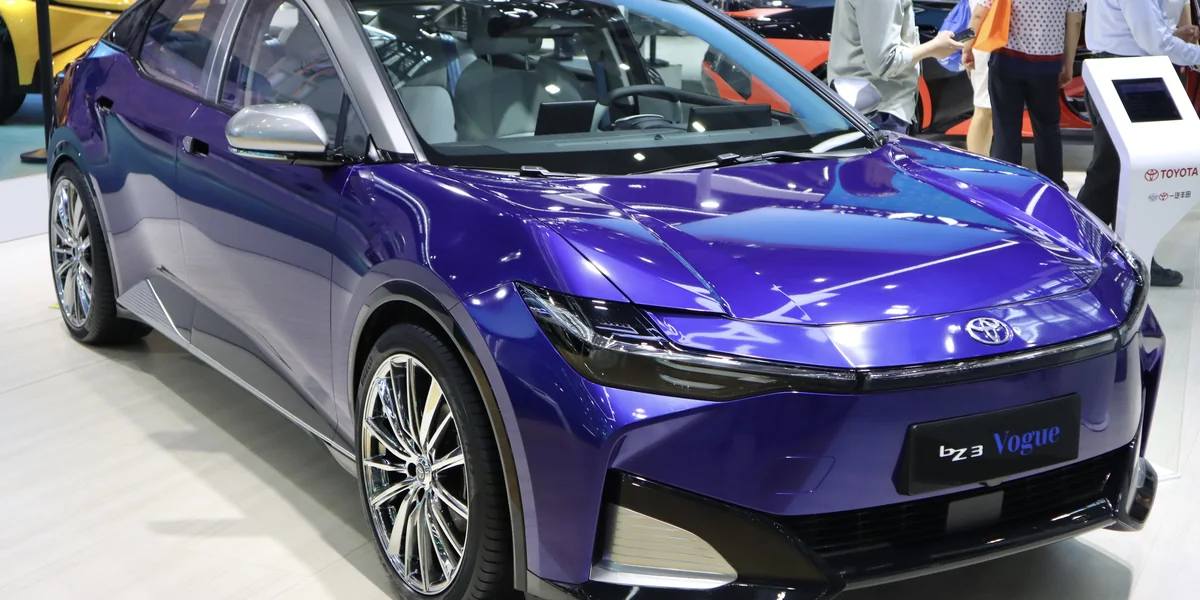
49.92 kWh version | 65.28 kWh version | |
|---|---|---|
Battery | BYD Blade LFP (Fudi cells) | BYD Blade LFP (Fudi cells) |
Range (CLTC) | 517 km | 616 km |
Motor (front, Fudi Power) | 135 kW | 180 kW |
DC charging peak | 70 kW | 90 kW |
0–50 km/h (as published in China) | — | 3.4 s (2023); 3.2 s reported for the new edition |
Shared: 303 Nm, front-wheel drive, 160 km/h top speed, AC charging 6.6 kW (~7 h / ~9.5 h for a full charge), GB/T charge port. No 0–100 km/h time is published by any official source — treat any you see with suspicion. Toyota publishes no usable/gross split for these packs. DC 30–80% in ~27 minutes is FAW Toyota’s figure.
A Toyota Built Around BYD’s Heart
The collaboration has a name, a joint venture and a parts list — and it goes much further than the battery.
The bZ3 was developed jointly by Toyota, BYD Auto and FAW Toyota through BTET — BYD Toyota EV Technology Co., the two giants’ dedicated EV joint venture, on Toyota’s e-TNGA architecture. The BYD content is the drivetrain entire: Blade LFP cells from Fudi (BYD’s FinDreams components arm), the TZ200-XS002 drive motor from Fudi Power, and BYD’s electronic control system.
Toyota’s contribution is the platform discipline, the body, the chassis tuning and the badge — plus one design brief worth knowing: Toyota engineered the pack installation around a target of keeping ~90% capacity after 10 years (a design target, stated as such by Toyota at launch — not a warranty and not a measured fleet result). The battery itself — long, thin LFP cells arranged like blades — is explained properly on our Blade Battery page.
Charging: Modest Peaks, Honest Times
Nothing about the bZ3’s charging is fast by 2026 standards — and for its LFP chemistry, it doesn’t need to be.
Peaks of 70/90 kW and a ~27-minute 30–80% (FAW Toyota’s figure) place the bZ3 a class below its BYD Seal cousin; the compensation is LFP’s tolerance for full charges and long cycle life in a car bought heavily by fleets and ride-hailing drivers in China. The port is GB/T, China’s standard — one more reason the car was never homologated for Europe or the US. For the Blade-battery peer that did go global, see the BYD Seal; for the Chinese-brand flagship taking yet another approach, the BYD Han.
The 100% Question, Answered Honestly
“Charge it to 100% every day” is stronger than anything Toyota or BYD actually publishes — here is what the sources do say.
The stored version of this page recommended daily full charging and attributed the advice to Toyota.
No Toyota or FAW source publishes bZ3-specific charging guidance at all. What exists is BYD’s own wording in its Blade-car manuals: fully charge regularly — at least once a week — so the battery management system can calibrate (LFP’s flat voltage curve makes the state-of-charge estimate drift without full-charge reference points).
Weekly, for calibration, in BYD’s words for BYD’s cars: that is the sourced version. LFP tolerates full charges far better than nickel chemistries, so a bZ3 owner loses little by charging high — but “daily, recommended by Toyota” is a stronger claim than the record supports, and this page no longer makes it.
The 2026 Smart Home Edition
A price cut of ¥60,000, standard LiDAR and a new screen — the bZ3’s second act is about software and value.
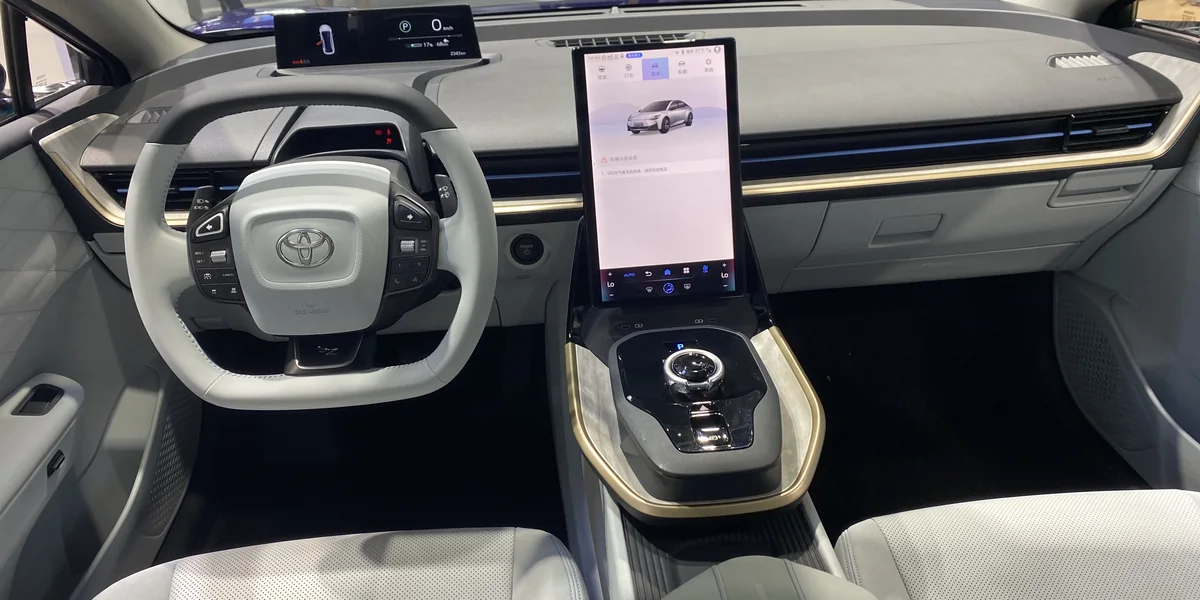
Launched on December 31, 2025 as the 2026 model-year car (the name 智享家 is officially rendered “Smart Home Edition”), the update keeps both Blade packs and cuts the entry price to ¥109,800 (Joy) / ¥129,800 (Pro), with LiDAR and Momenta 5.0 driver assistance standard (32 sensors, 544 TOPS of compute) and the range since extended to four trims (Pro+ ¥139,800, Max ¥159,800). Sales context, honestly: the bZ3 sold 27,027 in 2025 against 44,394 in 2024 — the edition is a value offensive in a brutal price war, not a victory lap.
China-Only: The Markets, the Warranty, and the Other bZs
No US version exists, none is planned — and two other cars keep stealing this one’s search results.
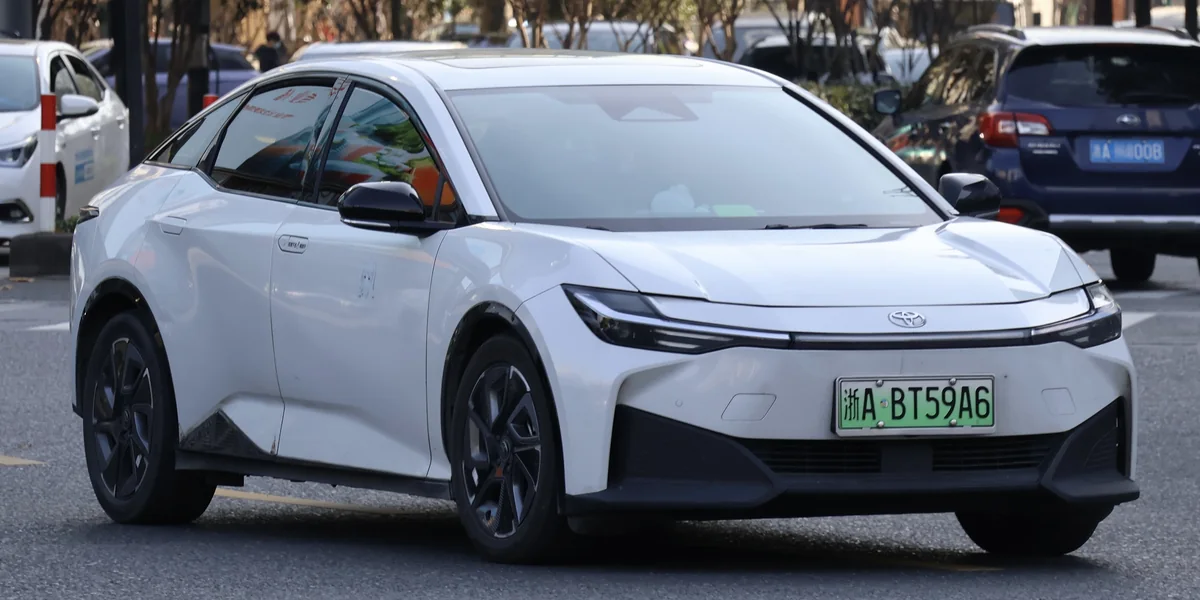
Toyota always positioned the bZ3 as a China-market car; the US and Europe got the SUV instead — today’s Toyota bZ (bZ4X), whose nickel-based packs are a different chemistry entirely (the question Bing users keep arriving with: no, the US bZ is not LFP; the Chinese bZ3 is).
And the bZ3X is a different car again — a GAC Toyota SUV (March 2025) on CALB cells; articles that quote its figures for this sedan are mixing the two. Warranty in China: 3 years/100,000 km for the car, 10 years/200,000 km for the battery pack — the strongest number on this page, and one the old version never mentioned.
Frequently Asked Questions
What battery does the Toyota bZ3 use?
BYD’s Blade battery — long LFP cells from Fudi (BYD’s FinDreams arm) — in two sizes: 49.92 kWh (517 km CLTC) and 65.28 kWh (616 km CLTC). The motor and control electronics are BYD’s too.
Is the Toyota bZ3 sold in the USA?
No. It is a China-only car, built by FAW Toyota in Tianjin. The US equivalent slot is filled by the Toyota bZ (bZ4X) SUV, which uses nickel-based batteries, not LFP.
How fast does the bZ3 charge?
DC peaks at 70 kW (49.92 kWh pack) or 90 kW (65.28 kWh); FAW Toyota quotes ~27 minutes for 30–80%. AC charging is 6.6 kW through China’s GB/T port.
Should bZ3 owners charge to 100% daily?
There is no Toyota-published guidance saying so. BYD’s manuals for its own Blade cars ask for a full charge at least once a week for gauge calibration; LFP tolerates full charges well, but “daily, on Toyota’s recommendation” overstates the sources.
What is the bZ3’s battery warranty?
In China: 10 years or 200,000 km for the battery pack; the car itself carries 3 years/100,000 km.
What is the Smart Home Edition?
The 2026 model-year bZ3 (launched December 31, 2025): same two Blade packs, prices cut to ¥109,800–129,800 for the first two trims, LiDAR and Momenta 5.0 assistance standard, and a new 15.6-inch horizontal screen.
Is the bZ3 the same as the bZ3X?
No. The bZ3 is FAW Toyota’s sedan with BYD cells; the bZ3X is GAC Toyota’s SUV on CALB cells. Different joint venture, different body, different battery supplier.
How does the bZ3 compare with the BYD Seal?
Same Blade LFP idea, different execution: the Seal is BYD’s own global car (82.5 kWh flagship, up to 354 miles WLTP in its big-battery form — note the stored table previously paired that range with the smaller 61.4 kWh pack, which is corrected here), while the bZ3 is a China-only Toyota with smaller packs and slower charging.
Conclusion
The bZ3 matters less as a car you can buy than as evidence: when Toyota needed a competitive electric sedan for the world’s toughest EV market, it built the car around BYD’s battery, motor and electronics — and warranted the result for 10 years and 200,000 km. This page now tells that story with the joint venture named, the charging and warranty numbers filled in, and every range figure wearing its CLTC label.
