
Ram 1500 REV Battery: Complete Guide

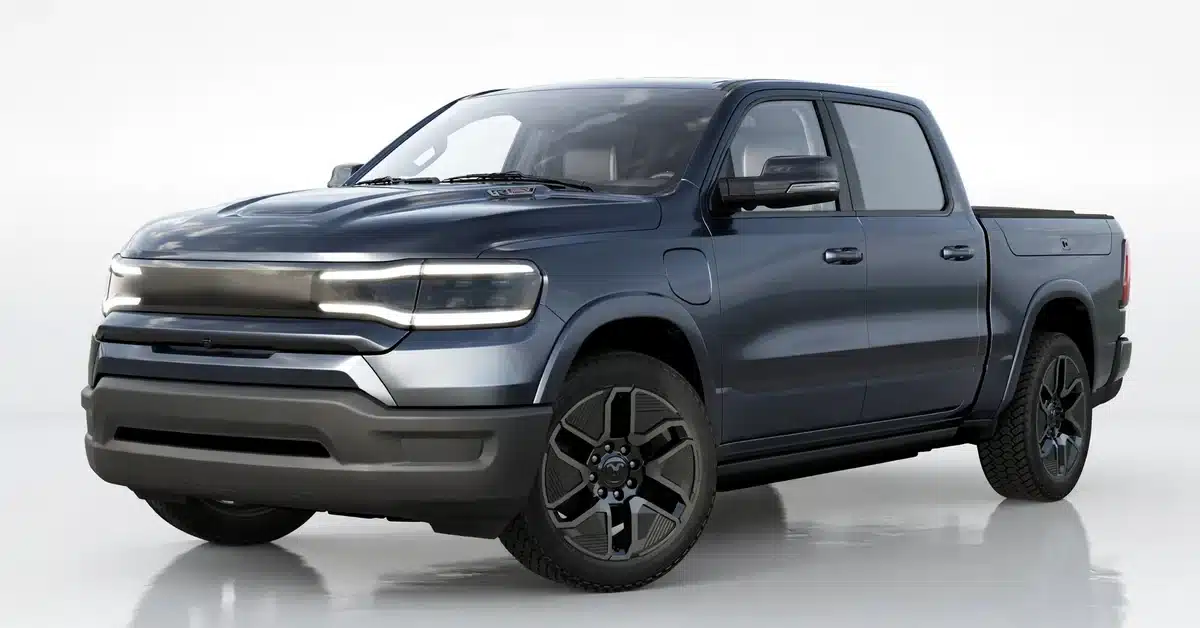
The Ram 1500 REV battery story involves a major pivot — the original all-electric truck has been cancelled, replaced by a Range-Extended Electric Vehicle (EREV). The 2026 Ram 1500 REV uses a 92 kWh battery pack (70.8 kWh usable) paired with a 3.6L V6 petrol generator. EV-only range is 145 miles — after which the generator recharges the battery for continuous driving. DC fast charging reaches 350 kW, adding 110 miles in 10 minutes. Production was delayed to late 2026, with deliveries beginning then. This EREV approach contrasts sharply with the fully electric Ford F-150 Lightning and Rivian R1T.
Ram 1500 REV Battery: Key Specs (Current 2026 EREV Version)
| Specification | Ram 1500 REV (2026 EREV) |
|---|---|
| Battery capacity (gross) | 92 kWh |
| Battery capacity (usable for EV) | 70.8 kWh (69.7 kWh consistent use) |
| Chemistry | NCM (liquid-cooled) |
| Architecture | 800V (STLA Frame) |
| EV-only range (Ram estimate) | ~145 miles |
| Generator | 3.6L Pentastar V6, 130 kW (174 hp) |
| Fuel tank | 27 gallons |
| Front motor | 340 hp (250 kW) — auto-disconnects for efficiency |
| Rear motor | 319 hp (238 kW) |
| Total system power | ~659 hp |
| Peak DC rate | 350 kW |
| 10 min DC charge | +110 miles of EV range |
| Max tow rating | 14,000 lb (Class 5 hitch) |
| Max payload | 2,625 lb |
| ICE-only fuel economy | ~20.5 mpg (battery depleted) |
| Production start | Late 2026 |
The Original REV vs Current REV: What Changed
The original 2023-announced Ram 1500 REV was a fully electric truck — no petrol engine — with 168 kWh or 229 kWh battery options targeting 350–500 miles. Ram cancelled this all-electric version in late 2025 due to weak demand and market conditions. The Ram 1500 Ramcharger EREV then absorbed the REV name entirely. The 229 kWh large battery option was also dropped — only the 92 kWh EREV configuration now exists under the “Ram 1500 REV” nameplate.
This means the 2026 Ram 1500 REV is not a battery-electric truck — it is a range-extended EV, more similar to the Li Auto L6 or Chevrolet Volt concept than the Ford F-150 Lightning or Rivian R1T. The petrol generator never drives the wheels mechanically. All propulsion comes from the electric motors — the V6 exists only to generate electricity when the battery is low. This architecture is called a series hybrid or EREV.
How the EREV Battery System Works
Drivers use the first 145 miles purely on electricity from the 92 kWh battery. When the battery drops to its threshold, the 3.6L V6 generator starts automatically and recharges the pack while driving. This provides effectively unlimited range on petrol — a 27-gallon tank at 20.5 mpg adds approximately 550 miles per fill. The front motor disconnects automatically when full AWD isn’t needed — reducing energy consumption during moderate driving. Ram estimates approximately 2 miles per kWh of electric efficiency.
350 kW Charging: 110 Miles in 10 Minutes
The 800V STLA Frame architecture enables 350 kW peak DC fast charging — the same rate as the Cadillac Escalade IQ and Hyundai Ioniq 5. A 10-minute charge adds 110 miles of EV range from a compatible 800V station. A full 10–80% charge from the 70.8 kWh usable takes approximately 14–18 minutes. This is extremely fast for a full-size pickup truck and matches the fastest-charging passenger EVs available.
Towing and Battery Performance
- Max tow rating: 14,000 lb with Class 5 hitch — beating the Chevrolet Silverado EV’s 10,000 lb
- EV range when towing: Approximately 60–90 miles towing at max capacity — significantly reduced from the 145-mile unloaded estimate
- Generator advantage when towing: Once the battery depletes, the V6 generator sustains driving indefinitely — critical for long-haul towing where BEV range is impractical
- Payload capacity: 2,625 lb — respectable but below some rival trucks that don’t carry battery weight
Ram 1500 REV vs Electric Truck Rivals
| Model | Battery | EV Range | Max Tow | DC Rate | Architecture |
|---|---|---|---|---|---|
| Ram 1500 REV (2026) | 92 kWh EREV | 145 miles + gas | 14,000 lb | 350 kW | EREV (series hybrid) |
| Chevy Silverado EV WT | 200+ kWh BEV | 450 miles | 10,000 lb | 350 kW | Full BEV |
| Rivian R1T (Large pack) | 108.5 kWh BEV | ~321 miles EPA | 11,000 lb | 220 kW | Full BEV |
| Ford F-150 Lightning (discontinued) | 131 kWh BEV | ~320 miles EPA | 10,000 lb | 150 kW | Full BEV (discontinued) |
Battery Warranty
Ram has not yet confirmed the full warranty terms for the 2026 REV battery at time of publication. Based on Stellantis’s existing PHEV and BEV policies, an 8-year / 100,000-mile battery warranty is expected as a minimum. The 27-gallon petrol backup means the battery is never the sole source of propulsion — it will cycle less aggressively than a full BEV battery. This should support lower degradation rates over time compared to pure electric trucks.
Charging Tips for Ram 1500 REV Owners
- Maximise EV miles daily: Fully charge the 92 kWh pack each night — the 145-mile EV range covers most daily driving without using the V6 generator at all
- Use DC fast charging on long hauls: A 10-minute 350 kW charge adds 110 miles — plan REV charging stops for meal breaks on long-distance trips
- Use generator for heavy towing: The generator’s unlimited-range capability makes the REV far more practical for multi-day towing adventures than any fully electric rival
- Set a departure charge schedule: Charging to 90% overnight preserves NMC longevity — 90% of 70.8 kWh still provides ~131 miles of EV range for daily use
Conclusion
The Ram 1500 REV battery represents a pragmatic answer to the tow-truck range dilemma. The 92 kWh pack provides 145 miles of clean EV driving for daily commutes and job sites. When range or towing demands more, the V6 generator provides effectively unlimited range without stopping to charge. Buyers wanting a fully electric truck alternative should compare our Rivian R1T battery guide or Tesla Cybertruck battery guide. For truck buyers who want genuine work capability — 14,000 lb tow rating, 2,625 lb payload — alongside daily EV driving, the Ram 1500 REV’s EREV architecture is a considered solution to a problem that pure BEV trucks continue to struggle with in 2026.
