
Ford F-150 Lightning Battery: Complete Guide

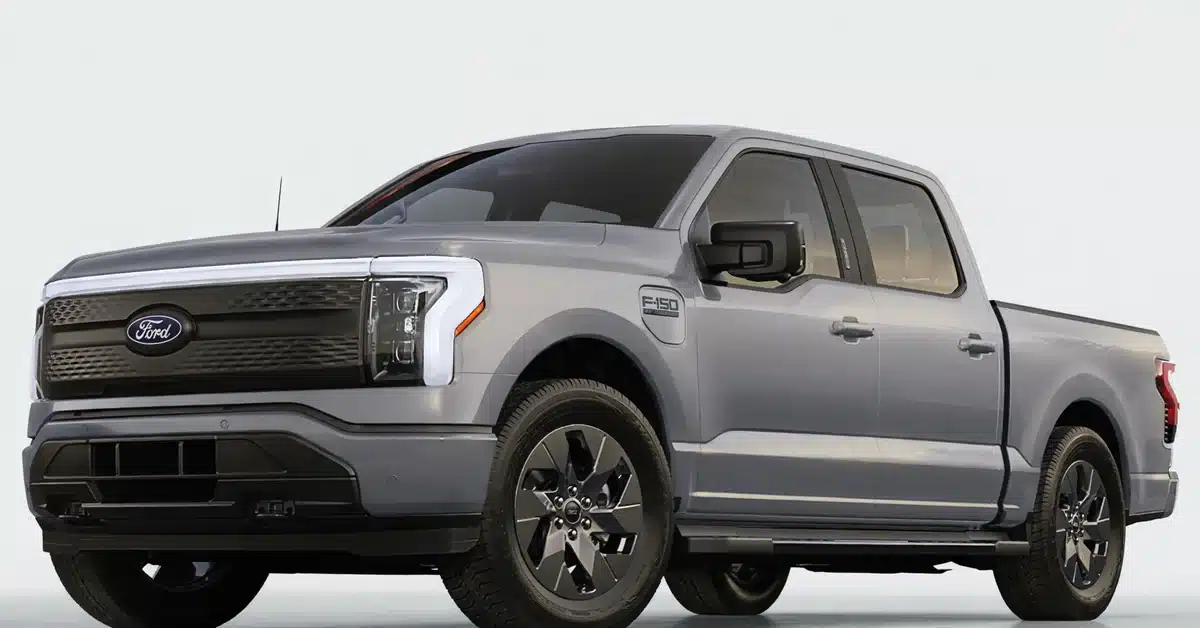
The Ford F-150 Lightning battery is one of the largest in any production pickup truck — available in 98 kWh, 123 kWh, and 131 kWh configurations across its production life from 2022 through 2025. For 2026, Ford simplified the lineup to a single 123 kWh Extended Range battery, delivering up to 320 miles of EPA-estimated range and 536 horsepower from a dual permanent magnet motor drivetrain. Ford’s other electric SUV, the Ford Explorer Electric, uses an entirely different VW-sourced MEB battery platform. This complete guide covers every Lightning battery specification, the Pro Power Onboard charging capabilities, degradation data, and the key differences between standard and extended range packs.
Ford F-150 Lightning Battery: Full Specs by Year
| Model Year | Battery | Usable Capacity | Total Capacity | EPA Range | Power Output | DC Fast Rate |
|---|---|---|---|---|---|---|
| 2022–2025 | Standard Range | 98 kWh | 107.6 kWh | ~240 miles | 452 hp / 775 lb-ft | 155 kW peak |
| 2025 only | Mid Range (Flash) | 123 kWh | ~135 kWh | ~300 miles | 536 hp / 775 lb-ft | 155 kW peak |
| 2022–2025 | Extended Range | 131 kWh | 143.4 kWh | 300–320 miles | 580 hp / 775 lb-ft | 155 kW peak |
| 2026 | Extended Range (only) | 123 kWh | ~135 kWh | ~300–320 miles | 536 hp / 775 lb-ft | 155 kW peak |
What’s Inside the F-150 Lightning Battery
The F-150 Lightning uses NMC (Nickel Manganese Cobalt) lithium-ion pouch cells arranged in modules under the truck bed floor. The pack is positioned as a structural component of the T3 platform — integrated into the frame rails to lower the center of gravity and protect the cells in a crash without adding external protective structure weight.
Cell configuration differs by battery size. The Standard Range 98 kWh pack uses a 4P10S module arrangement (4 parallel pouch cells × 10 series cell groups per module) across nine modules, operating at 90 × 3.7V nominal. The Extended Range 131 kWh pack uses eight 5P11S modules and one 5P8S module across 96 cell groups, increasing both capacity and the power output ceiling to 580 hp vs the Standard Range’s 452 hp.
The pack uses active liquid thermal management with coolant flowing through plates between cell groups. Ford’s “Intelligent Range” system uses previous driving data, weather conditions, speed, terrain, towing load, and payload weight to continuously update the range estimate — making the GOM (Guess-O-Meter) more accurate than most competitors, particularly important for a work truck where loading conditions change daily.
F-150 Lightning Charging: What You Need to Know
| Charging Method | Power | Standard Range (98 kWh) | Extended Range (131 kWh) |
|---|---|---|---|
| Level 1 (120V) | ~1.8 kW | ~54 hours (full) | ~73 hours (full) |
| Level 2 (Ford Charge Station Pro, 80A) | 19.2 kW | ~6 hours (full) | ~8 hours (full) |
| Level 2 (standard 48A) | 11.3 kW | ~10 hours (full) | ~13 hours (full) |
| DC Fast Charging (150 kW+) | 155 kW peak | ~36 min (15–80%) | ~41 min (15–80%) |
The Lightning’s 155 kW DC fast charge rate is notably lower than the Rivian R1T (~300 kW) and GMC Hummer EV (~350 kW). For daily use and overnight home charging, this makes little difference. For road trips requiring multiple fast-charge stops, the Lightning charges more slowly than some competitors — about 36–41 minutes for 15–80% vs 18–25 minutes for Rivian or Hyundai’s 800V rivals.
Pro Power Onboard: The Lightning’s Bidirectional Battery
The F-150 Lightning’s most distinctive battery feature is its Pro Power Onboard system — an integrated inverter that exports AC power from the high-voltage battery to standard electrical outlets. This turns the Lightning’s battery into a mobile generator and home backup power source.
- Pro Power Onboard capacity: 9.6 kW (4 × 120V outlets in the bed and frunk, plus 2 × 240V outlets on Extended Range models)
- Ford Intelligent Backup Power (IBP): With the Ford Charge Station Pro (19.2 kW bidirectional home charger) and optional Gateway device, the Lightning can power an average American home for 3–10 days on a full Extended Range pack
- V2H (Vehicle-to-Home): The IBP system automatically switches to battery power during a grid outage and recharges from the grid when power is restored — the most capable factory V2H implementation of any production EV as of 2025
- Impact on battery longevity: Frequent deep V2H discharges add additional cycles to the NMC battery. Ford limits IBP discharge to approximately 90% of pack capacity to maintain a buffer — moderate V2H use has minimal impact on long-term pack health under Ford’s thermal management controls
Extended Range vs Standard Range: Which Battery to Choose?
| Feature | Standard Range (98 kWh) | Extended Range (131 kWh) |
|---|---|---|
| EPA range | ~240 miles | 300–320 miles |
| Power output | 452 hp | 580 hp |
| 0–60 mph | ~4.4 seconds | Sub-4 seconds |
| Max tow capacity | 7,700 lb | 10,000 lb (max trailer tow pkg) |
| Pro Power Onboard | 2.4 kW (7.2 kW optional) | 9.6 kW standard |
| V2H capability | Limited (requires upgrade) | Yes (with Charge Station Pro) |
| Price premium | Base option | +$10,000–$15,000 over SR |
F-150 Lightning Battery Warranty and Degradation
Ford covers the F-150 Lightning battery with an 8-year / 100,000-mile warranty against defects and capacity loss. The warranty triggers if the battery falls below 70% of original capacity during the coverage period. Owner reports from Lightning Forum communities and independent monitoring show slow, steady degradation consistent with NMC chemistry under liquid cooling:
- Typical 2-year degradation: 2–4% capacity loss after 20,000–40,000 miles in normal use
- Annual degradation rate: Approximately 1.5–2.5% per year — slightly higher than the Chevy Bolt’s 65 kWh NMC pack but comparable to larger NMC packs in general
- High-towing use cases: Owners using the Lightning regularly for maximum-capacity towing report faster degradation — up to 3–4% annually — likely due to the combination of high power demand and associated charging needs accelerating cycle aging
- Normal fleet use: Owners using the Lightning primarily for daily driving and light work report 85–92% SOH at 80,000–100,000 miles
F-150 Lightning Battery Charging Tips
- Set daily charge limit to 80–90%: Ford’s in-vehicle charge limit settings allow 80% scheduling for daily use. For NMC chemistry, this meaningfully extends long-term battery health.
- Use the Ford Charge Station Pro for V2H: The 19.2 kW bidirectional charger and Gateway device are needed for full V2H capability. The standard Ford Mobile Power Cord cannot supply bidirectional charging.
- Precondition before cold-weather fast charging: Navigate to a DC charger using the Ford Pass app’s route planning feature to trigger battery preconditioning before arrival.
- Monitor via FordPass app: The FordPass app shows battery state-of-charge, charge scheduling, Pro Power Onboard status, and estimated range updates in real time.
Conclusion
The Ford F-150 Lightning battery is the most versatile in any electric pickup — combining up to 131 kWh of NMC capacity, 9.6 kW Pro Power Onboard output, and full Vehicle-to-Home capability that can power a household for 3–10 days on a full charge. The 155 kW DC fast charge rate lags behind rivals like Rivian for road trip charging speed, but the Lightning’s strength is its all-around work-truck capability powered by one of the largest batteries in any consumer vehicle. Buyers cross-shopping other electric trucks should also see our Ram 1500 REV battery guide and GMC Hummer EV battery guide. For 2026, Ford’s decision to standardize on the 123 kWh Extended Range battery simplifies the lineup while delivering 300+ mile range and 536 hp as the baseline experience for all buyers.
