
Leapmotor B10 Battery: Complete Guide

Facts checked against Leapmotor UK and Stellantis releases, EV Database, Euro NCAP and named road tests (electrive, EV Central, Fleet News).
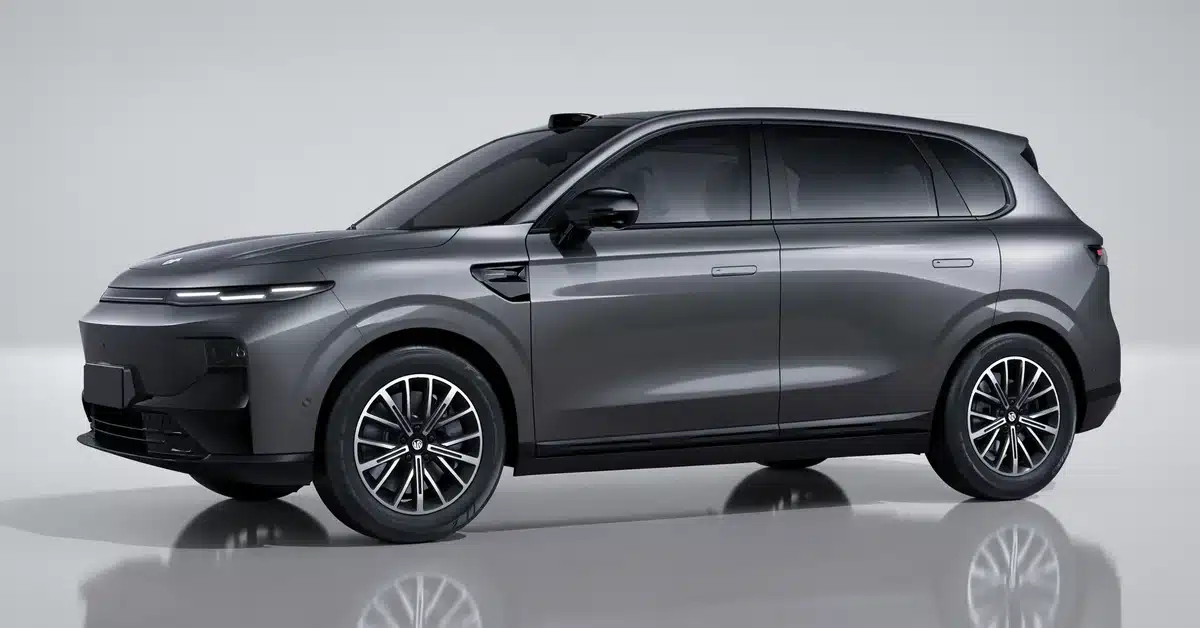
The Leapmotor B10 is the Chinese brand’s first global model — premiered at the Paris Motor Show in October 2024, sold in Europe since September 2025 and in the UK since December 2025 — and it is the car through which Stellantis sells a Chinese EV inside its own dealer network. It comes with two LFP battery packs, 56.2 and 67.1 kWh, though the UK takes only the larger one, in a single fully-equipped trim.
Three clarifications run through this guide, because the B10’s figures are widely muddled. Its capacities are quoted gross (usable is 55.0 and 65.0 kWh); its AC charging is 11 kW, not the 6.6 kW that belongs to the separate range-extender version; and its famous “20-minute charge” is a 30–80% figure. Each section below keeps those straight.
The Leapmotor B10 has two LFP batteries: 56.2 kWh gross (55.0 usable) and 67.1 kWh gross (65.0 usable) — the UK sells only the 67.1. DC charging peaks at 140 kW (56.2) or 168 kW (67.1), with 30–80% in about 20 minutes claimed; AC charging is 11 kW. WLTP range is 224 or 270 miles; the battery warranty is 8 years or 100,000 miles in the UK.
Key figures: both packs LFP, 400 V · single 160 kW rear motor · heat pump and V2L standard (UK) · UK £32,495 (£30,995 after Leapmotor’s own £1,500 grant)
Leapmotor B10 Battery Specs: Both Packs
Gross and usable side by side — the distinction almost every B10 page, including this one until now, skips.
| 56.2 kWh pack | 67.1 kWh pack | |
|---|---|---|
| Battery (gross / usable) | 56.2 / 55.0 kWh | 67.1 / 65.0 kWh |
| Chemistry | LFP | LFP |
| WLTP range | 224 miles (361 km) | 270 miles (434 km) |
| DC peak | 140 kW | 168 kW |
| DC charge (Leapmotor claim) | 30–80% in under 20 min | 30–80% in ~20 min |
| AC charging | 11 kW | 11 kW |
| Motor | 160 kW (218 PS), 240 Nm, RWD | 160 kW (218 PS), 240 Nm, RWD |
| 0–100 km/h · top speed | 8.0 s · 106 mph | 8.0 s · 106 mph |
| Sold in the UK? | No | Yes — the only UK version |
Both packs sit on Leapmotor’s LEAP 3.5 platform in a 400-volt architecture. China-market launch cars quote longer CLTC ranges (510/600 km) on the Chinese test cycle — those figures describe China-spec cars and are not comparable with the WLTP numbers above.
The Stellantis Backing: What It Actually Is
Stellantis owns about a fifth of Leapmotor and leads the joint venture that sells the car outside China — the trust story is real, and worth stating precisely.
How is Stellantis involved?
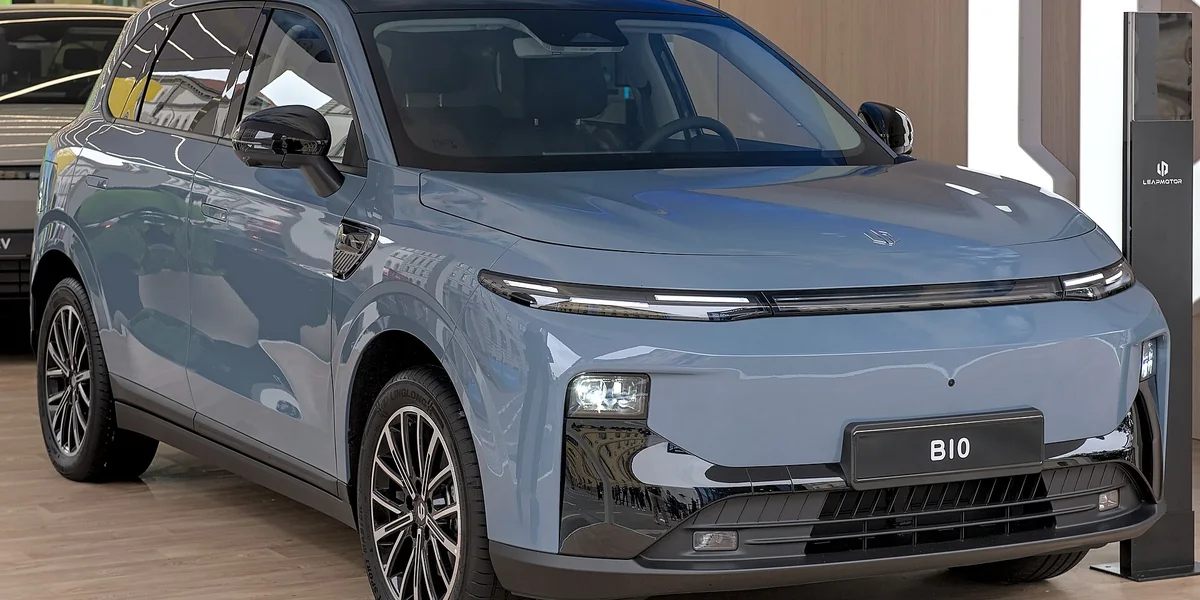
In October 2023 Stellantis invested €1.5 billion for roughly 20% of Leapmotor, and the two formed Leapmotor International — a 51/49 joint venture led by Stellantis — which holds the exclusive rights to export, sell and manufacture Leapmotor products outside China. That is why a B10 is bought and serviced through Stellantis-group retailers (53–70 sites in the UK). The chassis was tuned with Maserati engineering input, with European tuning work at Fiat’s Balocco test track, and Apple CarPlay/Android Auto arrived by over-the-air update in early 2026.
Where is the B10 built?
Production is the newest chapter: every car delivered so far was built in Hangzhou, China, but series production of the B10 began at Stellantis’s Figueruelas plant near Zaragoza, Spain, on 16 October 2026, with the first Spanish-built cars reaching European customers around December 2026–January 2027 and a battery-module assembly workshop nearby preparing the packs’ modules. That makes the B10 the first Leapmotor built in Spain — not the first assembled in Europe, a distinction the smaller T03 (built at Tychy in Poland until March 2025) already holds.
LFP Battery: Cell-to-Chassis, and Charging to Full
Both packs are LFP, integrated into the car’s structure — and Leapmotor’s own guidance treats full charges as normal.
How are the cells integrated?
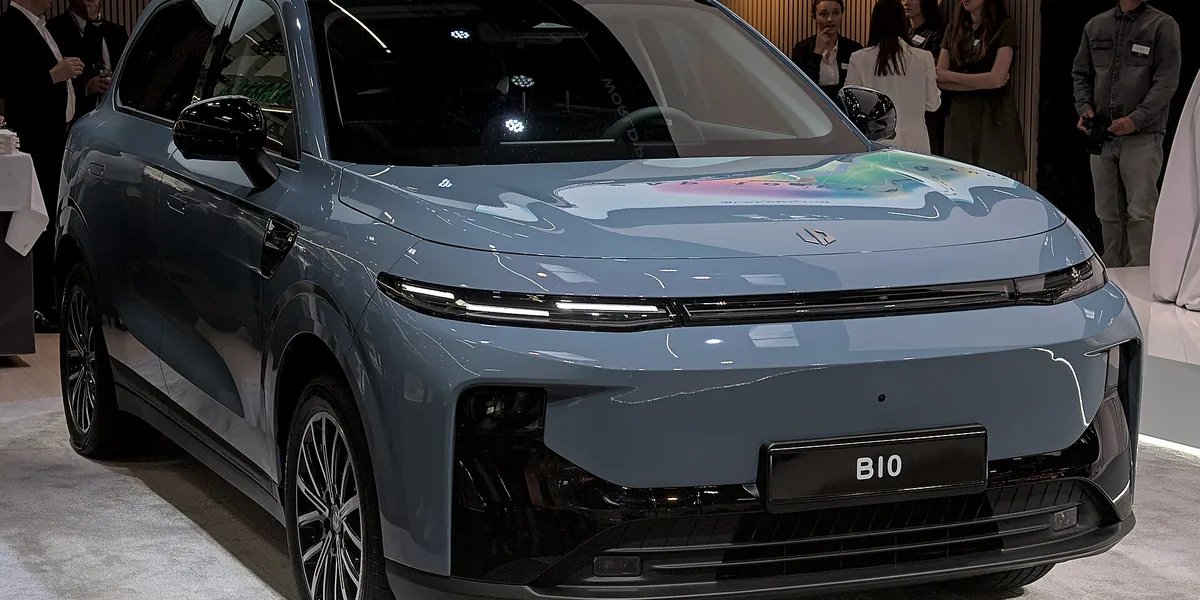
Leapmotor’s CTC 2.0+ (cell-to-chassis) design integrates the cells into the vehicle structure; Leapmotor claims a 13% gain in volumetric energy density from doing so (the claim is Leapmotor’s, attributed as such). The cells themselves are multi-sourced — Sunwoda, Zenergy, CALB and Gotion are all documented Leapmotor suppliers, with Chinese filing data pairing Sunwoda/Zenergy with the 56.2 pack and Gotion/CALB with the 67.1 — and Leapmotor publishes no supplier attribution for any individual European car, so none is claimed here.
Should the battery be charged to full?
On daily use: LFP’s flat voltage curve means the battery management system needs periodic full charges to stay calibrated, and Leapmotor’s guidance for its LFP cars supports charging fully on a regular basis — one of the practical perks of the chemistry. That is guidance, not a guarantee: like every lithium battery, this one ages, and no B10-specific degradation measurements exist yet (see the warranty section).
Leapmotor B10 Charging
168 kW DC on the big pack, 140 kW on the small one, 11 kW AC on both — and a charge-time claim that must always carry its window.
What are the DC and AC charging times?
Leapmotor quotes 30–80% in about 20 minutes for the 67.1 kWh car at up to 168 kW (under 20 minutes for the 56.2 at 140 kW). EV Database’s modelled 10–80% time for the big pack is 26 minutes at a ~110 kW average — the honest figure to set beside 800-volt cars whose headline times use that wider window. On AC, the 11 kW three-phase charger fills the 67.1 kWh car in about 7 hours (about 10½ hours on a 7.4 kW single-phase home supply).
What about pre-heating and V2L?
Battery pre-heating is available through the Leapmotor app — it is app-triggered rather than navigation-automatic — and the app also handles scheduled off-peak charging. V2L is fitted: 3.3 kW AC output via a Type 2 adapter. There is no vehicle-to-grid.
Leapmotor B10 Range: WLTP and Road Tests
270 miles WLTP for the car the UK sells — and the road tests cluster honestly below it.
The WLTP figures are 224 miles (56.2 kWh) and 270 miles (67.1 kWh). EV Database’s real-range estimate for the big pack is about 224 miles combined (360 km), with modelled bands from ~158 miles (motorway, cold) to ~255 miles (city, mild) — estimates, labelled as such. Measured tests sit in that frame: electrive recorded about 330 km in real driving; Australia’s EV Central saw consumption of 12–13 kWh/100 km over a week, implying roughly 380–400 km; and Fleet News’s UK long-term car’s trip computer indicates 216–235 miles on a full charge in running use. The Volvo EX30 is the size-and-price neighbour most buyers cross-shop; the B10 answers it with more range and a bigger boot.
Standard Equipment: The Single-Trim Idea
Britain gets one B10 — the highest specification sold anywhere — with everything standard and paint the only paid option.
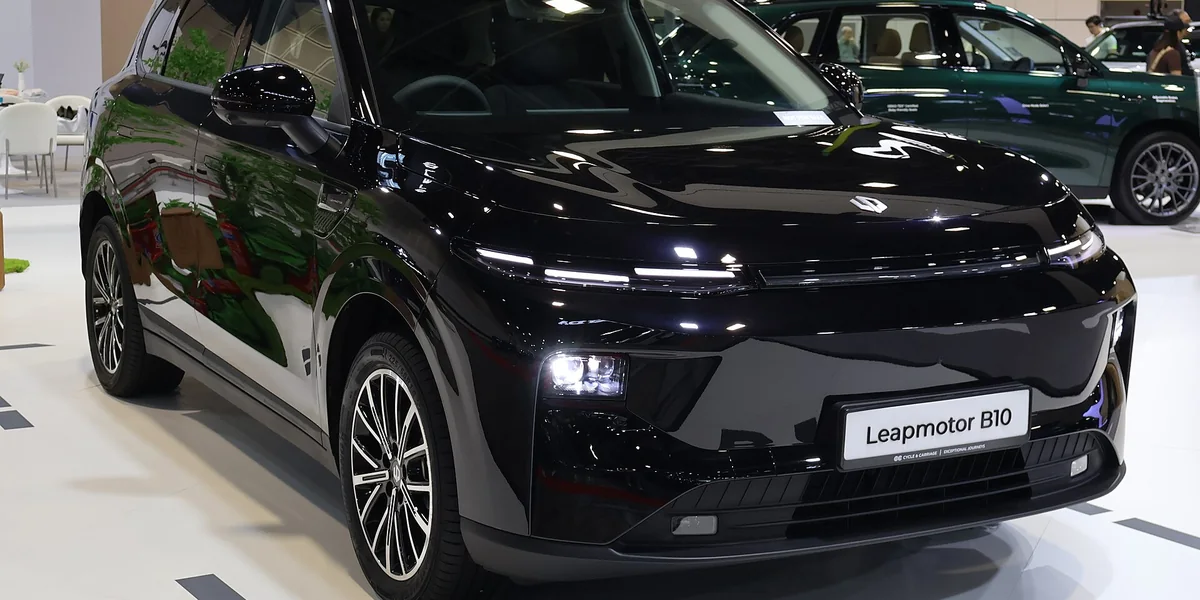
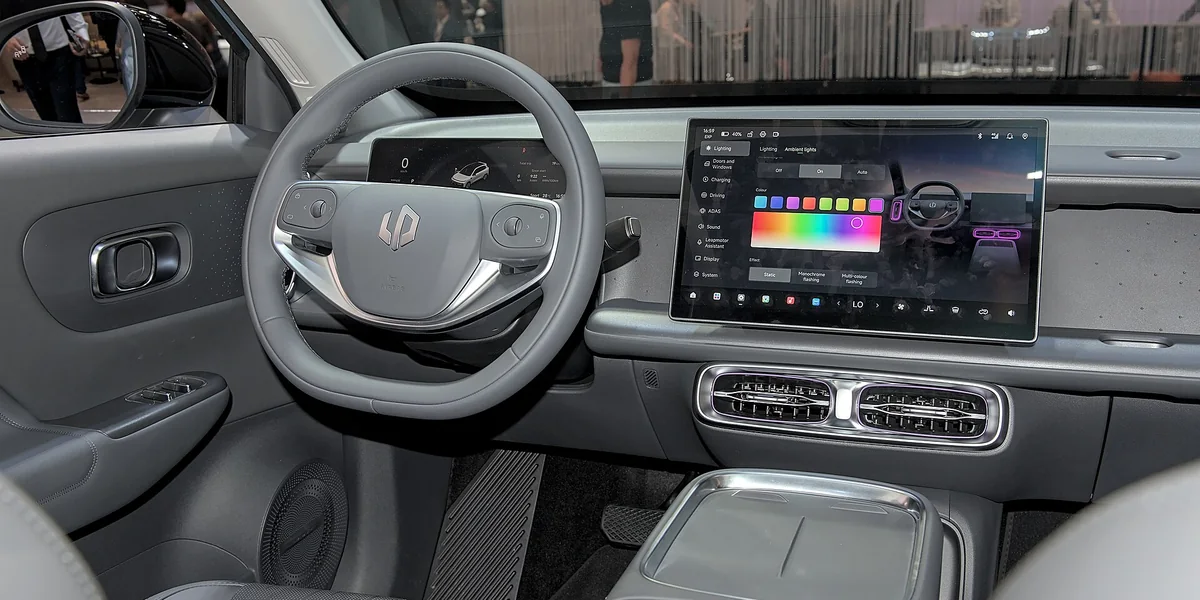
The UK car’s standard list includes the heat pump, V2L, a panoramic sunroof, heated and ventilated seats, a 360-degree camera, adaptive cruise and a 14.6-inch 2.5K touchscreen; the only cost option is paint (£575). Continental markets structure the car differently (Germany sells both packs, from €29,900), which is why European price lists and the UK’s must never be blended.
Not This Car: The B10 Hybrid EV
Leapmotor also sells a range-extender B10 Hybrid EV — a different powertrain whose figures must never enter the tables above.
It pairs an 18.8 kWh LFP battery with the same 160 kW rear motor and a 1.5-litre petrol engine that drives a generator only. Its provisional UK electric range is up to 50 miles WLTP (combined range up to 559 miles), and it charges at 46 kW DC and 6.6 kW AC — the source of the 6.6 kW figure so often attached to the electric car. It is sold in the UK at £31,495 and is excluded from the Leap-Grant. This guide covers the battery-electric B10 only.
Leapmotor B10 Prices and the Two Grants
The B10’s discount is Leapmotor’s own — £1,500, self-funded — and the car does not qualify for the government’s Electric Car Grant.
UK price history, because the launch figure still circulates: the car launched in October 2025 at £31,495 on the road, £29,995 after the £1,500 LEAP-GRANT. Two rises later, the current position (retailer terms for orders to 31 December 2026) is £32,495 on the road, £30,995 after the same £1,500 grant.
The LEAP-GRANT is Leapmotor’s own discount — the first manufacturer-funded answer to the government scheme — and it is £1,500, not the £3,750 figure that belongs to the larger C10 and appears against the B10 in some listings. The B10 itself is not eligible for the government Electric Car Grant, whose production-sustainability criteria Chinese-built cars do not currently meet. Against grant-eligible rivals like the Kia EV3, that distinction is worth real money and is stated here plainly.
Degradation and the Battery Warranty
No degradation data exists for the B10 yet — and Leapmotor publishes no capacity floor, which the warranty section should say out loud.
The battery warranty is 8 years or 100,000 miles in the UK (8 years/160,000 km in Europe). Leapmotor’s own materials do not publish a percentage capacity floor for this car; the backstop is regulatory — the UK’s ZEV Mandate requires manufacturers to warrant EV batteries for 8 years/100,000 miles and to replace a battery that falls below 70% within that period (UK Parliament, March 2026).
The vehicle warranty is 4 years/60,000 miles in the UK; Ireland’s is notably better — 6 years with unlimited mileage. On faults: there is no recall and no verified pattern; the single documented failure in long-term testing is one on-board charger on Auto Express’s long-term car, a fault Leapmotor’s technicians described as previously unseen — one car, recorded here as exactly that.
Leapmotor B10 Battery Replacement Cost
No official replacement price for the B10’s battery exists in any market checked.
Neither Leapmotor nor Stellantis publishes pack or module pricing for this car. General figures for packs of this class are in our guide to what an EV battery replacement costs — context only, not a B10 price.
Safety: Five Euro NCAP Stars, No Recalls
The B10 holds a five-star Euro NCAP rating from the 2025 test programme — and, as of November 2026, no safety recall anywhere.
Euro NCAP published the rating on 19 November 2025: Adult Occupant 93%, Child Occupant 93%, Vulnerable Road Users 84%, Safety Assist 85%, applying to both packs in left- and right-hand drive. (Australia’s ANCAP awarded five stars too, with slightly different category scores — the two must not be blended.) No B10-specific recall appears in the German KBA, UK DVSA or EU Safety Gate records as of this writing.
Frequently Asked Questions
What battery does the Leapmotor B10 have?
Two LFP packs: 56.2 kWh gross (55.0 usable) and 67.1 kWh gross (65.0 usable), both 400-volt, both built into the structure with Leapmotor’s cell-to-chassis design. The UK sells only the 67.1 kWh car.
Is the Leapmotor B10 an 800-volt car?
No — every European and UK B10 is 400-volt. An 800-volt B10 with a 69.7 kWh pack and a claimed 16-minute charge was launched in China in July 2026, and Leapmotor International has confirmed that update is skipped for Europe, the UK and Australia.
How long does the Leapmotor B10 take to charge?
On DC: 30–80% in about 20 minutes (Leapmotor’s claim, at up to 168 kW on the 67.1 kWh car; 140 kW on the 56.2). A 10–80% charge models to about 26 minutes. On AC at 11 kW, a full charge takes about 7 hours.
What is the fastest charging speed for the Leapmotor B10?
168 kW DC for the 67.1 kWh car; 140 kW for the 56.2 kWh car. AC charging is 11 kW on both — the 6.6 kW figure sometimes quoted belongs to the Hybrid EV range-extender.
How far can the Leapmotor B10 go on a full charge?
WLTP: 224 miles (56.2 kWh) or 270 miles (67.1 kWh). Road tests and modelled estimates for the big pack cluster around 216–250 miles in mixed real use.
Does the Leapmotor B10 have a heat pump?
Yes — standard on the UK car, along with V2L (3.3 kW via an adapter), a panoramic roof and heated, ventilated seats. Paint (£575) is the only paid option.
How much does the Leapmotor B10 cost in the UK?
£32,495 on the road, or £30,995 after Leapmotor’s own £1,500 LEAP-GRANT (terms to 31 December 2026). The £29,995 figure still circulating was the launch price in October 2025.
Does the Leapmotor B10 get the government EV grant?
No. The B10 is not eligible for the UK Electric Car Grant. Its £1,500 discount is Leapmotor’s own manufacturer grant — a different thing, launched to answer the government scheme.
What is the battery warranty on the Leapmotor B10?
Eight years or 100,000 miles in the UK (160,000 km in Europe). Leapmotor publishes no capacity percentage floor; the UK ZEV Mandate separately requires replacement if a battery falls below 70% within that term. The vehicle warranty is 4 years/60,000 miles (Ireland: 6 years, unlimited miles).
Is the Leapmotor B10 Hybrid EV the same car?
No — it is a range-extender: an 18.8 kWh battery, a 1.5-litre petrol generator, roughly 50 miles of electric range, and much slower charging (46 kW DC, 6.6 kW AC). It is sold in the UK at £31,495 and is not covered by this guide’s figures.
Conclusion
The B10’s real story needs no embroidery: a 65 kWh-usable LFP pack, 270 WLTP miles, 168 kW charging with its window honestly named, everything standard, five-star safety and a Stellantis network behind it — now being built in Spain as well as China. What it needed was its own numbers back: 11 kW AC, gross labelled as gross, today’s price, and its hybrid namesake fenced out of the electric car’s tables. That is the page it now has.
