If you own a Tesla, or are thinking about buying one, you’ve probably asked: “Does extreme weather hurt my Tesla battery life?“
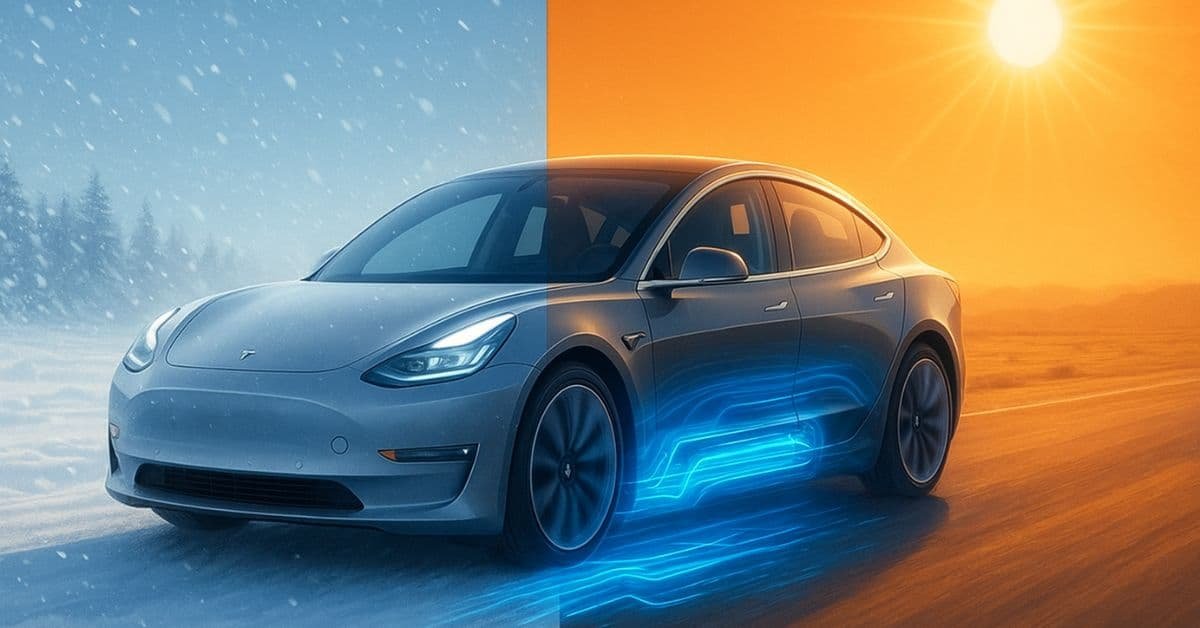
Extreme temperatures—both very hot and very cold—can change how your Tesla battery works. The biggest change a person will see right away is in the driving range. When it is cold, the car uses energy to keep the battery warm. This means less energy remains for driving. When it is hot, the battery’s chemicals can get stressed. Stress can cause a small amount of damage that lasts forever over many years.
But there is good news. Tesla cars have a smart system called Active Thermal Management. This system works hard to protect the battery. It keeps the battery in a happy temperature zone. This article will explain what happens in heat and cold. It will also give simple tips to protect a battery. Finally, it will show how to keep a Tesla running well, no matter the weather.
How Cold Weather Affects Tesla Battery Range
When the temperature drops below freezing, you will see a drop in your Tesla driving range. A drop in range is a normal part of how all lithium-ion batteries work, from a phone to a car.
Why Does Cold Weather Reduce Range?
There are two main reasons why your Tesla range goes down in the cold:
1. Cold temperatures make the battery’s chemistry work slower. This makes it harder for the battery to release energy fast. The car has less power for driving.
2. Your Tesla has a battery heater. The smart system knows the battery must be warm to work best. The car uses energy from the battery to run this heater. This process is called preconditioning. The car uses energy to keep the battery safe and ready. This energy reduces your driving range.
Expert Tip: The drop in driving distance due to cold weather is usually not forever. When the battery gets warm and the weather improves, your driving distance will return to normal. Cold weather does not make the battery wear out much for good.
Cold Weather Range Loss Data
Studies and owner reports show that in very cold weather (below 20°F or -6°C), you can expect a 15% to 30% drop in your total driving range.
| Temperature | Typical Range Loss | Reason for Loss |
|---|---|---|
| Mild Cold (32°F / 0°C) | 10% – 15% | Cabin heating, slight battery inefficiency |
| Extreme Cold (0°F / -18°C) | 20% – 30% | Battery heating (preconditioning), cabin heating, slower chemistry |
Actionable Tips for Driving in the Cold
To get the most out of your Tesla in the winter, follow these simple steps:
Precondition While Plugged In: You should always use the Tesla app to heat the inside and the battery while your car is still plugged in. This uses power from your house. It saves your car’s battery energy for driving.
Use Seat Heaters: Seat heaters use much less energy than heating the whole car. You can turn down the main heater. Use the seat and steering wheel heaters to stay warm.
Keep Your Charge Level High: When the weather is cold, it is best to keep your battery charged above 50%. A higher charge level helps the battery handle the cold better.
How Extreme Heat Affects Battery Degradation
Cold weather hurts your driving distance for a short time. Very hot weather is a bigger danger to your battery’s life for a long time (wear and tear).

Why Heat Causes Permanent Damage
Heat makes the chemicals inside the battery age faster. Experts call this calendar aging.
Fast Wear and Tear: Temperatures above 86°F (30°C) cause permanent wear and tear to start happening faster. When it gets hotter, the battery loses its power to hold a full charge faster.
High Charge Level (SoC): The worst mix for a battery is high heat and a high charge level (like $100\%$). Keeping a battery completely full in a hot garage or parking lot stresses the battery cells the most.
Case Study: Cold vs. Hot Climate Longevity
A study by Recurrent Auto on thousands of Tesla vehicles showed a surprising result about long-term battery health:
Finding: Tesla vehicles driven in colder climates showed slightly better long-term battery longevity (less permanent degradation) than those driven in consistently hot climates.
| Climate Zone | Average Range Score (Longevity) | Key Takeaway |
|---|---|---|
| Cold Climates | 95% | Temporary range loss is high, but long-term degradation is low |
| Hot Climates | 92% | Range loss is lower, but long-term, permanent degradation is higher |
Actionable Tips for Driving in the Heat
Protecting your battery from the heat is the best way to make it last longer:
- Avoid 100% Charge: When the weather is hot, set your charge limit to 80% or 90% for everyday driving. Only charge to 100% just before a long trip.
- Park in the Shade: Park in a garage or a shady spot when you can. Keeping the car in the shade makes the battery cooler. It also makes the cooling system work less.
- Use Cabin Overheat Protection: This feature uses a little battery power to keep the inside of the car from getting too hot. A cooler car cabin means a cooler battery.
- Precondition for Supercharging: When you drive to a Supercharger, your Tesla will automatically cool the battery. The car does this to prepare for fast charging. Fast charging makes a lot of heat.
Tesla Active Thermal Management System
The reason Tesla batteries perform so well in extreme weather is their advanced Active Thermal Management System (ATMS). This is the “brain” that protects the battery.
How the ATMS Work
The ATMS uses a liquid loop that cools and heats the entire battery pack.
Cooling: In hot weather, the system pumps cool liquid through the battery. The liquid takes heat away from the battery cells. The system uses the car’s AC to make the liquid cold.
Heating: In cold weather, the system uses a heater to warm the liquid. Newer models use a heat pump. The warm liquid brings the battery up to its best working temperature, about 70 degrees or F or 21 degrees C.
Quote from a Tesla Owner: “I live in Arizona, where it hits 115°F every summer. My Model 3 is five years old, and I’ve only lost about 7% of my original range. I credit the thermal management system and always parking in my garage. It really works.“
Importance of Preconditioning
Preconditioning is the most important thing you can do to help the ATMS.
| Action | When to Do It | Why It Helps |
|---|---|---|
| Precondition Before Driving | 15–30 minutes before leaving in the cold | Warms the battery for better range and power, and heats the cabin |
| Precondition Before Supercharging | Set a Supercharger as your navigation destination | Cools the battery for faster, safer charging and protects cells |
FAQs
Does cold weather cause permanent damage to my Tesla battery?
Cold weather does not cause permanent damage. The drop in driving distance you see is temporary. When the battery gets warm, the driving distance returns. Cold weather does not make the battery wear out permanently.
What is the ideal temperature for a Tesla battery?
The ideal operating temperature for a lithium-ion battery is around 70°F (21°C). Tesla’s thermal management system works to keep the battery close to this temperature.
Should I charge my Tesla to 100% in the summer?
You should not charge to 100% every day, especially when the weather is hot. Keeping the battery very full in the heat causes stress. Set your everyday limit to 80% or 90%. Only charge the battery to 100% right before a long drive.
How much range will I lose in extreme cold?
You can expect to lose about 15% to 30% of your driving distance in very cold weather (below 20°F). The car uses energy to heat the battery and the cabin, which causes this loss.
Is it better to drive a Tesla in a cold climate or a hot climate?
Studies show that cold and mild climates are a little better for long-term battery health. Cold weather hurts your daily driving distance. However, hot weather causes the battery to wear out more permanently over the car’s life.
Conclusion
Every owner should know about extreme weather’s effect on the Tesla battery life. Cold weather makes your driving distance shorter for a little while. High heat for a long time really hurts your battery’s health.
Luckily, your Tesla is a smart car. You can keep the battery healthy for many miles. Simply use the preconditioning feature, park in the shade, and manage the charge level. You are helping the car’s Active Thermal Management System. Do not worry about the weather. With a little knowledge, you can enjoy all the performance and long life your Tesla should give.