
What Is Depot Charging for Electric Fleet Vehicles?

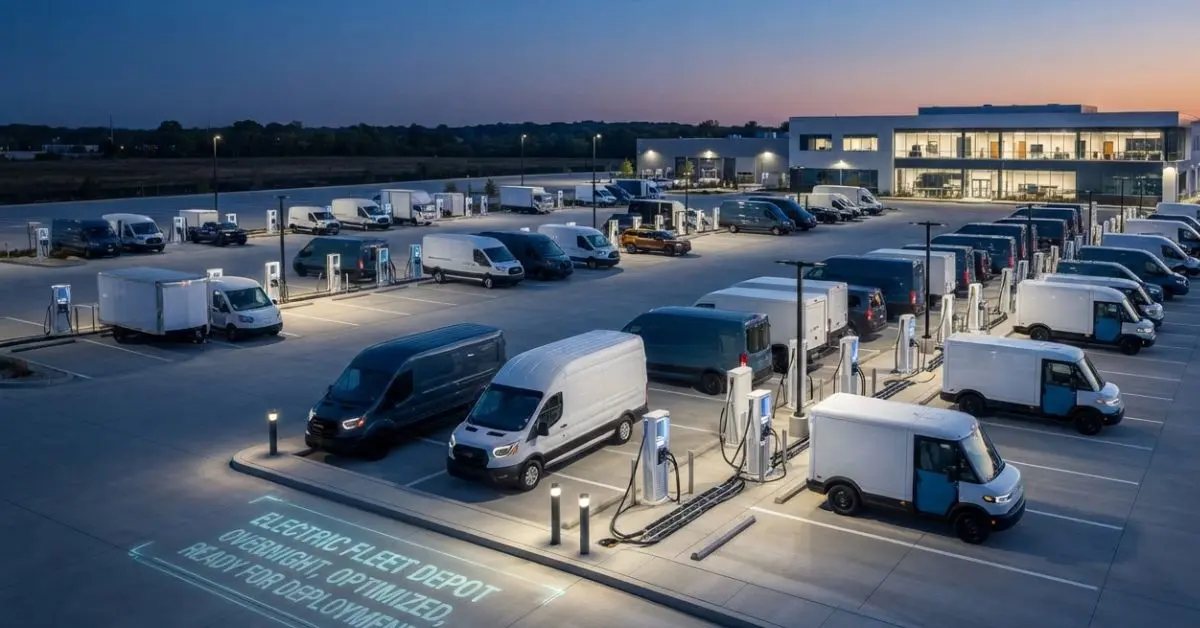
Depot charging means fleet vehicles return to a central station after each shift. They plug in to charge overnight so they are ready for the next morning. This method gives commercial fleets the most cost-effective and efficient way to power their vehicles.
Night electricity costs less, and the vehicles sit idle during this time. Central charging stations cost much less than public charging on the road. This guide shows how depot charging works, the parts it needs, and how to plan your system.
Running smaller delivery vans instead of a full depot fleet? See our guide on how to charge an electric van for business use.
How Does Depot Charging Work?
In a depot charging model, every electric fleet vehicle returns to the home depot at shift end and plugs into a dedicated charging stall. Charging management software receives the arrival SoC for each vehicle and calculates the minimum charge needed for the next day’s routes.
The software schedules each vehicle to charge during the cheapest overnight electricity window. It staggers start times to avoid simultaneous charging peaks that trigger demand charges. By morning, every vehicle gets exactly the charge it needs for its assigned route, plus a safety buffer.
Depot Charging Infrastructure Requirements
| Fleet Size | Recommended Charger Type | Typical Electrical Service Upgrade | Approx. Infrastructure Cost |
|---|---|---|---|
| 5–10 vehicles | Level 2 (7.2–11.5 kW) | 200–400A upgrade likely needed | $15,000–$50,000 |
| 10–25 vehicles | Level 2 with load management | 400–600A service; transformer may be needed | $50,000–$150,000 |
| 25–50 vehicles | Level 2 + DC fast (for range-critical vehicles) | 600A–1 MW; likely requires utility coordination | $150,000–$500,000 |
| 50–200+ vehicles | Mixed Level 2 and DC fast; V1G/V2G capable | 1–5 MW utility-scale service upgrade | $500,000–$3,000,000+ |
Benefits of Depot Charging for Electric Fleets
Lower Charging Costs
Depot charging allows fleets to take advantage of overnight off-peak electricity rates, typically ranging from $0.07 to $0.12 per kWh. In comparison, public DC fast charging often costs between $0.35 and $0.55 per kWh. The lower electricity cost significantly reduces operating expenses over time.
Greater Operational Control
Fleet operators have complete control over when and where vehicles charge. Since charging takes place at the company’s own facility, there is no dependence on the availability or reliability of public charging stations.
Smart Charging With Fleet Telematics
Modern depot charging systems integrate with fleet telematics platforms. The software automatically schedules charging based on each vehicle’s battery level and the distance it needs to travel the following day. This ensures every vehicle is ready while minimizing electricity costs.
Vehicle-to-Grid Opportunities
Large fleets equipped with V2G-compatible electric vehicles can support the power grid during periods of high electricity demand. Fleet operators may receive financial incentives through utility demand response programs, helping offset charging costs.
How to Plan a Depot Charging System: Step-by-step checklist
Planning a depot charging system requires more than installing chargers. Follow these steps to build a reliable, cost-effective charging setup that supports your fleet today and allows for future growth.
Step 1: Evaluate Your Fleet
Start by reviewing your current fleet and future electrification plans.
- Count the number of vehicles that will charge at the depot.
- Record each vehicle’s battery capacity.
- Estimate daily driving distance and energy consumption.
- Identify vehicles that need overnight charging or quick turnaround.
Step 2: Assess Your Electrical Capacity
Check whether your existing electrical service can support EV charging.
- Review your current electrical service size.
- Calculate the total charging power your fleet will require.
- Determine whether a service or transformer upgrade is needed.
- Contact your local utility early if additional capacity is required.
Step 3: Select the Right Chargers
Choose chargers based on your fleet’s operating needs.
- Use Level 2 chargers for vehicles parked overnight.
- Install DC fast chargers only for vehicles that need rapid charging.
- Select OCPP-compatible chargers for future flexibility and remote management.
Step 4: Design the Charging Layout
Plan the charging area for safe and efficient daily operations.
- Assign charging spaces for each vehicle.
- Position chargers to reduce cable length and trip hazards.
- Leave room for larger vehicles and future expansion.
- Ensure the site meets accessibility and safety requirements.
Step 5: Implement Smart Charging Management
Install charging management software to optimize energy use.
- Schedule charging during off-peak electricity hours.
- Balance power across multiple chargers.
- Prioritize vehicles with early departure times.
- Monitor charging status remotely.
Step 6: Coordinate With Your Utility
Work with your utility company before construction begins.
- Request a site assessment.
- Apply for any required electrical service upgrades.
- Explore special fleet electricity rates.
- Ask about available incentive and demand response programs.
Step 7: Budget for the Project
Estimate the total cost before installation.
- Charger equipment
- Installation and labor
- Electrical upgrades
- Software subscriptions
- Maintenance costs
- Future expansion expenses
Step 8: Apply for Incentives
Reduce project costs by taking advantage of available funding.
- Federal tax credits
- State or local EV charging grants
- Utility rebates
- Fleet electrification incentive programs
Step 9: Install and Test the System
Before the depot becomes operational, verify that everything works correctly.
- Test every charger.
- Confirm communication with the charging management software.
- Verify charging speeds.
- Train staff on charger operation and emergency procedures.
Step 10: Monitor and Optimize Performance
After deployment, continue improving system performance.
- Track electricity usage and charging costs.
- Review charger utilization.
- Identify charging bottlenecks.
- Adjust charging schedules as fleet operations change.
- Plan infrastructure upgrades as the fleet grows.
Utility Coordination for Large Depots
For fleets with more than 50 electric vehicles, depot charging becomes a major utility infrastructure project.
Electrical service upgrades, transformer installations, and utility interconnection approvals can take between 12 and 24 months from the initial permit application to final energization. Because of these long timelines, fleet operators should begin working with their local utility company 18 to 24 months before their planned fleet electrification.
Many utility providers offer dedicated fleet electrification programs that include expedited interconnection, demand flexibility programs, and financial assistance for electrical infrastructure upgrades. Contacting the utility’s commercial or large customer team early in the planning process can help reduce delays and lower project costs.
Conclusion
Depot charging is the foundation of successful commercial EV fleet operations. It provides the lowest charging costs, greater operational control, and seamless integration with fleet management software.
Although the infrastructure investment can be significant, businesses can reduce costs through the 30% federal tax credit, NEVI funding, and utility incentive programs. Starting infrastructure planning 18 to 24 months before fleet electrification is essential for larger deployments.
For most commercial fleets transitioning to electric vehicles between 2026 and 2028, depot charging with smart load management offers the most practical and cost-effective solution.
