
How Long Does a Solid State Battery Last?


Battery lifespan means how long a battery can hold charge before it gets too weak to use well. People often measure this life in cycles. A cycle is when you charge a battery and then use it up one time. A battery’s life ends when its power drops below 80% of its original power. How long a battery lasts even when you don’t use it much also counts as part of its total life.
Solid-state batteries are designed to far outlast today’s EV packs. Automotive test cells already pass 1,000 cycles, a Harvard lab cell kept 80% after 6,000 cycles, and Toyota targets 90% capacity after 40 years. No production EV uses one yet, so all of these are test results and targets, not field data.
Key figures:
Demonstrated 1,000+ cycles (automotive cells) – Lab best 6,000 cycles at 80% (Harvard) – Longest target Toyota, 40 years at 90% – First cars 2027-2028
Lifespan of Solid-State Batteries: The Current Understanding
Start with what has actually been demonstrated. QuantumScape’s QSE-5 and Solid Power’s test cells have both passed 1,000 charge cycles in automotive-format testing. In research labs the numbers run far higher: a Harvard lithium-metal design kept 80% of its capacity after 6,000 cycles, and several lab cells have passed 10,000 cycles. Those lab cells are small and hand-built, so they show what the chemistry can do, not what a car pack will do.
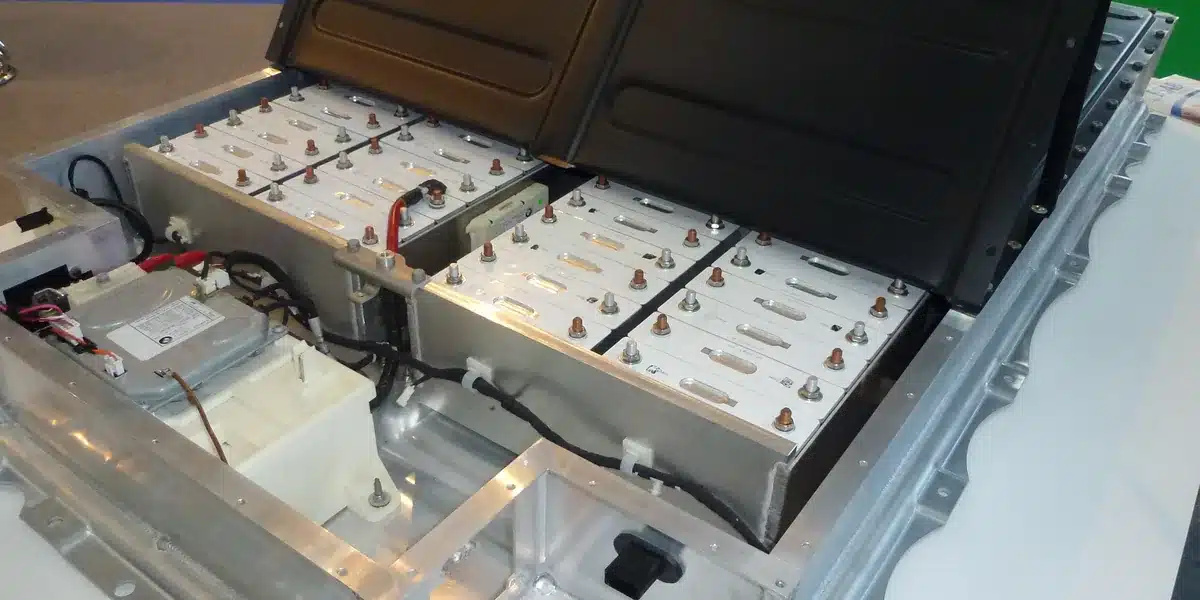
Calendar life is where the boldest claims sit. Samsung SDI says it is designing its solid-state cells for a 20-year life. Toyota goes much further: its stated target is 90% capacity remaining after 40 years, against roughly 10 years at 90% for the lithium-ion packs it builds today. None of this is proven in the field yet, because no solid-state EV has been on the road long enough. Treat every long-life figure on this page as a test result or an engineering target.
Why Do Solid-State Batteries Last Longer?
Three things wear out a normal lithium-ion battery, and a solid electrolyte fights all three. First, the liquid electrolyte slowly decomposes and reacts with the electrodes, consuming lithium with every cycle; a stable solid does far less of this. Second, lithium dendrites — tiny metal spikes that grow through liquid cells and eventually short them — are physically blocked or slowed by a dense solid layer. Third, the solid electrolyte tolerates heat and mechanical stress better, so the cell suffers less damage from fast charging and temperature swings.
Comparison: Solid-State vs. Lithium-Ion Battery Lifespan
Feature | Solid-State Battery | Traditional Lithium-Ion Battery |
|---|---|---|
Typical cycle life | 1,000+ cycles demonstrated; 6,000-10,000 in lab cells | 1,000-2,500 (NMC); 2,000-5,000+ (LFP) |
Calendar life | 20-year design target (Samsung SDI); 40 years at 90% targeted by Toyota; unproven in the field | Around 10-15 years in EV use |
Dendrite risk | Minimal to none | High risk, leading to capacity loss or safety hazards |
Thermal stability | High | Moderate, requires complex cooling systems |
Safety | Superior (less flammable) | Flammable electrolytes with leakage risk |
Read about: Solid-State vs. Lithium-Ion Batteries
Why Does The Lifespan Matter?
1. Cost-Efficiency
Due to production hurdles, solid-state batteries are more expensive than lithium-ion batteries. However, their longer life benefits make them the preferred option in the long run. Take, for example, an electric vehicle with a solid-state battery; decreased battery replacements will make the car cheaper in the long run.
2. Environmental Impact
Increased durability translates to solid-state batteries having an extended lifespan. Therefore, fewer batteries need to be replaced as they become worn out, subsequently decreasing the environmental impact of manufacturing, recycling, and disposing of used batteries.
Furthermore, it reduces the need to mine for materials integral to developing the batteries.
3. Reliability
Battery problems in cars and energy storage can cause serious damage. However, solid-state batteries are much more dependable. They last longer and meet higher safety standards. Therefore, people can choose these reliable batteries for important uses, including electric vehicles and renewable energy storage.
Factors That Influence Solid-State Battery Lifespan
The lifespan of any battery depends on several factors:
1. Charging Habits
How you charge a battery significantly affects its lifespan, no matter the brand. Charging too often or always charging to full capacity will shorten the battery’s lifespan. However, charging the battery only to 80% and avoiding letting it drain completely will help it last longer.
Solid-state batteries hold more energy than regular batteries, which allows them to handle repeated deep discharges and frequent charging. Still, good charging habits are essential to extending the battery’s working life.
2. Manufacturing Quality
Like any technology, a battery’s performance and duration greatly depend on the materials and methods used to build it. Batteries built with suitable materials and careful manufacturing tend to have a longer lifespan.
Solid-state batteries are a new technology. Companies are still working on improving the manufacturing process. As the technology becomes more developed, we can expect better production methods, which will make the batteries last even longer.
3. Battery Management Systems
Another determining component is the BMS of the solid-state battery. The BMS is responsible for keeping track of the battery’s temperature, charge level, and the number of cycles it has discharged. A well-designed BMS can protect the battery from overcharging, overheating, and other issues, thus improving its lifespan.
Can Solid-State Batteries Last Decades?
In theory, yes! The lifespan of a solid-state battery could reach decades, particularly in applications where the battery is not used heavily (for example, energy storage for solar power systems). However, it must be understood that technology is very fluid, and changes happen every second.
We note the potential advancements and long-term benefits that might follow from improving the design of solid-state batteries. At this time, a guarantee that every single solid-state battery will last for decades is still ambiguous, but the possibilities are definitely within reach.
Future Outlook for Solid-State Battery Lifespan
New research wants to make solid-state batteries last even longer. New materials could make the life span go past 10,000 cycles and 20 years. Car makers are putting a lot of money into this technology. By the late 2020s or early 2030s, these longer-lasting solid-state batteries should be more common in things people buy.
Frequently Asked Questions
How long do solid-state batteries last?
In cycle terms, automotive-format cells have demonstrated more than 1,000 cycles, and lab cells have passed 6,000 to 10,000 cycles. In years, makers are designing for 15 to 20 years of service, and Toyota’s stated target is 90% capacity after 40 years. All of these are test results and targets — no solid-state EV has been in service long enough to prove a real-world lifespan.
How many cycles can a solid-state battery handle?
The honest answer is a range. Cells being prepared for cars, from QuantumScape and Solid Power, have shown 1,000+ cycles. Research cells do far better: Harvard’s lithium-metal design retained 80% capacity after 6,000 cycles. Claims of 10,000 cycles come from small lab cells, not car packs, so expect production packs to land somewhere between the demonstrated 1,000 and the lab best.
Do solid-state batteries degrade like lithium-ion?
They age by different rules. A lithium-ion pack loses about 2.3% of capacity a year on average in fleet data, mostly from electrolyte reactions and lithium loss. A solid electrolyte slows exactly those mechanisms and blocks dendrites, so degradation should be slower — but ‘should’ is the right word until fleets of solid-state cars produce real data.
How fast do solid-state batteries charge?
Fast charging is one of their selling points. QuantumScape’s QSE-5 charges from 10 to 80 percent in about 12 minutes in testing, and Toyota targets 10 minutes or less for the same window. Repeated fast charging is also a lifespan question, and solid electrolytes are expected to tolerate it better than liquids.
Can a solid-state battery really last 40 years?
That is Toyota’s stated design target — 90% capacity after 40 years, which would let one pack outlast two or three cars. It is a target, not a measurement: the oldest solid-state EV cells are only a few years into testing. Samsung SDI’s 20-year design goal is the more conservative benchmark to plan around.
When will solid-state batteries be in cars?
The first production cars are targeted for 2027-2028, led by Toyota’s premium models, with wider availability in the early 2030s. Until then, every lifespan figure for these batteries comes from laboratories and test fleets, not from owners.
Conclusion
The life of solid-state batteries is a big improvement over old lithium-ion batteries. They can last up to 10,000 cycles and potentially 10 to 20 years. Their stability and safety are the main reasons they last longer. Even though making them and their cost remain challenges, solid-state technology promises to change how we store energy with batteries that are safer, stronger, and last much longer.
If you want to see what building one actually involves, start with the honest guide to making a solid-state battery — a short video covering the home demo, the costs and the factory method.
