
Solid-State vs. Lithium-Ion Batteries

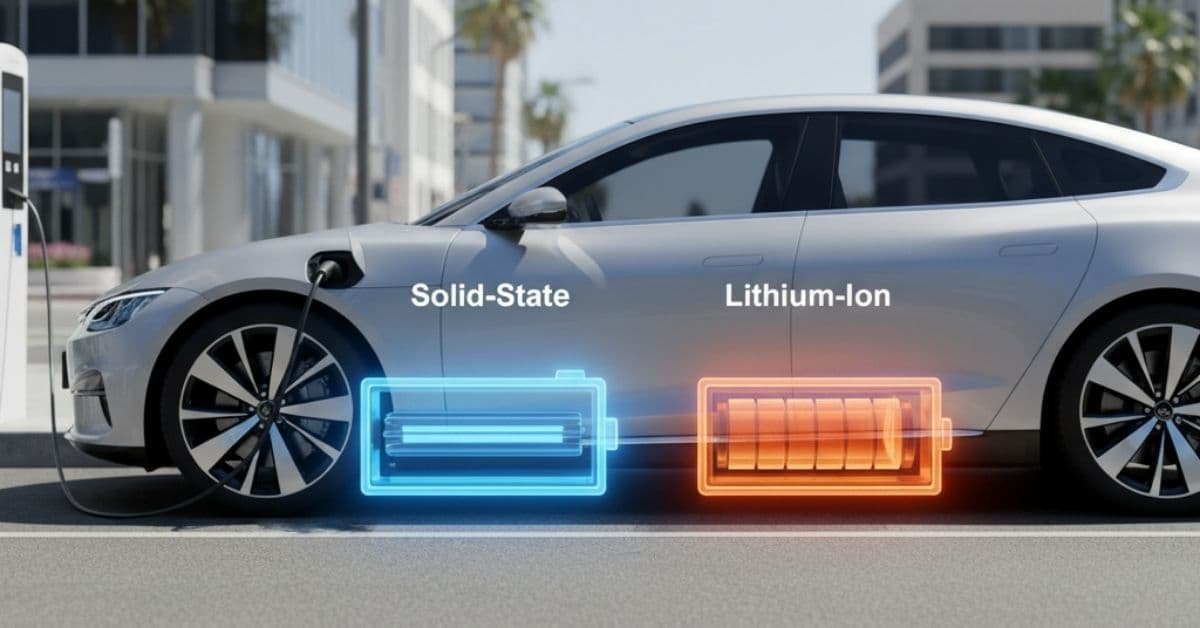
The Solid-State battery replaces the liquid electrolyte in the lithium-ion battery with a solid material. Compared to traditional lithium-ion technology, it offers several potential benefits, including increased safety (due to low combustibility), high energy density (resulting in a longer lifespan), fast charging times, and a comprehensive operating temperature range. However, solid-state batteries are currently more expensive and face challenges related to scalability and long-term stability.
Read about: How to make solid state battery at home
What Are Lithium-Ion Batteries?
Lithium-ion batteries are rechargeable batteries found in phones and laptops. They function by transferring lithium ions between two components (electrodes) using a liquid or gel (electrolyte) to store and release energy. We use them because they last a long time on a single charge and can be recharged repeatedly; however, damage can cause them to overheat.
Read about: Fast Charging Technologies for Lithium-Ion Electric Vehicle Batteries.
Pros of Solid-State Batteries
- Widely Available: These mass-produced batteries make them widely accessible and less expensive than newer technologies.
- High Energy Density: Li-ion batteries have a weight-to-power ratio that makes them compact.
- Long Lifespan: With the proper care and maintenance, they can last several years.
Read about: EV Battery Safety
Cons of Lithium-Ion Batteries
- Flammable: Li-ion batteries are dangerous to use in electric vehicles due to the heat they create. If damaged, they can also start fires.
- Limited Energy Density: Although efficient, the current comparison to other technologies makes these batteries appear less efficient.
- Wear and Tear: Li-ion batteries suffer from reduced capacity or range over time, leading to reduced efficiency.
What Are Solid-State Batteries?
Solid-state batteries are a newer type of rechargeable battery that uses a solid material instead of the liquid found in regular batteries. That solid part helps make them safer, last longer on a charge, and charge up faster. Think of it like swapping juice for a sturdy gel inside your battery! They’re still being developed, so they’re not everywhere yet.
Explore more: What Is A solid-state Battery?
Pros of Solid-State Batteries
a. Higher Energy Density
Solid-state batteries aim to change the game by providing the highest energy density available on the market. Although they are small, they can store vast amounts of energy within their space, which is beneficial for electric vehicles and similarly powerful devices.
b. Safer
Solid-state batteries operate without a liquid electrolyte, greatly increasing their reliability. The absence of liquid electrolytes means the batteries have a very low risk of leaking or igniting, which creates a significant advantage for electric vehicles.
c. Longer Lifespan
Solid-state batteries allow users to operate devices for many years without needing replacement, which is not possible with traditional lithium-ion batteries. The advanced materials within solid-state batteries contribute to their longer lifespan because they experience less breakdown over time.
See details: What Is The lifespan Of A Solid-State Battery?
Cons of Solid-State Batteries
a. Costly to Manufacture
The technology’s main drawback is its reliance on expensive materials and intricate processes.
2. Limited Availability
Solid-state batteries are still not widely available. Most advancements have been made at the research level, with some nominal commercial production.
3. Temperature Sensitivity
Sure, solid-state batteries experience overheating problems, which can reduce their performance. Researchers must conduct further investigations to help solve this issue.
Solid-State vs. Lithium-Ion Batteries In A Graph
Feature | Solid-State Batteries | Lithium-Ion Batteries |
|---|---|---|
Energy Density | 2-3x higher | Standard benchmark |
Safety | Very high (won’t catch fire) | Moderate (fire risk exists) |
Charging Speed | Very fast (10-15 min to 80%) | Moderate (30-60 min to 80%) |
Lifespan | 2,000-3,000+ cycles | 500-1,000 cycles |
Weight | Lighter | Heavier |
Current Cost | Very high (still in development) | Moderate (mass-produced) |
Temperature Performance | Better in extreme cold | Struggles in cold weather |
Commercial Availability | Limited (coming soon) | Widely available now |
Which One Is Better?: Solid-State vs Lithium-Ion
It is no secret that solid-state lithium-ion batteries have opposing advantages and disadvantages. While lithium-ion batteries are trusted to be reliable, safe, and inexpensive, their solid-state counterparts offer higher energy density, improved safety, and longer lifespan. The former dominates the smartphone, laptop, and electric vehicle market. Lithium-ion batteries are the go-to option; however, solid-state batteries could be the future technology if you want something more advanced.
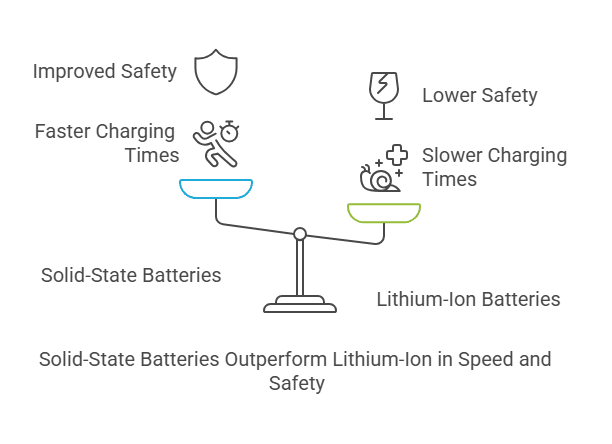
Unfortunately, these are not ready for mass production, so the market is still waiting.
Conclusion
So, while lithium-ion batteries, with their liquid insides, are the current go-to solid-state batteries, solid batteries hold exciting promise for safer, longer-lasting power. Though still in development, they represent a potential leap forward in how we power our devices and vehicles in the future.
