
How Tesla Gigafactories Power EV Battery Production

Factory status and production figures from Tesla’s own quarterly production & delivery releases and update letters (ir.tesla.com), cross-checked against Reuters and Electrive reporting and independent cell teardowns (November 2026).
The word “Gigafactory” suggests a building that takes in raw materials and ships out finished batteries. Tesla’s actual network is more interesting than that — and less self-sufficient than the name implies. As of late 2026, Tesla makes battery cells at exactly two of its sites; its other car plants assemble packs from cells manufactured by Panasonic, CATL and LG Energy Solution. Even Tesla’s own latest update letter concedes that battery availability is still what limits how fast it can grow vehicle production.
This page is the honest map: which factory does what today (with dates and sources, because this subject decays fast), what became of the famous expansion promises, how the in-house 4680 cell is really performing against independent measurement, and — in the process section that never goes stale — how a gigafactory actually turns foil and powder into a finished cell.
Does Tesla make its own batteries? Partly. Cells are made at Giga Nevada (Panasonic-built 2170s on shared lines, plus Tesla’s own new LFP lines for storage) and Giga Texas (Tesla’s in-house 4680). Giga Berlin and Giga Shanghai make no cells at all — they assemble packs from bought-in cells. Across the whole company, most cells in Teslas still come from suppliers; the in-house share is the 4680 program plus a storage-first LFP start.
Key figures: Nevada 2170 output ≈41 GWh/yr (industry estimate) · Texas 4680 installed capacity >40 GWh (Tesla, Q2 2026 — installed, not output) · Berlin cell production: not before 2027, ~8 GWh/yr planned
464,391 vehicles produced · 486,532 delivered · 13.7 GWh of energy storage deployed. For scale, full-year 2025 closed at 1,654,667 vehicles produced and 46.7 GWh of storage deployed. This box is updated each quarter from Tesla’s production & delivery release.
The Network at a Glance: Who Makes Cells, Who Assembles Packs
Two cell-making sites, two pack-assembly car plants, and a storage network that is quietly becoming Tesla’s second battery business.
Site | Makes cells? | What happens there (Nov 2026) |
|---|---|---|
Giga Nevada (Sparks, NV) | Yes | Panasonic 2170 lines (≈41 GWh/yr, industry estimate); Tesla’s own LFP cell lines ramping for storage; drive units and Powerwalls also built here |
Giga Texas (Austin, TX) | Yes | Tesla’s in-house 4680 (>40 GWh installed); cathode plant ramping on site; feeds Cybertruck, some Model Y, Cybercab |
Giga Berlin (Grünheide, DE) | No | Packs assembled on site, including packs built around Austin-made 4680 cells; cell production targeted to start 2027 at ~8 GWh/yr |
Giga Shanghai (CN) | No | Packs assembled from CATL, LG and (from 2026) Sunwoda cells; 6 millionth pack built Aug 2026 |
Fremont + Kato Road (CA) | Pilot only | Car and pack assembly (a bottleneck Tesla itself flags); the Kato Road pilot line is no longer itemised in Tesla’s updates |
Megafactories (Lathrop CA, Shanghai) | No | Megapack assembly; Shanghai Megafactory producing since Feb 2025; Nevada-made LFP cells now reaching Megapacks |
Giga Nevada: The Original — and the Expansion That Became Something Else
Nevada is two factories wearing one name: Panasonic’s mature 2170 operation, and the site where Tesla’s LFP ambitions landed instead of the promised 4680 giant.
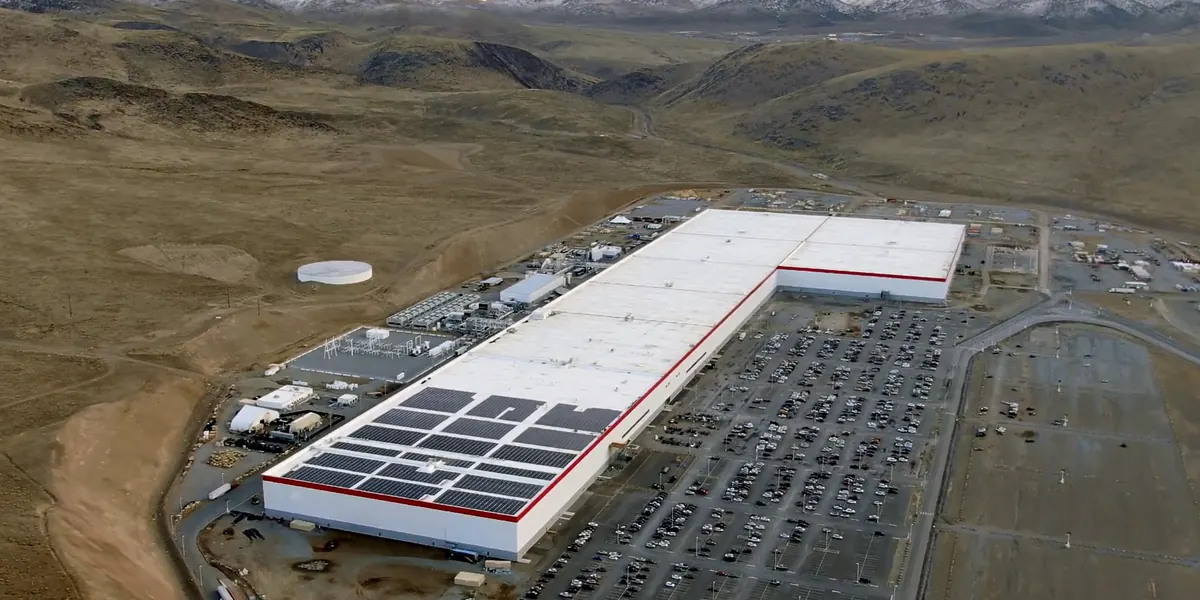
The cell lines that have run here since 2017 are a Tesla–Panasonic partnership: Panasonic manufactures 2170 cells (industry estimates put output around 41 GWh a year) that become Model 3 and Model Y packs, alongside Tesla-built drive units and Powerwalls. It remains, by shipped volume, the most productive battery site in Tesla’s world — and the cells in it are Panasonic’s.
The January 2023 expansion announcement promised a 100 GWh 4680 cell plant and a Semi truck factory for a $3.6 billion investment. What actually got built tells the real story of Tesla’s shifting priorities: the Semi factory was inaugurated on September 24, 2026 (rated at 50,000 trucks a year), while the giant 4680 plant never materialised. In its place, the Nevada site now hosts Tesla’s LFP cell factory — built with equipment bought from CATL — making storage cells (the LFP section below). The lesson the Nevada site teaches: Tesla’s factory announcements describe intentions at a moment in time; this page tracks what is actually running.
Giga Texas: The 4680’s Home
Austin is where Tesla’s own cell bet lives — the only place Tesla manufactures its 4680 at scale, with the supply chain being built around it.
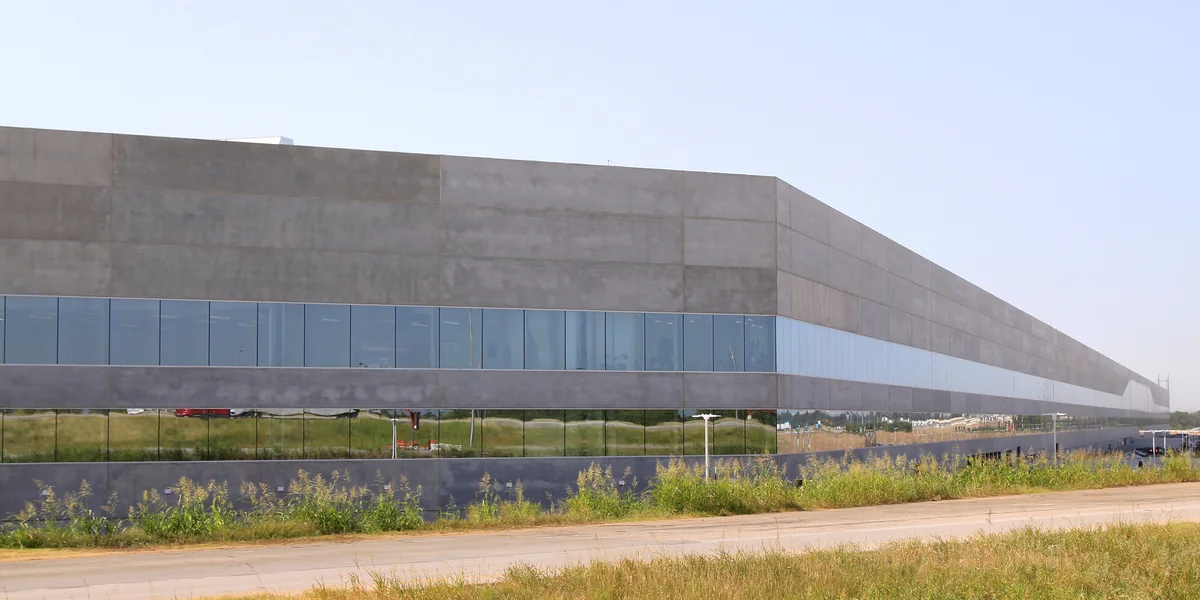
Tesla’s Q2 2026 update puts installed 4680 capacity above 40 GWh — read that word carefully: installed lines, not cells shipped, and Tesla does not publish the line’s actual output. What the cells feed is documented better than the rate: the Cybertruck, certain Model Y builds (4680 Model Y production resumed in January 2026 after a pause), the Cybercab program, and packs assembled for Berlin. Around the cell lines, Texas is where Tesla is verticalising fastest: an on-site cathode plant ramping production, and the Corpus Christi lithium refinery, which Tesla reported at full ramp in July 2026 — refining lithium in-house rather than buying refined material.
Giga Berlin: Packs Yes, Cells Not Yet
Berlin assembles battery packs — some around 4680 cells shipped from Austin — but as of November 2026 it manufactures no cells, and its cell plans have shrunk.
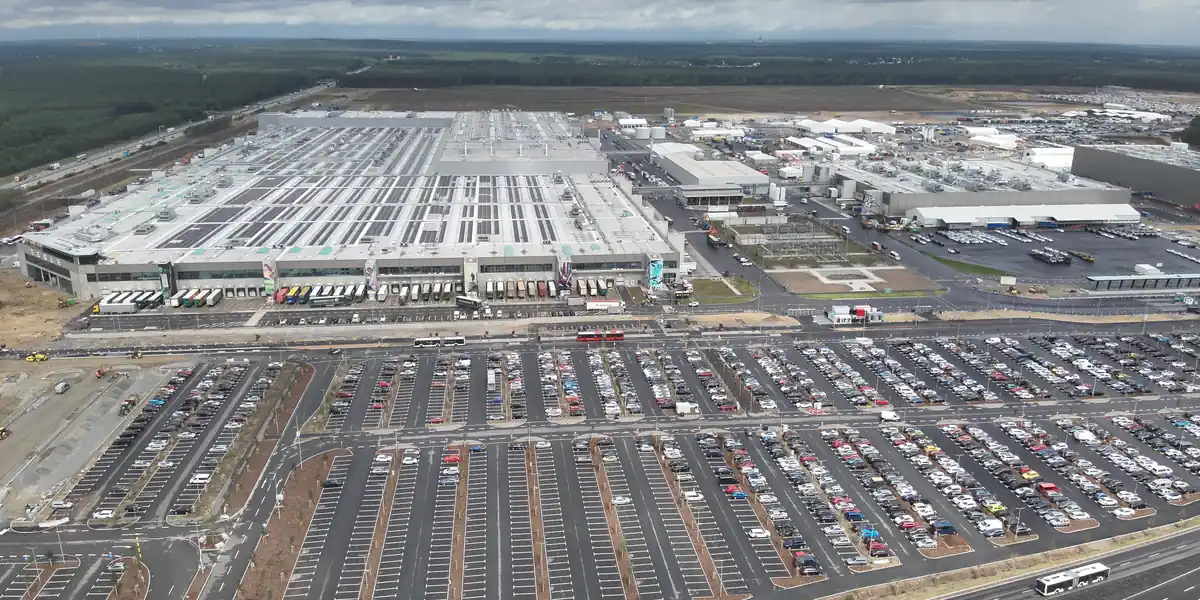
Berlin was announced with cell production as a centrepiece. The reality, per the plant manager’s own statements reported by Electrive: cell production is now targeted to start in 2027, at roughly 8 GWh a year — a fraction of the originally implied scale — with Reuters reporting an investment around $250 million attached to the plan. Until then, Berlin is a pack plant: cells arrive (CATL and LG for most cars; Austin 4680s for the structural-pack Model Y) and packs are assembled on site. Anyone who tells you Berlin “makes its own batteries” is repeating the 2020 announcement, not the 2026 factory.
Giga Shanghai: The Pack Plant That Out-Produces Everyone
Shanghai makes no cells and needs none of its own: CATL, LG and now Sunwoda supply them, and the plant assembles packs at a rate no other Tesla site matches.
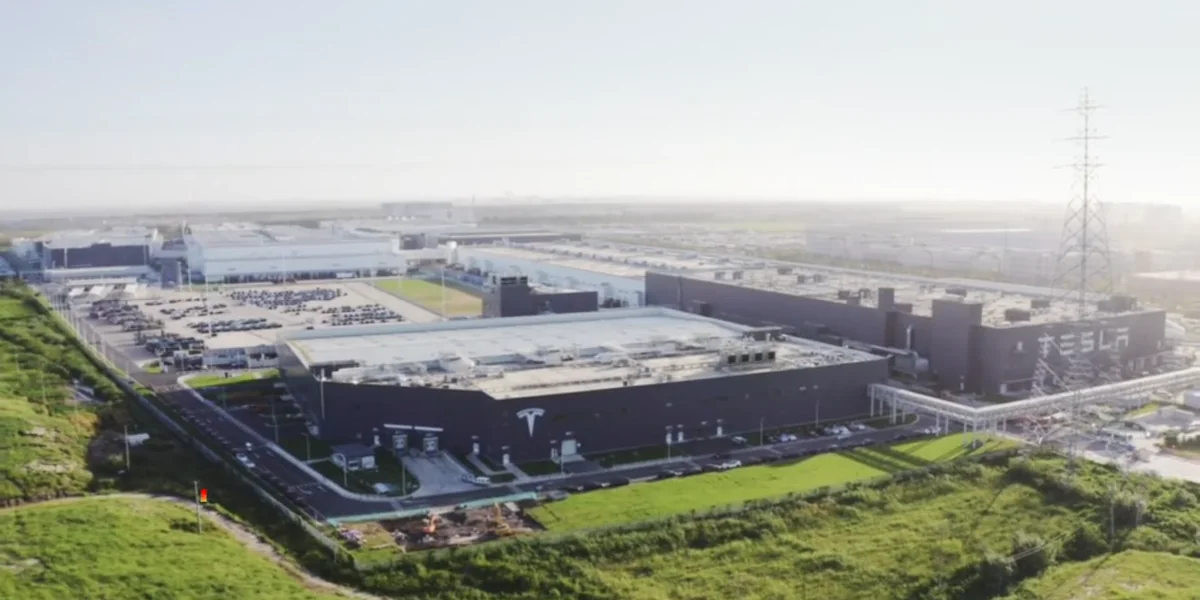
Shanghai’s six millionth battery pack came off the line in August 2026 — packs assembled in-house from cells made by CATL (including the LFP cells in standard-range cars), LG Energy Solution, and, from 2026, Sunwoda. Next door, the separate Shanghai Megafactory has been building Megapacks since February 2025, extending the same model to storage: Tesla’s integration and assembly, the cell industry’s cells. As the supplier section below notes, that is not a weakness in Tesla’s system — it is the system, everywhere except Texas and (for storage) Nevada.
Fremont, Kato Road and the Megafactories, briefly
The California originals are assembly and pilot territory now. Fremont builds cars and assembles packs — a constraint Tesla’s own updates flag — and its Model S/X lines were decommissioned in 2026 to make room for Optimus robot production. The Kato Road pilot line, where the 4680 was first proven, is no longer itemised in Tesla’s updates. The storage side runs through the Megafactories at Lathrop, California and Shanghai — assembly plants whose cell supply is exactly what the Nevada LFP factory was built to change.
The 4680 Reality Check: Solved Process, Middling Density
The 4680’s manufacturing breakthrough is real and now complete; its cell performance, measured independently, is ordinary — and both halves matter.
Start with the genuine achievement. The 4680’s hardest problem was the dry electrode — coating electrode material without solvents — and on January 28, 2026 Tesla disclosed that both the anode and the cathode are now produced dry. That closes a six-year engineering saga and removes real cost and factory footprint from every future line.
Then the claims discipline. Battery Day 2020 promised 5× energy, 6× power, +54% range and −56% cost per kWh from the 4680 program as a package (cell design + dry electrode + structural pack + factory). Those are 2020 targets — this site prints them only with their date attached — and no independent measurement has yet shown a production 4680 car delivering the full package.
Tesla’s own position is the most credible summary: its Q3 2026 update says battery availability still limits vehicle production growth, which is not something a company with a solved, surplus cell supply writes. The 4680 is scaling and its process is finally whole; the leapfrog, on measured evidence, is still ahead of it. (What the cell formats themselves mean — and why size is not destiny — is covered in our guide to cylindrical, prismatic and pouch cells.)
LFP: The Storage-First Bet in Nevada
Tesla’s second in-house cell is not for cars at all — it is an LFP cell for Megapacks, built in Nevada on equipment bought from CATL.
The arrangement, reported from 2024 and confirmed in outline by Tesla’s own updates: Tesla bought idle CATL equipment and installed it in Nevada, with CATL’s technology licensed rather than its staff running the plant. Tesla’s update letters list Nevada LFP at 7 GWh in early ramp “for our energy storage products”, and on the Q3 2026 earnings call Elon Musk said Megapacks with in-house LFP cells have started delivering.
No US-made LFP cell for Tesla cars is verified — car LFP still comes from CATL — and the second US leg of the storage strategy is a supplier’s: LG Energy Solution’s $4.3 billion Michigan plant will supply LFP cells for the Megapack 3 from 2027. Storage, not cars, is where Tesla’s cell independence is actually being built. (The pack architecture those cells land in is its own subject: how Tesla battery packs work.)
How a Gigafactory Actually Makes a Cell
The process below is the evergreen heart of this page: it changes slowly, it is what “production” physically means, and it is where the dry-electrode fight was won.
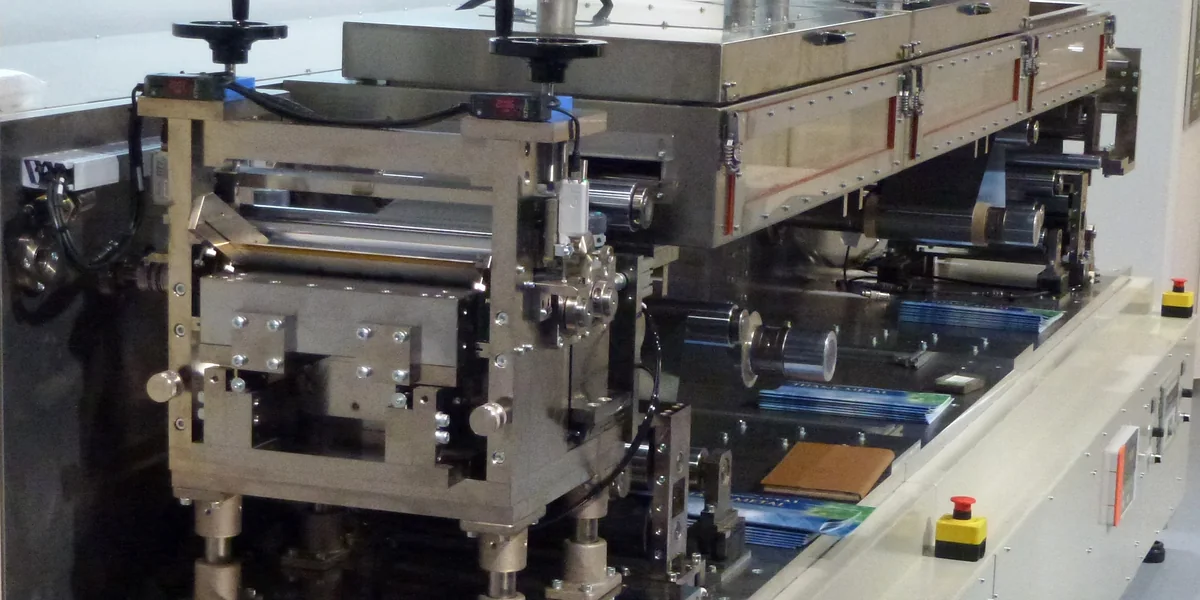
- Mixing and coating. Cathode and anode powders are made into a slurry and coated in a thin, precise layer onto aluminium and copper foil. In the conventional wet process the slurry uses solvents that must then be dried off in long ovens and recovered — floor space, energy and cost. Tesla’s dry electrode process coats the powder directly, deleting the ovens: this is the step that took until 2026 to solve for the cathode.
- Calendaring. The coated foil is rolled to an exact thickness and density — the quiet step that sets much of the cell’s final energy density.
- Slitting, winding, assembly. The foil is cut to width and wound (cylindrical cells) or stacked (prismatic) into the cell’s core, tabbed, inserted into its can or pouch, and sealed.
- Filling and formation. Electrolyte is injected, and the cell is charged and discharged under control for the first time — formation — while its protective SEI layer forms; then it is aged and graded. Formation and ageing halls are among the largest, slowest parts of any gigafactory, and a common hidden bottleneck.
- Packs. Finished cells are assembled into modules or directly into packs (Tesla’s structural pack bonds 4680s into the car’s floor). The cell technology inside those packs — chemistries, cooling, management — is covered in depth in our Tesla battery technology overview.
The Supplier Map: Who Actually Makes Tesla’s Cells
Four cell makers stand behind the badge — which is why “Tesla battery production” is a network, not a building.
- Panasonic — the founding partner: 2170 cells at Giga Nevada, the premium 2170s from Japan, and its new Kansas (De Soto) plant supplying US production.
- CATL — the world’s largest cell maker: LFP and NMC cells for Shanghai-built cars, LFP for standard-range cars elsewhere, and the licensed technology + equipment behind Nevada’s LFP lines.
- LG Energy Solution — cells for Shanghai and Berlin cars, US production in Arizona, and the $4.3B Michigan LFP plant contracted for Megapack 3 storage cells from 2027.
- Sunwoda — added as a Shanghai pack-cell supplier in 2026, a sign Tesla is widening the bench rather than replacing it.
Frequently Asked Questions
Does Tesla make its own batteries?
Partly. Tesla manufactures its own 4680 cells at Giga Texas and LFP storage cells at Giga Nevada, and Panasonic makes 2170 cells inside Giga Nevada. But the majority of cells in Teslas are bought from Panasonic, CATL and LG Energy Solution, and Giga Berlin and Giga Shanghai manufacture no cells at all — they assemble packs from supplier cells.
How many batteries does Tesla produce?
Tesla reports vehicles and storage, not a cell count: Q3 2026 saw 464,391 vehicles produced and 13.7 GWh of storage deployed, and Tesla’s update letters put installed 4680 capacity above 40 GWh (capacity, not output) with Nevada LFP at 7 GWh in early ramp. Any exact “cells per day” figure you see elsewhere is an estimate wearing a fact’s clothing — including the widely repeated ones.
Where are Tesla batteries made?
Cells: Sparks, Nevada (Panasonic 2170s; Tesla LFP for storage) and Austin, Texas (Tesla 4680), plus supplier plants in Japan, China, Korea, the US (Panasonic Kansas; LG Arizona) and elsewhere. Packs: assembled at every car plant — Nevada, Texas, Berlin, Shanghai, Fremont — from whichever cells that model uses.
When will Giga Berlin make its own cells?
Not before 2027, on the plant management’s current statements: a start in 2027 at roughly 8 GWh a year is the target, with about $250 million of investment reported by Reuters. Until then Berlin assembles packs from imported cells, including Austin-made 4680s.
What is the 4680, and is it better than the 2170?
It is Tesla’s larger in-house cylindrical format (46 mm × 80 mm), built with dry-electrode coating that is now solved for both electrodes. On independent measurement its energy density (232.5–244 Wh/kg in teardowns) currently trails Panasonic’s best 2170 (~269 Wh/kg) — its advantages today are manufacturing cost and factory simplicity, not stored energy per kilogram.
Does Giga Nevada make LFP batteries?
Yes — for storage. Tesla installed LFP cell lines in Nevada using equipment bought from CATL; its updates list 7 GWh in early ramp for energy storage products, and Megapacks with in-house LFP cells began delivering in 2026 (per Musk on the Q3 2026 call). LFP cells for Tesla cars are still supplied by CATL.
Why does Tesla still buy cells if it has gigafactories?
Scale and time. Car production needs more cells, sooner, than Tesla’s young in-house lines can supply — Tesla’s own Q3 2026 update says battery availability limits its vehicle ramp. Buying from Panasonic, CATL and LG while the in-house programs scale is the strategy, not a failure of it.
What happened to the Nevada expansion Tesla announced in 2023?
Half of it arrived in a different shape: the Semi truck factory was inaugurated in September 2026 (50,000 trucks/year), while the announced 100 GWh 4680 cell plant was never built — the site instead hosts Tesla’s LFP storage-cell factory. It is the clearest example of why this page dates and sources every factory claim.
Conclusion
“Gigafactory” is a brand; the reality is a network — two cell-making sites, pack plants on three continents, and four suppliers doing most of the cell work.
Nevada pairs Panasonic’s mature lines with Tesla’s storage-first LFP start; Texas carries the 4680, whose process is finally solved and whose measured performance is still catching up with its 2020 promises; Berlin and Shanghai prove a gigafactory can be a world-class pack plant without making a single cell. Judge every future announcement the way this page does: cells actually shipping, from named lines, beat nameplate capacity every time.
