
Cylindrical vs Prismatic vs Pouch Cells: Which Is Better?

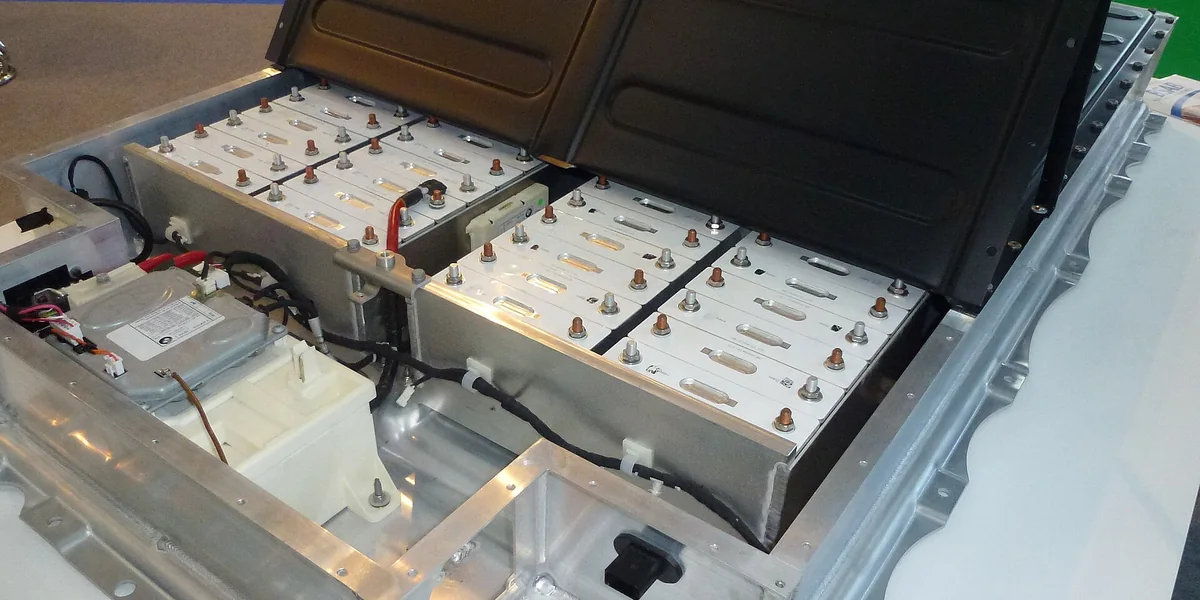
Based on the RWTH Aachen and Journal of The Electrochemical Society teardown studies, manufacturer specifications and releases (GM, Audi, BMW, Tesla), and Adamas Intelligence deployment data.
Every EV battery is built from one of three cell shapes — and the internet’s favourite argument about them mostly misses the point.
Guides love to crown a winning format, usually with a table of energy densities per shape. The awkward truth, proven by the best teardown science available, is that the chemistry inside the can moves the numbers far more than the can: RWTH Aachen University measured Tesla’s cylindrical 4680 cell at 241 Wh/kg and BYD’s prismatic Blade cell at 160 Wh/kg — and that gap is NMC versus LFP, not round versus square. Format still matters — for how a pack is built, cooled, repaired and priced. This guide decodes the size codes, gives the real cell count in real cars, and answers “which is winning” with market data instead of opinion.
Quick answer
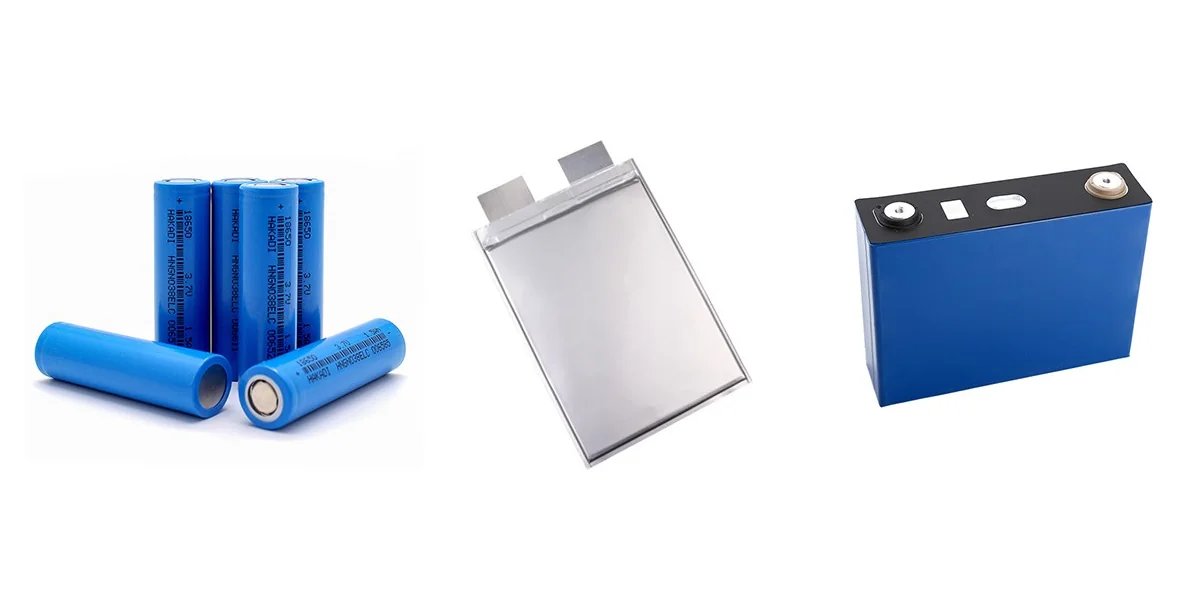
EV batteries come in three cell shapes. Cylindrical cells are metal tubes (Tesla’s 21700 and 4680) — thousands per pack. Prismatic cells are rigid metal boxes (BMW, VW, BYD, Toyota) — dozens to a few hundred per pack, and the world’s best-selling format. Pouch cells are foil packets (GM Ultium, Hyundai/Kia, the old Nissan Leaf) — light and flexible, but they must be squeezed in their modules. The shape matters less than the chemistry inside it: a cylindrical NMC cell and a prismatic LFP cell differ mainly because they are NMC and LFP.
Key figures:
Prismatic = 69% of EV battery capacity deployed in 2024 · Model 3 Long Range: 4,416 cylindrical cells · Chevy Bolt: 288 pouch cells · BMW i3: 96 prismatic cells · 4680 = 46 mm wide × 80 mm tall
What are the three formats?
A cell format is just the shape of its case: tube, box, or foil packet — and the numbers on cylindrical cells are its dimensions in millimetres.
What is a cylindrical cell?
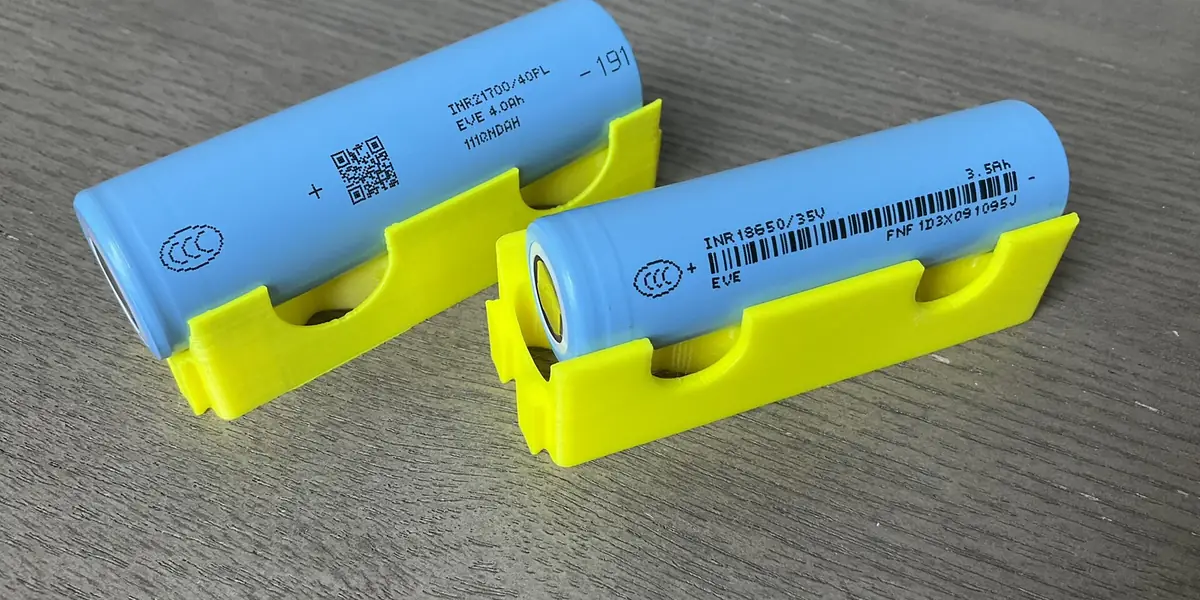
A cylindrical cell is a wound electrode roll sealed in a steel or aluminium tube. The code reads diameter × length: 18650 = 18 mm × 65 mm (~12 Wh per cell), 21700 — “2170” in Tesla shorthand — = 21 × 70 mm (~17–18 Wh), and Tesla’s 4680 = 46 × 80 mm (~86 Wh). The 46 mm family is now growing taller variants: 4695 (95 mm) and 46120 (120 mm).
What is a prismatic cell?
A prismatic cell packs its electrodes (wound flat or stacked) into a rigid rectangular aluminium or steel can with a scored safety vent in the lid — one cell can hold 100–400+ Wh.
What is a pouch cell?
A pouch cell seals its stacked electrodes in aluminium-laminate foil: no rigid case at all, the lightest packaging of the three, in sizes designed per vehicle.
Full comparison
Compared honestly, the formats differ in packaging, failure size and repairability — not in some fixed energy-density ranking.
| Feature | Cylindrical | Prismatic | Pouch |
|---|---|---|---|
| Case | Steel/aluminium tube | Rigid aluminium/steel box | Aluminium-laminate foil |
| Cells in one EV pack | Hundreds to thousands (828–7,104) | Dozens to hundreds (96–432) | Hundreds (288–384 in US examples) |
| Energy per cell | ~12–91 Wh | ~100–430 Wh | Sized per vehicle (~200 Wh in a Bolt) |
| Pack fit | Round cells leave gaps; needs structure/foam | Boxes tile neatly; suits cell-to-pack | Foil flexes to the space; needs compression frames |
| If one cell fails | Small event (~18 Wh in a 2170); many neighbours to protect | Large event (a Q8 cell ≈ 265 Wh); barriers and vent paths matter | No vent valve; the module must manage gas and swelling |
| Swelling | Strongest case; vents via a cap disc | Can bulge; lid vent releases pressure | Swells by design of its chemistry; runs under stack pressure |
| Serviceability | Structural packs are foam-potted — effectively unrepairable | Module-level swaps are normal | Module-level swaps are normal |
| US examples | Tesla, Rivian, Lucid | BMW, VW (next-gen), Toyota, BYD, Tesla Standard Range | GM Ultium, Hyundai/Kia, Ford (Extended Range) |
Same test lab, same method: a cylindrical NMC cell measured 241 Wh/kg; a prismatic LFP cell, 160. An LFP prismatic from a Tesla measured 163 — shape explains almost none of it. Chemistry first, format second.
Cylindrical cells: the proven workhorse
Cylindrical is the oldest, fastest-made format in the industry — and the one that fills a pack with thousands of small, identical cans.
Its moat is manufacturing: wound on standardised lines at enormous speed and yield, with decades of consistency data. Tesla built its cars on it — about 7,104 of the small 18650 cells in an 85 kWh Model S (teardown-reported), 4,416 of the larger 2170 in a Model 3 Long Range, 6,600 in a Lucid Air — and Rivian’s R1 trucks run 2170s too.
The 4680 era needs honest footnotes: its “5×” figure is energy per cell (~86 Wh vs ~18), not energy density — generation-one 4680s measured slightly BELOW the 2170 on Wh/kg in independent teardowns — and Tesla confirmed dry-electrode production on both electrodes only in January 2026. In structural packs (828 cells in the Model Y pack, 1,344 in the Cybertruck’s, both teardown/Tesla-documented) the cells are potted in foam, which is why those packs are effectively unrepairable. The format’s second act is already cast: BMW’s Neue Klasse runs 4695 and 46120 cylinders, and Rivian’s R2 takes LG’s 4695.
Pros of cylindrical cells
Mature, high-yield manufacturing; a strong steel case that resists internal pressure; small failure events; and a supply chain any maker can buy into. The costs are real too: round cells waste pack volume, thousands of welds connect them, and the structural-pack versions cannot be repaired at cell or module level.
Prismatic cells: space-efficient and scalable
Prismatic is the world’s default EV format — big, boxy cells that tile a pack with almost no wasted space.
How few cells does a prismatic pack need?
Because one prismatic cell holds as much energy as dozens of small cylinders, packs need far fewer connections: 96 cells in a BMW i3 (Samsung SDI, across its 60, 94 and 120 Ah generations), 96 in a Toyota bZ4X, 432 in an Audi Q8 e-tron — where the honest detail is that launch cars used LG pouch cells and the prismatic Samsung cells arrived with the e-tron 50 and in the 55 from 2021.
Where is prismatic showing up now?
The format also hosts the industry’s longest cells: BYD’s Blade is a prismatic cell stretched to ~965 mm and used as structure. And the format’s quiet takeover of “cylindrical brands” is the story of the LFP era: Tesla’s Standard Range cars run CATL prismatic LFP cells, and so does Ford’s standard-range Mustang Mach-E — Ford itself contrasts them with the Extended Range’s pouch cells.
What is VW’s Unified Cell?
VW’s Unified Cell is prismatic, with PowerCo’s first production cells made in December 2025.
Pouch cells: lightweight and flexible
The pouch is the lightest way to package a cell — and the format quietly retreating from American EVs.
How many pouch cells are in real packs?
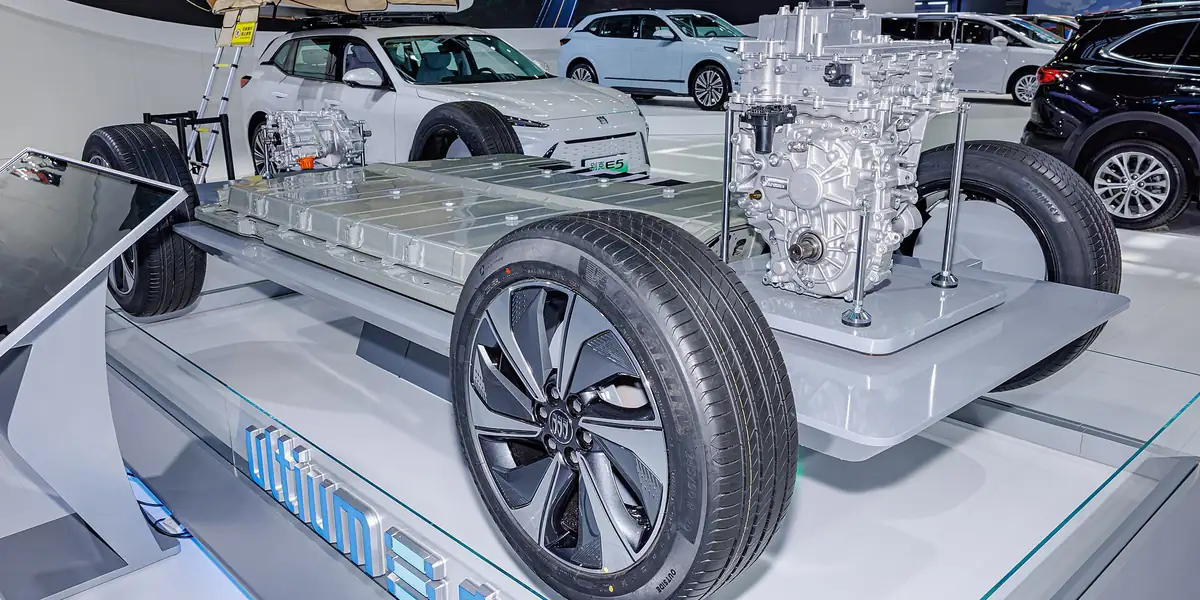
With no metal can, a pouch cell spends almost all its mass on electrodes: GM’s own specification for the Chevy Bolt lists 288 LG pouch cells in 10 modules, and Hyundai/Kia’s E-GMP packs stack 384 SK On pouch cells.
What are the structural trade-offs?
The trade-offs are structural. A pouch has no rigid case and no vent valve, so it must live under controlled compression in its module, with room to swell as it ages and gasses; the Bolt’s fire recalls traced to a manufacturing defect (a torn anode tab and folded separator in LG’s cells), not to the pouch shape itself — but the shape leaves less margin when manufacturing slips.
Where is pouch heading?
Direction of travel: GM’s Ultium still builds pouch today, yet GM’s announced next generations point prismatic (a Samsung co-development programme since the Indiana joint venture was unwound in 2026, and an LMR prismatic platform announced for 2028), and Nissan — the pouch pioneer with the Leaf — has not disclosed the new Leaf’s cell format at all.
Which cell format is winning right now?
By capacity actually deployed, it is not close: prismatic took 69% of all EV battery gigawatt-hours in 2024.
Who leads by gigawatt-hours?
Adamas Intelligence’s deployment data puts prismatic at 69% of GWh in 2024 (596.9 GWh), up from 42% in 2020, with pouch growing slowly and cylindrical slightly shrinking — because the world’s two biggest cell makers, CATL and BYD, are prismatic-first, and China’s market leads global volume.
What are the caveats?
Two caveats keep the picture honest. First, cylindrical leads where Tesla leads: in the Americas it remains the volume format, and its 46-series (Tesla, BMW, Rivian, LG) is attracting the industry’s biggest cylindrical investments in a generation. Second, forecasts (Frost & Sullivan) see 2030 at roughly 65% prismatic, 18% cylindrical, 16% pouch — a settled lead, not a shutout. “Winning” also depends on the scoreboard: by cars on US roads, no format dominates the way headlines imply.
Which cell type is best for an EV?
There is no best format — there is a best format for a given car, chemistry and factory.
Choose cylindrical for manufacturing maturity and small, containable failures; prismatic for pack efficiency, cell-to-pack designs and module-level service; pouch for the lightest cell and shapes nothing else can fill. Then remember the order of importance: the chemistry (LFP vs NMC) decides the car’s cost, life and thermal character far more than the case does, and the pack design — cooling, barriers, structure, serviceability — decides much of the rest. A buyer comparing two EVs learns more from the chemistry and the warranty than from the cell shape, which is exactly why the shape should never headline a spec sheet.
Frequently asked questions
Does Tesla use prismatic cells?
Yes. Its Standard Range Model 3 and Model Y use CATL prismatic LFP cells (confirmed by teardown studies), while Long Range cars use cylindrical 2170s and some Model Ys and the Cybertruck use cylindrical 4680s. Tesla is a two-format company.
Are Tesla batteries just 18650 cells?
No. The 18650 survives in the Model S and X. The Model 3 and Y run the larger 21700 (and 4680 in some versions), and the Standard Range cars use prismatic LFP cells from CATL.
Which cell format lasts the longest?
Cycle life follows chemistry, not shape: LFP cells (2,000–5,000+ cycles) outlast NMC cells (roughly 1,000–2,500) in any of the three cases. A prismatic LFP and a cylindrical LFP age alike; what differs is how the pack around them is cooled and managed.
Which format is most prone to swelling?
The pouch. It has no rigid case, so the gas every lithium-ion cell generates over its life shows up as swelling; pouch modules are built with compression and room to expand. Prismatic cans can bulge before their lid vent opens; cylindrical steel cans resist pressure best.
What do the numbers 18650, 21700 and 4680 mean?
Diameter × length in millimetres: 18 × 65, 21 × 70, and 46 × 80 mm. The taller 46-series variants follow the same rule — 4695 is 46 × 95 mm, 46120 is 46 × 120 mm.
Is a Blade battery a prismatic or a pouch cell?
Prismatic — a very long prismatic LFP cell (about 965 mm in production) laid across the pack as structure. It is the extreme end of the prismatic family, not a fourth format.
How many cells are in an EV battery?
From under a hundred to several thousand, by format: 96 prismatic cells in a BMW i3, 288 pouch cells in a Chevy Bolt, 4,416 cylindrical cells in a Model 3 Long Range, and 1,344 of the big 4680s in a Cybertruck.
Conclusion
The format war has a scoreboard, and prismatic is ahead — but the chemistry war matters more.
Prismatic cells carry most of the world’s EV capacity, cylindrical cells anchor Tesla and the coming 46-series wave, and pouch cells hold strongholds at GM and Hyundai/Kia while ceding ground in new programmes. For anyone choosing a car, the durable lesson is the teardown’s: check the chemistry and the pack design first. The shape of the can is the third question, not the first.
