
Polestar 4 Battery: Complete Guide

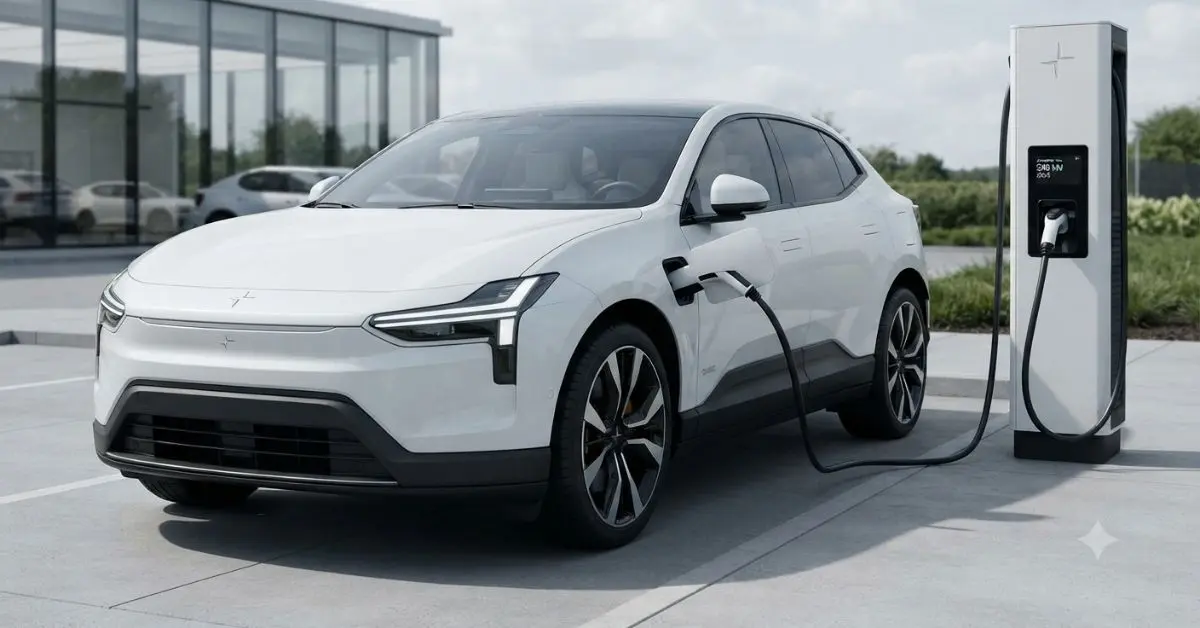
The Polestar 4 is the coupe-SUV with no rear window, and in the United States it is a one-year car: every US Polestar 4 is a 2026 model, built in Busan, South Korea, with US deliveries starting in December 2025. Every US car also uses the same battery — a 100 kWh pack with 94 kWh usable — so the choice between the Single Motor and Dual Motor versions changes power and range, not the battery itself. This guide covers that pack in full: its CATL cells, charging speeds, real-world range, lifespan, warranty, replacement cost, and the separate 12V battery that can leave the car unresponsive when it runs flat.
That one-year status matters for buyers. Polestar will not sell new cars in the US from model year 2027, so the 4 is now a remaining-stock and used purchase, and Polestar supported that exit through 2026 with heavy clearance discounts. Parts, service and software support continue, and the battery warranty runs with the car, which is what makes a discounted or used Polestar 4 worth understanding properly.
Sources used in this guide: Polestar’s official US specifications and owner’s manual, fueleconomy.gov EPA ratings, Edmunds’ EV Range Test, NHTSA records, and Geotab’s fleet degradation research.
Quick answer
The US Polestar 4 has one battery: a 100 kWh lithium-ion pack with 94 kWh usable, built from CATL nickel-manganese-cobalt (NMC) prismatic cells on a 400V system. It charges at up to 200 kW DC (10–80% in about 30 minutes) and 11 kW AC, and it is covered for 8 years or 100,000 miles down to 70% of its original capacity.
Key figures: 100 kWh total · 94 kWh usable · EPA range 310 miles (Single Motor), 280 (Dual Motor), 255 (Performance) · 200 kW DC peak · from $56,400 plus $1,400 destination
Polestar 4 Battery Specs (US Models)
Every US Polestar 4 carries the same 100 kWh battery — only the motors, wheels and range change.
Polestar sells the 4 in the US in one battery size only. The smaller 87.2 kWh Standard Range car sold in Europe and China was never offered here, so any US listing you see has the 100 kWh pack. The table below is the full US ladder, with EPA range from fueleconomy.gov.
| Variant | Battery | Usable | EPA range | Power | DC peak |
|---|---|---|---|---|---|
| Long Range Single Motor (RWD) | 100 kWh | 94 kWh | 310 miles | 272 hp | 200 kW |
| Long Range Dual Motor (AWD) | 100 kWh | 94 kWh | 280 miles | 544 hp | 200 kW |
| Dual Motor Performance Pack | 100 kWh | 94 kWh | 255 miles | 544 hp | 200 kW |
Prices started at $56,400 for the Single Motor and $62,900 for the Dual Motor, before the $1,400 destination fee. The Performance Pack’s drop to 255 miles is a wheel effect — its 22-inch wheels cost range on the same battery — not a different pack.
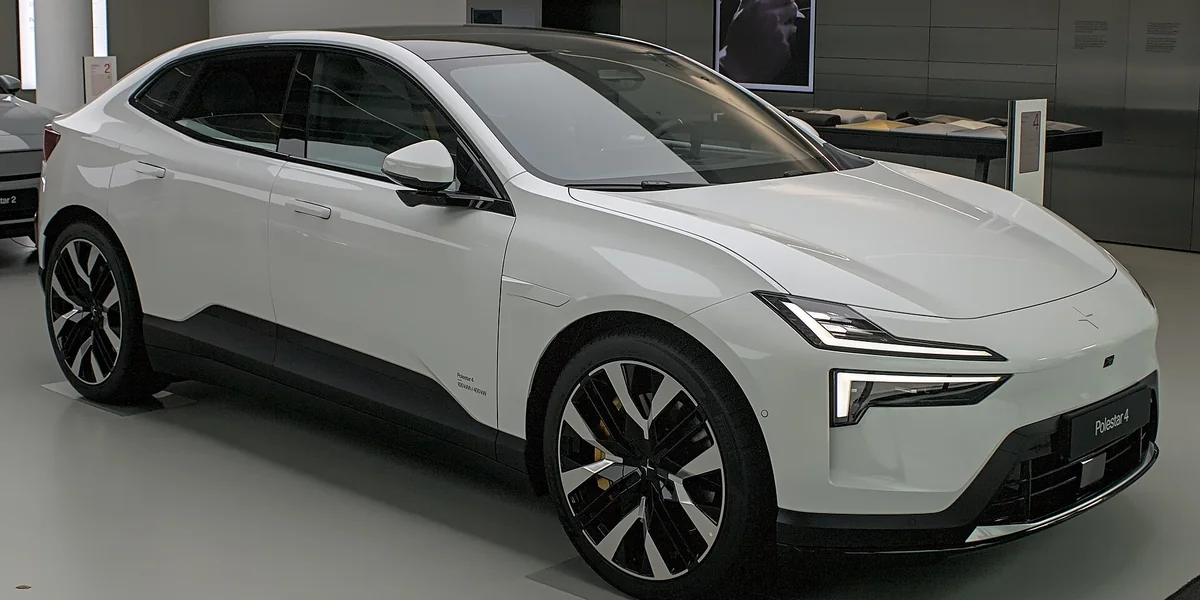
Inside the Polestar 4 Battery Pack
The pack is a cell-to-pack design with 110 large CATL prismatic cells and NMC chemistry.
What is inside the pack?
The pack runs on Geely’s SEA platform, and the battery is part of the car’s structure rather than a separate box bolted underneath. Inside are 110 large CATL prismatic cells in a single series string — 110s1p, in the usual notation — giving a nominal voltage of about 407 V. Those cells are NMC 811, so this is a nickel-rich chemistry, not the LFP of the smaller pack that Europe got. Because the pack is one series string of large cells, there are no separate modules to swap: a module-level repair means replacing cells, not a bolt-off cartridge.
How much of the battery can you actually use?
Of the 100 kWh total, 94 kWh is usable, leaving a buffer of about 6 kWh split between the top and bottom of the charge range. That buffer is part of why the car can be charged to a high percentage daily without the wear an unbuffered pack would take. The pack is liquid-cooled, and every US car also gets a heat pump as standard, which keeps the battery at its working temperature and warms the cabin without drawing directly on the pack’s energy the way a resistive heater does.
Is the Dual Motor pack different?
No. The Dual Motor adds a front motor and a second inverter, but the pack is the same 100 kWh unit. Its front motor disconnects while cruising, so the car runs as a rear-wheel-drive car most of the time and only wakes the front axle when you ask for power. The range difference between the Single and Dual Motor cars is the second motor, its inverter and the wider wheels, not a different battery.
Polestar 4 Charging: Speeds, Times and the Tesla Adapter
The Polestar 4 charges at up to 200 kW on DC and 11 kW on AC, taking about 30 minutes for a 10–80% fast charge.
How fast does the Polestar 4 charge?
The 400V system caps DC charging at 200 kW, and the average across a 10–80% session is closer to 140 kW, because the charge rate tapers as the battery fills. At home on a Level 2 charger the car takes 11 kW, which fills the pack in about 11 hours. There is no 22 kW AC option on US cars — that charger is a European-market item that does not apply here.
| Charging method | Power | Time |
|---|---|---|
| Level 1 (120V outlet) | ~1.4 kW | 70+ hours for a full charge |
| Level 2 (240V home or public) | 11 kW | About 11 hours for a full charge |
| DC fast charging | 200 kW peak | 10–80% in about 30 minutes (about 217 miles added in a Single Motor car) |
How do you get the fastest charge?
To get that 200 kW peak, the battery needs to be at its working temperature. Route to the fast charger in the car’s built-in Google Maps — the car runs Android Automotive — and it will precondition the battery on the way, warming it to the temperature the charger wants. Without preconditioning, expect a slower rate for the first part of the session as the battery warms.
What about the Tesla Supercharger adapter?
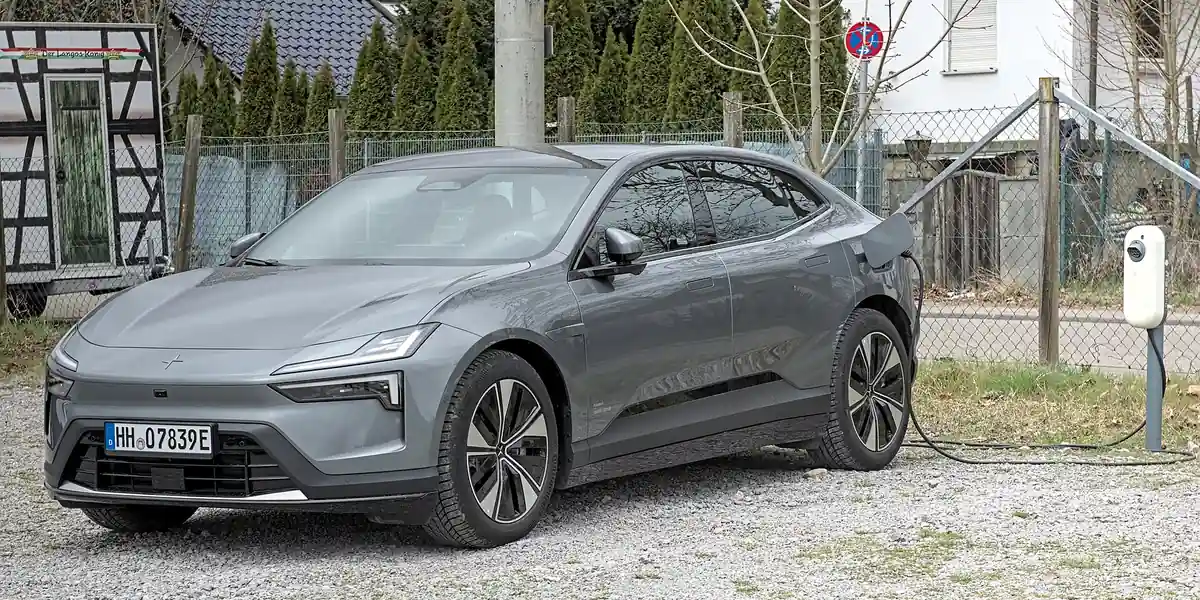
The Polestar 4 has a CCS1 port, not a native NACS port. Supercharger access began on October 29, 2024, and there are now more than 17,800 Supercharger stations across the US and Canada. An NACS-to-CCS adapter is required, and it is ordered through a Polestar Service Point for $230. It is a purchase, not an included accessory, so it is not in the car when it arrives. Once it is plugged in, charging runs through the Tesla app, and Google Maps shows NACS chargers in its results.
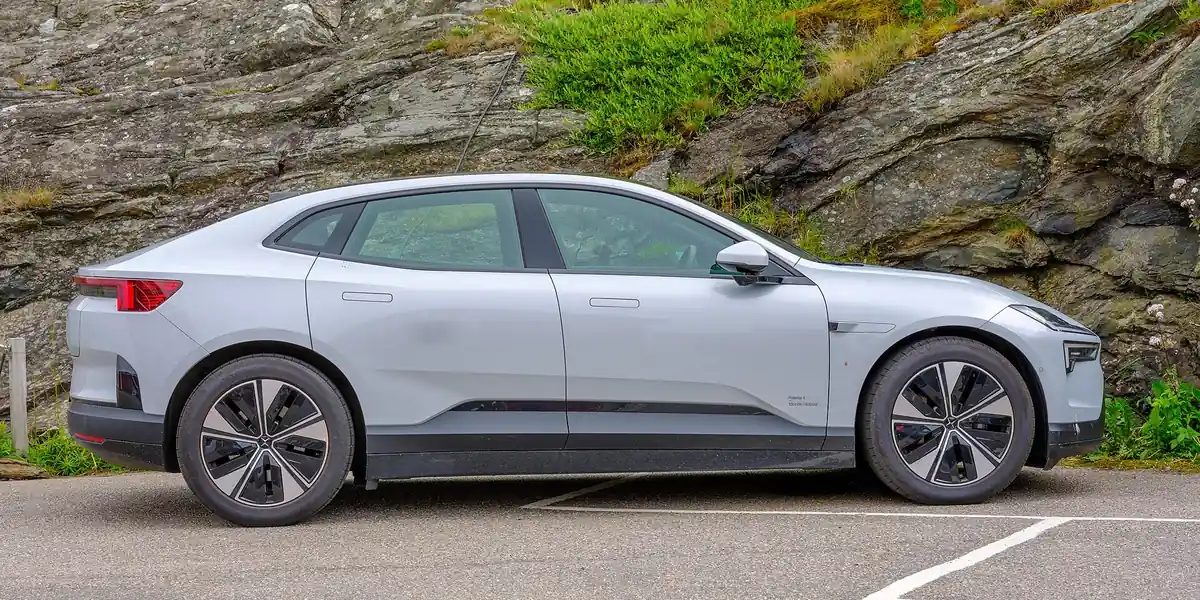
Real-World Range: What the Polestar 4 Actually Does
In Edmunds’ independent range test, the least efficient Polestar 4 beat its EPA rating by 31 miles.
What did Edmunds’ test find?
EPA figures are the starting point: 310 miles for the Single Motor, 280 for the Dual Motor and 255 for the Performance Pack car. Edmunds then drove the Dual Motor Performance — the version with the lowest rating — on its standard EV Range Test route and recorded 286 miles, using 38.5 kWh per 100 miles against the EPA’s 44. A car that beats its rating in the hands of testers is a good sign for the versions rated higher.
286 miles — the Dual Motor Performance’s Edmunds test result, against a 255-mile EPA rating.
What about cold weather?
Cold weather is the main exception to plan around. Like every lithium-ion car, the Polestar 4 loses range in deep cold — expect roughly a fifth to a quarter less on the coldest days — and the standard heat pump is a large part of why the loss is not worse. Short trips in winter cost the most, because the pack is warmed again from cold on every start.
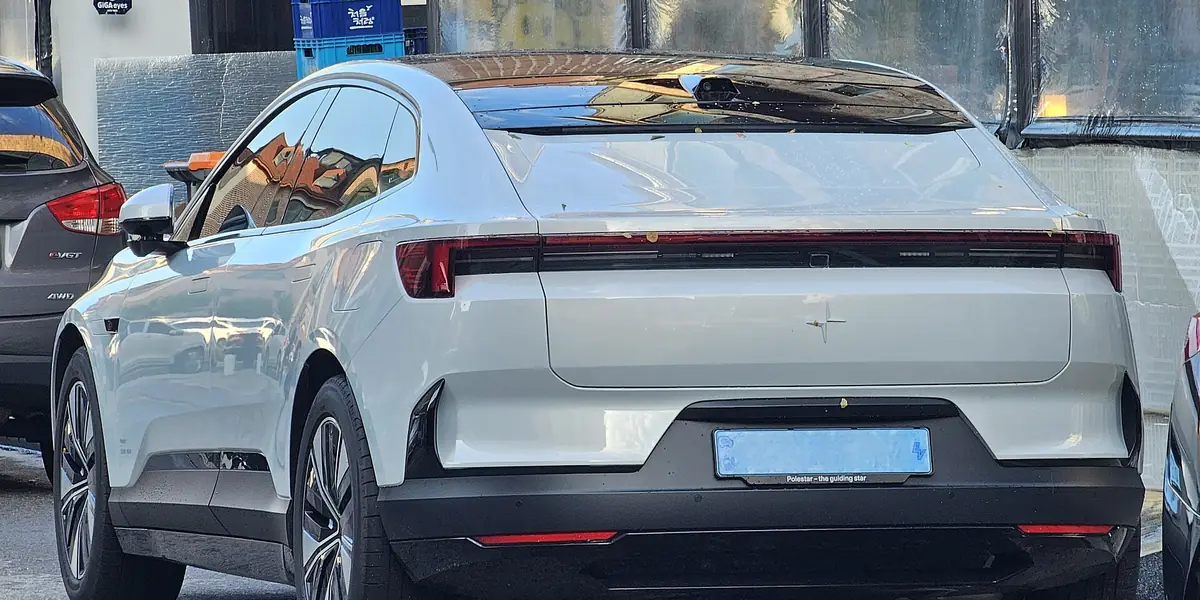
The Polestar 4 in the US: Final Model Year and Clearance Pricing
The 2026 Polestar 4 is the last one the US gets — and that is exactly why it has been discounted so hard.
Why is there no 2027 Polestar 4?
The Polestar 4 launched at $56,400 (Single Motor) and $62,900 (Dual Motor) before the $1,400 destination fee, with deliveries starting in December 2025. In June 2026, Polestar announced it would stop selling new vehicles in the US from model year 2027, after its authorization under the federal Connected Vehicle Rule was declined. There will be no 2027 Polestar 4 for the US, and later models will not be sold here either.
What does the exit mean for price?
Through 2026, Polestar offered cash discounts of up to $25,000 off MSRP on the Polestar 4, and the offers changed month to month, so check the current offers page before taking a price as fixed. A leftover 2026 car should never be priced like a continuing model.
Does support continue after the exit?
Yes. The end of new-vehicle sales does not end support: service, parts and software updates continue for cars already on the road, and the battery warranty runs with the car to its next owner. The risk for a buyer is resale value and the depth of the parts network over time, not the battery.
How Long Does the Polestar 4 Battery Last?
No Polestar 4 has been on the road long enough for a model-specific degradation record — so the honest answer comes from large fleet data, not a made-up rate.
What does the fleet data show?
The Polestar 4 only reached US buyers in December 2025, so there is no five-year health data for this model. The best evidence is Geotab’s January 2026 study of more than 22,700 EVs, which found an average degradation rate of about 2.3% per year, or about 81.6% of capacity remaining after eight years, on average. The liquid-cooled NMC pack in the Polestar 4 is in the same technology class as those cars.
What ages the battery fastest?
Habits move the number. DC fast charging above 100 kW was associated with about 3.0% per year, against about 1.5% per year for cars that charged mostly at home on AC. Hot climates add a small penalty on top. The slowest-aging pattern is the one most owners already follow: charge at home most of the time and use fast charging mainly on trips.
Read more about how long EV batteries last in general — the fleet evidence and the warranty floors that back it up — in our guide to EV battery lifespan.
Polestar 4 Battery Warranty
Polestar covers the Polestar 4 battery for 8 years or 100,000 miles, and replaces it free if it falls below 70% of its original capacity.
The battery warranty is the same on every US trim: 8 years or 100,000 miles, with a 70% floor. If the pack’s capacity drops below 70% of its original rating inside that window, Polestar replaces it free of charge. For comparison, Hyundai and Genesis stretch the time to 10 years, but the 70% floor and the free-replacement promise are the same shape.
The warranty runs with the car, not with the buyer. Polestar’s certified Pre-owned programme sells used cars with the remainder of the 8-year battery warranty included, so the cover is transferable and does not end at the first sale.
Polestar 4 Battery Replacement Cost
Polestar does not publish a US price for a complete Polestar 4 battery pack, and no credible fitted price exists yet — anyone quoting you one is guessing.
Replacement-pack numbers are easy to invent and hard to check. The Polestar 4 has only just reached US roads, no meaningful number of packs has been replaced, and there is no public pack price. The warranty is what protects an owner: if a pack fails, or falls below 70% inside the 8-year or 100,000-mile window, it is Polestar’s cost, not yours.
Outside the warranty, repair comes before replacement: module- or component-level repair first, a pack only when it is genuinely needed. For the verified prices that do exist across other models, see our EV battery replacement cost guide — it is the page we keep updated as real figures are published.
Polestar 4 Recalls: None for the Battery
As of this guide’s preparation, the Polestar 4 has no NHTSA recall campaigns in the United States — for its battery or for anything else.
The rear-camera recalls covering more than 27,000 cars in 2025 cover the Polestar 2 only, and the Polestar 3 has its own separate campaigns. Neither touches the Polestar 4: the camera-based rear view is part of the car’s design — it has no rear window — and there is no recall on that system.
Recalls can still be issued later. Before buying, and once a year afterwards, enter the car’s VIN on the NHTSA recalls site.
The Polestar 4’s 12V Battery
Like every EV, the Polestar 4 has a small 12V battery as well as its traction pack — and a flat 12V battery leaves this car completely unresponsive.
What does the 12V battery do?
The 12V battery runs the car’s low-voltage systems — the locks, lights, screens and computers — and it is also the power source for waking the car up. The big traction battery handles propulsion and keeps the 12V battery charged, but the 12V battery is the one that has to be alive for the car to respond at all. Because the door locks are electric, a flat 12V battery is a bigger event than on a car with manual locks.
How do you recover a flat 12V battery?
The owner’s manual describes a recovery route: there is an externally accessible emergency 12V terminal behind a small panel in front of the left wheel housing, with a red (+) and a black (−) connection point. Polestar recommends that only service technicians use it, that any charger connected there stays below 30 amps, and that another 12V battery is never connected to it directly.
What size is the 12V battery?
Polestar does not publish the size or capacity of the 12V battery in the US owner’s material, so this guide does not print a figure for it. Replacement is a workshop job rather than a DIY task, and if the car will sit unused for weeks the manual’s storage guidance should be followed rather than letting the 12V battery drain flat.
Buying a Used Polestar 4: Battery Checks
A used Polestar 4 is now the normal way to buy one — and its battery story is unusually checkable.
Start with health evidence, not the dashboard’s range estimate. Battery state-of-health certificates are part of the certified Pre-owned programme, and if the car is being sold any other way, ask the seller for documented state of health or have a Polestar Service Point measure it. A healthy pack at a few years old should sit comfortably in the mid-90s percent, in line with the fleet data in the lifespan section above.
Then confirm the paperwork: the remainder of the 8-year, 100,000-mile battery warranty, which transfers with the car, and a clean VIN check showing no recalls outstanding. Ask whether the $230 NACS adapter is included — it was a separate purchase when new — and whether the seller’s charging was mostly home AC.
Polestar 4 vs Macan Electric, Q6 e-tron and Electrified GV70
The Polestar 4 matches its German and Korean rivals on battery size and range, gives away charging speed to their 800V systems, and undercuts all of them on price.
Every car in the table below is a current US model, with EPA range and US prices. The pattern is voltage: the Macan, Q6 and GV70 are 800V cars and charge faster; the Polestar 4 is a 400V car and charges slower — but it launched for thousands less, before its clearance discounts.
| Model | Battery (usable) | EPA range | Peak DC | Starting price |
|---|---|---|---|---|
| Polestar 4 Single Motor | 100 kWh (94) | 310 miles | 200 kW | $56,400 |
| Porsche Macan Electric | 100 kWh (95) | Up to 332 miles | 270 kW | $80,300 |
| Audi Q6 e-tron | 100 kWh (94.9) | Up to 321 miles | 270 kW | $64,500 |
| Genesis Electrified GV70 (2026) | 84 kWh | Up to 263 miles | Up to 350 kW | $64,380 |
The Polestar’s case is simple: it has the same usable capacity as the Porsche and the Audi for the price of neither. The thing it gives up is speed at a fast charger — the 800V cars’ roughly 20-minute stops against roughly 30 minutes in the Polestar.
Charging Tips for Polestar 4 Owners
Three habits cover almost everything: charge to 90% daily, let the car prepare the battery before fast charging, and keep the adapter in the car.
What charge limit should I use every day?
Set the daily charge limit to 90%. NMC ages slowest when it is not held at full charge all the time, and 90% of 94 usable kWh is still about 280 miles in a Single Motor, so there is little to gain from charging higher on an ordinary day. Save 100% for the morning of a long trip and finish charging close to departure so the car does not sit at full charge.
How do I get the fastest road-trip charge?
On a road trip, navigate to the fast charger in Google Maps first, so the car preconditions the battery. On a cold or hot day it is the difference between roughly 200 kW and a much lower number for the first ten minutes. A 10–80% stop should take about 30 minutes; if it is consistently far slower on a healthy charger, preconditioning is the first thing to check.
When should I buy the NACS adapter?
Buy the NACS adapter before you need it, not at the start of a trip. Order it through a Polestar Service Point for $230 and it unlocks more than 17,800 Tesla Supercharger stations across the US and Canada. That turns the Polestar 4 from a CCS-only car into one that can use the largest fast-charging network on the continent.
Frequently Asked Questions
What battery does the Polestar 4 have?
Every US Polestar 4 has the same 100 kWh lithium-ion pack, with 94 kWh usable. Inside are 110 CATL prismatic NMC cells in a single series string, on a 400V system. The smaller European battery was never offered in the US.
How long does the Polestar 4 take to charge?
From 10 to 80%, about 30 minutes, at up to 200 kW on a DC fast charger. On an 11 kW home charger a full charge takes about 11 hours.
How far can the Polestar 4 go on a charge?
On the EPA cycle, 310 miles in a Single Motor, 280 in a Dual Motor and 255 in the Performance Pack. In Edmunds’ independent test, the Performance car covered 286 miles, beating its rating.
Is the Polestar 4 battery covered by a warranty?
Yes. Polestar covers the battery for 8 years or 100,000 miles, and replaces it free of charge if its capacity falls below 70% of its original rating inside that window. The warranty transfers to the next owner.
Can the Polestar 4 use Tesla Superchargers?
Yes, with an adapter. Supercharger access began on October 29, 2024, and there are now more than 17,800 Supercharger stations across the US and Canada. An NACS-to-CCS adapter is ordered through a Polestar Service Point for $230 and is a purchase, not an included accessory.
Does the Polestar 4 have a 12V battery?
Yes. A small 12V battery runs the locks, lights and computers, and the traction battery keeps it charged. If it is fully flat the car will not respond at all. There is an emergency power terminal behind a panel in front of the left wheel housing, and Polestar recommends only service technicians use it.
Conclusion
The Polestar 4’s battery is the straightforward part of an unusual car: one 100 kWh CATL pack, 94 kWh usable, honest EPA range that independent testing has beaten, and an 8-year warranty that survives a change of owner. Its 200 kW charging is a step behind the 800V rivals, and that is the real trade behind its lower price.
As a final-year car sold with deep discounts, it now asks to be judged as value rather than as a flagship. Buyers who want the flagship version of this platform should read our Polestar 5 battery guide; buyers who want the 4 should spend their effort on a documented battery-health check and the remaining warranty — the two things that decide what a used one is really worth.
