
NIO ET5 Battery: Complete Guide

Checked against NIO’s European owner’s manual and price lists (Netherlands, January 2026; Denmark, October 2026), EV Database, and NIO’s own statements through November 2026 — including William Li’s November 2025 interview on the 150 kWh pack. The ET5 is not sold in the United States.
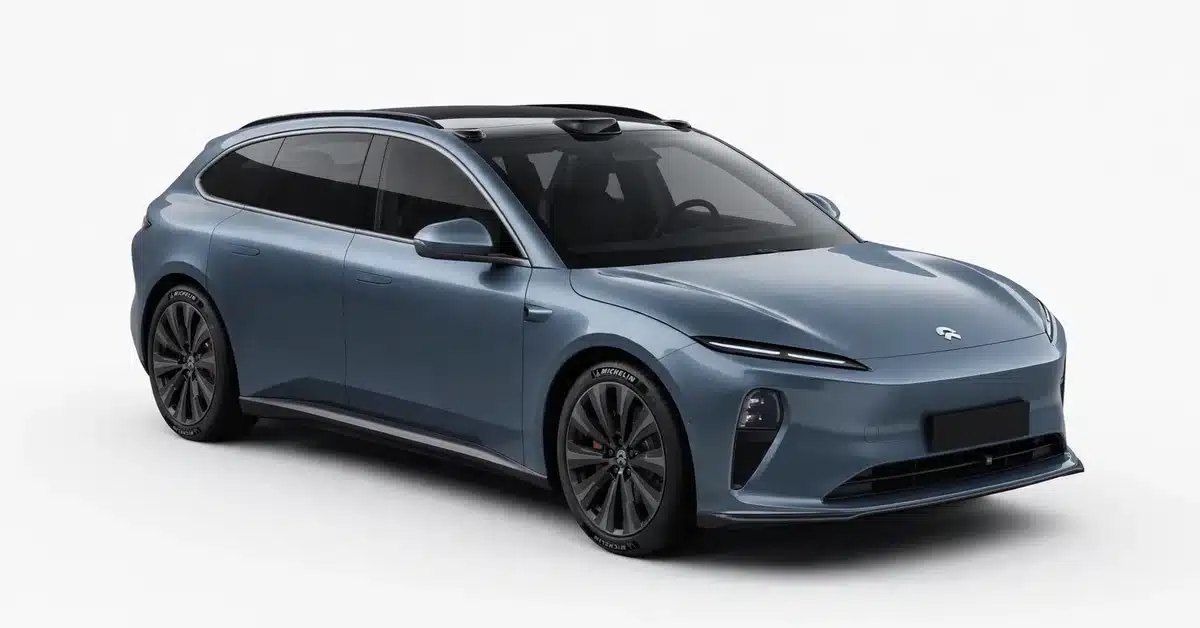
The NIO ET5 sells a genuinely different idea: a premium electric saloon (and, as the Touring, one of the very few electric estates) whose battery is not a fixed part of the car but a choice you can revise — two sizes to buy or rent, and a swap network that exchanges a flat pack for a full one in minutes. It also carries one of the most repeated myths in EV publishing: that it offers a 150 kWh semi-solid battery with a thousand kilometres of range.
It does not — not to buy, not in Europe, not anymore, not ever, in fact. This guide covers the two batteries that are real, the swap system as it actually stands in November 2026, the rental maths, and the full story of the famous third pack, told once and told straight.
The European ET5 offers two batteries: a 75 kWh pack (LFP since March 2024; 456–413 km WLTP in the saloon) and a 100 kWh NMC pack (590–532 km WLTP). Both can be bought (€12,000 / €21,000) or rented via BaaS (€169 / €289 a month) — and only rented-battery cars may use the swap stations (61 across Europe). The 150 kWh semi-solid pack was a China-only daily rental, is discontinued, and was never sold with a car.
Key figures: 360 kW · 0–100 km/h 4.0 s · swap stop ≈5–7 min real-world · battery warranty 8 yr / 160,000 km (bought packs)
The Two Real Batteries
Two sizes — and each hides two versions, which is why published charging figures for this car contradict each other.
| Pack | Chemistry / suppliers | Usable | WLTP (saloon / Touring) | DC charging |
|---|---|---|---|---|
| 75 kWh | LFP (CATL) — hybrid LFP+NCM before Mar 2024 | 70.5 kWh (NIO figure) | 456–413 / 435–393 km | Up to 170 kW (post-2024); 10–80% ~27 min claim |
| 100 kWh | NMC (CATL and CALB) | 90 kWh | 590–532 / 560–506 km | Claimed 180 kW — see the two versions below |
Both packs sit in the same swap-compatible footprint — that sameness is the whole system. Dutch prices, January 2026: from €62,700 (75 kWh) or €71,700 (100 kWh) with battery, or €50,700 plus BaaS rental without.
The 75 kWh Pack: The One That Changed Chemistry Mid-Life
Ask which chemistry an ET5’s 75 kWh pack has and the honest answer is: what year is the car?
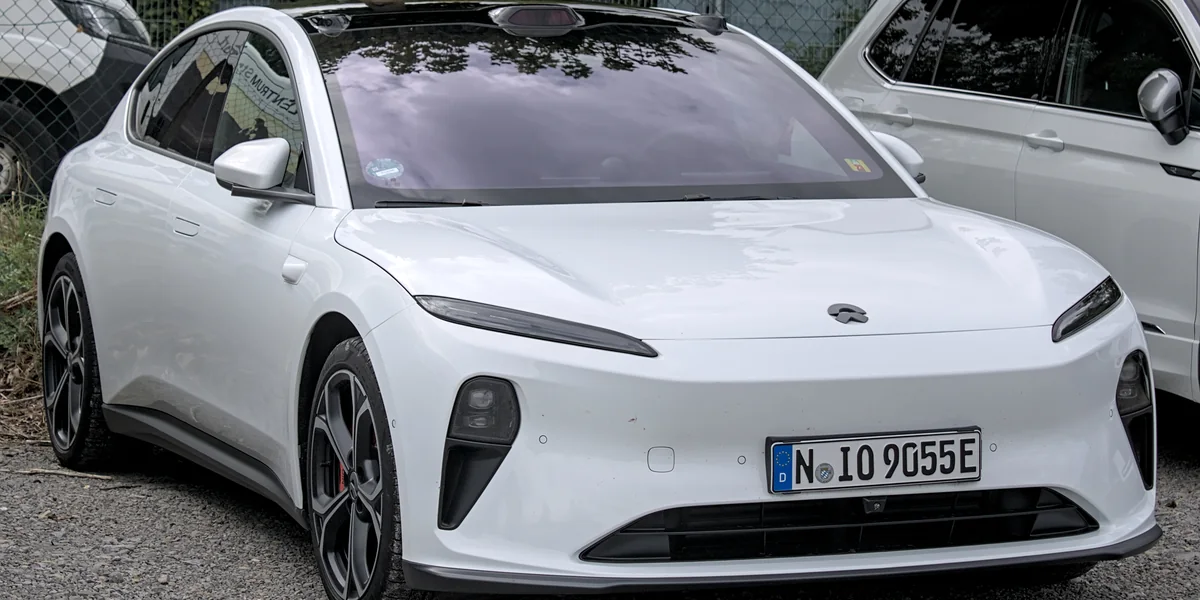
The launch pack (2021) was a genuine oddity: LFP and NCM cells combined in one CATL-celled, NIO-assembled pack, using each chemistry where it helped. From March 2024 the 75 kWh pack is all-LFP, and the change came with a charging step-up: peak DC rose from 140 to 170 kW and the claimed 10–80% time fell from 30 to ~27 minutes. Usable capacity is 70.5 kWh on NIO’s figure (EV Database estimates 73.5). For European buyers this is the default car — and on BaaS, the one whose €169 monthly rental gets the break-even treatment below.
The 100 kWh Pack, and the Touring
The big pack is the range answer (up to 590 km WLTP) — and the source of the ET5’s most confusing spec-sheet arguments.
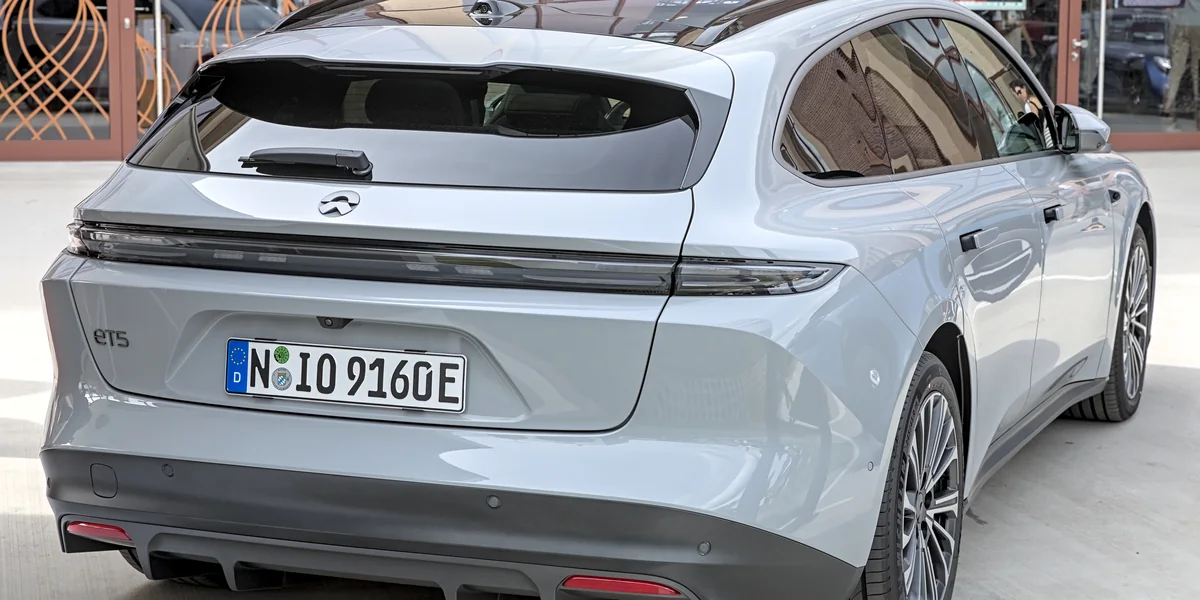
The 100 kWh pack is NMC, supplied by both CATL and CALB, 90 kWh usable. NIO claims a 180 kW charging peak — and some cars deliver it: the Touring/180 kW version runs 10–80% in ~29 minutes. But EV Database’s saloon entry (127 kW peak, ~40 minutes) matches independent measured tests of other cars, so treat “how fast does an ET5 charge?” as version-dependent, not a single number — the honest answer spans 29–40 minutes by variant. Both bodies share the drivetrain: 360 kW, 700 Nm, 0–100 km/h in 4.0 s on current specification (the 4.3 s figure still circulating is the 2022 launch claim).
The 150 kWh Pack: The Full Story, Once
The most famous battery NIO ever announced was real, extraordinary — and never a product you could buy.
The facts, in order. The pack uses WeLion semi-solid cells (360 Wh/kg) in the same swap footprint as the smaller packs, only ~20 kg heavier than the 100 kWh unit. In December 2023, William Li drove an ET7 1,044 km on one charge with it — a demonstration, livestreamed, on a prototype-grade pack.
From June 2024, Chinese owners could rent it by the day through the swap network (¥150/day upgrading from 75 kWh; ¥100/day from 100 kWh). It was never sold, never factory-fitted as a purchase option, and never offered in Europe — Li has explicitly ruled Europe out. And in a November 2025 interview, Li confirmed production has been discontinued after only several hundred units. The stored version of this page printed “~1,010 km WLTP” for this pack: that figure is the Touring’s CLTC number from China, and no WLTP figure for the 150 kWh pack exists. Treat any site still listing it as a buyable third battery as a 2023 press release with a web address.
Battery Swap in Europe: The Network as It Stands
Sixty-one stations, four real markets, no growth — and one eligibility rule that decides everything.
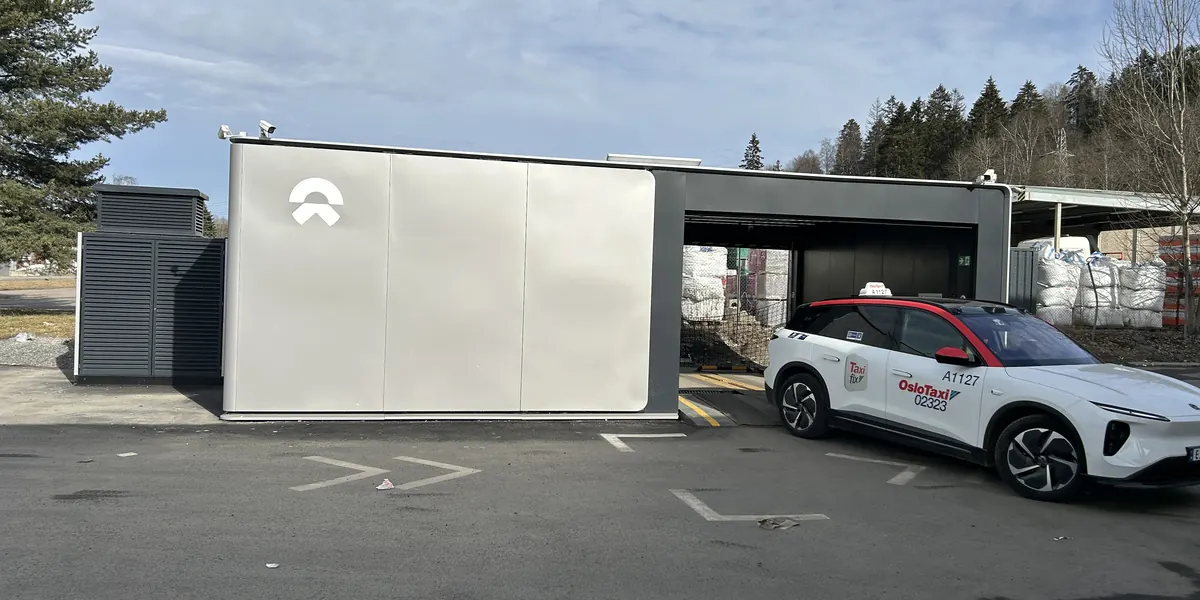
The swap itself: NIO quotes ~3 minutes hatch-to-hatch; a complete real-world stop — positioning, swap, payment, exit — runs about 5–7 minutes (an ET5 at Hilden, Germany, was measured at 6:32). The network: 61 stations as counted in November 2026. Denmark’s only station closed in November 2025 (Europe’s first closure); the October 2026 German opening was the first new station in over a year; the faster gen-4/5 stations (144-second swaps) are China-only and ruled out for Europe.
Pricing in Germany: €10 per swap plus €0.43/kWh, with two vouchers monthly; a monthly flex upgrade (75 → 100 kWh) exists since December 2024. And the rule that outranks every other fact in this section: in Europe, only BaaS cars can swap. Buy the battery outright and swapping is closed to you entirely.
BaaS: The Rental Maths Nobody Prints
Battery as a Service is a financial product wearing a battery’s clothes — here is the break-even, done plainly.
BaaS pricing has been unchanged since 2022: €169/month (75 kWh) or €289/month (100 kWh), against buy prices of €12,000 and €21,000. Divide one by the other and the rental passes the purchase price in about 5.9 years (75 kWh) or 6.1 years (100 kWh) — before counting what the rental buys beyond the battery: swap eligibility, the flex upgrade, and never owning a degrading asset (a rented pack’s degradation is the asset company’s problem, by design).
Keep the car longer than ~6 years without valuing swaps, and buying was cheaper; swap often or sell early, and BaaS earns its fee. For the Chinese-brand peer taking the opposite approach — battery firmly included — see the BYD Han.
NIO in Europe Today: The Honest Status
This page used to describe an expansion; November 2026 requires a different word.
NIO’s European operation has contracted into a distributor model: direct sales ended in February 2026, NIO Houses have closed (Hamburg among them), Denmark was relaunched without BaaS, and German registrations across January–September 2026 numbered 20 cars. The group’s European volume play is now the small Firefly brand, and in September 2026 Geely took a 30% stake in NIO Power, the swap-network company. None of this makes an existing ET5 a bad car — the network operates, the warranty stands (below) — but a buyer in 2026 should price in a thin, distributor-run presence rather than the flagship expansion the launch coverage promised.
Charging Without Swapping, and the Warranty
The plug still matters: 11 kW AC, a standard heat pump, and a warranty with a BaaS-shaped hole that is actually a feature.
Home charging is 11 kW AC; a heat pump is standard. NIO’s European owner’s manual sets the car warranty at 5 years / 150,000 km and the bought battery at 8 years / 160,000 km with a 70% capacity floor — and expressly excludes BaaS cars from the battery warranty, for the logical reason that a rented battery is the rental company’s asset and its problem. (China, for the record and fenced as China-only: the battery warranty there runs 10 years/unlimited km for the first owner.)
Frequently Asked Questions
What battery does the NIO ET5 have?
In Europe: a 75 kWh pack (all-LFP since March 2024; a hybrid LFP+NCM pack before) or a 100 kWh NMC pack (CATL and CALB). Both are swap-compatible and can be bought or rented via BaaS.
Can I buy the 150 kWh battery?
No — nobody can. It was a China-only daily rental through the swap network from June 2024, was never sold or offered in Europe, and production has been discontinued after several hundred units.
How long does a battery swap actually take?
NIO quotes ~3 minutes for the exchange itself; a complete stop takes about 5–7 minutes in the real world. There are 61 stations in Europe (Germany, Norway, the Netherlands, Sweden, Belgium).
Can every ET5 use the swap stations?
In Europe, no — only cars on BaaS (rented battery) can swap. If you bought the battery with the car, swapping is not available to you.
Is BaaS worth it?
The rental (€169/€289 a month) passes the battery’s buy price (€12,000/€21,000) in about six years. Shorter ownership, regular swapping or using the flex upgrade favours BaaS; keeping the car well beyond six years without swapping favours buying.
How fast does the ET5 charge on a plug?
Version-dependent: the 75 kWh LFP claims up to 170 kW and ~27 minutes 10–80%; the 100 kWh car spans ~29 minutes (180 kW versions) to ~40 minutes (127 kW measured versions). AC charging is 11 kW.
What warranty does the battery have?
Bought batteries: 8 years/160,000 km with a 70% capacity floor (NIO’s European manual). BaaS batteries are excluded — the rented pack is the asset company’s responsibility, which is the point of the rental. The car itself: 5 years/150,000 km.
Is the NIO ET5 sold in the USA?
No. The ET5 sells in China and parts of Europe; there is no US version, price or EPA rating.
Conclusion
Strip away the phantom battery and the ET5’s real proposition is still unlike anything else in Europe: two swappable packs, a rental model with a printable break-even, and an estate body nobody else offers. What it asks in return, in November 2026, is clear-eyed ownership — a frozen 61-station network, BaaS-or-no-swap eligibility, and a distributor-era dealer footprint. This page will keep telling that version, because it is the true one.
