
Volvo EX60 Battery: Complete Guide


The Volvo EX60 comes with three battery sizes: 80 kWh (P6), 91 kWh (P10), and 112 kWh (P12). These batteries use NMC technology on an 800V SPA3 platform. The P6 model is EPA-estimated at up to 307 miles on a single charge. The top-tier P12 AWD model reaches an estimated 400 miles. This is the longest range of any Volvo, beating its sibling, the Volvo EC40.
You can charge the battery quickly using a DC fast charger. Charging speeds reach 320-370 kW. This allows the car to charge from 10% to 80% in 16 to 19 minutes, depending on the version. On a powerful enough charger, you can add up to 173 miles of range in only 10 minutes.
Volvo started building these cars in Torslanda, Sweden, on April 22, 2026. U.S. orders opened in May 2026, and the first cars reached buyers from the summer of 2026 in limited numbers. Prices start at $58,400 for the P6 Plus, before the $1,395 destination fee.
Quick answer
The Volvo EX60 battery is an NMC lithium-ion pack on an 800V platform, built into the car’s floor. It comes in three usable sizes: 80 kWh (P6), 91 kWh (P10) and 112 kWh (P12). EPA-estimated range tops out at 400 miles, and DC charging peaks at 370 kW.
Key figures: 80 / 91 / 112 kWh usable – 800V platform – Up to 400 miles (EPA est.) – 370 kW DC charging – Warranty 8 years / 100,000 miles
Volvo EX60 Battery: Full Specs by Powertrain
| Powertrain | Battery (Usable) | Architecture | EPA Range (est.) | WLTP Range | Power | 0–60 mph | Peak DC Rate |
|---|---|---|---|---|---|---|---|
| P6 (RWD) | 80 kWh NMC | 800V SPA3 | 307 miles | 385 miles | 369 hp | 5.7 sec | 320 kW |
| P10 AWD | 91 kWh NMC | 800V SPA3 | 330 miles | 410 miles | 503 hp | 4.7 sec | 370 kW |
| P12 AWD | 112 kWh NMC | 800V SPA3 | ~400 miles | 503 miles | 670 hp | 3.8 sec | 370 kW |
| P10 Cross Country AWD | 91 kWh NMC | 800V SPA3 | ~300 miles | ~395 miles | 503 hp | 4.7 sec | 370 kW |
SPA3 and Cell-to-Body: Volvo’s Engineering Breakthrough
The EX60 is Volvo’s first car built on the new SPA3 platform. SPA3 uses a process called megacasting. This method produces large, single-piece aluminum parts that replace dozens of smaller stamped parts. Megacasting reduces the car’s weight, strengthens the frame, and helps Volvo build cars faster.
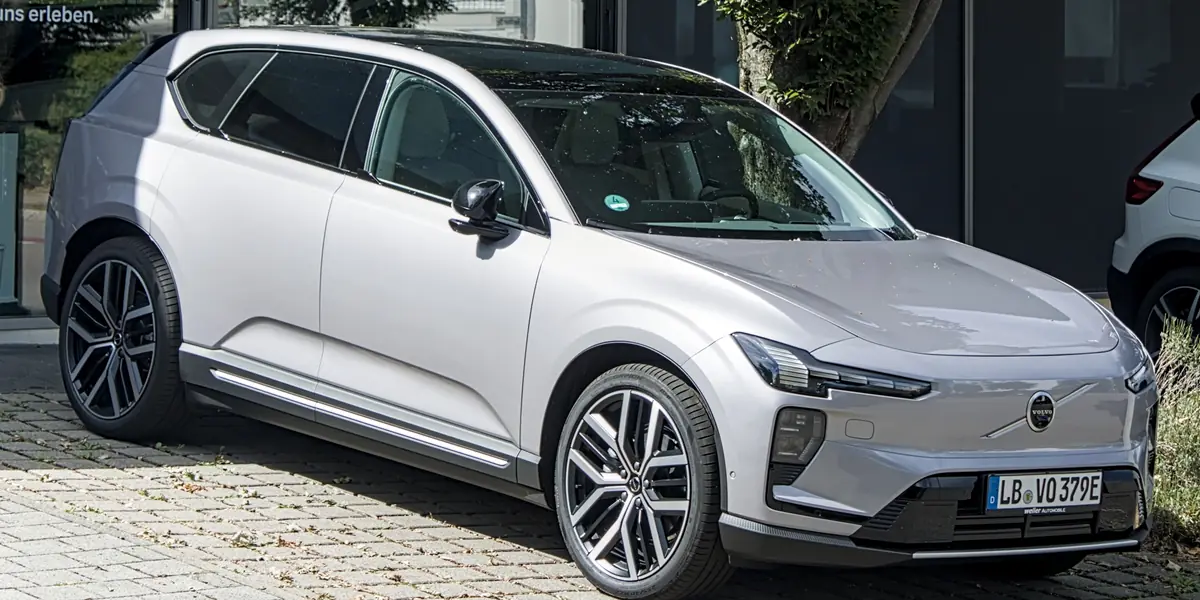
Volvo also uses a cell-to-body (CTB) design for the first time in the EX60. Instead of putting battery cells in a separate box, the team builds them directly into the floor. This design makes the battery act as a main part of the car’s frame. This makes the car much stiffer, which helps create the smooth ride that reviewers at Electrifying.com enjoy.
The P10 and P12 models feature an active chassis system. Sensors monitor the road 500 times per second to adjust the suspension’s feel. This system provides a luxury ride quality that feels better than the EX90 and competes well with the BMW iX3.
P12 Battery: 503 Miles WLTP — Volvo’s Range Record
The new P12 battery has a usable capacity of 112 kWh. It offers a 503-mile WLTP range, the longest of any Volvo electric vehicle. For comparison, the current EX90 uses a 106-kWh battery to deliver about 350 miles on the EPA test.
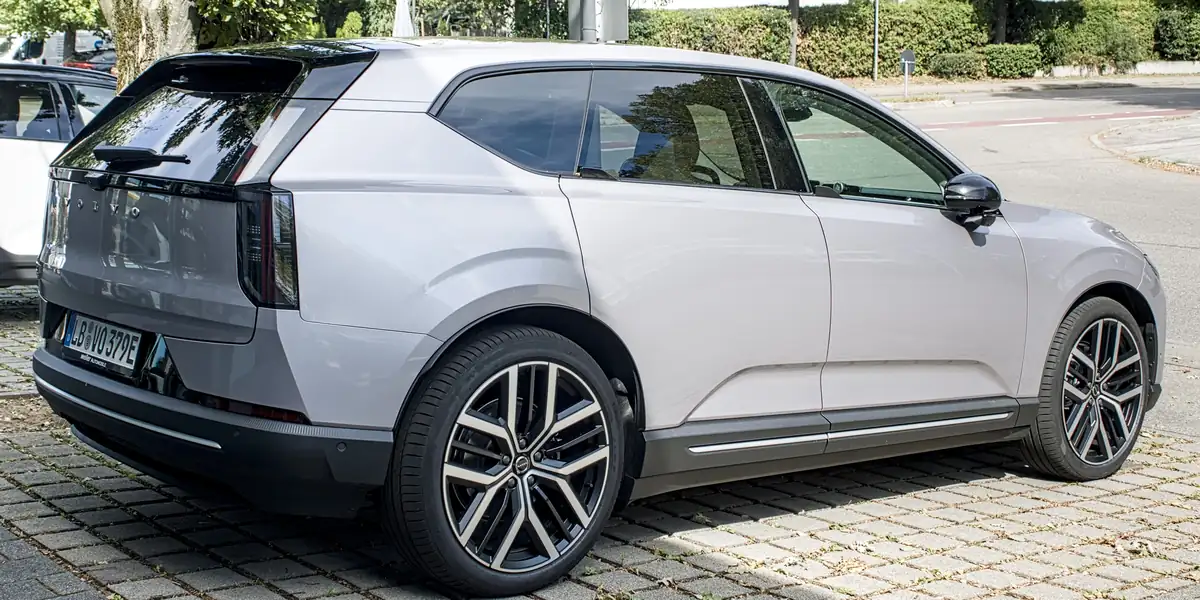
The P12 improves efficiency through the new SPA3 platform. This platform lowers wind resistance, while the Cell-to-Body (CTB) structure increases rigidity to stop energy loss. The car also uses better 800V power electronics. These changes help the P12 reach an estimated 400 miles on the stricter American EPA test, setting a new record for Volvo.
370 kW Charging: 170 Miles in 10 Minutes
The P10 and P12 support a maximum DC charging rate of 370 kW. This is one of the fastest rates for any production luxury SUV. A powerful enough station adds up to 155 miles of range in 10 minutes for the P6, 165 miles for the P10, and 173 miles for the P12.
The P6 and P10 charge from 10% to 80% in about 16 minutes, and the larger P12 battery takes about 19 minutes. At home, the standard 19.2 kW onboard AC charger fills the battery in 4 to 6 hours. European models use a 22 kW charger.
Drivers use Volvo Plug & Charge at compatible stations to start charging instantly. This system automatically authenticates the vehicle without requiring an app or a card.

Native NACS: First Volvo with NACS Port
The EX60 is Volvo’s first vehicle with a native NACS (SAE J3400) charging port. Tesla Supercharger access is fully enabled — no adapter required. The charge port sits on the rear-left (driver’s side) — in the same position as in Tesla vehicles. A CCS1-to-NACS adapter is included for compatibility with Electrify America, EVgo, and ChargePoint stations. Volvo joined Tesla’s NACS partnership in October 2024, making the EX60 the first to benefit.
EX60 Charging Speeds
| Method | Power | P6 (80 kWh) | P10 (91 kWh) | P12 (112 kWh) |
|---|---|---|---|---|
| Level 2 AC (19.2 kW US) | 19.2 kW | ~5 hours full | ~5.5 hours full | ~7 hours full |
| DC Fast (320 kW, P6) | 320 kW | ~16 min (10–80%) | — | — |
| DC Fast (370 kW, P10/P12) | 370 kW | — | ~16 min (10–80%) | ~19 min (10–80%) |
Battery Warranty
Volvo protects the EX60 battery with an 8-year or 100,000-mile warranty in the United States. It covers manufacturing defects and any drop below 70% of the battery’s original capacity. That matches the federal minimum term and the cover offered by most premium rivals.
The battery loses about 1.5% to 2% of its charge capacity each year. The Cell-to-Body (CTB) design makes the battery a structural part of the car. Because of this, replacing the battery is more difficult than replacing modular packs in other cars. However, Volvo’s 8-year warranty significantly lowers this risk for owners.
Volvo EX60 Battery Replacement Cost
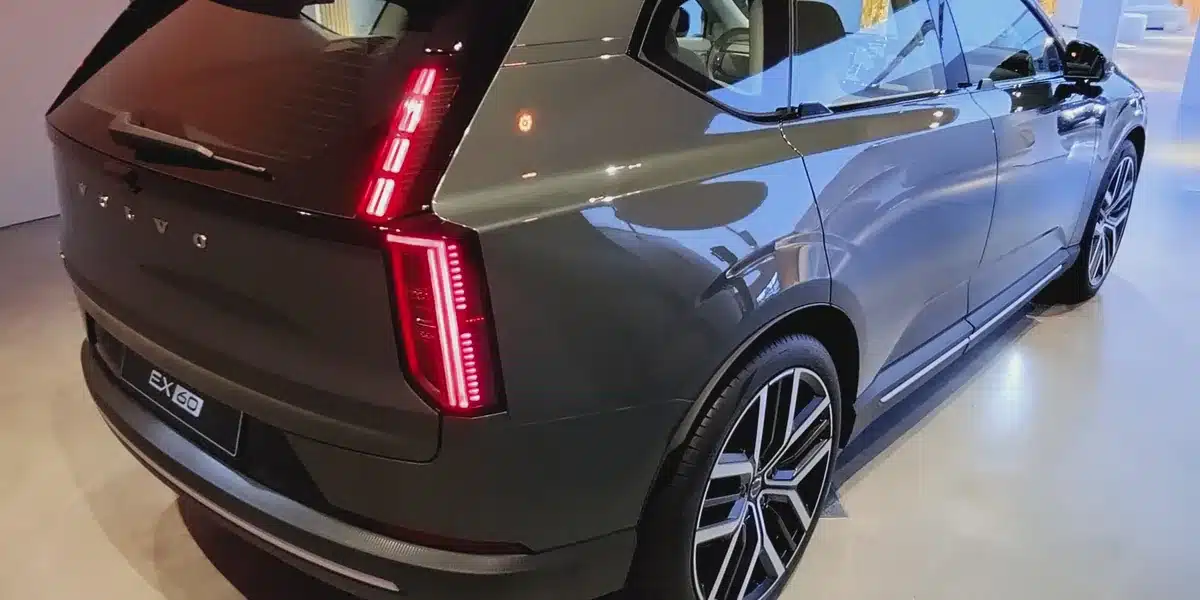
There is no meaningful replacement price for the EX60 battery yet, because the car is new for 2027. Every pack on the road sits inside its 8-year, 100,000-mile warranty. Volvo does not sell the pack as a normal spare part to owners.
One honest warning matters for long-term owners. The cell-to-body pack is part of the car’s structure, so a full replacement would be a major workshop job, not a quick swap like modular packs in other cars. If you plan to keep an EX60 beyond the warranty, that design is the main cost risk to weigh. For typical prices on today’s EVs, see our EV battery replacement cost guide.
EX60 vs Competitors: 2026 Premium Electric SUV Comparison
| Model | Battery (Usable) | WLTP / EPA Range | Peak DC Rate | Starting Price |
|---|---|---|---|---|
| Volvo EX60 P6 (2026) | 80 kWh NMC | 307 mi EPA (est.) | 320 kW | $58,400 |
| BMW iX3 50 xDrive (2026) | ~98 kWh NMC | 456–500 mi WLTP | 400 kW | $61,500 |
| Audi Q6 e-tron Performance | 94.9 kWh NMC | 391 mi WLTP | 270 kW | ~$65,900 |
| Mercedes GLC Electric (est.) | ~85 kWh NMC | ~350 mi WLTP (est.) | ~150 kW (est.) | ~$65,000 |
Charging Tips for Volvo EX60 Owners
- Set daily charge limit to 80%: NMC benefits significantly — 80% of 80 kWh (P6) provides ~64 kWh, covering 240+ miles; reserve 100% for road trips
- Use navigation for preconditioning: Input your DC fast charger stop as a navigation destination before departure — battery preconditioning activates automatically for maximum 320–370 kW charge speed
- Install 19.2 kW home charger: Unlocks the full home charging speed — fills P6 in ~5 hours, P12 in ~7 hours; requires dedicated 100-amp circuit
- Use native NACS for Superchargers: No adapter needed — the EX60’s native NACS port gives direct Supercharger V3 and V4 access across Tesla’s 20,000+ U.S. network
Frequently Asked Questions
What battery sizes does the Volvo EX60 come in?
Three usable sizes: 80 kWh in the P6, 91 kWh in the P10 AWD, and 112 kWh in the P12 AWD. The gross figures are 83, 95 and 117 kWh. Each size is tied to one powertrain, so you choose your battery when you choose your motor.
What type of battery does the Volvo EX60 use?
The EX60 uses an NMC lithium-ion battery on an 800V platform. The pack is built into the car’s floor in a cell-to-body design. Cells come from Sunwoda for the P6 and P10, and from CATL for the P12.
How far can the Volvo EX60 go on a single charge?
Volvo’s EPA-cycle estimates are 307 miles for the P6, 330 miles for the P10 AWD, and up to 400 miles for the P12 AWD, on 20-inch wheels. Bigger wheels cut the range by up to about 25 miles. The P10 Cross Country is estimated at about 300 miles.
How fast does the Volvo EX60 charge?
The P6 peaks at 320 kW, and the P10 and P12 peak at 370 kW on a DC fast charger. A 10 to 80 percent charge takes about 16 minutes in the P6 and P10, and about 19 minutes in the P12. At home, the 19.2 kW onboard charger is one of the fastest fitted to any EV.
What warranty covers the Volvo EX60 battery?
In the United States, Volvo covers the battery for 8 years or 100,000 miles. The warranty covers defects and capacity loss below 70 percent of the original. It is separate from the car’s general warranty.
How long will the Volvo EX60 battery last?
The EX60 is too new for owner data, so any figure today is an expectation, not a measurement. Modern NMC packs typically lose about 1.5 to 2 percent of capacity per year in the early years, then slow down. Volvo’s 8-year, 100,000-mile warranty protects owners through the period that matters most.
What does a Volvo EX60 battery replacement cost?
There is no published price, because every EX60 is still under warranty and Volvo does not list the pack as a spare part. One thing to know: the cell-to-body pack is structural, so a full replacement after the warranty would be a major job. Budget-minded buyers should weigh that before keeping the car long term.
Does the Volvo EX60 have a NACS charging port?
Yes. The EX60 is the first Volvo with a native NACS port, so it plugs straight into Tesla Superchargers with no adapter. A CCS1 adapter is included in the car for networks like Electrify America, EVgo and ChargePoint.
Conclusion
The Volvo EX60 battery is a major step forward for the company. It uses three battery sizes—80, 91, and 112 kWh—built on a new 800-volt “cell-to-body” platform. This design helps the car drive between 385 and 503 miles on a single charge. The car also charges very quickly, going from nearly empty to full in just 18 to 19 minutes.
The P12 model sets a new company record with a 503-mile range. Volvo also includes advanced features like “megacasting,” which simplifies the car’s construction, and “native NACS,” which makes it easy to use popular fast-charging stations. By combining these new technologies with Volvo’s famous safety systems, the EX60 sets a high standard for electric SUVs.
If you are interested in a smaller coupe-style SUV, please check out our separate guide for the Volvo EC40.
