
Renault 5 E-Tech Battery: Complete Guide

Facts checked against Renault and Renault UK releases and warranty terms, EV Database, ADAC’s Autotest, Euro NCAP and the EU Safety Gate recall register.
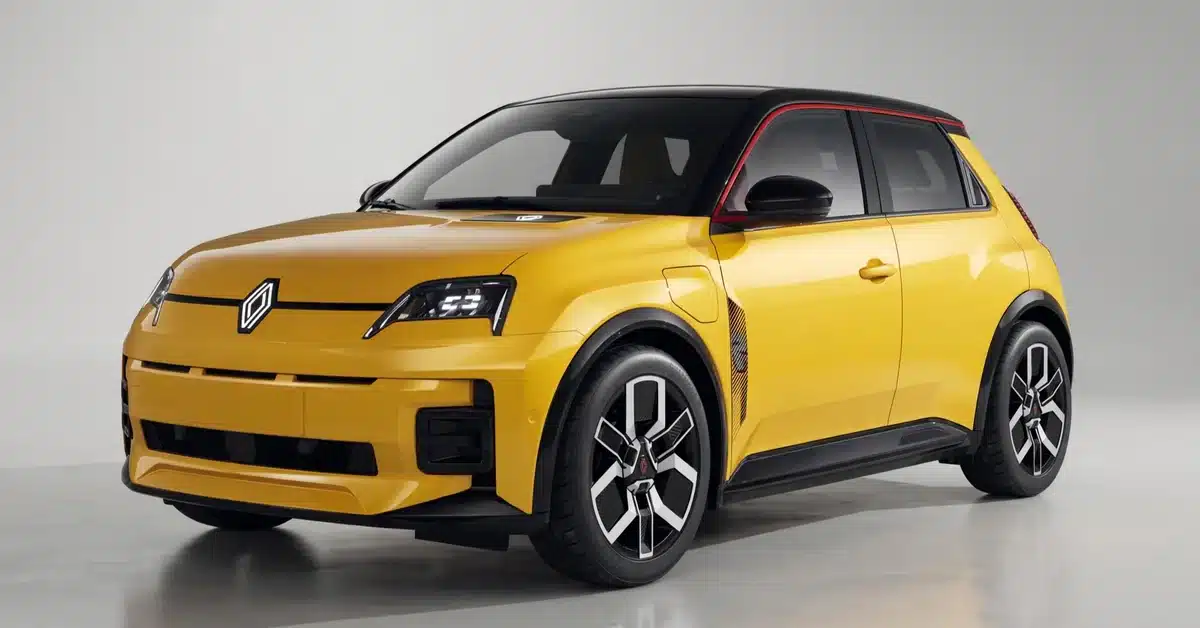
The Renault 5 E-Tech battery story now comes in three sizes. The car launched with two nickel-based packs — 40 kWh and 52 kWh, both quoted by usable capacity — and an August 2026 update added a cheaper 36.5 kWh lithium-iron-phosphate version while stretching the original cars’ range. Every version is built at Douai in northern France, on Ampere’s AmpR Small platform.
One point needs correcting wherever it appears, because it changes how the car’s battery should be described: the cells are made by AESC, an independent specialist supplier — not by Renault. Renault’s own Ampere operation assembles the packs at Douai, and AESC’s own cell plant next door only began producing in June 2025, so the earliest cars run on imported cells. The sections below keep that distinction straight.
The Renault 5 is not sold in the United States, and an Australian launch is blocked by a local design rule (covered under Prices), so this guide works in WLTP range figures and European and UK prices, with the market named on each one.
The Renault 5 E-Tech uses a 40 kWh or 52 kWh NMC battery — Renault quotes usable capacity — with WLTP range up to 430 km (267 miles) on updated 52 kWh cars; a new entry version adds a 36.5 kWh LFP pack (305 km). DC charging peaks at 80 kW (40 kWh) or 100 kW (52 kWh). The battery warranty is 8 years or 100,000 miles in the UK (160,000 km in Europe) with a 70% capacity floor. Renault publishes no replacement pack price.
Key figures: 40 kWh — 312 km WLTP (315 km updated) · 52 kWh — 410 km (430 km updated) · 36.5 kWh LFP — 305 km · cells by AESC, packs assembled at Douai · Euro NCAP 4 stars (2024)
Renault 5 E-Tech Battery: Sizes, Cells and Construction
The choice is 40 or 52 kWh of NMC in the established cars, or a 36.5 kWh LFP pack in the new entry version — and Renault’s headline figures are usable capacity.
| Version | Chemistry | Capacity (usable) | Motors | WLTP range | DC peak |
|---|---|---|---|---|---|
| 40 kWh Urban Range | NMC | 40.0 kWh (gross ~43*) | 95 or 120 hp | 312 km / 194 miles (315 km updated) | 80 kW |
| 52 kWh Comfort Range | NMC | 52.0 kWh (gross ~55*) | 150 hp | 410 km / 252 miles (430 km / 267 miles updated) | 100 kW |
| 36.5 kWh Five (new) | LFP | 36.5 kWh | 110 hp | 305 km / 190 miles | 80 kW |
*Gross figures are EV Database estimates — Renault publishes only the usable number. The 36.5 kWh Five launched with the August 2026 update, starting in France; market roll-out varies.
Renault sells both NMC cars by their usable capacity and publishes no gross figure, which is why the estimates in the table are labelled. The 40 kWh pack pairs with a 90 kW (120 hp) motor in most versions and a 70 kW (95 hp) motor in the entry Five, while the 52 kWh pack comes only with the 110 kW (150 hp) motor; all versions are front-wheel drive with a 150 km/h top speed.
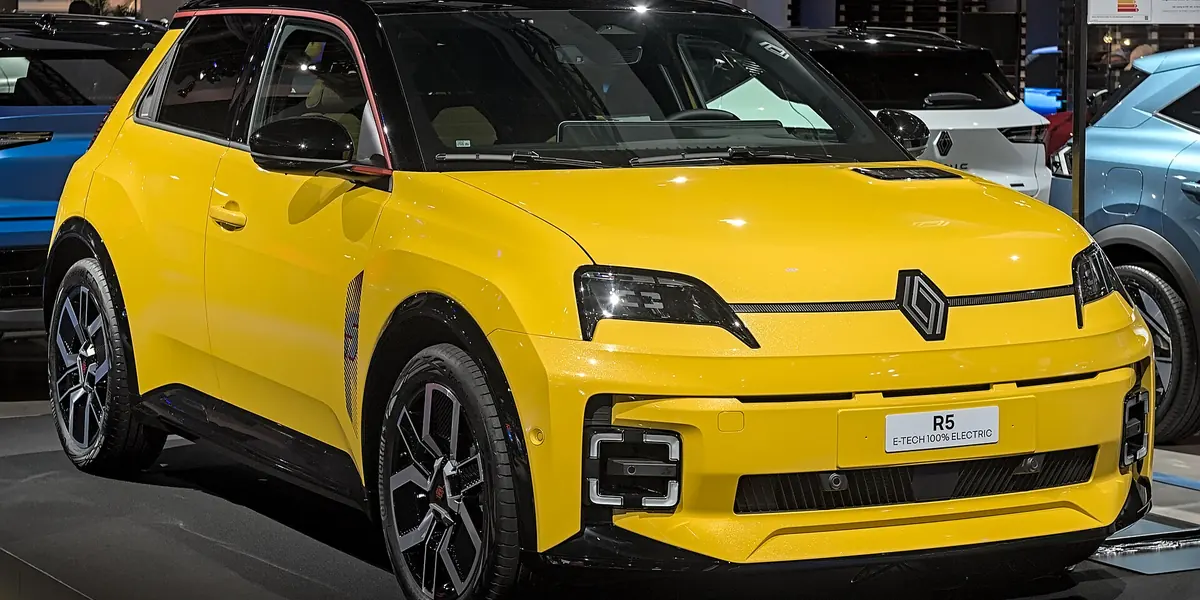
Quick view: Three packs — 40 kWh NMC, 52 kWh NMC and a new 36.5 kWh LFP Five — all quoted by usable capacity, with DC peaks of 80 or 100 kW.
Where the Renault 5’s Batteries Come From
Who makes the Renault 5’s cells?
The cells are AESC’s, the pack assembly is Renault’s — and the French-cell story only starts in mid-2025. AESC — Envision AESC, headquartered in Japan and majority-owned by China’s Envision Group — is one of the world’s established cell makers and a Renault supplier since the group’s 2021 battery strategy named it a partner. It is not a Renault subsidiary or affiliate, and descriptions of the Renault 5’s cells as “in-house” are wrong: what Renault’s Ampere division does in-house is assemble the finished packs at Douai, a short distance from where the cars are built.
When did the Douai cell plant open?
AESC’s own Douai gigafactory, built roughly 50 metres from the vehicle plant, was inaugurated in June 2025 with an initial capacity of about 10 GWh, making NMC cells initially for the Renault 5. Cars built from October 2024 to mid-2025 therefore cannot contain Douai-made cells — theirs came from AESC’s existing plants abroad. A “French battery” description only fits cars built after the plant opened.
Why do the two packs get different UK grants?
That supply chain is also the correct explanation for the UK’s Electric Car Grant banding. Since the grant began in July 2025, versions whose batteries come through the low-carbon Douai chain qualify for the higher £3,750 band — the current 52 kWh cars — while the 40 kWh car sits in the £1,500 band. Both packs use the same AESC cells assembled in the same place; the banding follows the grant’s sourcing criteria, not an in-house-versus-imported split between the two packs.
Renault 5 Charging, Heat Pump and V2G
DC charging peaks at 80 or 100 kW depending on the pack, the heat pump is standard in the UK, and the famous V2G feature is — for now — a French service, not a UK one. Renault claims 15–80% in 30 minutes for both NMC packs, and ADAC’s summer Autotest found the 52 kWh car matched that rapid-charging claim.
EV Database models a 10–80% session at about 31 minutes for the 52 kWh car (averaging ~75 kW) and 32 minutes for the 40 kWh car, which is the more comparable figure against other cars’ 10–80% quotes. Note one trap at the bottom of the range: the original entry Five with the 40 kWh pack had no DC fast charging at all, while the new LFP Five restores it at 80 kW.
How long does charging take on AC?
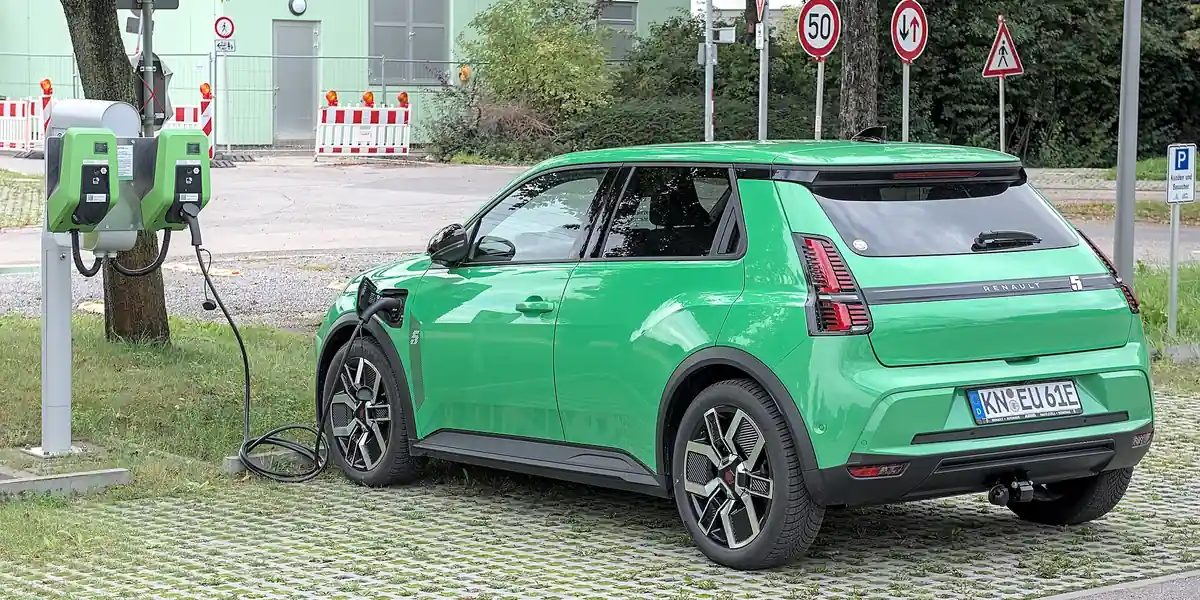
Every NMC car carries an 11 kW three-phase AC charger: EV Database’s full-charge times are 4 hours 30 minutes (40 kWh) and 5 hours 45 minutes (52 kWh) at 11 kW, 6 hours 30 and 8 hours 30 at 7.4 kW single-phase, and about 20 and 27 hours on a 2.3 kW domestic socket. The new LFP Five charges more slowly on AC, at 6.6 kW. A heat pump is standard on all UK models, and the battery preconditions automatically when a charger is set as the navigation destination.
Can the Renault 5 power your home or the grid?
Bidirectional charging needs separating into hardware and service. The hardware is fitted across the NMC range: an 11 kW bidirectional AC onboard charger that supports vehicle-to-load and vehicle-to-grid. Vehicle-to-load works anywhere through Renault’s adapter, delivering up to 3.7 kW — but the adapter is a £100 option on current UK specification, not an included accessory.
Vehicle-to-grid is different. The only commercial V2G service for this car is Mobilize Power in France, launched in October 2024, and it requires a bidirectional wallbox costing €2,143 plus a Mobilize electricity contract; even in France the base Five version is excluded. No Renault V2G service operates in the UK — one was planned for 2025 and had not launched as of late 2026 — so UK owners cannot yet sell energy back at peak hours, however capable the car is.
Renault 5 Real-World Range
Expect roughly 200 miles from the 52 kWh car in mixed real use, about 165–175 miles in cold weather, and around 160 miles combined from the 40 kWh car. EV Database’s estimates (its own modelling, labelled as such) put the 52 kWh car at about 205 miles combined, 240 in mild city use and 175 combined in cold weather, falling to about 145 miles on a cold motorway run. The 40 kWh car’s combined estimate is about 160 miles, with roughly 135 in cold combined use. These are estimates to plan around, not test results.
What do the measured tests show?
Measured results anchor the bigger pack. ADAC’s Ecotest recorded 17.3 kWh/100 km including charging losses — against a 14.4 WLTP rating — for a derived range of 345 km. What Car?’s winter test calculated 166 miles for the 52 kWh car, and Carwow found about 200 miles achievable over a motorway-heavy week; a six-month UK long-term test never saw more than 224 miles displayed on a full charge, dropping toward 200 as the weather cooled. Sitting in traffic with the heating running draws from the same pack, which is why cold, stationary use eats range faster than the trip computer first suggests.
The Updated Renault 5 Range for 2027
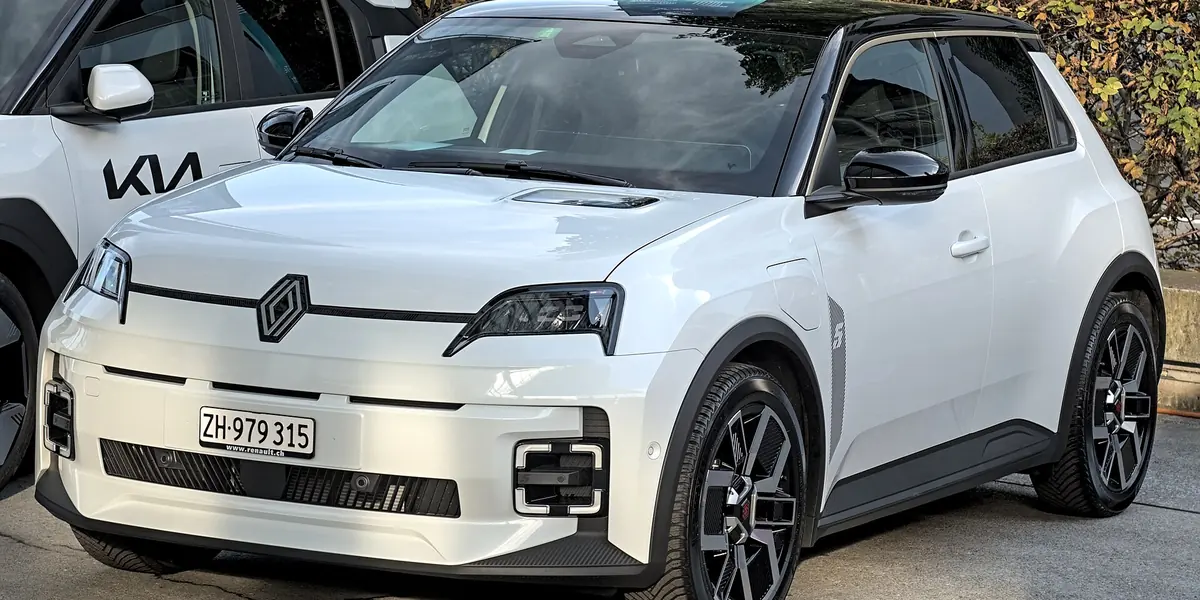
From the August 2026 update, the same NMC batteries go further — 315 km for the 40 kWh car and 430 km for the 52 kWh — and a cheaper LFP version joins underneath. Renault achieved the range gains through aerodynamics and battery-electronics optimisation, not a chemistry change: the 40 and 52 kWh packs remain NMC. Reports that the range “switched to LFP” misread the update — the LFP battery belongs only to the new entry Five version, which pairs its 36.5 kWh cell-to-pack battery with the 110 hp motor for 305 km of WLTP range, replacing the 40 kWh Five in the markets where it launches, France first.
Is one-pedal driving an over-the-air update?
One widely repeated claim about the updated cars needs correcting: one-pedal driving was not added by an over-the-air update. It is a production change fitted to cars built from late January 2026 in Techno trim and above, and it cannot be retrofitted to earlier cars — an existing owner cannot download it.
What do the updated cars cost in the UK?
UK orders for the updated range opened on 24 September 2026. The entry Evolution with the 40 kWh battery starts at £21,495 including the £1,500 Electric Car Grant, and the 52 kWh Techno+ costs £23,945 including the higher £3,750 grant.
Renault 5 Prices: What the Car Costs
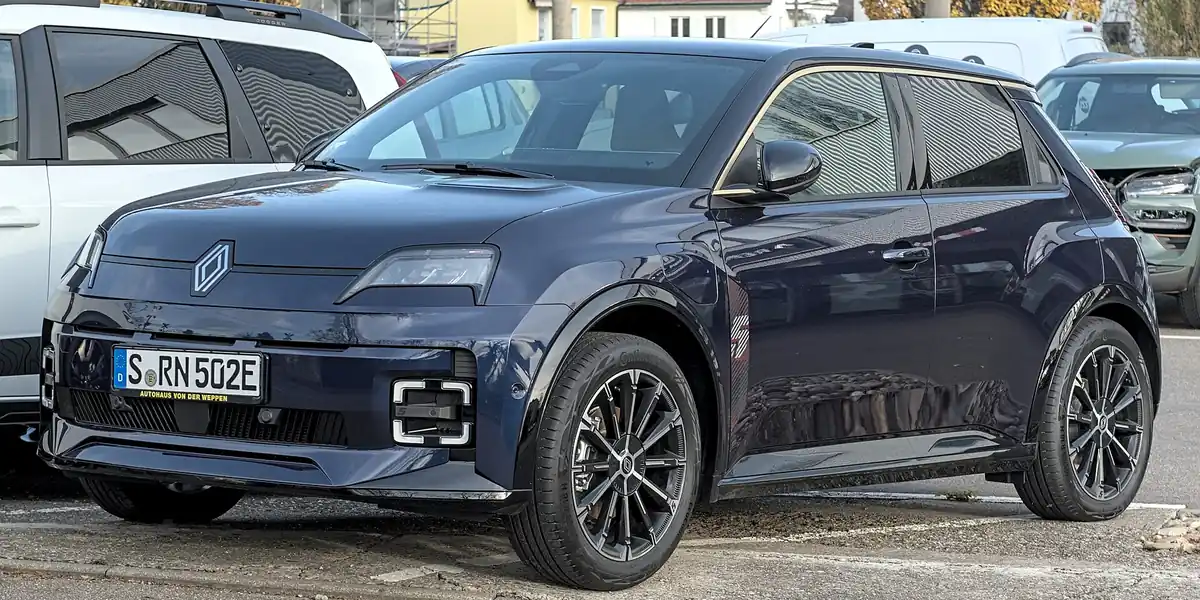
France launched the car from €25,000; the UK launched it at £22,995 in January 2025, and updated UK cars now start at £21,495 with the grant. French orders opened in May 2024 with the 52 kWh car — Techno at €32,900 and Iconic Cinq at €34,900 — followed by the 40 kWh Evolution at €27,900 and the entry Five at €25,000 in early 2025.
UK prices were announced in November 2024 from £22,995 before any grant existed, with orders from January 2025 and the first deliveries that spring. The model’s success since is a matter of record: the 100,000th Renault 5 was built at Douai in December 2025, fifteen months after launch — a production milestone, and the car is the 2025 European Car of the Year.
Where is the Renault 5 not sold?
The car is not sold in the United States and Renault has announced no plan to sell it there. Australia is a different story: Renault Australia wants the car but says a local design rule requiring a child-seat top-tether anchor in every rear position blocks it, with compliance work on the rear bench alone estimated at about €3 million. The door is described as never fully closed, but no Australian launch is planned.
Renault 5 Battery Replacement Cost
No official or dealer replacement price for either Renault 5 battery pack has been published anywhere — any figure quoted as one should be treated with suspicion. Renault does not list a pack price, and no dealer quote for a Renault 5 traction battery appears in reputable coverage. Searches for a price mostly return 12-volt auxiliary batteries — including units listed for the original 1970s Renault 5, a different car and a different battery entirely — which have nothing to do with the cost of a traction pack. For how EV pack replacements are priced when they do happen, see our guide to what an EV battery replacement costs.
In practice the warranty does the financial work for years yet: a pack that falls below 70% of its original capacity inside the warranty period is Renault’s problem, not the owner’s. How long the battery lasts is the next question.
Quick view: No replacement pack price is published anywhere, so any figure quoted as one should be treated with suspicion — the 8-year/100,000-mile warranty covers capacity below 70% in the meantime.
How Long Will the Renault 5’s Battery Last, and How Is Its Health Checked?
There is no Renault 5 degradation dataset yet — the fleet is too young — so any percentage-per-year figure for this car would be invented. The oldest Renault 5s are from late 2024, and no large state-of-health study of the model exists. What exists is the warranty floor: Renault guarantees at least 70% of original capacity for 8 years or 100,000 miles in the UK (160,000 km in Europe), so a faster-than-expected decline inside that window is covered. Owners can follow the car’s own range behaviour over time, and a dealer can read the pack’s state of health with diagnostic equipment — worth doing before buying a used example.
How should owners charge the packs?
The established habits apply: the NMC packs are happiest charged to about 80% for daily use and to 100% for trips, while the new LFP Five can be charged to 100% regularly, which also keeps its charge reading calibrated. Renault’s long Zoe production run gives it deep electric-car experience, but experience is not a degradation figure, and none is claimed here.
Renault 5 Battery Warranty and Recalls
The battery warranty is 8 years or 100,000 miles in the UK with a 70% capacity floor — and the recall record includes one small battery-cell action from 2026. In Europe the same battery cover runs to 8 years or 160,000 km. The UK vehicle warranty is three years, with unlimited mileage for the first two years and a 100,000-mile total cap for electric cars in the third. Unlike some rival brands, Renault offers no service-activated warranty extension for this car — extended cover is a paid product, not something earned through dealer servicing.
Which recalls and service actions affect the Renault 5?
Two service actions matter. In March 2026 the EU Safety Gate registered a formal recall (alert SR/00796/26) for Renault 5s built between 12 December 2025 and 28 January 2026: a production anomaly in battery cells supplied for the 52 kWh pack’s construction can cause anode delamination, with charging errors and, in the worst case, overheating and fire risk. Volumes were small — Renault Germany reported just four affected cars there — and owners were contacted for the remedy.
Earlier, in February 2025, Renault ran a service campaign (not a formal recall) reprogramming the inverter control unit on 15,722 Renault 5s and Alpine A290s built in late 2024, for a potential failure to start. Owners of early cars also report “check electrical system” warnings and occasional 12-volt drain; those are owner-reported complaints rather than the subject of any recall, and are recorded here as such.
Renault 5 Safety Rating
The Renault 5 holds a four-star Euro NCAP rating from 2024 — a good result, but not the five stars sometimes assumed for it. Euro NCAP published the rating in December 2024: 80% for adult occupant protection, 80% for child occupants, 76% for vulnerable road users and 68% for safety assist. The Alpine A290 was tested alongside it and shares the rating. The car has not been assessed by Green NCAP.
Quick view: Four stars overall from Euro NCAP in 2024 — 80% adult, 80% child, 76% vulnerable road users, 68% safety assist — and no Green NCAP assessment.
The Renault 5’s Sibling Cars: A290, Renault 4 and Micra
Three other cars share this car’s hardware, and their figures are close enough to cause real confusion — here is where each one differs. The Alpine A290 is the performance version: the same platform and the same 52 kWh battery, assembled at Douai, but with Alpine’s own motors (180 hp, or 220 hp in the GTS) and a shorter 380 km WLTP range. It shares the Renault 5’s four-star Euro NCAP rating and was included in the February 2025 inverter campaign. There is no 40 kWh A290.
What about the Renault 4 and the Nissan Micra?
The Renault 4 E-Tech uses the same 40 and 52 kWh packs in a taller crossover body built at Maubeuge, which costs it a little range; its own October 2026 update added a 37 kWh LFP entry version. Nissan’s Micra EV is a restyled Renault 5 built on the same Douai line with the same batteries, homologated at slightly different ranges (310 and 408 km at launch). The closest small-car alternative on a different platform is Citroën’s ë-C3, covered in our Citroën ë-C3 battery guide.
What shares only the name?
Finally, the name itself: the original Renault 5 of 1972–1996 was a petrol car (the mid-engined Turbo was a rally special), and the 2025 Renault 5 Turbo 3E is a separate limited-run halo car with in-wheel motors — neither shares anything with this car but the badge. The Renault Zoe that the 5 replaces is fenced off for a subtler reason: its ZE50 version also quotes “52 kWh”, but that is a different, older pack with much slower charging.
Frequently Asked Questions
What battery sizes does the Renault 5 E-Tech come with?
Two NMC batteries — 40 kWh and 52 kWh, both quoted by usable capacity — plus, from the August 2026 update, a 36.5 kWh LFP pack in the new entry Five version. Gross capacities for the NMC packs are not published by Renault; EV Database estimates about 43 and 55 kWh.
Is the Renault 5 battery NMC or LFP?
Both, depending on the version. The established 40 and 52 kWh cars are NMC; the new entry Five is LFP — the range’s first iron-phosphate battery. The 2026 range increases on the NMC cars came from aerodynamics and electronics, not a chemistry change.
Who makes the Renault 5’s battery, and where?
The cells are made by AESC, an independent supplier; Renault’s Ampere division assembles the packs at Douai in France, where the cars are built. AESC opened its own cell plant at Douai in June 2025, so earlier cars use cells made at AESC plants abroad.
How far does the Renault 5 go in the real world?
About 200 miles for the 52 kWh car in mixed use, roughly 165–175 miles in winter (What Car? measured 166), and about 160 miles combined for the 40 kWh car on EV Database’s estimates. Official WLTP figures run to 430 km (267 miles) on updated 52 kWh cars.
How long does the Renault 5 take to charge?
Renault claims 15–80% in 30 minutes on DC for both NMC packs (peaks of 80 and 100 kW), and EV Database models 10–80% at about 31–32 minutes. On the standard 11 kW AC charger, a full charge takes about 4 hours 30 minutes (40 kWh) or 5 hours 45 minutes (52 kWh).
Does the Renault 5 have V2G?
The car has the hardware — an 11 kW bidirectional AC charger across the NMC range — but the only V2G service is Mobilize Power in France, which needs a €2,143 bidirectional wallbox and a contract, and excludes the base Five. No V2G service operates in the UK yet. Vehicle-to-load works via an adapter (a £100 option) at up to 3.7 kW.
How much does a Renault 5 battery replacement cost?
No official or dealer price has been published for either pack, and no credible figure circulates. The battery is warranted to at least 70% capacity for 8 years or 100,000 miles in the UK, which covers the realistic risk for years to come.
What warranty does the Renault 5 battery have?
Eight years or 100,000 miles in the UK (160,000 km in Europe) with a 70% capacity floor. The vehicle warranty is three years, unlimited mileage for the first two years and capped at 100,000 miles for electric cars in the third.
Can I get one-pedal driving on my Renault 5?
Only if the car was built with it. One-pedal driving is fitted to cars built from late January 2026 in Techno trim and above; it was not an over-the-air update and cannot be retrofitted to earlier cars.
Conclusion
The Renault 5’s battery story is better than the version of it that circulates — provided it is told accurately. Two honest NMC packs quoted by usable capacity, a heat pump as standard, genuinely rapid charging for the class, and now a cheaper LFP entry version and longer ranges — all of it holds up.
What does not hold up is the garnish: cells described as in-house when they come from an independent supplier, a French grid service presented as a standard feature, and an update that was never an update. Stripped of those, this remains the benchmark small EV battery package in Europe — and for buyers cross-shopping it against Peugeot’s entry, our Peugeot e-208 battery guide covers the closest rival in the same detail.
