
Alfa Romeo Junior Elettrica Battery: Complete Guide

Facts checked against Alfa Romeo and Stellantis releases, EV Database, Euro NCAP’s published records and named road tests (Springer Professional, AutoTrader, The Car Expert).
The Junior has the best origin story of any small EV: revealed in Milan on 10 April 2024 as the Alfa Romeo Milano, it was renamed Junior five days later after Italy’s industry minister objected that a car called Milano could not legally be built in Poland — the Junior is built at Tychy — citing the 2003 law against misleadingly Italian-sounding names. Alfa Romeo changed the name, kept the car, and in doing so launched its first fully electric production car.
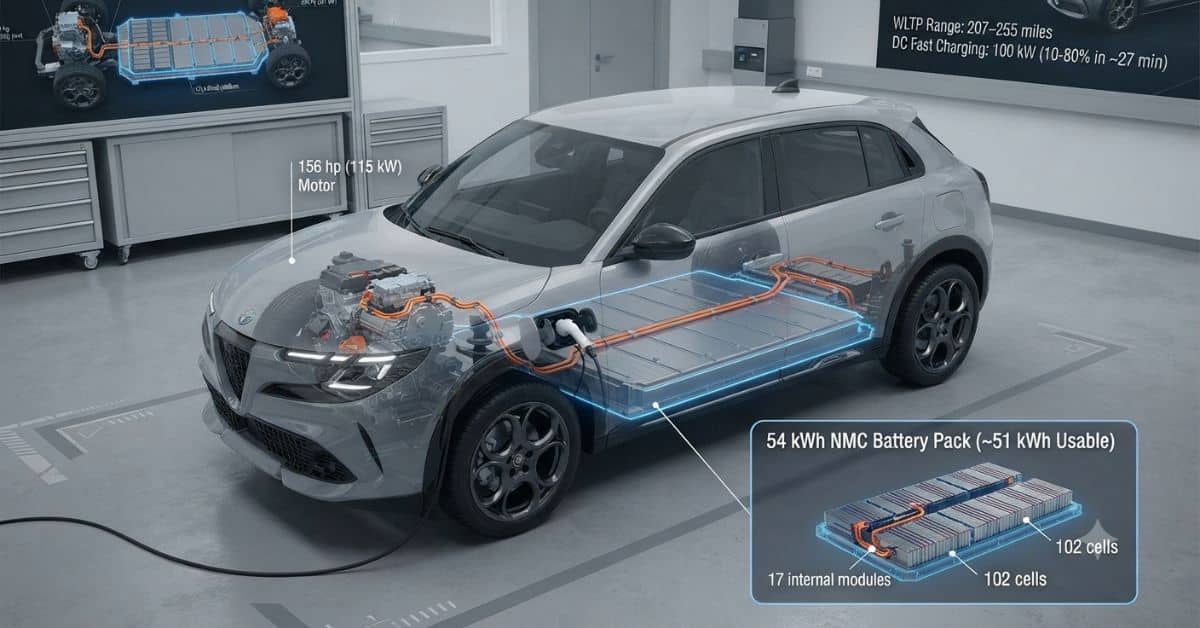
Every electric Junior uses the same battery: a 54.0 kWh NMC pack with 50.8 kWh usable. What differs is the motor in front of it — a 156 hp standard car, or the 280 hp Veloce. This guide covers both, and keeps the separate petrol-hybrid Junior Ibrida out of the figures entirely.
Key figures: 102 cells · 377 V nominal · platform e-CMP2 (not STLA Small) · battery warranty 8 years / 100,000 miles · UK from £33,900 (£30,900 with both grants)
Alfa Romeo Junior Elettrica Battery Specs
One pack, two motors — and the platform named correctly, because the page you are replacing named its successor by mistake.
| Elettrica (156 hp) | Elettrica Veloce (280 hp) | |
|---|---|---|
| Battery (gross / usable) | 54.0 / 50.8 kWh | 54.0 / 50.8 kWh |
| Chemistry | NMC | NMC |
| Motor | 115 kW (156 PS), 260 Nm, FWD | 207 kW (280 PS), 345 Nm, FWD |
| WLTP range | up to 255 miles (412 km) | 207 miles (334 km) |
| 0–100 km/h · top speed | 9.0 s · 93 mph | 5.9 s · over 124 mph |
| DC charging | 100 kW · 10–80% ~30 min | 100 kW · 10–80% ~30 min |
| AC charging | 11 kW | 11 kW |
| Heat pump | Standard (UK) | Standard (UK) |
The pack holds 102 prismatic cells at a nominal 377 volts. EV Database lists its cathode grade as NMC811 — a database attribution worth knowing, but not an Alfa Romeo specification: Alfa Romeo itself publishes only “NMC”, and the cell supplier is not officially published for this car at all.
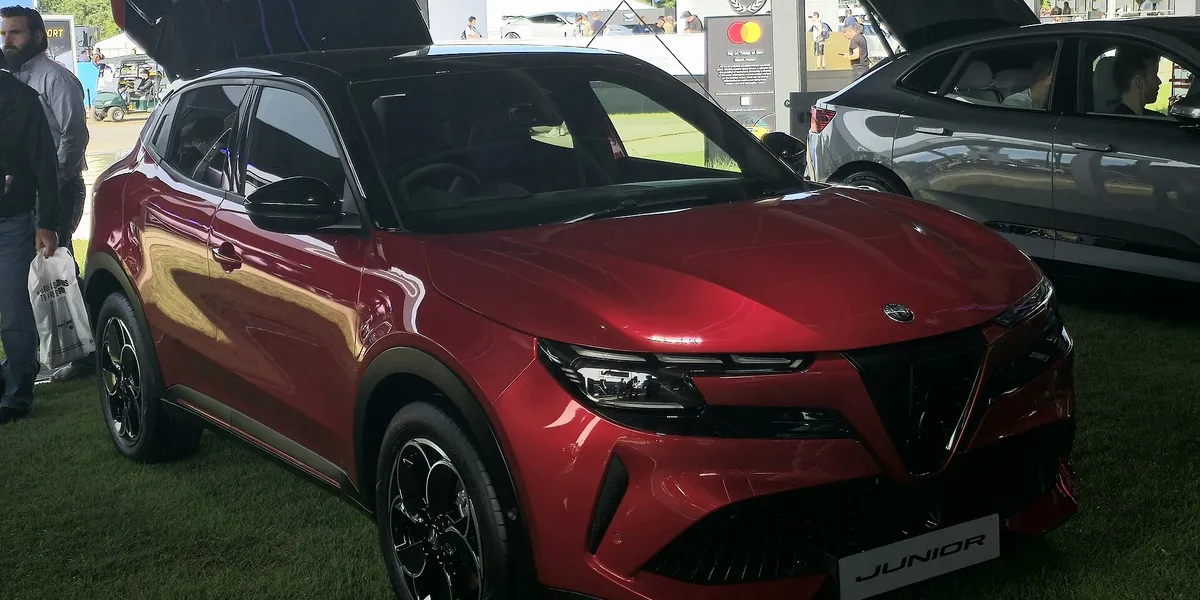
Quick view: One pack for both motors — 54.0 kWh gross / 50.8 kWh usable NMC, 102 cells at 377 V nominal; 100 kW DC charging, 11 kW AC; heat pump standard in the UK.
The Platform: e-CMP2 and Its Siblings
The Junior is the Alfa-badged member of Stellantis’s e-CMP2 family — which is why its battery numbers look familiar.
The same 54 kWh pack family serves the Jeep Avenger Electric, Fiat 600e, Peugeot e-2008 and Vauxhall Mokka Electric; the Junior is built at Tychy in Poland alongside the Avenger and 600e. CMP is a multi-energy platform — the same base also carries the petrol and hybrid Juniors — and Alfa Romeo’s work went into the tuning, steering and design rather than new battery hardware. That honesty frames the whole car: proven electricals, Alfa character.
The Veloce: 280 hp Through the Front Wheels
The Veloce nearly doubles the standard car’s power — and spends real hardware, not software, on putting it down.
The Veloce’s 207 kW (280 PS) motor delivers 345 Nm through a Torsen ‘D’ mechanical limited-slip differential — a first on a front-wheel-drive EV, developed from the old 147 Q2’s unit. The chassis sits 25 mm lower on stiffer anti-roll bars with a widened track, the front brakes grow to 380 mm discs with four-piston calipers, and the steering (14.6:1) is the most direct in the segment. The cost is range: 207 miles WLTP against the standard car’s 255, from the identical battery.
DNA Drive Modes: What They Actually Change
Three modes, and their real effect is power: Advanced Efficiency caps the standard car at about 79 bhp.
On the standard Elettrica, Advanced Efficiency restricts output to roughly 79 bhp, Natural gives about 109 bhp, and only Dynamic releases the full 156 hp — figures UK reviews document and the reason the efficiency mode genuinely extends range rather than merely suggesting it. On the Veloce, Advanced Efficiency caps torque at 300 Nm, while Dynamic delivers full power and torque and disengages regenerative braking in favour of mechanical braking; a separate B-mode button adds stronger regeneration in everyday driving. What DNA does not do — despite what this page used to claim — is adjust the suspension: the Veloce’s lowered setup is fixed, and the car has no adaptive dampers.
Alfa Romeo Junior Elettrica Charging
100 kW DC with Alfa’s own claim stated exactly, 11 kW AC, a standard heat pump — and two absences worth printing.
Alfa Romeo quotes 10–80% in about 30 minutes at up to 100 kW DC (“less than 30 minutes” in the launch release; dealer-carried Alfa text also quotes 20–80% in 27 minutes, and EV Database models 10–80% at 28 minutes). On AC, the standard 11 kW charger fills the battery in 5 hours 45 minutes by Alfa’s figure (about 8¼ hours on a 7.4 kW home supply; a 2.3 kW socket models to roughly 26 hours). The heat pump is standard across the UK range — base cars included — though EV Database’s continental data records some non-UK Veloces without one, so the statement is a UK one. Two honest absences: the Junior has no battery preconditioning and no vehicle-to-load output.
Range: WLTP, Estimates and Road Tests
255 miles is the headline; about 195 is the modelled everyday figure for the standard car, and the Veloce gives back roughly 50 miles for its pace.
Homologation puts the standard car at 412 km (TEL) to 398 km (TEH) depending on trim and wheels — the 247–256-mile band behind the 255 headline — and the Veloce at 334 km (207 miles). EV Database’s real-range estimates (labelled estimates, not measurements) centre on ~195 miles combined for the standard car and ~185 for the Veloce.
What do the measured road tests show?
Measured tests agree in shape: Springer Professional’s instrumented Veloce test averaged ~18 kWh/100 km with about 250 km of motorway range; AutoTrader South Africa found a realistic 250–260 km in mixed Veloce driving; The Car Expert advises expecting around 200 miles from the standard car, and about 160 from a hard-driven or cold-weather Veloce. The Volvo EX30 is the premium-badged rival most buyers weigh against it.
Practicality: Boot Space
400 litres with the seats up, 1,265 folded — and no frunk.
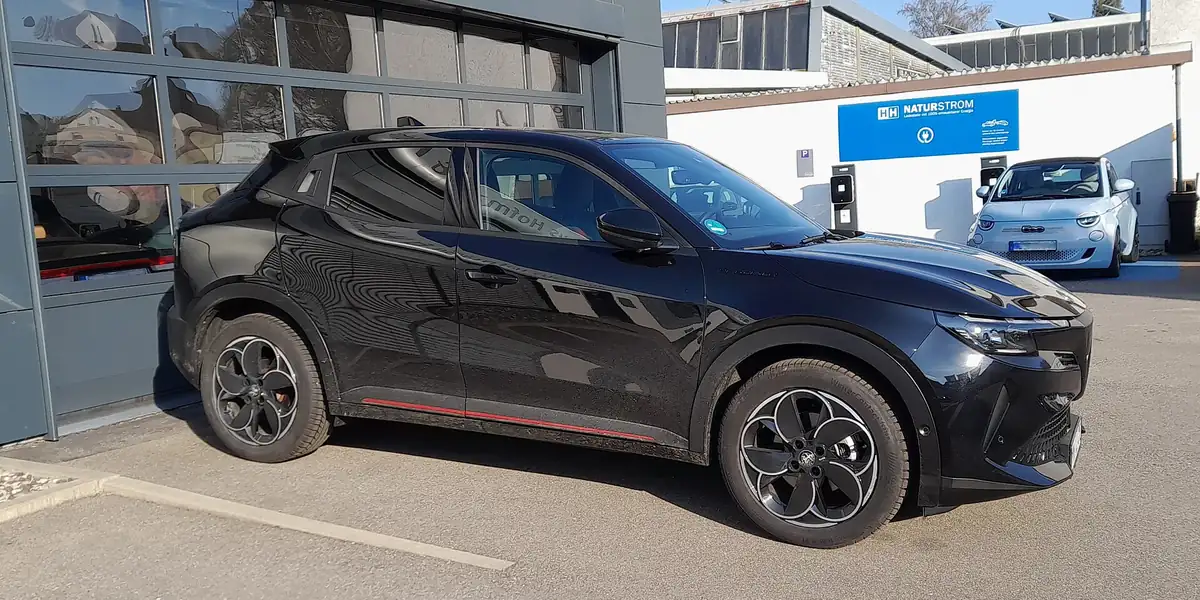
The Elettrica’s boot measures 400 litres (the hybrid’s slightly larger figure belongs to a different car), expanding to 1,265 litres with the rear seats folded. There is no front trunk; the charging cables live in the boot.
Prices and Grants: Three Numbers, Kept Apart
List price £33,900; government grant £1,500 on the 156 hp cars; Alfa’s own £1,500 on top of that — the £30,900 entry figure is real, and it is arithmetic, not a list price.
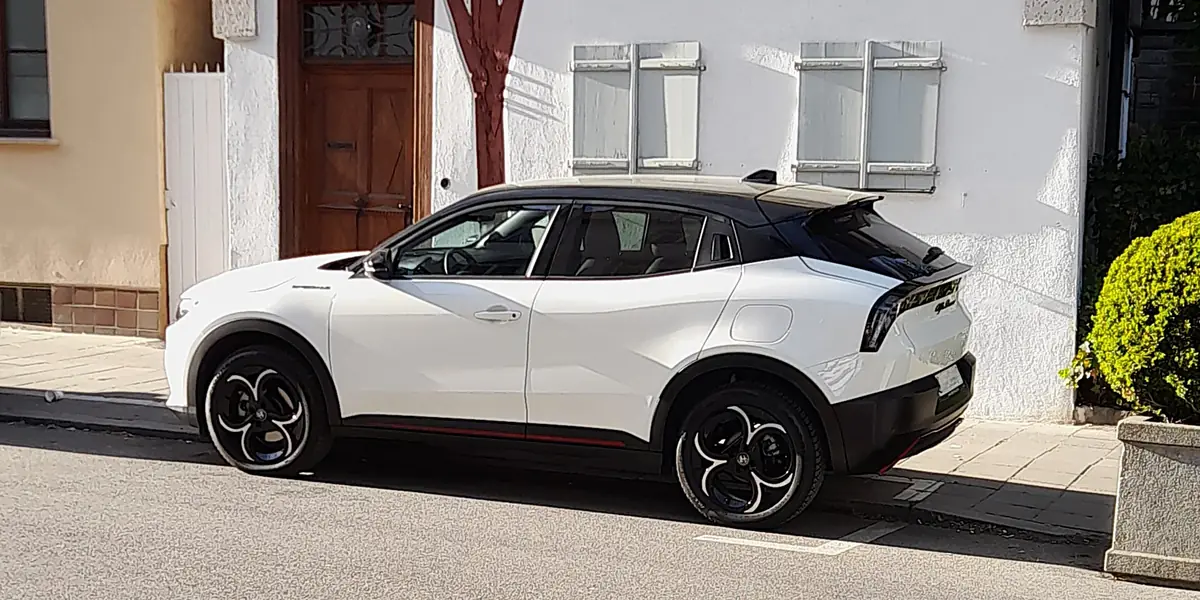
The Junior launched in June 2024 from £33,895. The current MY26 UK list runs Elettrica £33,900 · Ti £36,400 · Sport Speciale £39,100 · Veloce £42,300. (The “from £35,995” this page used to print was never the car’s entry price at any date, and the ~£33,095 figures circulating online are discounted or post-grant money.)
What grants apply?
Since the end of May 2026 the Junior qualifies for the government Electric Car Grant, Band 2 (£1,500) — on the Elettrica, Ti and Sport Speciale; the Veloce is excluded by the scheme’s price cap. Alfa Romeo’s own £1,500 EV grant runs additionally across the range, Veloce included, which is how the entry car can legitimately reach £30,900. In Ireland the Elettrica starts at €34,995 including VRT relief and the SEAI grant.
Degradation and the Battery Warranty
No degradation data exists for this car — and the warranty, at least, is a strong one with its floor printed.
The UK battery warranty is 8 years or 100,000 miles, guaranteeing at least 70% of original capacity (Europe: 8 years/160,000 km). The vehicle warranty is 3 years with unlimited mileage. No fleet study, manufacturer curve or model-specific measurement of Junior battery degradation has been published — the annual percentage this page used to quote was generic folklore, and it has been removed rather than repeated. The 12V battery is listed in Parkers’ specification data as an L2-AGM unit; nothing further about it is officially published.
Battery Replacement Cost
No official replacement price for the Junior’s battery exists in any market checked.
Alfa Romeo publishes no pack or module pricing for this car. Class-typical figures are in our guide to what an EV battery replacement costs — context only, not a Junior price.
Safety and Recalls: The Honest Position
Euro NCAP has not tested the Junior — there is no star rating, whatever any aggregator claims.
No Euro NCAP (or ANCAP) result exists for this car as of November 2026; a “4-star” figure circulating on aggregator sites is fabricated, and ratings earned by its platform siblings belong to those cars, not this one. On recalls, the Elettrica’s record is clean: no DVSA, KBA or EU Safety Gate action names the electric Junior. The Junior actions that do exist — a 48V starter-generator arcing campaign and a large 2026 hybrid fire-risk recall — name the Ibrida hybrid only; the electric car has neither a starter-generator nor a fuel system, and none of it can apply here.
Frequently Asked Questions
What battery does the Alfa Romeo Junior Elettrica have?
A 54.0 kWh nominal NMC pack with 50.8 kWh usable, 102 prismatic cells at 377 volts nominal, in a 400-volt system. Every electric Junior — standard and Veloce — uses this same battery.
Is the Junior Elettrica’s battery NMC or LFP?
NMC. Alfa Romeo publishes the chemistry as NMC without a grade; EV Database lists the cathode as NMC811, which is a database attribution rather than an Alfa specification. The cell supplier is not officially published.
Is the Junior on the STLA Small platform?
No — it is built on e-CMP2, Stellantis’s second-generation CMP architecture, shared with the Jeep Avenger and Fiat 600e. STLA Small is the newer successor architecture, not this car’s platform.
How far does the Alfa Romeo Junior Elettrica go on a charge?
WLTP: up to 255 miles for the 156 hp car (247–256 by trim and wheels) and 207 miles for the Veloce. Real-range estimates centre near 195 miles (standard) and 185 miles (Veloce), with road tests in that frame.
How long does the Junior Elettrica take to charge?
DC at up to 100 kW: 10–80% in about 30 minutes by Alfa Romeo’s claim. AC at 11 kW: 0–100% in 5 hours 45 minutes; about 8¼ hours on a 7.4 kW home supply.
Does the Alfa Romeo Junior Elettrica have a heat pump?
Yes — standard across the UK range, including the base car. (Some continental-market Veloces are recorded without one; the standard-fit statement is a UK one.) The car has no battery preconditioning and no vehicle-to-load output.
How much does the Junior Elettrica cost in the UK?
List prices (MY26): Elettrica £33,900, Ti £36,400, Sport Speciale £39,100, Veloce £42,300. The 156 hp cars also qualify for the £1,500 government Electric Car Grant, and Alfa Romeo’s own £1,500 grant stacks on top — the entry car can reach £30,900.
What is the battery warranty on the Junior Elettrica?
Eight years or 100,000 miles in the UK, guaranteeing at least 70% of original capacity (8 years/160,000 km in Europe). The vehicle warranty is 3 years, unlimited mileage.
What is the Junior Elettrica’s Euro NCAP rating?
It does not have one — Euro NCAP has not tested the Junior as of November 2026. Any star rating shown for this car on aggregator sites is not a real result.
Is the Junior Ibrida the same car?
No. The Ibrida is a 1.2-litre petrol mild-hybrid with a small 48V battery — a different powertrain with different figures and its own recalls, none of which apply to the Elettrica covered here.
Conclusion
The Junior’s proposition survives its fact-check intact: a proven 54 kWh NMC pack in the sharpest-driving car of its platform family, a genuinely special 280 hp Veloce, honest charging, a standard heat pump and a warranty with its floor in print.
What it needed was its own platform named, its real entry price, its drive modes quantified, and its missing crash-test rating stated instead of borrowed. That is the page it now has.
