
Dacia Spring Battery: 24.3 kWh LFP in Today’s Car, 26.8 kWh in the Earlier One

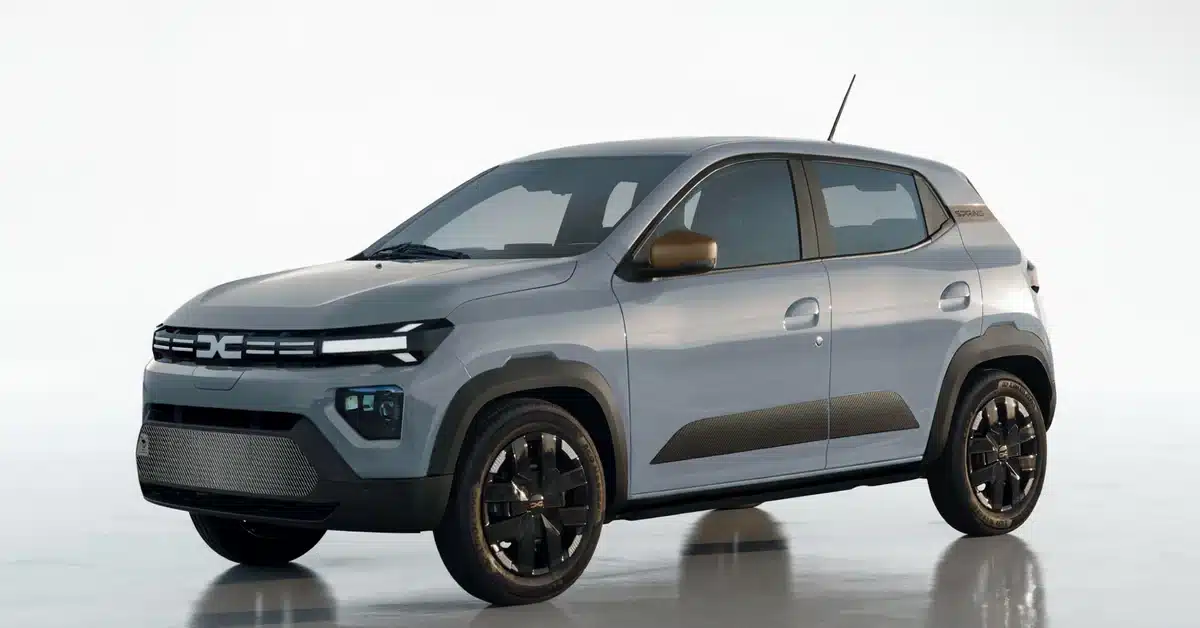
Two questions follow the Dacia Spring everywhere: how big is the battery, and is it LFP or NMC? Both answers changed between generations — here’s the short version, then the full story.
The Dacia Spring has used two different batteries. Springs on sale in the UK now — the Expression 70 and Extreme 100 — carry a 24.3 kWh lithium-iron-phosphate (LFP) pack, 24.0 kWh of it usable. The earlier car, from the original launch through the facelift, carries a 26.8 kWh pack (25.0 kWh usable) that EV Database lists as NMC. A newer generation with a 27.5 kWh usable LFP battery has been announced but is not on sale in the UK yet.
- Current pack: 24.3 kWh LFP (24.0 kWh usable)
- Earlier pack: 26.8 kWh (25.0 kWh usable)
- WLTP range: up to 140 miles combined, 195 miles urban (current car, UK figures)
- DC charging: 40 kW, 20–80% in 29 minutes (current car)
- UK battery warranty: 8 years / 100,000 miles, 75% capacity floor
What battery size does the Dacia Spring have?
It depends on the version: 24.3 kWh in the current car, 26.8 kWh in the earlier car, and 27.5 kWh usable in the next generation.
This is where most Spring write-ups go wrong: they describe one battery as if every Spring had it. In fact the car has already had two different packs, and a third is on the way with the next generation. The current UK car pairs the smaller pack with the newer chemistry; the earlier car pairs the bigger pack with the older chemistry. Size alone tells you very little unless you know which car you are looking at.
| Version | Battery (total) | Usable | Chemistry | WLTP range | DC charging |
|---|---|---|---|---|---|
| Expression 70 (current UK car) | 24.3 kWh | 24.0 kWh | LFP | 140 miles | 40 kW |
| Extreme 100 (current UK car) | 24.3 kWh | 24.0 kWh | LFP | 140 miles | 40 kW |
| Electric 45 (facelift) | 26.8 kWh | 25.0 kWh | NMC* | 142 miles (229 km) | 30 kW |
| Electric 65 (facelift) | 26.8 kWh | 25.0 kWh | NMC* | 142 miles (229 km) | 30 kW |
| Original Spring (launch version) | 26.8 kWh | 25.0 kWh | NMC* | 141 miles (227 km) | 30 kW |
| Next generation (not yet on UK sale) | 29.0 kWh | 27.5 kWh | LFP | 155 miles (250 km) | 50 kW (option) |
*Chemistry as listed by EV Database. Dacia has never published the earlier car’s battery chemistry officially — see the chemistry section below.
How much of the battery can you actually use?
The usable figure is the one that decides your range: 24.0 kWh in the current car and 25.0 kWh in the earlier one.
Every EV battery holds back a small buffer at the top and bottom to protect the cells, and the Spring is no exception. The gap here is small — under 2 kWh on both packs — which is typical of LFP and of budget packs generally. When you compare the Spring with rivals, compare usable figures, not the headline totals, because makers quote the two inconsistently.
Which battery does a used Spring have?
Any Spring from before the current 70 and 100 versions arrived has the 26.8 kWh pack; the 24.3 kWh LFP pack arrived with those versions.
This matters more than it sounds, because the two packs want different charging habits (covered below). If you are buying used, the version badge is the giveaway: Electric 45 and Electric 65 cars are the earlier pack, while Expression 70 and Extreme 100 cars are the LFP car. Do not let a listing’s claim of “LFP” settle it — check the version.
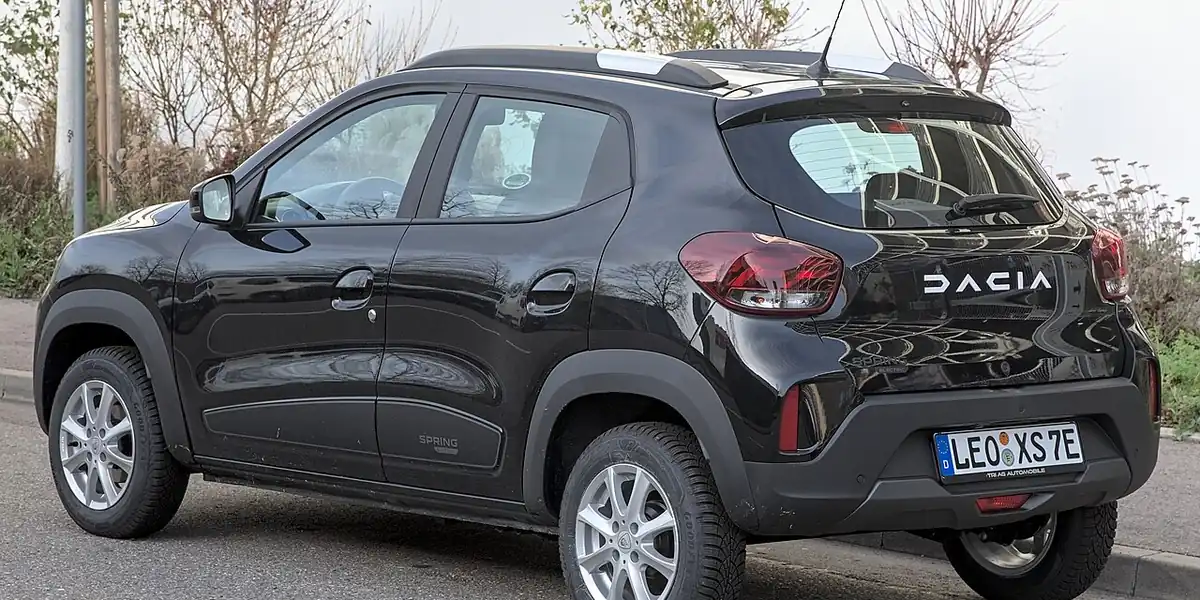
Is the Dacia Spring’s battery LFP or NMC?
The current car is officially LFP. The earlier car is listed as NMC by EV Database, and Dacia has never confirmed its chemistry officially.
When Dacia announced the current car, it stated in its own press material that the new 24.3 kWh battery uses lithium-iron-phosphate technology — and that this was the first LFP battery anywhere in the Renault Group. That is an official statement, from the maker, about the current car only. The same maker has never published an equivalent statement for the original or facelift cars: EV Database lists both as NMC, and that listing is the best public source there is, but it is a database listing, not a Dacia announcement.
So the honest answer has two halves. If your Spring is a current 70 or 100, its LFP chemistry is official. If it is an earlier car, NMC is the widely listed answer but not an officially confirmed one — and any source that states the whole Spring range “is LFP” is flattening a change that only happened with the current car.
Why does the chemistry difference matter?
Because the two chemistries age differently and charge differently, so the right habits for one Spring are the wrong habits for the other.
LFP cells contain no nickel and no cobalt, tolerate being charged to full without the same wear penalty, and are the cheaper chemistry to build — which is a large part of how the current car undercuts the earlier one’s launch price. NMC cells pack more energy into the same weight, but they prefer to live in the middle of their charge range. For a full explanation of the two families, see our LFP battery explainer; for how little cobalt each chemistry uses, see which EV battery chemistry uses the least cobalt.
Can you charge a Dacia Spring to 100% every day?
On the current LFP car, yes — that is normal LFP use. On the earlier cars, treat 100% as a trip setting, not a daily one.
This is the question the chemistry change actually answers. LFP packs are routinely charged to 100% — makers of LFP cars recommend regular full charges, partly because the pack’s voltage curve is so flat that the car needs full charges to keep its range estimate honest. The earlier Spring’s pack, listed as NMC, follows the usual NMC guidance: charge to around 80% for daily use and save 100% for days when you need the range. If you do not know which pack your car has, the version check in the battery-size section above settles it in seconds.
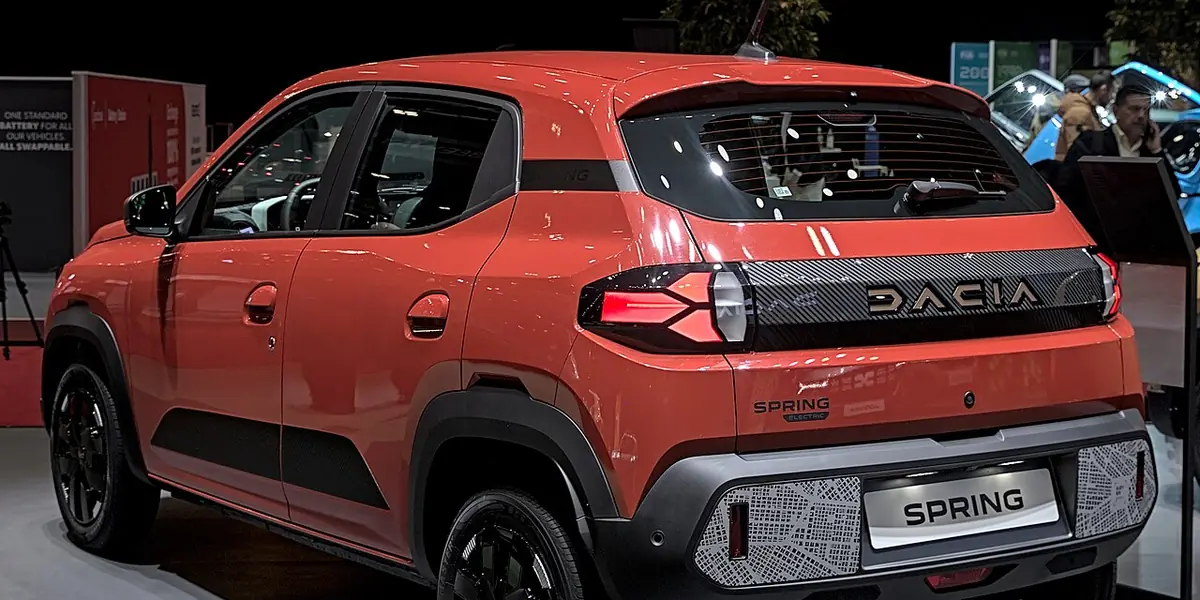
What range does the Dacia Spring get in the real world?
Officially 140 miles combined and 195 miles urban for the current car in the UK; independent real-range testing puts everyday range nearer 103 miles.
EV Database’s real-range estimate for the current car is 165 km, roughly 103 miles, against the 140-mile WLTP combined figure. The earlier car tests similarly: a 227–229 km WLTP rating and a real-range estimate of 160 km, roughly 99 miles. Neither figure makes the Spring a motorway car — it makes it what it was designed to be, a city and short-commute car whose numbers hold up best exactly where it will be used.
Why is the urban range figure so much higher?
Because the Spring uses very little energy at town speeds: 12.4 kWh per 100 km on the official cycle.
At urban speeds there is little aerodynamic drag to fight, and stop-start driving hands energy back through regenerative braking. A small, light car with a modest motor is at its most efficient in exactly those conditions, which is why the urban figure stretches to 195 miles while the combined figure — which includes faster roads — sits at 140. Judge the car on the figure that matches your driving.
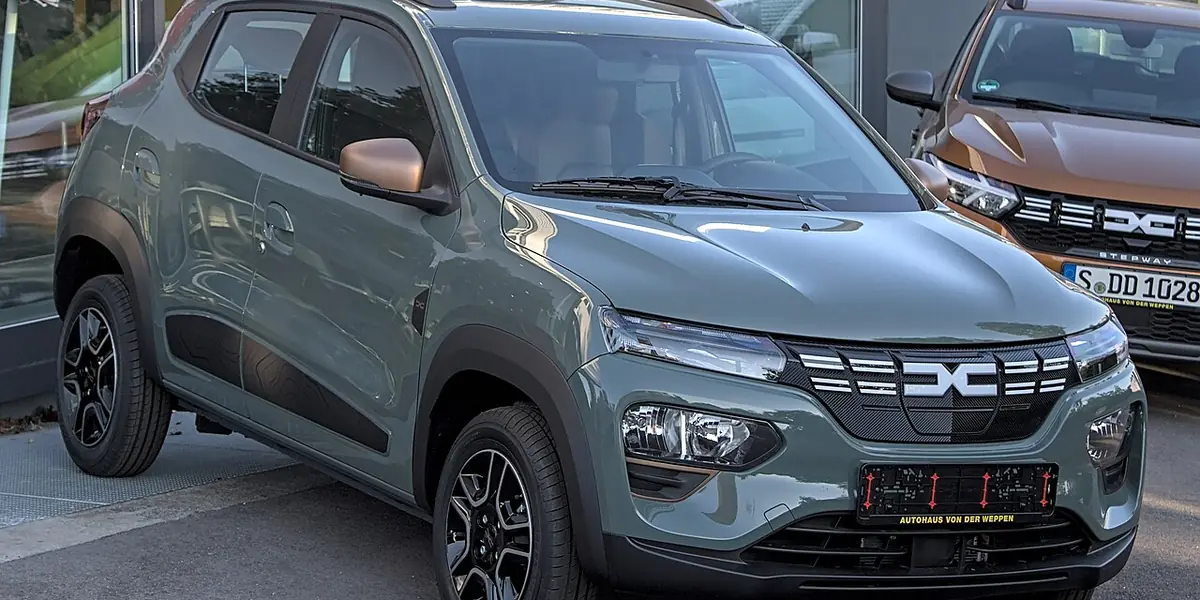
How fast does the Dacia Spring charge?
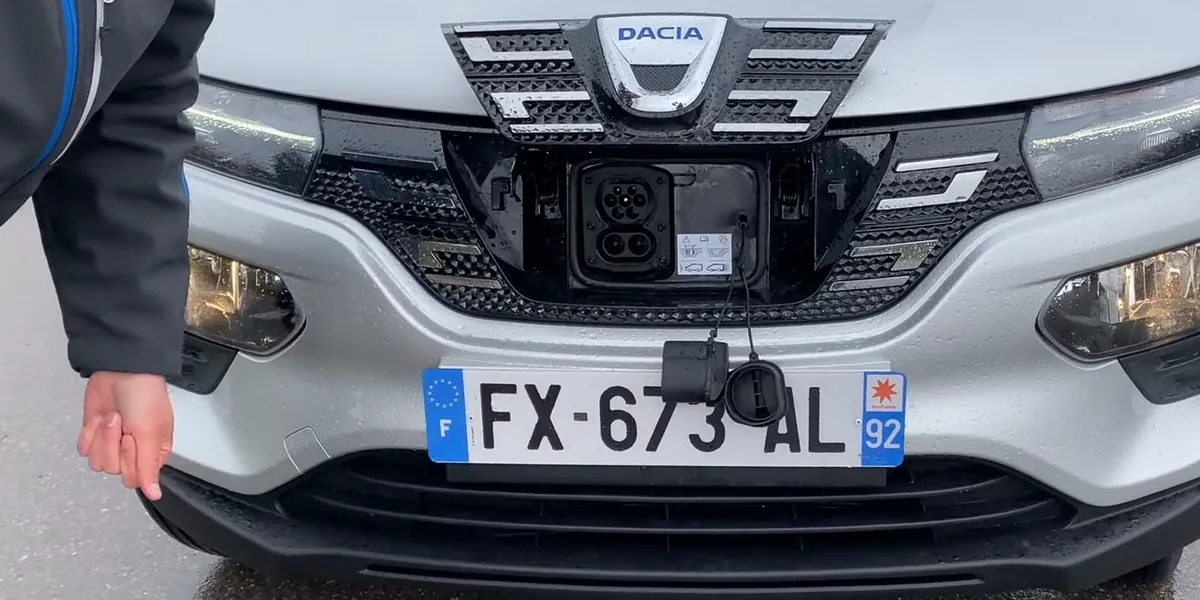
The current car charges at up to 40 kW on a DC rapid charger and up to 7 kW on AC; the earlier car peaks at 30 kW DC.
On AC, Dacia quotes up to 7 kW for the current car: a 20–80% charge takes about 5 hours on a home wallbox and about 11 hours on a domestic socket. On a DC rapid charger, the 40 kW peak takes the pack from 20% to 80% in 29 minutes. One caution on availability: Dacia describes the DC charger as an option that depends on the market, while Dacia UK lists a DC rapid charger on both UK trims — so if you are buying, confirm the individual car’s equipment rather than assuming.
How fast did the earlier Spring charge?
Slower: a 30 kW DC peak and a claimed 45 minutes for 20–80%, with 6.6 kW AC charging.
Those figures, from EV Database and Dacia’s own claims for the earlier car, are adequate for overnight and weekly charging but make rapid charging a patience test on long trips. It is one more reason the earlier car works best as a second car or a fixed-route commuter.
What about the next generation’s charging?
The announced next generation raises DC charging to 50 kW — but only as part of a fast-charge option.
In standard form the next car charges at 6.6 kW AC; the fast-charge offer lifts AC to 11 kW and adds the 50 kW DC capability, taking a 15–80% charge down to 28 minutes. Dacia has announced the car for mainland Europe with a 27.5 kWh usable LFP battery and up to 250 km of WLTP range; it is not on sale in the UK yet, so UK prices and equipment are still to come.
Does the Dacia Spring have vehicle-to-load (V2L)?
Only on some versions: the current Extreme 100 has it, the Expression 70 does not.
The Extreme 100 can supply up to 3.6 kW of AC power from its battery — enough for tools, camping kit or emergency home loads. The facelift Electric 65 also offered V2L at 3.6 kW; the original launch car did not have it at all. The announced next generation lists V2L at 3.7 kW. If V2L matters to you, it is a trim-level question, not a model-level one — check the specific version before you buy.
What does the Dacia Spring cost in the UK?
Dacia UK lists the Expression 70 from £11,990 and the Extreme 100 from £12,990 — among the lowest prices of any new electric car on sale in the UK.
The chemistry switch is part of how the price fell: the facelift Electric 65 was listed at £15,995 when it was on sale, so the newer LFP car starts roughly £4,000 lower than the car it replaced. If your budget stretches further and you want a larger small EV with a bigger battery, the MINI Cooper Electric is the natural next step up — but on price per seat, the Spring has no real rival.
What warranty covers the Dacia Spring’s battery?
In the UK, the traction battery is covered for 8 years or 100,000 miles, with a 75% capacity floor.
That floor, from Dacia UK’s warranty terms, is stronger than the 70% figure most makers promise: if the pack falls below 75% of its original capacity inside the term, the warranty responds. The general manufacturer warranty is 3 years or 60,000 miles. EV Database lists the earlier cars’ battery warranty as 8 years or 120,000 km in European terms. Whichever Spring you own, the battery cover runs far longer than the general warranty — it is the pack’s chemistry and care, not its paperwork, that will decide how it ages.
Frequently asked questions
What size battery does the Dacia Spring have?
The current UK car (Expression 70 and Extreme 100) has a 24.3 kWh battery with 24.0 kWh usable. Earlier Springs have a 26.8 kWh battery with 25.0 kWh usable. The announced next generation has a 27.5 kWh usable battery.
Is the Dacia Spring battery LFP or NMC?
The current car is officially LFP — Dacia announced it as the Renault Group’s first LFP battery. The earlier car is listed as NMC by EV Database; Dacia has never published an official chemistry statement for it.
Can I charge my Dacia Spring to 100% every day?
If it is the current LFP car, yes — regular full charges are normal for LFP and help the range estimate stay accurate. If it is an earlier car, use around 80% for daily charging and reserve 100% for trips.
How long does a Dacia Spring take to charge?
The current car takes about 29 minutes for 20–80% on a 40 kW DC rapid charger, about 5 hours for the same charge on a 7 kW home wallbox, and about 11 hours on a domestic socket. The earlier car needs about 45 minutes for 20–80% on a DC charger.
How long is the Dacia Spring’s battery warranty?
In the UK the battery is covered for 8 years or 100,000 miles, whichever comes first, with a guaranteed capacity floor of 75%.
Conclusion
The Spring’s battery story is two stories: a 26.8 kWh pack in the earlier car, and a smaller, cheaper, officially LFP 24.3 kWh pack in the current one.
Everything practical follows from knowing which car you have — how full to charge it, how fast it will charge, and what its range figures mean. The current car’s LFP switch is the important change: it cut the price, simplified the charging rules, and made the cheapest EV in the UK cheaper still to live with. The next generation’s bigger LFP pack will move the story on again when it reaches the UK.
