
CUPRA Born Battery: Sizes, Life, Charging and Warranty

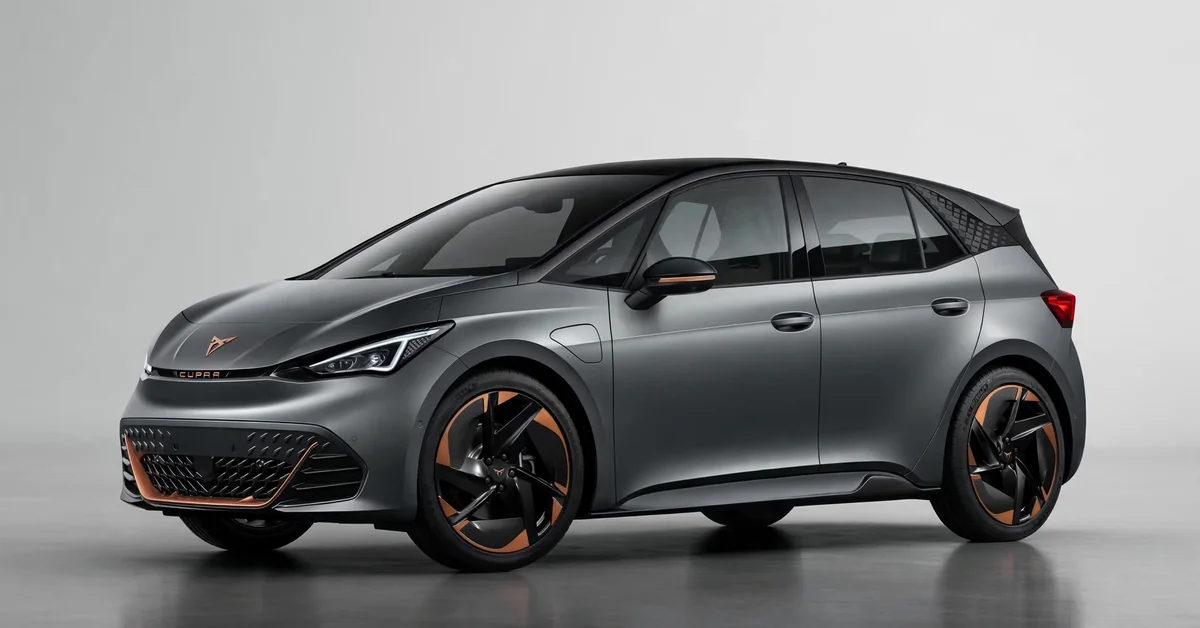
Researched from CUPRA’s official price lists and launch material, EV Database, EVKX, ADAC’s ID.3 endurance test, Moba battery certificates and electrive, November 2026.
Five different batteries have worn the CUPRA Born badge since 2021, and the badge on the back tells you none of them. The car has been sold with 45, 58, 59, 77 and 79 kWh packs, the mid-size pack quietly grew by a kilowatt-hour mid-production, and the facelifted car that arrived in 2026 changed the small pack’s chemistry entirely — from nickel-based NMC to LFP.
That is why Born battery questions are so hard to answer with a single number. This guide separates the cars by era, gives gross and usable capacity for every pack, tests the charging claims against the databases that log them, and answers the question owners actually ask — how long the battery lasts — with the best evidence that exists: real state-of-health certificates from used Borns.
Every Born built before the 2026 facelift uses an NMC pack: 45, 58, 59 or 77 kWh usable, and 79 kWh in the VZ. The facelift sells just two sizes — a 58 kWh pack that has switched to LFP, and the 79 kWh NMC — and adds vehicle-to-load charging the older cars never had.
• Usable capacity: 45–79 kWh depending on era and variant (table below)
• Fastest charging: up to 185 kW (VZ); the facelift’s LFP pack peaks at 105 kW
• Battery warranty: 8 years — 160,000 km in the EU, 100,000 miles in the UK, 70% capacity floor
• Battery life evidence: used-car certificates show 91–93% health at 62,000–111,000 km on typical cars
Which CUPRA Born Battery Do You Have?
Start with the year, not the trim badge — the Born’s battery changed under the same names more than once. The launch range had three packs, the mid-size one was quietly revised upward during production, and the March 2026 facelift cut the range back to two packs with a different chemistry in the smaller one. Here is the full map:
| Era | Variant | Battery (usable / gross) | Chemistry |
|---|---|---|---|
| 2021–2026 | 45 kWh | 45 / 55 kWh | NMC |
| 2021–2026 | 58 kWh | 58 / 62 kWh | NMC |
| 2025–2026 | 59 kWh | 59 / 63 kWh | NMC |
| 2021–2026 | 77 kWh (e-Boost) | 77 / 82 kWh | NMC |
| 2024–2026 | VZ 79 kWh | 79 / 84 kWh | NMC |
| 2026 facelift | 58 kWh | 58 / 61 kWh | LFP |
| 2026 facelift | 79 kWh (incl. VZ) | 79 / 84 kWh | NMC |
The launch packs: 45, 58 and 77 kWh
The Born arrived in 2021 with three nickel-based packs on Volkswagen Group’s MEB platform, all 400-volt-class hardware. The 45 kWh car was the short-range entry model, the 58 kWh the mainstream choice, and the 77 kWh — badged e-Boost in its later years — the long-range version. Every one of them is an NMC pack; there was no LFP Born before 2026, whatever a listing claims.
The quiet change: 58 became 59
Mid-production, the mid-size pack’s usable capacity crept from 58 to 59 kWh (63 kWh gross), with charging improved to match. CUPRA at times even quoted 60 kWh for it. If you are comparing two used Borns that both say “58” on the badge, check the car’s papers or a VIN decoder — they may not have the same battery.
The 2026 facelift: two sizes, one chemistry switch
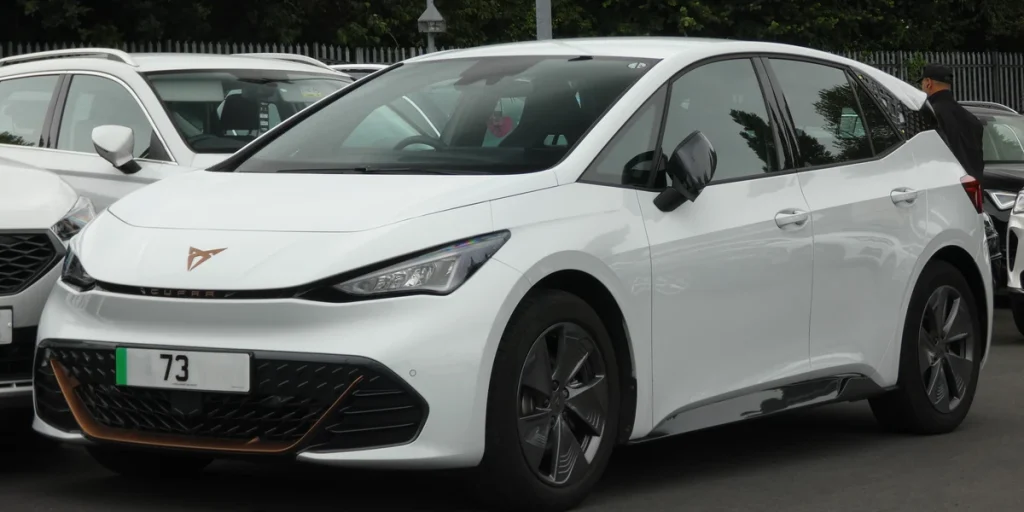
The facelift was revealed on 5 March 2026, built at Zwickau from the second quarter, and orderable from May. It answers the question searchers keep asking — the 2026 Born comes in exactly two battery sizes: 58 and 79 kWh usable. The 79 is the familiar NMC pack, now also in the 326 PS VZ. The 58 is the story: a new LFP pack, and the trade-offs that come with it are covered in the next two sections.
One facelift myth to kill here: the APP550 motor is not new. It was already the pre-facelift VZ’s 240 kW rear motor; the facelift keeps it. What the facelift genuinely adds is vehicle-to-load output, one-pedal driving and physical steering-wheel buttons in place of the old touch sliders.
Chemistry: NMC, Then LFP — and the Supplier Nobody Names
Every Born built before the facelift is NMC; only the facelift’s 58 kWh pack is LFP, and no credible source names the cell supplier for any of them. Those three facts settle most of the arguments in Born forums, including the confident ones.
Every early Born is NMC
Nickel manganese cobalt is the chemistry of the whole pre-facelift range — 45, 58, 59, 77 and the VZ’s 79 kWh pack alike. Sources sometimes add a ratio, such as NMC811, but no credible source we found states the cathode ratio for the Born, so this page does not print one. The packs differ in size and layout — the original 58 kWh pack is built from nine modules, the VZ’s 79 kWh pack uses 192 cells — not in fundamental chemistry.
The facelift’s LFP switch
The facelift’s 58 kWh pack is lithium iron phosphate: 61 kWh gross, 58 usable, built from 208 cells at a lower nominal voltage (333 V) than the NMC cars. LFP brings the usual trade — cheaper and longer-lived cells that tolerate full charges, against lower energy density and slower cold-weather charging. How the two chemistries compare in depth is covered in our guide to what LFP battery chemistry is.
Who makes the cells? The honest answer
Owners ask whether the Born’s cells come from LG or Samsung. The truthful answer is that nobody outside Volkswagen Group has published it: VW does not comment on cell suppliers for these packs, and no credible report names one for the Born or its ID.3 sibling. The supplier stories you may have read — PowerCo’s own cells, Gotion, a reported Samsung SDI order — concern the group’s newer Unified Cell for its next generation of small cars, a different battery programme entirely. Anyone who tells you a Born cell maker with certainty is guessing.
Charging: Peaks, Times and the Heat-Pump Truth
The Born’s charging story improved steadily for five years — 100 kW at launch, up to 185 kW in the VZ — and the facelift’s LFP pack then traded peak speed back for cost and durability. Google searchers land on this page at position 59–70 for charge-time questions because the old page never gave the numbers plainly. Here they are, per pack, from EV Database’s logged specifications (CUPRA’s own claims in brackets where they differ):
| Pack | DC peak | Average 10–80% | 10–80% time |
|---|---|---|---|
| 45 kWh (NMC) | 101 kW | 72 kW | 28 min |
| 59 kWh (NMC) | 165 kW | 105 kW | 25 min (CUPRA claims 24) |
| 77 kWh (NMC, current spec) | 175 kW | 125 kW | 27 min |
| VZ 79 kWh (NMC) | 185 kW | 130 kW | 27 min (CUPRA claims 26) |
| Facelift 58 kWh (LFP) | 105 kW | 95 kW | 27 min (CUPRA claims 26) |
| Facelift 79 kWh (NMC) | 185 kW | — | 29 min |
Notes the table cannot hold: the original 58 kWh car launched at 100 kW in 2021 and was later raised to 120 kW; the launch-era 77 kWh car charged at 125 kW and needed about 35 minutes for 5–80%. One independent charging-curve analysis (EVKX) estimates the current 77 kWh car nearer 36 minutes at a ~90 kW average — real-world charges vary with temperature and charger, and both figures are printed here so you can judge.

At home: 11 kW, with one exception
Almost every Born has an 11 kW three-phase onboard charger as standard — 7.4 kW on a single-phase home supply — which refills any pack overnight. The exception is the earliest 45 kWh car, whose onboard charger is 7.2 kW. Budget home-charging comparisons that assume 11 kW for every Born are wrong for that one model only.
Preconditioning and Plug & Charge
The battery preconditions automatically when a fast charger is set as the navigation destination, and the car’s charging menu offers battery preheating for maximum fast-charge power — use it in winter, because a cold MEB pack charges slowly whatever the badge says. Plug & Charge (ISO 15118) is supported on recent cars, so charging can start without an app or card on compatible networks.
The heat pump is an option, not standard
No Born, in any year, has a heat pump as standard equipment — it has always been an extra (about £960 on the UK options list; bundled into winter packs in some markets). If you are buying used and winter range matters, check the individual car’s spec sheet; the trim badge does not tell you. And if a seller claims “they all have one,” that claim alone tells you to check everything else twice.
Range: WLTP Figures and What Drivers Actually Get
The Born’s WLTP range runs from about 349 km in the 45 kWh car to 629 km in the facelift VZ — but plan around EV Database’s real-range estimates, which sit roughly 15–20% lower. The table pairs the official figure with the estimate for each main version:
| Version | WLTP range | Real-range estimate |
|---|---|---|
| 45 kWh | 349 km | about 275 km |
| 59 kWh | 428 km | about 360 km |
| 77 kWh | up to 548 km | about 440 km (275 miles) |
| VZ 79 kWh (pre-facelift) | 594 km | about 465 km |
| Facelift 58 kWh (LFP) | 449 km (300 miles UK) | about 355 km (220 miles) |
| Facelift 79 kWh / VZ | up to 629 km (389 miles UK) | — (too new for estimates) |
Cold weather: what the estimates say
Winter is where the questions concentrate — including, verbatim, how far a VZ goes in winter without a heat pump. CUPRA publishes no with-or-without-heat-pump figures, so the honest guide is EV Database’s cold-weather estimates: the 59 kWh car drops to about 300 km combined and 255 km on a cold highway; the 77 kWh car to about 235 miles combined and 200 miles on the highway; the facelift’s LFP 58 to about 185 miles combined and 160 on the highway. LFP’s cold sensitivity is real, and the facelift car’s standard preconditioning matters more, not less, because of it.
Warranty: Eight Years, but Read Your Market’s Line
The Born’s battery warranty is eight years everywhere — what changes is the distance limit and, in Germany, a tiered capacity promise that is better than the headline. The old version of this page printed the EU battery warranty as “5 years / 100,000 km.” That was wrong — five years is a vehicle-warranty figure. The battery terms:
| Market | Battery warranty | Capacity promise |
|---|---|---|
| United Kingdom | 8 years / 100,000 miles | at least 70% |
| European Union | 8 years / 160,000 km | at least 70% |
| Germany (tiered) | 8 years / 160,000 km | 78% to 3 yrs/60,000 km · 74% to 5 yrs/100,000 km · then 70% |
| Australia | 8 years / 160,000 km | at least 70% |
The car itself is warranted separately — five years or 90,000 miles on current UK cars, five years or up to 150,000 km in Germany. Keep the two apart when a listing mangles them: a “5-year warranty” Born is describing the car, not the battery.
The 93S4 recall: check a used Born’s build date
One ownership item belongs next to the warranty: a recall (code 93S4) covers Borns built between February 2022 and April 2024 for a possible cell defect, handled with a free software check, inspection and module replacement where needed, according to carchecker.pro’s Born reliability file. If you are buying a used Born from that window, ask for proof the recall was completed — it costs the owner nothing and tells you the pack has been inspected.
How Long Does a Born Battery Actually Last?
This is the question the whole internet answers with range figures — but owners mean degradation, and for the Born the evidence is unusually concrete: real battery certificates issued for used cars. No fleet study of Borns exists (we searched; there is no Geotab- or Recurrent-style Born cohort). What exists is better than forum opinion: Moba battery certificates, generated from the car’s own data, of the kind used for warranty assessments.
What the certificates show
Five certified 58 kWh cars bracket the story. At low mileages (25,000–63,000 km) they read 91–92.5% state of health. The two highest-mileage cars — 111,175 km and 118,245 km — read 93% and 80%. That second car is a genuine outlier (670 charge cycles, the hardest-used of the set), and it is printed here deliberately: a badly treated Born battery can age faster, and a certificate on the actual car you are buying beats any average. A certified 77 kWh car at 15,046 km read a full 100%.
The 85,000-mile question
Searchers ask, almost word for word, what a Born’s battery is like at 85,000 miles (about 137,000 km). No certified Born has quite reached that mileage yet, so the nearest hard evidence is the platform sibling: ADAC’s four-year endurance test of the VW ID.3 — same MEB platform, same 77 kWh pack family — measured 91% state of health at around 107,000 miles, losing only about 8 miles of range, despite being fast-charged 40% of the time and often charged to 100% and left standing.
On that evidence, a typical 85,000-mile Born should sit in the high-80s to low-90s percent — an expectation from the data, not a promise about any individual car. How that slow fade works is explained in our guide to EV battery degradation.
Habits that help
The ADAC car’s treatment is the encouraging part: these packs tolerate real life. Still, the standard care applies — keep the car between roughly 20% and 80% for daily use, charge to 100% for trips rather than habit, and don’t leave any EV sitting full or empty for weeks. The facelift’s LFP pack is the exception that proves the rule: LFP tolerates full charges well, and occasional 100% charges keep its state-of-charge estimate honest.
Replacement Cost: The Honest Answer
There is no published price for a replacement CUPRA Born battery pack — not from CUPRA, not from Volkswagen, not anywhere we could find. Any page quoting you an exact Born pack price has invented it. Here is what can honestly be said instead.
First, for almost every owner the question is theoretical: a pack that falls below 70% health inside eight years or the distance limit is a warranty claim, not a purchase. Second, the closest published comparator — UK price-index data for the VW ID.4/ID.5’s 77 kWh pack, the same MEB family — puts a full fitted replacement at £7,000–£13,000; treat that as the ID.4’s figure and a neighbourhood for the Born’s 77, not a Born quote. Third, the MEB packs are modular — the 58 kWh pack has nine modules — and refurbished or module-repaired packs are the realistic out-of-warranty route, with generic UK index prices of £2,500–£4,500 fitted.
When the 12V battery is the whole problem
The battery Born owners actually replace is the ordinary 12-volt one. It lives in the front compartment, and when it fades the car can refuse to wake, unlock or connect its drive battery — the “my Born’s battery died” reports in owner groups are usually this, not a failed traction pack. CUPRA’s manual is strict about it: charging needs a specialist workshop’s limited-voltage equipment, and a replacement must be fitted by a qualified technician because the car’s electronics need adapting afterwards. Budget roughly €120–£200 — and test the 12V first whenever a Born appears dead.
Can a Born Power Your House? The V2L and V2H Truth
Short answer: a facelift Born can power devices; almost no Born can power a house, and none does it out of the box. The old page’s spec table claimed vehicle-to-grid “yes.” The real position, by era:
Before the facelift: no V2L at all
Pre-facelift Borns have no vehicle-to-load function — you cannot run a kettle, a laptop or a power tool from them. That surprises owners because the hardware story is more interesting than the feature list.
The 77 kWh exception: ready, but charger-specific
Volkswagen announced in late 2023 that MEB cars with the 77 kWh battery on software 3.5 or later are “BiDi ready”: able to feed a home through a compatible bidirectional DC wallbox, launched in Germany alongside the E3/DC home power station.
The one confirmed pairing is Wallbox’s Quasar 2, demonstrated running a Born 77 kWh in both directions — the Born was the first CCS car with a confirmed bidirectional charger match. But it was never a standard enabled feature, and in some markets (Australia, for one) it has not been enabled at all. If home backup is your plan, you need the 77 kWh car, the right software, that specific class of charger, and a market where the function is switched on.
The facelift: V2L arrives
The 2026 facelift adds proper vehicle-to-load: 3.6 kW of AC power through a Type 2 adapter — laptops, e-bikes, tools, camping kit. It still does not add vehicle-to-home or vehicle-to-grid. So the searcher’s question — “can I turn my Born into a house battery?” — gets this answer: devices, yes, on the new car; a house, only in the narrow 77 kWh-plus-special-charger case above.
What the Born Costs Now
The facelift reset the price list in May 2026 — in the UK the Born now starts below where the old car did, and the two battery sizes sit unusually close in price. UK on-the-road prices from CUPRA’s official list (12 May 2026): V1 58 kWh £35,995, V1 79 kWh £36,995 (just £1,000 more for the big pack), and the VZ at £45,995. The £1,500 Electric Car Grant, where it applies, comes off the two V1 prices.
In Germany, launch pricing reported in April 2026 put the facelift from €37,990, with the VZ at €49,040 — figures that included launch marketing discounts, so treat them as the price of entry rather than a bare list price. The old page’s “from €39,990” belonged to neither era: the pre-facelift car started at €36,450 in Germany and £35,690 in the UK.
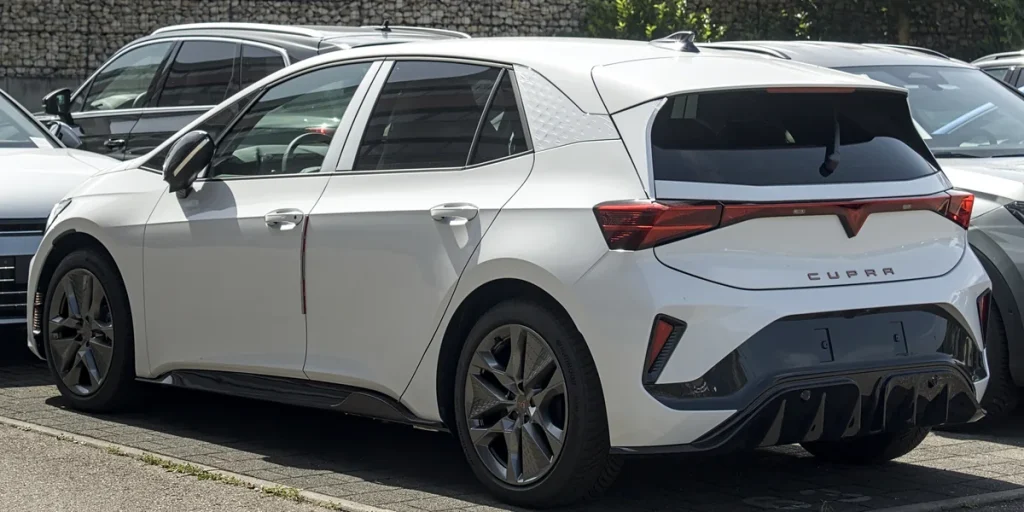
Born vs ID.3: Same Bones, Different Clothes
Underneath, the Born and the VW ID.3 are the same car: same MEB platform, same pack family, same charging hardware, same warranty shape — which is why this guide can cite ADAC’s ID.3 endurance test as evidence about the Born’s battery. CUPRA’s differences are tuning, styling and standard kit, not battery engineering. If you are cross-shopping the two used, buy on condition and on the individual car’s battery certificate, not on the badge. The full battery picture for the sibling is in our VW ID.3 battery guide.
Frequently Asked Questions
What battery sizes does the CUPRA Born have?
Five usable sizes across its life: 45, 58, 59, 77 and 79 kWh. Cars from the 2026 facelift come in only two — 58 kWh (now LFP) and 79 kWh (NMC).
Is the CUPRA Born battery LFP or NMC?
Both, depending on the car. Every pre-facelift Born is NMC. The facelift’s 58 kWh pack switched to LFP; its 79 kWh pack remains NMC.
Who makes the CUPRA Born’s battery cells?
Nobody has credibly published it. Volkswagen Group does not comment on cell suppliers for the Born’s packs, and the PowerCo/Gotion/Samsung stories in the press concern a different, newer battery programme for the group’s small cars.
How long does a CUPRA Born battery last?
On the best available evidence — real state-of-health certificates from used cars — a typical 58 kWh Born holds 91–93% health at 62,000–111,000 km, with hard-used outliers lower. ADAC’s endurance test of the sibling ID.3 measured 91% at about 107,000 miles. The warranty floor is 70% at eight years.
What does a replacement CUPRA Born battery cost?
There is no published price — CUPRA and Volkswagen do not release one. UK index data for the same-family ID.4 77 kWh pack suggests £7,000–£13,000 fitted as a neighbourhood figure, and module-level repair is the realistic out-of-warranty route. Inside the warranty period, a pack below 70% health is replaced as a claim.
How fast does the CUPRA Born charge?
It depends on the pack: 25 minutes for 10–80% in the 59 kWh car (165 kW peak), 27 minutes in the 77 kWh (175 kW) and VZ (185 kW), and 27 minutes in the facelift’s LFP 58 (105 kW peak). At home, 11 kW three-phase AC refills any Born overnight.
Does the CUPRA Born have a heat pump?
Not as standard — on no model year. It is an optional extra (about £960 in the UK) or part of a winter pack in some markets, so check the individual car’s specification when buying used.
Can a CUPRA Born power a house?
Not out of the box. Facelift cars offer 3.6 kW vehicle-to-load for devices. Home power (V2H) exists only for pre-facelift 77 kWh cars on the right software, paired with a specific bidirectional DC charger such as Wallbox’s Quasar 2, in markets where the function is enabled.
Is the CUPRA Born being recalled for its battery?
A recall (93S4) covers cars built from February 2022 to April 2024 for a possible cell defect, with a free check and module replacement where needed. Ask for completion proof when buying a used car from that period.
Conclusion
The CUPRA Born is not one battery story but five, and the year of the car decides which one you own: NMC packs of 45 to 79 kWh in the early cars, a chemistry switch to LFP in the facelift’s small pack, charging that climbed from 100 to 185 kW, and a warranty that was always better than this page used to claim.
What has not changed is the shape of the honest answers: the supplier is unpublished, the replacement price is unpublished, and the battery-life evidence — certificates and a four-year endurance test on its sibling — is better than the hatchback’s sporty image might suggest. Its smaller sibling makes the same point from the other direction: our CUPRA Raval battery guide covers the car that gets the group’s next-generation cells. Buy the Born on the individual car’s health certificate, and it should serve as well as its numbers promise.
