
Does Level 2 Charging Damage an EV Battery?

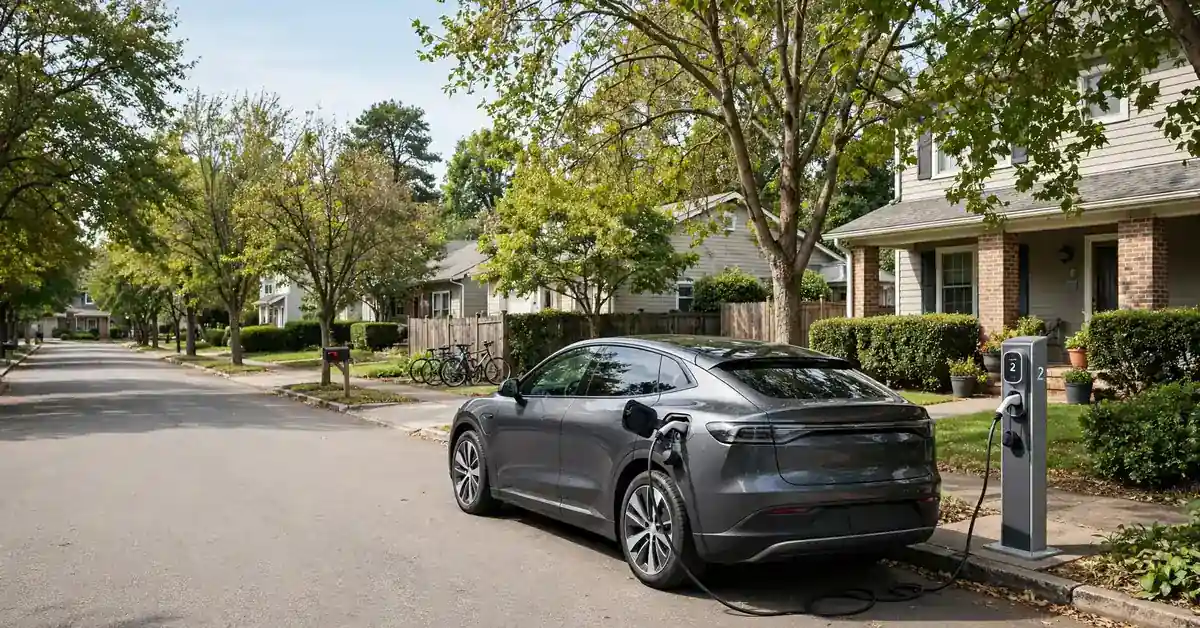
Level 2 charging does not damage an EV battery when used correctly. In fact, it is the healthiest and most recommended way to charge an electric car for daily use. The combination of moderate charging speed, low heat generation, and overnight convenience makes Level 2 the ideal method for preserving battery health long-term. However, certain habits — including always charging to 100%, charging in extreme heat, and leaving your EV plugged in at 100% for days — can cause gradual battery stress regardless of the charging level used.
Why Level 2 Charging Is Safe for Your Battery
EV batteries degrade primarily through three mechanisms: heat from high-power fast charging, stress from charging to very high states of charge (above 90%), and stress from discharging to very low states of charge (below 10–15%). Level 2 charging at 7–11 kW generates very little heat — far less than DC fast charging at 150–350 kW. The battery’s thermal management system easily handles Level 2’s modest power input without activating aggressive cooling.
Battery management engineers design EV batteries expecting Level 2 to be the primary daily charging method. All battery degradation warranties are set assuming a mix of mostly Level 2 home charging with occasional DC fast charging — not the reverse. Hyundai, Kia, Tesla, and virtually every EV manufacturer explicitly recommend Level 2 as the standard daily charging method in their owner’s manuals.
What Actually Damages an EV Battery
| Damaging Habit | Risk Level | Better Practice |
|---|---|---|
| Daily 100% charging (NMC batteries) | Moderate — accelerates degradation | Set daily limit to 80% |
| Frequent DC fast charging (3+ times/week) | Moderate to High — generates heat stress | Limit to 1–2 times/week |
| Letting battery sit at 100% for days | Low to Moderate | Charge to 80% for regular use |
| Letting battery drain below 10% | Moderate — stresses cells | Plug in above 15–20% |
| Charging in extreme heat (above 95°F/35°C) | Moderate — heat accelerates degradation | Park in shade; charge at cooler times |
| Level 2 daily charging to 80% | Negligible — recommended method | This is the ideal habit |
Does Charging to 100% on Level 2 Damage the Battery?
Charging to 100% on Level 2 periodically is fine — especially for NMC (nickel-manganese-cobalt) batteries, Hyundai recommends 100% charges for road trips but 80% for daily use. The issue is not the charging level (Level 1 vs 2 vs 3) — it is the state of charge (SoC). Keeping an NMC battery at 100% for extended periods stresses the cells. Setting a daily charge limit of 80% and only charging to 100% before road trips is the best practice for NMC battery longevity.
LFP (lithium iron phosphate) batteries — used in Tesla Standard Range models, some BYDs, and certain Chinese EVs — are designed to be charged to 100% daily. For LFP EVs, regularly charging to 100% is actually recommended by manufacturers to keep the Battery Management System (BMS) accurately calibrated.
How Much Does Level 2 Charging Affect Long-Term Battery Health?
Long-term real-world data from Recurrent Auto’s analysis of over 15,000 EVs shows that EV batteries typically retain 88–94% of original capacity after 5 years under normal mixed-use conditions. Vehicles that primarily use Level 2 home charging consistently show better long-term health than those relying heavily on DC fast charging. Tesla’s fleet data shows approximately 12–15% capacity loss by 200,000 miles for Model S/X — the vast majority of which comes from age and cycle count rather than Level 2 charging specifically.
Level 2 Best Practices for Battery Health
- Set daily charge limit to 80% (NMC batteries): Most EV apps and touchscreens allow a simple slider to set the charge limit — 80% is the sweet spot for cell longevity vs usable range
- Charge every night rather than letting the battery drain low: Shallow daily charge cycles (e.g., 50% to 80%) are much easier on cells than deep cycles (5% to 100%)
- Schedule charging to finish just before departure: Avoid letting the battery sit at 100% SoC for hours before use — most EV apps allow departure time scheduling
- Keep the car plugged in but not charging in extreme heat: Most EVs automatically manage thermal conditioning when plugged in — staying plugged in allows the car to cool itself without drawing battery power
Conclusion
Level 2 charging does not damage an EV battery — it is the healthiest recommended daily charging method. The factors that genuinely accelerate battery degradation are excessive DC fast charging, chronic 100% charges on NMC batteries, and extreme temperature exposure. Using Level 2 at home with an 80% daily charge limit, scheduled to finish shortly before departure, represents essentially optimal battery management. Follow these simple habits and expect your EV battery to retain 85–90%+ of its original capacity after 100,000 miles of normal use.
