
Best Level 2 EV Chargers for Home in 2026

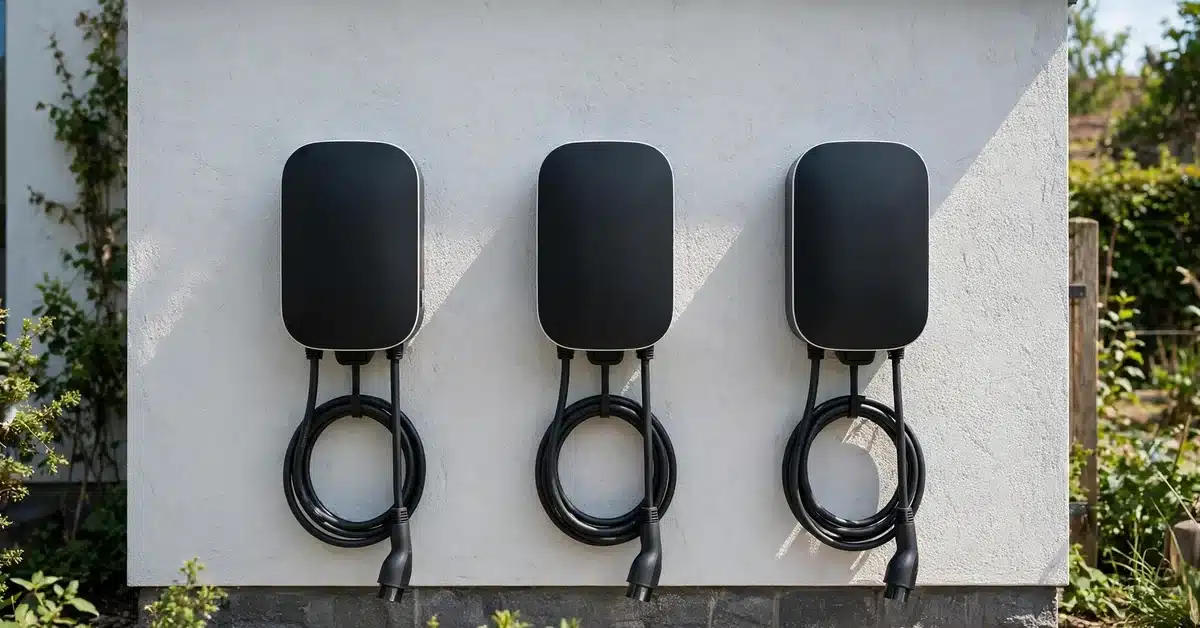
The best Level 2 home EV charger for most people in 2026 is the ChargePoint Home Flex — adjustable 16–50 amp output, the best app in the category, universal EV compatibility, and UL/ENERGY STAR certification. Budget buyers get exceptional value from the Emporia Smart Level 2 ($199–$429). Outdoor or extreme weather charging demands the Grizzl-E Classic. Tesla owners get the tightest integration from the Tesla Universal Wall Connector. This guide compares the best home EV chargers by category, price, and real-world performance.
Best Home Level 2 EV Chargers: Quick Comparison
| Charger | Amperage | Power | Miles/Hour | Price | Best For |
|---|---|---|---|---|---|
| ChargePoint Home Flex | 16–50A (adjustable) | Up to 12 kW | Up to 37 mi/hr | $494–$699 | Best overall / most homes |
| Emporia Smart Level 2 | 48A | 11.5 kW | ~35 mi/hr | $199–$429 | Best budget / solar homes |
| Grizzl-E Classic | 40A | 9.6 kW | ~28 mi/hr | $300–$460 | Best durability / outdoors |
| JuiceBox 48 | 48A | 11.5 kW | ~35 mi/hr | $489–$589 | Smart features / solar excess mode |
| Tesla Universal Wall Connector | 48A | 11.5 kW | ~35 mi/hr | $475 | Tesla owners; multi-EV homes |
| Wallbox Pulsar Plus | 40–48A | Up to 11.5 kW | ~35 mi/hr | $649–$699 | Multi-EV / solar integration |
| IYILO Level 2 | 48A | 11.5 kW | ~35 mi/hr | ~$339 | Budget smart with heat sensor |
1. ChargePoint Home Flex — Best Overall
The ChargePoint Home Flex is the gold standard for home EV charging in 2026. Its adjustable amperage (16A to 50A) works with any electrical panel — from a 20A spare circuit in an older home to a 60A dedicated circuit in a new build. At 50A maximum, it delivers 12 kW and adds up to 37 miles of range per hour — among the fastest available for a home Level 2 unit. It is also fully compatible with every EV via J1772 and the optional NACS adapter.
The ChargePoint app is widely regarded as the best in the category — offering real-time status, detailed energy tracking, cost estimation, off-peak scheduling, Amazon Alexa and Google Home integration, and access to ChargePoint’s public charging network from the same app. UL listed and ENERGY STAR certified. The 23-foot cable with a backlit holster adds practical convenience in dark garages. Price: $494–$699. Limitation: No built-in load balancing or power sharing.
2. Emporia Smart Level 2 — Best Budget Pick
The Emporia Smart Level 2 delivers 48A / 11.5 kW charging — identical in raw speed to chargers costing $300+ more. Starting at approximately $199 for a basic version and $429 for the Pro with whole-home energy monitoring, it offers exceptional value. The app includes off-peak scheduling, energy monitoring, and solar integration. The Emporia Pro includes the Emporia Vue 3 Home Energy Monitor — providing a full dashboard of home energy use, not just EV charging. Price: $199–$429. Limitation: App WiFi connectivity has been occasionally inconsistent per user reports.
3. Grizzl-E Classic — Best for Durability and Extreme Weather
The Grizzl-E Classic from Canada is the most durable home EV charger available. Built in an aluminum NEMA 4 (IP65+) enclosure, it is tested to -22°F (-30°C) and functions in rain, snow, dust, and extreme heat. The Grizzl-E CEO famously drove an ATV over a unit and dunked it in a frozen lake — it still worked. There are no smart app features on the Classic model — it is a plug-and-charge appliance with exceptional mechanical reliability. Price: $300–$460. Limitation: No app, no scheduling — manual use only.
4. Tesla Universal Wall Connector — Best for Tesla Owners
Tesla’s Universal Wall Connector delivers 48A / 11.5 kW with seamless integration into the Tesla app — scheduling, energy monitoring, and status updates appear in the same app you already use for your car. It supports NACS natively and can daisy-chain up to 6 units to share power across multiple charging locations — ideal for households with multiple Teslas. Non-Tesla owners can use it with a J1772 adapter, though this reduces the app integration benefits. Price: $475. Limitation: Does not qualify for the federal tax credit.
5. JuiceBox 48 — Best for Solar Integration
The JuiceBox 48 offers 48A / 11.5 kW with a unique solar excess charging mode — it automatically draws power only when your solar panels are producing more than your home consumes, turning your EV into a real-time solar battery. The app includes automatic Time-of-Use optimization, which chooses the cheapest electricity window each night without manual scheduling. The JuiceBox is available plug-in or hardwired. Price: $489–$589. Limitation: Solar mode works best paired with Enel X’s own monitoring hardware.
How to Choose the Right Level 2 Home Charger
- Check your electrical panel capacity first: Most homes need a 40–60A circuit for a Level 2 charger — have an electrician confirm before buying any specific model
- Match amperage to your car’s onboard charger: A car with an 11 kW onboard charger won’t charge faster from a 12 kW charger — buying 50A/12 kW is future-proofing, not immediate gain
- Plug-in vs hardwired: Plug-in units (ChargePoint, Emporia, Grizzl-E) are portable when you move; hardwired units are cleaner installs but require an electrician to remove
- Check utility rebates before buying: Many utilities offer $100–$500 rebates on specific qualifying charger models — this can make a $699 ChargePoint effectively cost $199–$299
- Smart features only help if you use them: If you’re on a flat electricity rate (not TOU), scheduling features save nothing — a simpler Grizzl-E Classic charges just as fast at lower cost
Conclusion
The best Level 2 home EV charger in 2026 is the ChargePoint Home Flex for most owners — flexible, reliable, and with the best app experience available. Budget buyers should look at the Emporia Smart Level 2 for 48A output at a fraction of the price. Outdoor and harsh-climate installations belong on a Grizzl-E Classic. Tesla owners benefit most from the Tesla Universal Wall Connector. Always check your utility’s rebate program before purchasing — discounts of $200–$500 can change the value equation entirely. Any of the chargers in this guide, properly installed, will reliably charge your EV every night for 10+ years.
