
How to Charge an Electric Van for Business Use

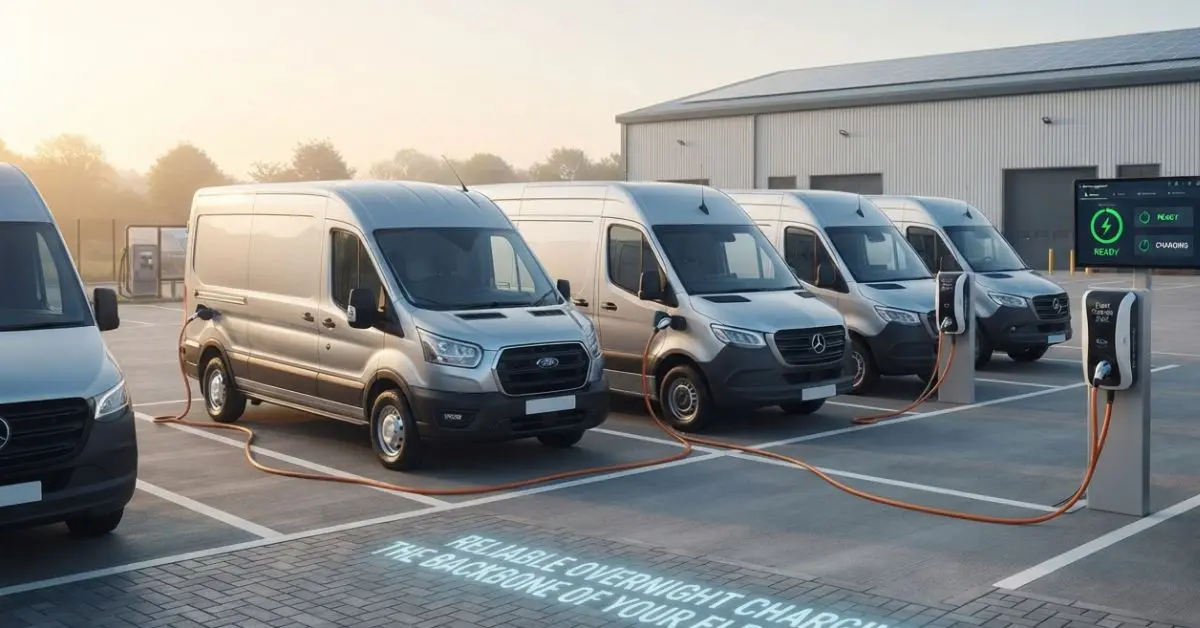
Running an electric van fleet is not only about buying the right vehicles. A smart charging strategy keeps your business moving, lowers costs, and reduces downtime.
Charging an electric van for business use requires dedicated Level 2 AC charging at your depot (7.4 to 22 kW) for overnight fleet charging, supplemented by DC fast charging (50 to 150 kW) for mid-route top-ups. Commercial electric vans like the Ford E-Transit, Mercedes eSprinter, Stellantis e-Dispatch/e-Expert, and Rivian Commercial Van have batteries ranging from 55 to 90 kWh, which are charged overnight on Level 2 charging at a depot. Setting up a reliable depot charging infrastructure is the most important operational decision for any business transitioning to an electric van fleet.
Operating a much larger fleet? See our guide on what depot charging is for electric fleet vehicles.
Electric Van Charging Specifications by Model
| Van Model | Battery | Range (WLTP/EPA) | Max AC Rate | Max DC Rate | 10–80% DC Time |
|---|---|---|---|---|---|
| Ford E-Transit (SR) | 68 kWh | ~126 miles EPA | 11.3 kW | 115 kW | ~34 min |
| Ford E-Transit (ER) | 89 kWh | ~159 miles EPA | 11.3 kW | 115 kW | ~45 min |
| Mercedes eSprinter | 55–113 kWh | ~97–248 miles WLTP | 9.6–22 kW | 80–115 kW | ~40–60 min |
| Rivian Commercial Van | 135 kWh | ~150 miles EPA | 11.5 kW | 50 kW | ~130 min |
| Stellantis e-Dispatch/e-Expert | 50–75 kWh | ~205–242 miles WLTP | 11 kW | 100 kW | ~30 min |
| Vauxhall Vivaro-e | 50–75 kWh | ~205–208 miles WLTP | 11 kW | 100 kW | ~30 min |
Why Depot Charging Is the Backbone of Electric Van Fleets
For most electric van fleets, overnight depot charging is the operational backbone. Vans return to a central location at the end of each shift, plug into Level 2 charging stations, and charge overnight. They leave fully charged and ready for the next day’s routes.
An 11 kW Level 2 charger fills a 75 kWh van battery from 20% to 100% in about 6.5 hours. This charging time fits easily within an overnight schedule.
Businesses operating multiple vans need multiple charging stations with load management software. This software prevents electrical overload and helps control demand charges. At a minimum, plan for one dedicated Level 2 charging point per van in the fleet.
When Your Business Needs DC Fast Charging
Overnight depot charging is enough for many businesses. However, vans that travel 100-150 miles or more during a shift may need additional charging, especially on highway routes where energy use is higher.
Long Distance Routes
Long delivery routes or service calls can reduce the remaining battery range before the workday ends. In these situations, a quick charging stop helps drivers complete their routes without delays.
Mid Route Top Ups
DC fast charging at 50 to 115 kW adds about 80 to 100 miles of driving range in approximately 30 to 45 minutes. Many businesses schedule these charging sessions during required driver breaks, making charging part of the normal workday.
Public Charging Options for Commercial Fleets
ChargePoint Express, Electrify Commercial, and other fleet-focused DC charging networks provide reliable charging options for commercial vans operating away from their depots.
How to Set Up a Business Depot Charging System
A well-designed charging system improves fleet efficiency and reduces operating costs.
Install One Charging Point for Every Van
Each van should have its own dedicated charging point. Sharing chargers requires careful scheduling and increases the risk of vehicles leaving the depot without a full battery.
Use Fleet Charging Management Software
Fleet charging platforms such as ChargePoint for Business, Greenlots, and IONNA help businesses schedule charging during off-peak electricity hours. They also balance electrical loads and automatically reduce demand charges.
Work With Your Utility Company Early
Businesses planning to operate five or more electric vans should contact their local utility company 12 to 18 months before deploying their fleet. This gives enough time to complete any required electrical service upgrades.
Take Advantage of Available Tax Credits
Commercial EV charging infrastructure qualifies for the Alternative Fuel Vehicle Refuelling Property Credit. Businesses may receive a 30% federal tax credit, up to $100,000 per location, to help reduce the cost of installing depot charging equipment.
Amazon Rivian Delivery Van Fleet Case Study
Amazon uses 100,000 Rivian Commercial Vans to create the largest electric van fleet in North America. Amazon installs Level 2 depot charging at each warehouse. Vans charge overnight, so they start each day with a full battery. These vans drive an average of 150 miles per day.
The 135-kWh battery in the Rivian van provides enough range for most city delivery routes. Amazon pays for this charging setup with help from federal fleet electrification grants and state clean transportation funds. Other businesses can use this model when they plan to switch to electric fleets.
Conclusion
Businesses charge electric vans at reliable overnight depot charging stations. Each van typically uses one Level 2 charging point. Fleet software manages these chargers to schedule work during off-peak hours and lower energy costs. Most commercial van batteries, which range from 55 to 135 kWh, are completely filled overnight using an 11 kW charger.
Drivers use DC fast charging at 50-115 kW for longer trips. This adds enough power during 30- to 45-minute breaks. The 30% federal tax credit and various fleet electrification grants help reduce the cost of installing this equipment. These charging systems will become the main way that delivery and service fleets operate across North America as technology improves.
FAQs
How long does it take to charge an electric van at a business depot?
Most electric vans with batteries between 55 and 90 kWh fully charge overnight using an 11 kW Level 2 charger. Charging usually takes 6 to 8 hours, depending on battery size and starting charge level.
Do businesses need DC fast charging for electric van fleets?
Not always. Businesses with predictable daily routes often rely only on overnight depot charging. DC fast charging is most useful for vans that travel 100-150 miles in a single shift.
How many charging stations should a business install?
A business should install at least one dedicated Level 2 charging point for each electric van. This ensures every vehicle is fully charged and ready for work each morning.
