
EV Battery Recycling Methods: Pyro, Hydro, and Direct Compared

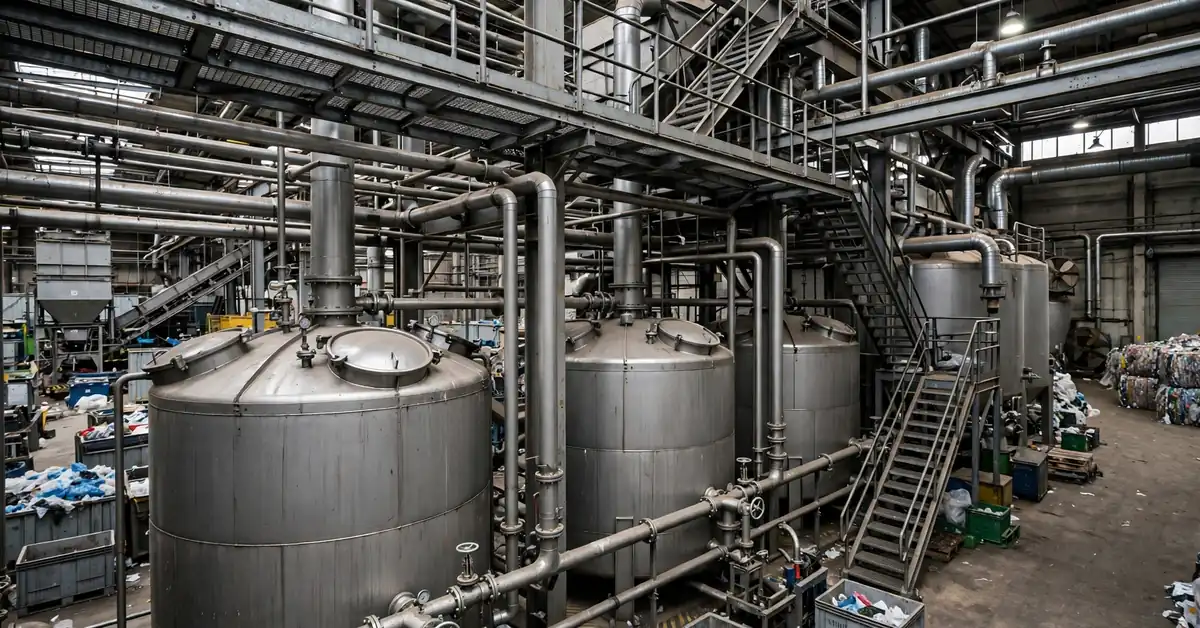
EV battery recycling methods fall into three main categories: pyrometallurgy, hydrometallurgy, and direct recycling. Each one breaks down a battery’s black mass differently, with its own recovery rate, cost, and environmental footprint. This guide compares all three, explains black mass, and covers why LFP batteries recycle differently than NMC.
What Is Pyrometallurgy in EV Battery Recycling?
Pyrometallurgy uses extreme heat, often 1,200°C to 1,600°C, to smelt battery materials in a furnace. The heat burns off plastics and electrolytes, leaving behind a metal alloy.
This method recovers cobalt, nickel, and copper efficiently. But it has a major weakness: lithium, aluminum, and manganese mostly end up lost in the slag byproduct.
Key traits of pyrometallurgy:
- Handles mixed or contaminated battery inputs well
- Processes large volumes quickly
- Requires heavy energy input and fuel-powered furnaces
- Needs a follow-up hydrometallurgical step to fully refine the alloy
Because it loses lithium, pyrometallurgy alone is considered the least efficient of the three main methods for EV batteries specifically.
What Is Hydrometallurgy in EV Battery Recycling?
Hydrometallurgy uses chemical leaching, typically acids, to dissolve black mass at low temperatures, usually under 100°C. This process pulls out lithium, cobalt, nickel, and manganese with high precision.
Recovery rates with hydrometallurgy can reach up to 98% for elements like nickel and lithium. That’s significantly higher than pyrometallurgy’s typical output for the same metals.
Hydrometallurgy’s tradeoffs include:
- Lower emissions than pyrometallurgy, with roughly 24% less climate impact for NMC recycling
- Scalable, modular processing plants
- Reliance on chemical leaching agents, which creates wastewater management needs
- Better fit for diverse, modern battery chemistries like NMC, NCA, and LFP
Most research points to hydrometallurgy as the best available technology today for high-value metal recovery.
What Is Direct Recycling of EV Batteries?
Direct recycling skips the chemical or thermal breakdown entirely. Instead, it recovers the cathode material’s crystal structure intact, using physical separation methods like gravity separation.
This matters because the cathode’s structure is expensive and complex to build in the first place. Preserving it means less energy and fewer raw materials are needed to make it battery-ready again.
Direct recycling advantages:
- Lower processing costs, since less energy and fewer chemicals are needed
- Preserves valuable crystal structure for faster reuse
- Works especially well for LFP batteries and manufacturing scrap
- Still mainly in development, not yet widely used at commercial scale
Some lab tests have shown batteries built from directly recycled material can outperform batteries made from newly mined metals in cycle life.
What Is Black Mass in EV Battery Recycling?
Black mass is the fine, dark powder left after a battery is shredded. It’s named for its graphite content, which comes from the battery’s anode.
This powder is the raw material that pyrometallurgy, hydrometallurgy, or direct recycling all work to process further. Black mass typically contains:
| Material | Source in Battery |
|---|---|
| Lithium | Cathode |
| Cobalt | Cathode |
| Nickel | Cathode |
| Manganese | Cathode |
| Graphite | Anode |
| Copper residue | Current collectors |
Shredding happens in a controlled, often inert atmosphere to prevent fires. Magnets, filters, and centrifuges separate out plastics, aluminum, and copper foils before black mass is collected for chemical processing.
How Is an LFP Battery Recycled Differently From NMC?
LFP and NMC batteries recycle very differently, mainly because of what’s inside them. NMC contains valuable cobalt and nickel, while LFP relies on iron and phosphate, both cheap and abundant.
This difference changes the economics completely. Recyclers often prioritize NMC batteries because cobalt and nickel recovery pays for the recycling process itself.
Key differences in practice:
- NMC: Usually processed with hydrometallurgy to recover cobalt and nickel at high value
- LFP: Often better suited to direct recycling, since there’s less valuable metal to chemically extract
- Profitability: NMC recycling currently earns more per battery due to metal value
- Long-term outlook: Some studies show LFP recycling can boost profits by up to 58% when paired with reuse strategies before recycling
As LFP adoption grows globally, recyclers are adapting processes specifically to make LFP recycling more economically viable.
Comparing the Three Main Recycling Methods
Each method fits different priorities, whether that’s speed, purity, or environmental impact.
| Method | Recovery Rate | Environmental Impact | Best Suited For |
|---|---|---|---|
| Pyrometallurgy | Lower (loses lithium) | Highest emissions | Mixed or contaminated feed |
| Hydrometallurgy | Up to 98% for key metals | Lower emissions than pyro | NMC, NCA, mixed chemistries |
| Direct Recycling | Preserves cathode structure | Lowest impact, still developing | LFP, manufacturing scrap |
Many facilities today actually combine methods. Pyrometallurgy pre-treats material, and hydrometallurgy refines it further to reach battery-grade purity.
The Bottom Line on EV Battery Recycling Methods
EV battery recycling methods each serve a different purpose in the process. Pyrometallurgy processes volume fast but loses lithium. Hydrometallurgy recovers more metal with lower emissions. Direct recycling preserves value but remains early-stage. Understanding these methods explains why LFP and NMC batteries follow such different recycling paths today.
Frequently Asked Questions
Which EV battery recycling method is most common today?
Hydrometallurgy is the most widely used method for high-value metal recovery, especially for NMC and NCA batteries. Many facilities combine it with pyrometallurgical pre-treatment for efficiency.
Why is lithium hard to recover from pyrometallurgy?
Lithium reacts differently than cobalt and nickel under extreme heat. It ends up in the slag byproduct instead of the metal alloy, making it costly to extract separately.
Is direct recycling available at commercial scale yet?
Not widely. Direct recycling is still mostly in development and pilot-stage facilities, though research shows strong potential for LFP batteries and manufacturing scrap specifically.
Does black mass composition vary by battery brand?
Yes, black mass composition depends on the original battery’s cathode chemistry. NMC-based black mass contains more cobalt and nickel, while LFP-based black mass contains mostly lithium and iron phosphate.
