
What Is Blink Charging Network?

Researched from Blink’s own driver and host FAQs and network terms, Blink’s SEC filings, the US Department of Energy’s charging registry and J.D. Power’s 2025 public charging study, November 2026.
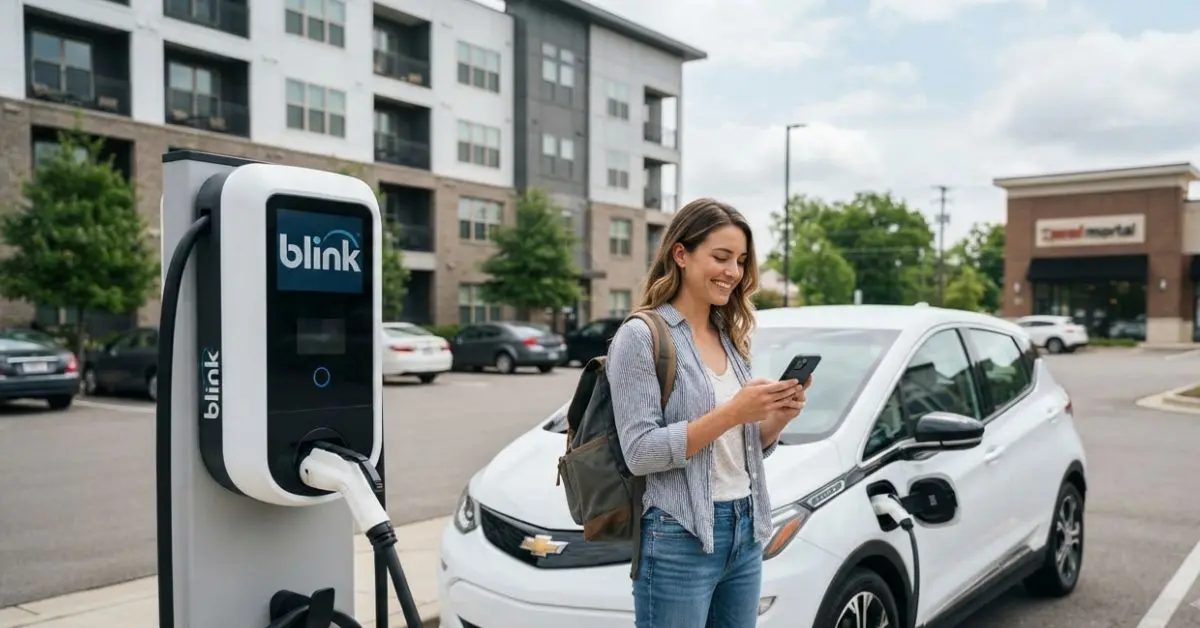
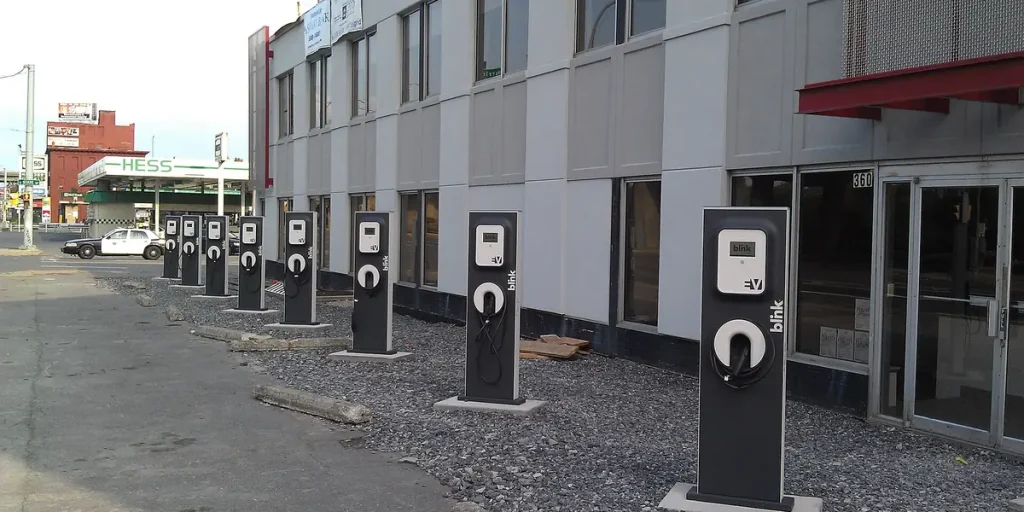
Blink is the charging network you meet where you park, not where you stop: at hotels, apartment buildings, offices and parking garages, usually as a Level 2 post you plug into for hours rather than minutes. It is one of the largest charging networks in the United States — and also one of the most misunderstood, starting with its size.
The one fact that explains almost everything about Blink is ownership. Most chargers wearing the Blink badge belong not to Blink but to the property they stand on, with Blink supplying the network, the app and the payment system. That is why two Blink stations a mile apart can charge different prices, follow different access rules and even penalise overstaying differently. This guide works through what Blink is, what it really costs, and how to use it without surprises.
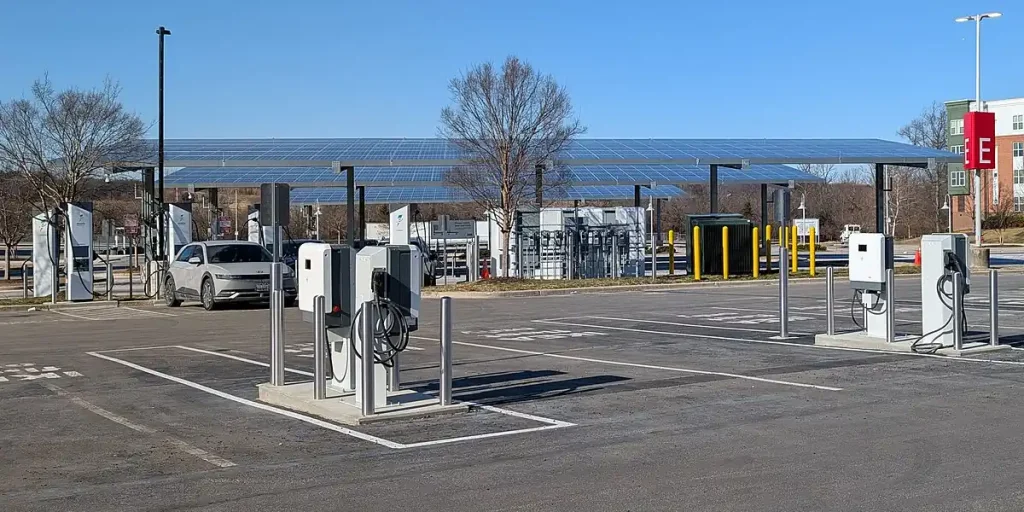
Blink Charging is a US network of mostly Level 2 chargers at hotels, apartments, workplaces and parking garages — about 23,000 public ports in the United States by the Department of Energy’s count (November 2026), roughly nine in ten of them Level 2.
• Cost: there is no single Blink price — each station’s rate is set by Blink or by the property host and is shown in the Blink app; add a $0.49 access fee per session at paid stations
• Membership: free, and not required — you can charge as a guest through the app
• Speed: Level 2 adds roughly 20–40 miles of range per hour; Blink’s DC fast chargers are only about 1 in 11 of its US ports
• Idle fee: possible — Blink calls it an occupancy fee, charged at certain stations if you stay plugged in after charging ends
What Blink Charging Is
Blink Charging Co. (NASDAQ: BLNK) is a charging company founded in 2009 as Car Charging Group, headquartered in Bowie, Maryland, whose Blink Network — its cloud platform — runs Blink-branded stations owned either by Blink itself or by the properties hosting them. Understanding that split matters more than any specification on this page, because it decides who sets the price and the rules at the charger in front of you.
Blink-owned stations
At a Blink-owned station, Blink paid for the equipment and installation, owns and operates the charger, and sets the price you pay. These are the minority. Of the roughly 66,350 chargers connected to Blink’s networks worldwide at the end of 2025, Blink’s own SEC filing counts only about 8,250 as owned by Blink itself.
Host-owned stations
At a host-owned station, the hotel, apartment operator, employer or garage bought the charger and runs it on Blink’s network: Blink handles connectivity, the app and payments, and the host keeps the charging revenue — and sets the price, which can be anything from a premium rate to completely free. Hosts also decide who may use the station at all, which is why some Blink chargers are reserved for residents or employees (covered below).
How Many Chargers Does Blink Really Have?
Three numbers circulate for Blink’s size, and they measure three different things — the honest US figure is about 23,000 public ports. Blink’s website claims “nearly 110,000 chargers deployed, sold, or contracted” — but that is a worldwide figure, counted since the company began, and it includes chargers merely sold to customers or under contract. It is not a count of live American charging ports, whatever pages quoting it as one suggest.
| The count | Number | What it actually measures |
|---|---|---|
| Blink’s headline claim | ~110,000 | Chargers sold, deployed or contracted, worldwide, since inception |
| Blink’s SEC filing | ~66,350 | Chargers connected to Blink’s networks (end of 2025); ~8,250 of them Blink-owned |
| US DOE registry (AFDC) | ~23,000 | Public Blink ports in the US a driver can use: 20,885 Level 2 + 2,087 DC fast (Nov 2026) |
By that registry, Blink is the second-largest Level 2 network in the US — and a network whose American footprint is currently shrinking slightly rather than growing: its US public Level 2 count has drifted down over the past two years as the company restructured (see the last section). Its strongest states are Florida, California and Texas.
Charger Types and Speeds
Blink’s hardware runs from Level 2 posts up to 19.2 kW to DC fast chargers rated between 30 and 360 kW — but the network you will actually meet is overwhelmingly Level 2. Its current Level 2 line-up (the IQ 200, Series 7 and Series 8, and the Shasta line) delivers up to 80 amps / 19.2 kW per port, although units are often configured lower and many older Blink posts in the field run at modest outputs. Level 2 connectors are J1772, with NACS now offered on the newest Series 7 units — the CCS vs NACS changeover reaching even destination charging. Blink’s DC fast chargers use CCS1 and NACS connectors, with CHAdeMO surviving on legacy units.
Is Blink “Level 3” charging?
There is no official “Level 3” in the SAE charging scheme — the chargers people mean by it are DC fast chargers. Blink does operate them, and new corridor sites are still being built (ten 180 kW units opened on State Route 111 in California in July 2025). But by the DOE count they are only about 2,090 of its roughly 23,000 US public ports. If a Blink charger is your plan, plan on Level 2 speeds unless the app specifically shows a DC unit.
How Much Does Blink Charging Cost?
There is no national Blink price, because there is no single price-setter: Blink sets the rate only at stations it owns; at host-owned stations the property owner sets it — a point Blink makes itself in its own pricing explainer. The rate for the specific station in front of you is shown in the Blink app before you start, and the station’s terms (Blink’s network terms, updated August 2026) allow billing per kWh, per minute plugged in, or as a flat per-session fee, depending on how that station is configured.
What drivers actually pay
Blink no longer publishes a national rate schedule. The ranges most guides quote — Level 2 at $0.39–$0.79 per kWh, DC fast at $0.49–$0.69 per kWh, or $0.04–$0.06 per minute where time-based billing applies — come from the last schedule Blink published for its own stations, and they remain a fair guide to the Blink-owned end of the network.
Independent logs of real 2026 sessions land in similar territory: one driver’s 47-session record shows Blink Level 2 between $0.29 and $0.49 per kWh and DC fast charging between $0.40 and $0.79. And because hosts set their own prices, some Blink stations cost nothing at all — workplaces, hotels and apartments sometimes set theirs to free, and the app shows $0.00. Whether you are billed per kWh or per minute is largely a matter of state law: states that allow electricity resale bill per kWh; the rest bill for time.
The fees around the price
Two charges catch drivers out. The first is Blink’s $0.49 access fee, added per session at paid charging stations (free stations are exempt). The second is not a charge at all: paying by card or guest code triggers a pre-authorisation hold — $10, $20 or up to $68 depending on the charger class, per Blink’s driver FAQ — which is released when the session settles but can sit on a card for days. Neither appears in the per-kWh rate, so both belong in any honest cost comparison.
Idle Fees: Blink Calls It an Occupancy Fee
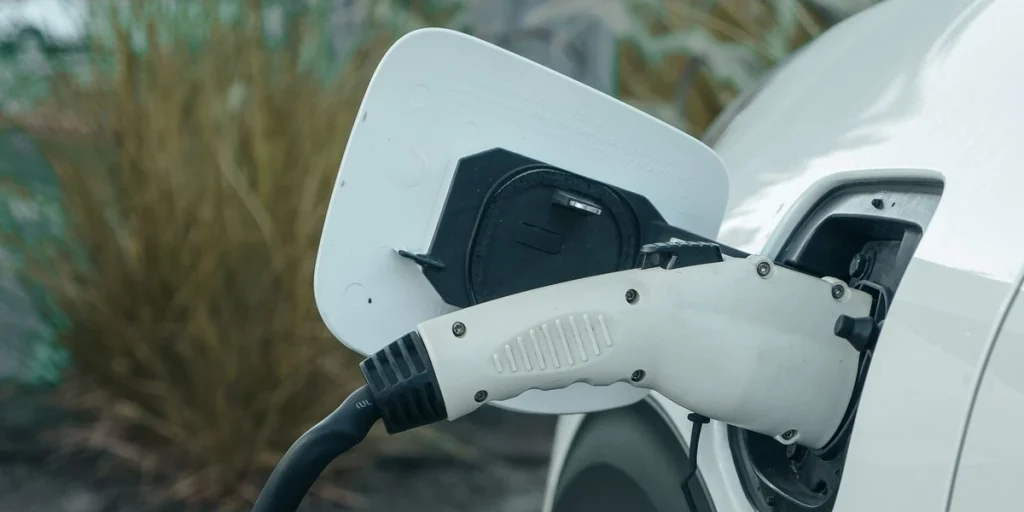
Yes — leave a car plugged in after charging finishes at certain Blink stations and you can be charged for the space: Blink’s network terms call it an occupancy fee, “a non-refundable occupancy fee for cars plugged into the Blink Charging Station after the charging session has ended.” Like the price itself, the fee is set per station — by Blink at its own stations, by the host at theirs — and the current terms publish no single amount or grace period, so the figure that applies is the one on that station’s pricing screen in the app.
The one documented Blink benchmark is historical: on Blink-owned Level 2 stations in 2015, the occupancy fee was $0.08 per minute, starting 15 minutes after charging completed. Hosts can also layer on their own overstay rules — one college district’s Blink chargers, for example, are free for four hours and then charge $3 an hour. The practical rule is simple: when the app says your session has ended, move the car.
How to Use a Blink Charger
Using Blink is a five-minute routine once you know the order: find the station, check its price and access, plug in, start the session, and unplug promptly when it ends.
- Find it: search the Blink Charging app (or our EV charging station locator) and open the station’s page — it shows the connector, the live status, the price and any access restrictions before you drive there
- Plug in: connect the cable to your car first
- Start the session: in the app as a member or as a guest (“Continue as Guest”), by tapping a Blink RFID card on the reader, or by contactless card payment on newer chargers that have a reader fitted
- Pay as you go: no pre-loaded balance is required — a saved card is charged per session, plus the $0.49 access fee at paid stations
- Finish: end the session, unplug, and move the car if an occupancy fee applies at that station
Do you need a membership?
No. Blink’s own driver FAQ states it plainly: anyone can use a public Blink station, no membership is required, and “becoming a Blink Member is free.” A free account is still worth having — it stores your payment method and charging history, it unlocks member-group stations at workplaces and apartment buildings that are closed to guests, and it carries roaming access to partner networks. What it no longer guarantees is a cheaper rate: member discounts existed under Blink’s old published schedule, but today any discount is set location by location, not network-wide.
Where You Find Blink Chargers — and Why Some Are Off-Limits
Blink chargers live where cars sit for hours: multifamily housing, workplaces, campuses, fleet depots, parking garages, hotels, hospitals, schools, airports and retail sites, concentrated in Florida, California and Texas. That placement is the network’s identity — destination charging, not road-trip charging. If you are hunting stations in an unfamiliar city, the best apps for finding EV charging stations round up the tools drivers actually use, Blink’s own app included.
The catch is access. A charger visible on a map is not necessarily open to you: hosts can restrict their stations to authorised member groups — residents, employees, fleet drivers — through member groups and invitation codes in the app, and can even price public and private users differently. A restricted station is simply unavailable outside its group.
Charging at Blink with other apps
Roaming softens that picture for public stations. You can start and pay for a charge at public Blink stations through the ChargePoint app or RFID card, the Shell Recharge app, and ChargeHub — and through carmaker apps built on those services, such as Ford’s. In May 2026 Blink also integrated its network with Emobi’s roaming hub, which feeds Blink chargers into more carmaker and fleet apps. One account increasingly opens several networks — but roaming never overrides a host’s private-access setting.
Is Blink Fast — and Is It Reliable?
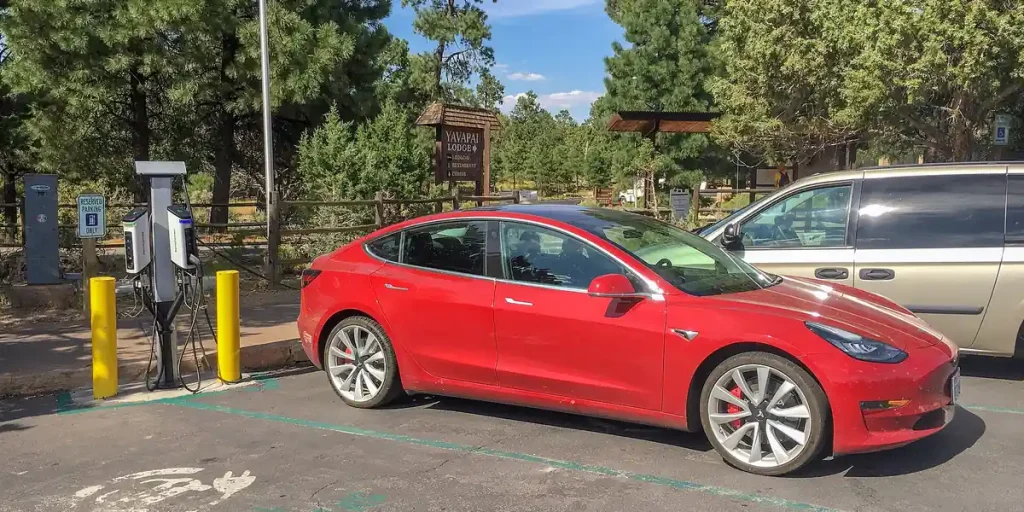
Blink is not a fast-charging network: about nine in ten of its US public ports are Level 2, adding roughly 20–40 miles of range per hour, and its DC fast footprint — some 2,090 ports — is the sixth-largest in the country, far behind the Supercharger’s 40,000-plus. For a road trip, plan around the corridor networks; Blink is what you find at the end of the day. Its hardware ceiling (360 kW) is real but rare in the field: Blink added only about 161 net DC ports in the first ten months of 2026.
On reliability, honesty requires the harder number. In J.D. Power’s 2025 U.S. Electric Vehicle Experience Public Charging Study — 7,428 owners surveyed with PlugShare — Blink scored lowest of any named network in both segments: 557 out of 1,000 for Level 2 satisfaction (segment average 607) and 501 for DC fast charging (average 654, with Tesla’s Supercharger at 709). Individual stations vary — a well-kept hotel charger can be flawless — but as a network, the survey evidence says to check a specific charger’s live status in the app before you depend on it, and to have a backup in mind.
Blink Mobile: The Charger You Can’t Order
Blink Mobile is not a service you can summon — it is a piece of hardware Blink sells to roadside-assistance providers, fleet operators and insurers. The unit is a self-contained portable charger (the original paired a petrol generator with Blink’s IQ 200 charger) that delivers 240-volt Level 2 charging at up to 9.6 kW, adding roughly half a mile to a mile of range per minute: enough in about half an hour to reach a real charging station instead of a tow truck.
If your breakdown cover carries one, it arrives with the assistance call-out; there is no button in the Blink app that sends one to you. The product no longer appears in Blink’s current commercial line-up, so treat any older page promising on-demand mobile charging as out of date.
Blink vs the Other Big Networks
Blink’s honest position in the US market is: one of the two giant Level 2 networks, a minor DC fast player, and the network whose prices vary most from place to place because its hosts set them.
| Network | US public ports (DOE, Nov 2026) | Character | J.D. Power 2025 satisfaction |
|---|---|---|---|
| Blink | ~23,000 (20,885 L2 + 2,087 DC) | Level 2 destination network: apartments, workplaces, hotels | L2 557 · DC 501 |
| ChargePoint | Largest overall (~69,000 L2, Jan 2025 count; ~5,080 DC) | Level 2 everywhere plus growing DC; host-owned model like Blink | L2 628 · DC 619 |
| Tesla Supercharger | 40,612 DC | DC corridor network | DC 709 |
| EVgo | ~5,419 DC | DC urban and corridor | DC 579 |
| Electrify America | ~6,091 DC | DC corridor | DC 601 |
For the head-to-heads, our Tesla Supercharger vs Electrify America comparison covers the two corridor giants, the best EV charging network ranking scores the networks against each other, and the EVgo guide profiles Blink’s closest fast-charging rival. Blink’s own company story belongs in that picture too: Blink is a smaller company than it was — it cut about a fifth of its workforce in its 2025 BlinkForward restructuring, moved to contract manufacturing in January 2026, and on 5 November 2026 trimmed its full-year revenue guidance to $78–81 million. The network remains the country’s number-two Level 2 system; it is being run for cost, not for growth, and drivers should set expectations — and check live status — accordingly.
Frequently Asked Questions
How much does Blink charging cost?
It depends on the station. Blink sets the price at stations it owns; the property host sets it at host-owned stations — per kWh, per minute, or flat per session — and the rate is shown in the Blink app before you start. Add a $0.49 access fee per session at paid stations. Historical Blink-owned rates ran $0.39–$0.79 per kWh for Level 2.
Are Blink charging stations free?
Some are. Because hosts set their own prices, workplaces, hotels and apartment buildings sometimes set their Blink stations to free — the app shows $0.00 for those. Blink membership itself is always free.
Does Blink have idle fees?
Yes, at certain stations — Blink calls it an occupancy fee, charged if your car stays plugged in after the charging session ends. The amount and any grace period are set per station and shown in the app; hosts can add their own overstay charges on top.
Do I need a Blink membership to charge?
No. You can charge as a guest in the Blink app, with a Blink RFID card, or by contactless card payment where the charger has a reader. A free membership adds saved payment, charging history, access to member-group stations and roaming — but no guaranteed discount.
Are Blink chargers fast? Does Blink have Level 3?
Mostly no: about nine in ten US Blink ports are Level 2. Blink does run DC fast chargers (its products span 30–360 kW) — the chargers people call “Level 3,” though no such official category exists — but they number only about 2,090 US ports.
How many Blink chargers are there?
Three honest answers: Blink claims nearly 110,000 chargers sold, deployed or contracted worldwide; its SEC filing counts about 66,350 chargers connected to its networks; and the US Department of Energy counts roughly 23,000 public Blink ports in the United States.
Can I charge at Blink with another app?
Yes, at public stations: the ChargePoint app or RFID card, the Shell Recharge app and ChargeHub all work at Blink through roaming agreements, as do carmaker apps built on those services. Roaming does not open host-restricted private stations.
How does Blink Mobile work?
Blink Mobile is a portable, generator-based Level 2 charger (up to 9.6 kW, roughly 0.5–1 mile of range per minute) that Blink sells to roadside-assistance providers. A stranded driver receives it through their assistance provider’s call-out — it cannot be ordered from the Blink app.
Conclusion
Blink makes sense once you stop expecting it to be a smaller Tesla network. It is a destination network — the charger in the apartment garage, the office car park and the hotel forecourt — run largely by the properties themselves on Blink’s platform, which is why its prices, rules and overstay fees change from station to station and why the app, not any price list, is the source of truth for the charger in front of you. Join free, check the station’s price and live status before you rely on it, unplug when you’re done — and save the road-trip planning for the corridor networks.
