Which EVs Use NMC Batteries?
Which EVs use NMC batteries? Full list including Tesla, Hyundai, Kia, BMW, Mercedes, VW, Rivian, Lucid, and more. Learn which NMC suppliers power each brand.

A deep dive into EV battery chemistry: NMC, NCA, LFP, sodium-ion, and solid-state. These articles compare how each chemistry performs on range, cost, safety, and charge cycles, and explain why automakers choose different chemistries for different vehicles. For cell-type-specific coverage, see our dedicated Lithium-Ion Batteries and Solid-State Batteries archives.
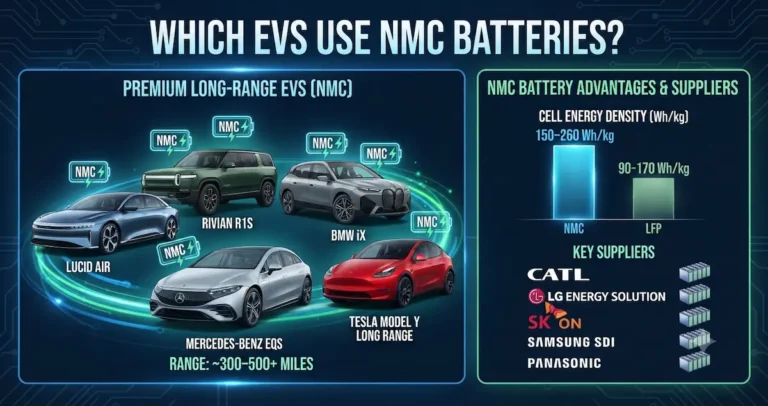
Which EVs use NMC batteries? Full list including Tesla, Hyundai, Kia, BMW, Mercedes, VW, Rivian, Lucid, and more. Learn which NMC suppliers power each brand.

What are the downsides of NCA batteries? Higher cobalt content, lower thermal threshold, faster degradation at 100% charge, and higher cost — the full NCA limitations explained.
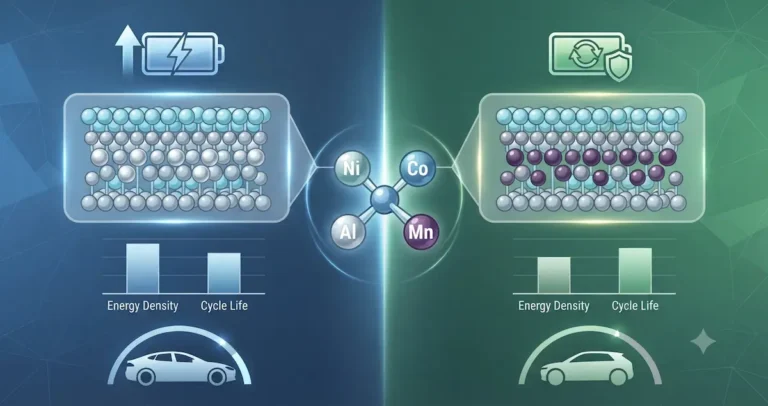
NCA vs NMC battery: what’s the key difference? Aluminum vs manganese as the third metal. Learn how energy density, cycle life, and thermal stability compare between these two EV chemistries.
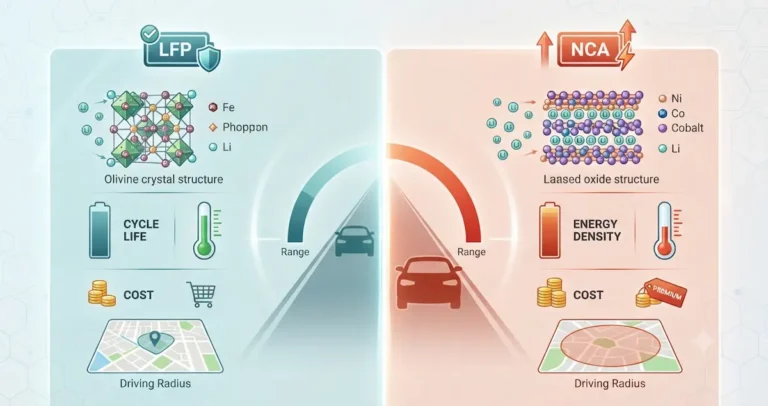
LFP vs NCA battery range: NCA delivers 405 miles (Tesla Model S) vs LFP’s 260–300 miles. But LFP wins on cost, safety, and cycle life. Full comparison of both EV battery chemistries.
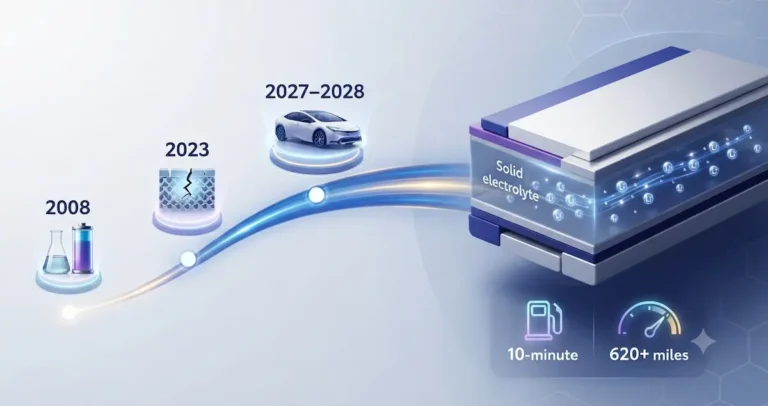
Toyota solid-state battery status: 620+ miles of range, 10-minute charging, the 2027-2028 launch target, sulfide electrolyte, and Idemitsu’s pilot plant.
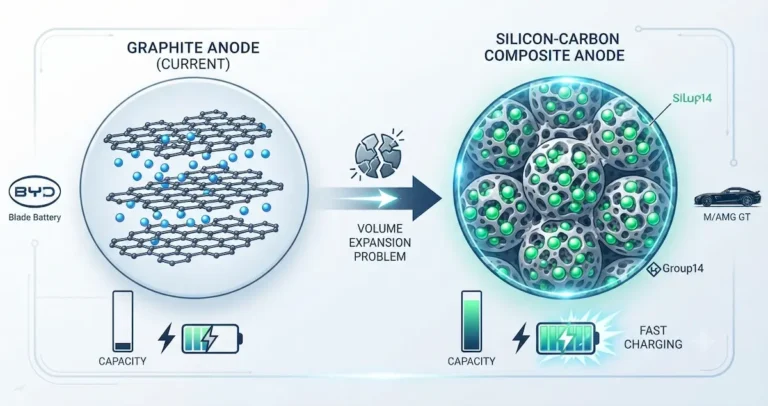
What is a silicon anode battery? Silicon stores 10x more lithium than graphite — enabling 15–55% more range and faster charging. Learn how silicon-carbon composites work and which EVs use them in 2026.
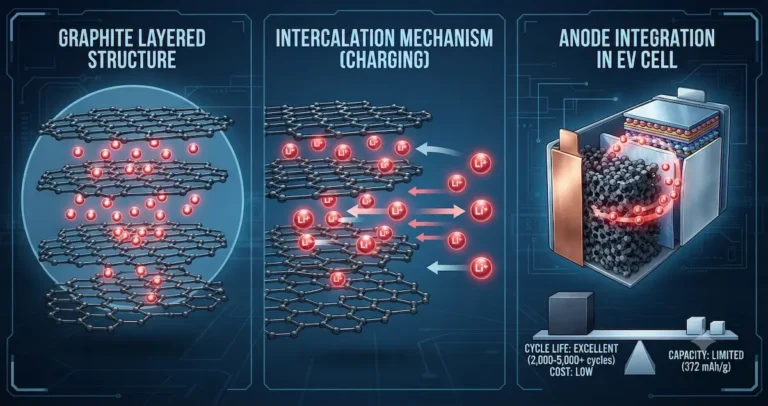
What is a graphite anode in an EV battery? Learn how graphite stores lithium via intercalation, why it dominates EV batteries, natural vs synthetic graphite, limitations, and silicon alternatives.
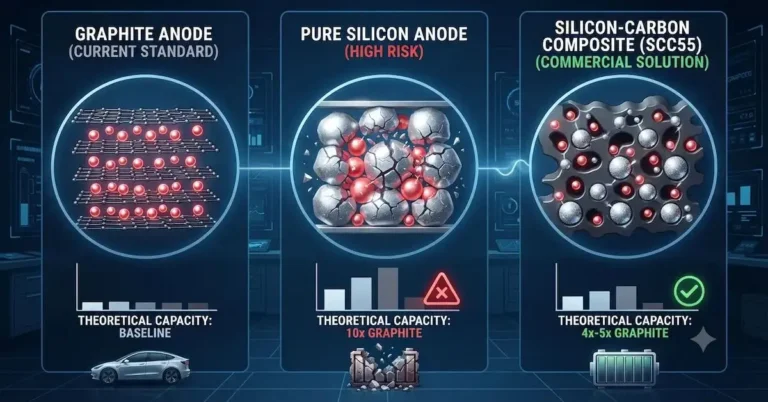
Silicon vs graphite anode: which is better for EVs? Silicon stores 10x more lithium but expands 400%. Silicon-carbon composites win the practical race — delivering 15–55% more range and faster charging.

What is high-nickel cathode battery chemistry? Learn how NMC 811, NCMA, and ultra-high-nickel cells work, why more nickel means more range, and the challenges manufacturers must solve.
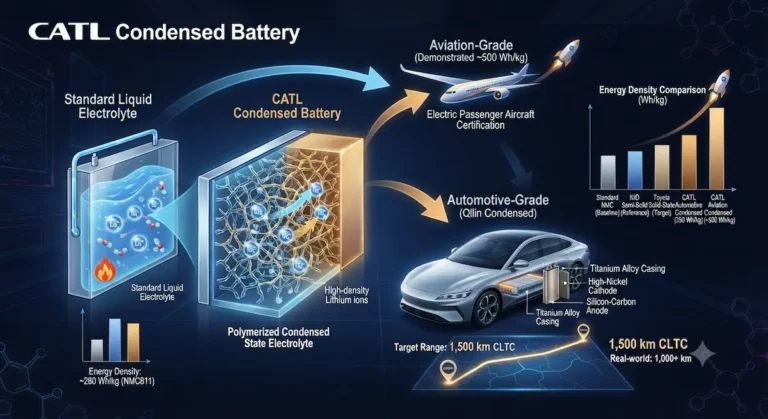
What is CATL’s condensed battery technology? The 350 Wh/kg Qilin Condensed Battery enables 1,500 km EV range using a novel condensed-state electrolyte, silicon-carbon anode, and titanium casing. Full guide.
End of content
End of content