
Which EVs Use NMC Batteries?


NMC batteries power the majority of premium long-range EVs on the market today. In 2024, NMC accounted for roughly 40–45% of the global EV battery market — and outside China, about 80% of EV batteries are nickel-based. Any EV targeting 300+ miles of EPA range almost certainly uses NMC chemistry, given its superior energy density of 200–260 Wh/kg compared to LFP’s 90–190 Wh/kg.
New to NMC chemistry itself? Start with our full explainer on what NMC battery chemistry is.
EVs That Use NMC Batteries (2025–2026)
| Brand | Model | NMC Variant | EPA Range (approx.) |
|---|---|---|---|
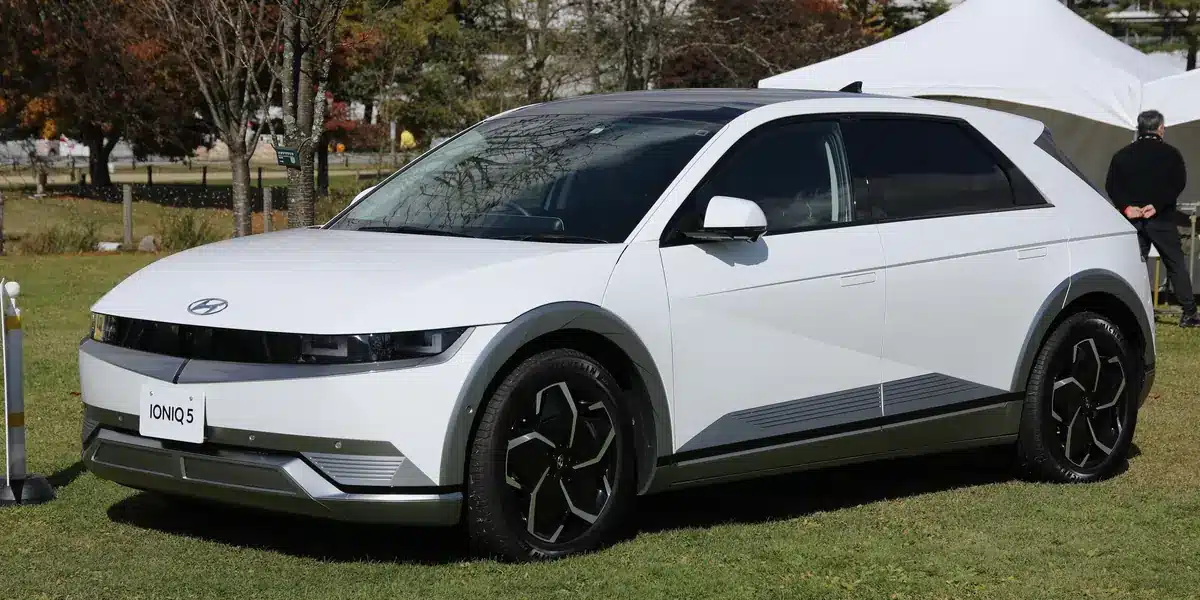
| Hyundai | Ioniq 5, Ioniq 6 Long Range | NMC 811 (SK On) | 266–342 miles |
| Kia | EV6, EV9 Long Range | NMC 811 (SK On) | 260–319 miles |
| BMW | i4, iX, i5, i7 | NMC 811 (Samsung SDI) | 270–324 miles |
| Mercedes | EQS, EQE, EQB | NMC (CATL/Farasis) | 260–350 miles |
| Tesla | Cybertruck; Model 3/Y (China/EU-built) | NMC 811 (Tesla 4680 / LG Energy Solution) | 301–350 miles |
| Volkswagen | ID.4/ID.5 Long Range, ID.7 | NMC (SK On / LG Energy Solution) | 260–300 miles |
| Rivian | R1T, R1S (Large/Max pack) | NCMA (Samsung SDI) | 321–410 miles |
| Ford | Mustang Mach-E Extended Range | NMC (SK On) | 290–312 miles |
| GM (Chevrolet / Cadillac) | Blazer EV, Equinox EV, Silverado EV, Lyriq | NCMA (LG Energy Solution) | ~280–490 miles |
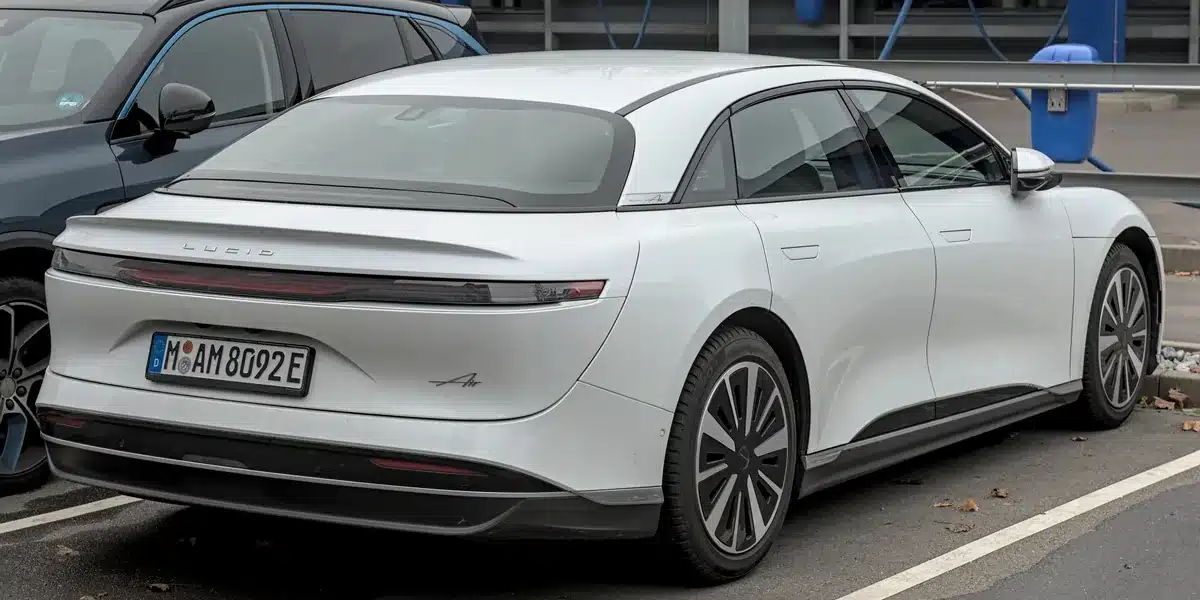
| Lucid | Air (all trims) | NMC (LGÉS) | 410–516 miles |
| Polestar | Polestar 2, 3, 4, 5 | NMC (CATL/SK On) | 260–320 miles |
| Audi | Q4 e-tron, e-tron GT | NMC (LG Energy Solution / SK On) | 250–303 miles |
| Porsche | Taycan (all trims) | NMC (LG Energy Solution) | 230–260 miles |
Tesla in the US is the exception, not the rule: US-built Model 3 and Model Y Long Range, Model S and Model X use Panasonic NCA cells — see the FAQ below.
Why Premium EVs Choose NMC
The reason is simple: energy density. NMC’s 200–260 Wh/kg vs LFP’s 90–190 Wh/kg means that for any given pack weight, NMC stores significantly more energy and delivers more range. For vehicles targeting 300–500+ miles EPA range — which is a premium market expectation — NMC is the only practical chemistry without making the pack impossibly heavy. The Lucid Air’s 516-mile range using NMC chemistry is only achievable because of NMC’s high energy density paired with a highly aerodynamic body and ultra-efficient drivetrain.
All that extra energy density comes with real thermal demands — see our explainer on why NMC battery needs active cooling.
The trade-offs are life and cost: NMC lasts about 1,000–2,500 cycles against 2,000–5,000+ for LFP, and a 2025 NMC pack cost about $128/kWh against about $81/kWh for LFP.
NMC Battery Suppliers for Major EV Brands
| Supplier | Key EV Customers (NMC) |
|---|---|
| CATL | Mercedes-Benz, Porsche (Macan EV), Polestar, BMW (select models) |
| LG Energy Solution | GM (Ultium NCMA), Lucid, Porsche Taycan, Ford, VW, Audi |
| SK On | Hyundai, Kia, Ford, VW, Audi, Polestar 5 |
| Samsung SDI | BMW, Rivian |
| Panasonic | Tesla (NCA cells — not NMC) |
Frequently Asked Questions
Which EVs use NMC batteries?
Most premium long-range EVs use NMC batteries, including the Hyundai Ioniq 5/6, Kia EV6/9, BMW i4/iX, Mercedes EQS/EQE, Tesla Cybertruck and China/EU-built Model 3/Y, VW ID.4/ID.7, Rivian R1T/R1S (Large/Max pack), Ford Mustang Mach-E Extended Range, Lucid Air, Porsche Taycan, and Polestar 2/3/4/5.
Does Tesla use NMC batteries?
Only in some cars. US-built Model 3 and Model Y Long Range, and every Model S and Model X, use Panasonic NCA cells, not NMC. Tesla’s NMC cars are the Cybertruck (its in-house 4680 cells, listed as nickel-cobalt-manganese in Tesla’s own battery passport) and Model 3 and Model Y built in China and Europe, which use LG Energy Solution NMC cells. Standard Range cars sit outside both: the Model 3 used CATL LFP cells, while the current US Model Y Standard is nickel-based.
How do I know if my EV has NMC or LFP?
Check the owner’s manual or in-car software. Tesla vehicles show battery chemistry under Controls → Software → Additional Vehicle Information. For other brands, the charging recommendation is a reliable indicator: if your manual recommends an 80% daily charging limit, it’s almost certainly NMC. If it recommends 100% daily, it’s LFP. You can also check resources like EVDatabase.org or Recurrent Auto for chemistry by VIN.
Which EVs use NCA batteries instead of NMC?
Mostly Teslas sold in the US: Model 3 and Model Y Long Range and Performance, Model S and Model X all run Panasonic NCA cells from Gigafactory Nevada. NCA and NMC are close cousins — both are nickel-rich — but NCA swaps manganese for aluminum, much like NCMA does in GM and Rivian packs.
Which EVs use NCMA batteries?
GM’s Ultium EVs — the Chevrolet Blazer EV, Equinox EV and Silverado EV and the Cadillac Lyriq — use LG Energy Solution NCMA cells, and Rivian’s Large and Max packs use Samsung SDI NCMA. NCMA is an NMC variant with a little aluminum added for stability at very high nickel levels.
Conclusion
NMC batteries power the world’s best long-range EVs — from the Lucid Air’s 516-mile maximum to the Hyundai Ioniq 6’s 361-mile class-leading efficiency. Any EV targeting 300+ miles of range almost certainly runs NMC chemistry. The key NMC suppliers — CATL, LG Energy Solution, SK On, and Samsung SDI — collectively power most premium EV brands globally. While LFP is capturing the mainstream and budget segments, NMC remains firmly in charge of the performance and long-range tier of the EV market.
Want the full technical picture of the highest-density variant? See our breakdown of why NMC 811 has more range than older NMC.
