What Is a Dual-Ion Battery Chemistry?
What is a dual-ion battery chemistry? Learn how both cations and anions simultaneously store energy, dual-carbon and aluminum-graphite configurations, advantages over lithium-ion, and EV potential.

A deep dive into EV battery chemistry: NMC, NCA, LFP, sodium-ion, and solid-state. These articles compare how each chemistry performs on range, cost, safety, and charge cycles, and explain why automakers choose different chemistries for different vehicles. For cell-type-specific coverage, see our dedicated Lithium-Ion Batteries and Solid-State Batteries archives.
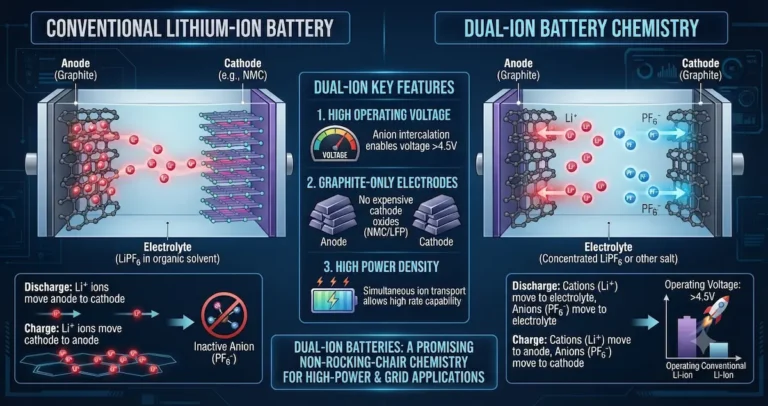
What is a dual-ion battery chemistry? Learn how both cations and anions simultaneously store energy, dual-carbon and aluminum-graphite configurations, advantages over lithium-ion, and EV potential.
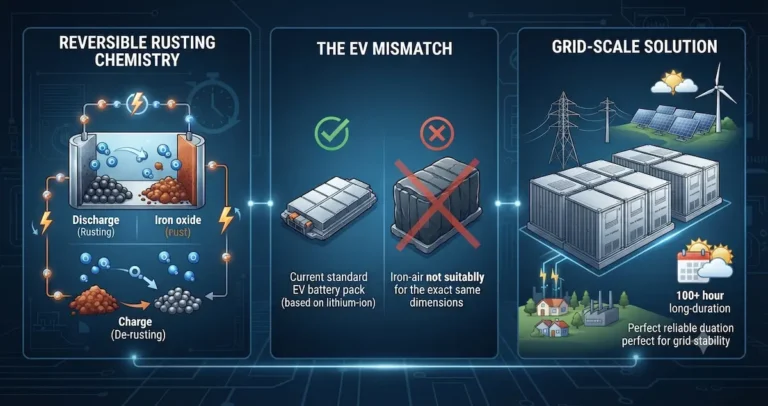
What are iron-air batteries? Form Energy’s reversible rusting technology targets under $20/kWh for grid storage — but iron-air is too heavy for EVs. Full explanation of how it works and where it fits.
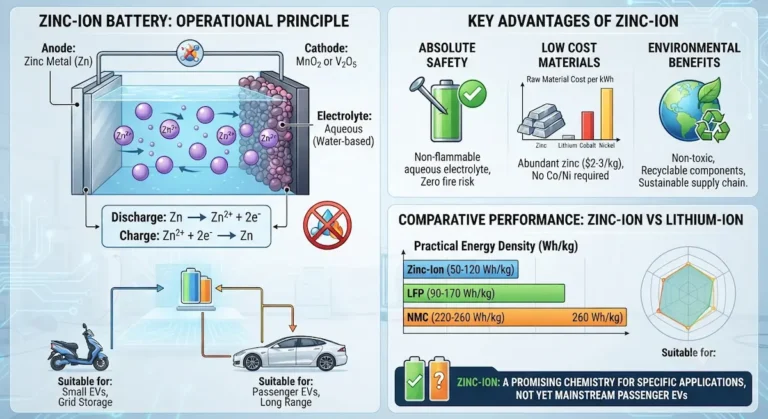
What are zinc-ion batteries and can they power EVs? Learn how zinc-ion works, its safety and cost advantages, energy density limits vs lithium-ion, and where zinc-ion batteries are commercially deployed in 2026.
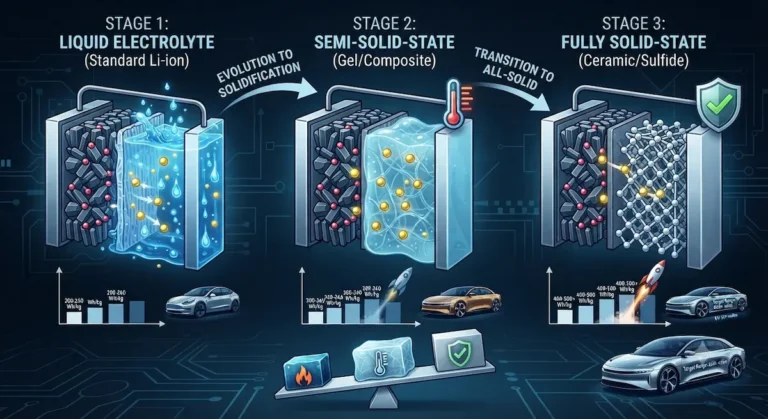
What is a semi-solid-state battery? Learn how gel electrolyte batteries work, NIO’s 150 kWh WeLion pack achieving 360 Wh/kg, how it differs from solid-state, and why semi-solid matters for EVs.

What is a lithium-air battery? Could it power EVs with 1,000+ mile range? Learn how Li-Air works, its 3,500 Wh/kg potential, the core technical challenges, and why it’s still research-stage in 2026.
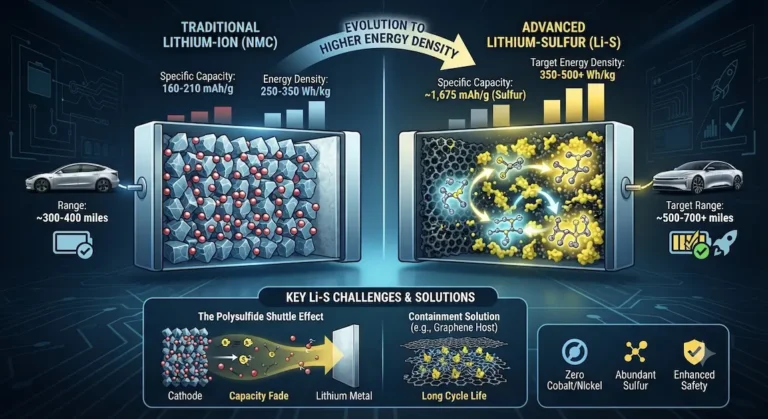
What is a lithium-sulfur battery for EVs? Sulfur cathode delivers 2,500 Wh/kg theoretical energy density at $0.57/kg — but the polysulfide shuttle effect limits cycle life. Full guide with commercial timeline.
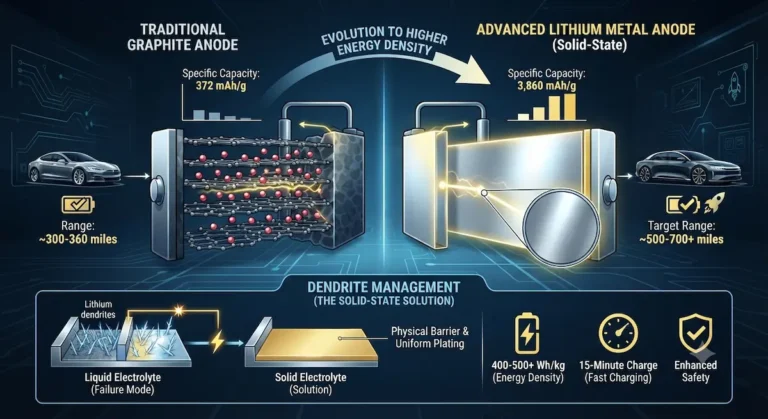
What is a lithium metal anode battery? Lithium metal stores 10x more energy than graphite — enabling 400–500 Wh/kg for solid-state EVs. Learn how it works, why dendrites block it, and who’s commercializing it.

What causes electrolyte breakdown in EV batteries? Five mechanisms — cathode oxidation, SEI growth, HF formation, heat, and gas generation — explain why batteries age. Full guide with prevention tips.
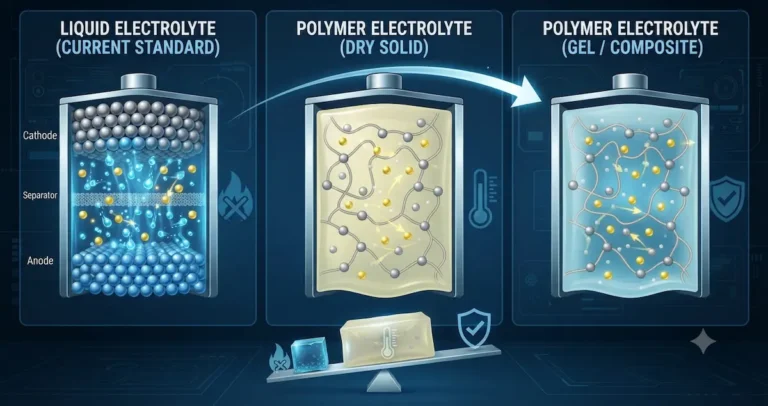
What is a polymer electrolyte battery? Learn how PEO and gel polymer electrolytes work, why room-temperature conductivity is the challenge, and where polymer electrolytes fit in EV battery evolution.
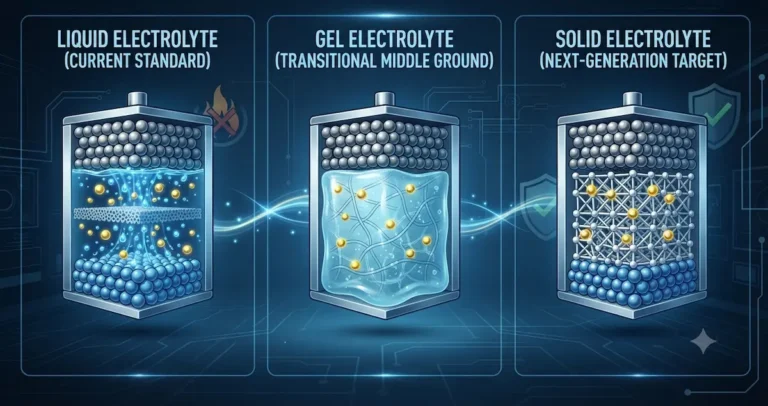
Liquid vs gel vs solid electrolyte in EV batteries: how each works, their conductivity, safety, compatibility, and commercial status. Full comparison including solid-state timeline.
End of content
End of content