
Can You Fly with Batteries?

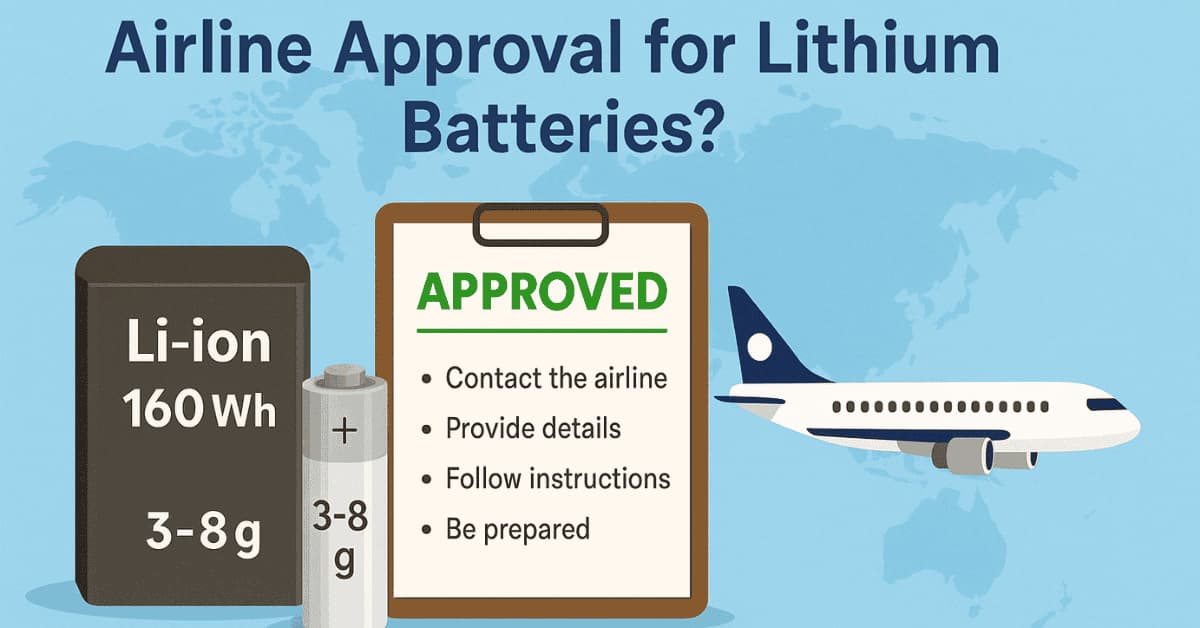
Yes, you can fly with lithium batteries, but there are specific regulations you must follow. Small lithium batteries inside devices like phones and laptops are generally permitted in carry-on luggage. However, spare batteries must be properly protected and carried in your cabin baggage, never in checked luggage.
Read about: EV lithium battery
This comprehensive guide covers everything you need to know about flying with lithium batteries in 2026. So, can you fly with batteries? The answer is yes, with adherence to these guidelines.

Expert Tip: Always check your specific airline’s policies before traveling with lithium batteries, as requirements can vary between carriers and may change without notice.
Which Batteries Are Allowed or Not Allowed on Airplanes
Battery Type | Allowed in Carry-on | Allowed in Checked | Special Notes / Conditions |
|---|---|---|---|
AA / AAA / C / D (Alkaline, NiMH, NiCd) | Yes | Yes | Common disposable or rechargeable household batteries. No restrictions. |
Lithium-ion (rechargeable) ≤ 100 Wh | Yes | No | Up to 2 spare batteries with a capacity of 100 Wh or more require airline approval. |
Lithium-ion 100–160 Wh | Yes (max 2 spares) | No | Requires airline approval. Used in large drones, professional cameras, and medical devices. |
Lithium-ion > 160 Wh | No | No | Prohibited on passenger aircraft. Allowed on cargo planes only under strict conditions. |
Lithium-metal (non-rechargeable) ≤ 2 g lithium | Yes | Yes (installed only) | Found in watches, cameras, or medical devices. Spare cells carry-on only. |
Lithium-metal > 2 g lithium | No | No | Not allowed on passenger flights. |
Power Banks / Portable Chargers | Yes | No | Treated as spare lithium-ion batteries (<100 Wh). Must be in carry-on. |
Laptop, Tablet, Smartphone (with battery installed) | Yes | Yes | Allowed if a battery is installed inside the device. Spares carry-on only. |
E-Cigarettes / Vapes | Yes | No | Must be in carry-on or on person. Charging during flight is prohibited. |
Drone Batteries | Yes (<100 Wh) / Limited (100–160 Wh) | No | Up to 2 spare batteries over 100 Wh allowed with airline approval. |
Lead-acid Batteries (wet, spillable) | No | No | Only allowed for wheelchairs or mobility devices with airline approval. |
Sealed Lead-acid (non-spillable, ≤12 V / ≤100 Wh) | Yes | Yes | Must be packed securely to prevent short circuits. |
Dry Batteries (Zinc-carbon, Zinc-air, Silver oxide) | Yes | Yes | Common in hearing aids and remotes. No restrictions. |
Car / Motorcycle Batteries | No | No | Not allowed unless part of mobility equipment. |
Wet Batteries (non-spillable types) | Yes (if ≤100 Wh) | Yes | Airline approval required. Must be leakproof and protected. |
Nickel-Metal Hydride (NiMH) | Yes | Yes | Common in cameras, flashlights, and toys. Safe for both. |
9-Volt Batteries | Yes | Yes | Terminals must be taped or covered. |
Button Cell Batteries | Yes | Yes | Installed in small devices (watches, hearing aids). Safe for all luggage. |
Understanding The Safety Concerns
Lithium batteries power nearly all our portable electronics, from smartphones and laptops to cameras and portable chargers. While these energy-dense power sources have revolutionized mobile technology, they also present unique safety challenges, especially in an aircraft’s confined environment.
Detailed Guide: How to Pack Lithium Batteries Safely
The Science Behind Lithium Battery Risks
Lithium batteries store significant energy in a compact form. When damaged or improperly handled, they can experience what engineers call “thermal runaway” — a chain reaction where the battery temperature rises rapidly, potentially leading to:
- Fire that can reach temperatures of over 1,000°F (538°C).
- Release of toxic gases.
- There is an explosion risk if the battery casing ruptures.
- Fires that cannot be extinguished with conventional methods.

significant safety risks if not handled properly. Source: IATA
Real-world incident: In 2016, a passenger’s e-cigarette battery caught fire in the overhead bin of a Delta flight. Fortunately, crew members were able to extinguish it quickly, but this incident underscores the importance of proper battery handling.
Why Carry-On Is Safer Than Checked Baggage
Aviation safety experts require spare lithium batteries to be carried in the cabin for three critical reasons:
- Immediate detection: Cabin fires can be spotted and addressed immediately
- Access to fire extinguishers: Crew members have specialized equipment to handle battery fires
- Pressure and temperature monitoring: The cabin environment is more controlled than the cargo holds

Who Makes The Rules For Flying With Lithium Batteries?
International organizations, national aviation authorities, and individual Airlines establish the airline rules for lithium batteries.
1. International Civil Aviation Organization (ICAO)
The ICAO, the International Civil Aviation Organization, is like the United Nations for airplanes! It’s a special part of the UN that helps all countries agree on making flying safe and organized.
2. TSA Guidelines
In the US, the Transportation Security Administration (TSA) is your first point of contact at security checkpoints. Their website guides what’s allowed in carry-on and checked baggage, including lithium batteries.
3. FAA Regulations
The Federal Aviation Administration (FAA) sets broader safety standards for US air travel. Their guidelines serve as the foundation for many Airline-specific policies regarding lithium batteries.
The Federal Aviation Administration, or FAA, has warned airlines about the risks of flying with lithium batteries. The FAA issued this warning after several batteries overheated or caught fire. This warning includes new, stricter rules for both passengers and cargo shipments.
4. IATA Standards
Globally, the International Air Transport Association (IATA) provides guidelines that Airlines adopt for safely transporting various items, including lithium batteries.
5. DOT Oversight
The Department of Transportation (DOT) also has rules for moving dangerous stuff, including lithium batteries.
Flying with Lithium Batteries as a Passenger
It can be confusing to know the rules for traveling with lithium batteries. Safety groups like the TSA in the US and IATA worldwide make most of the rules. Airlines also have their own extra rules you need to follow.
1. Carry-on vs. Checked Baggage
Carry-on Baggage
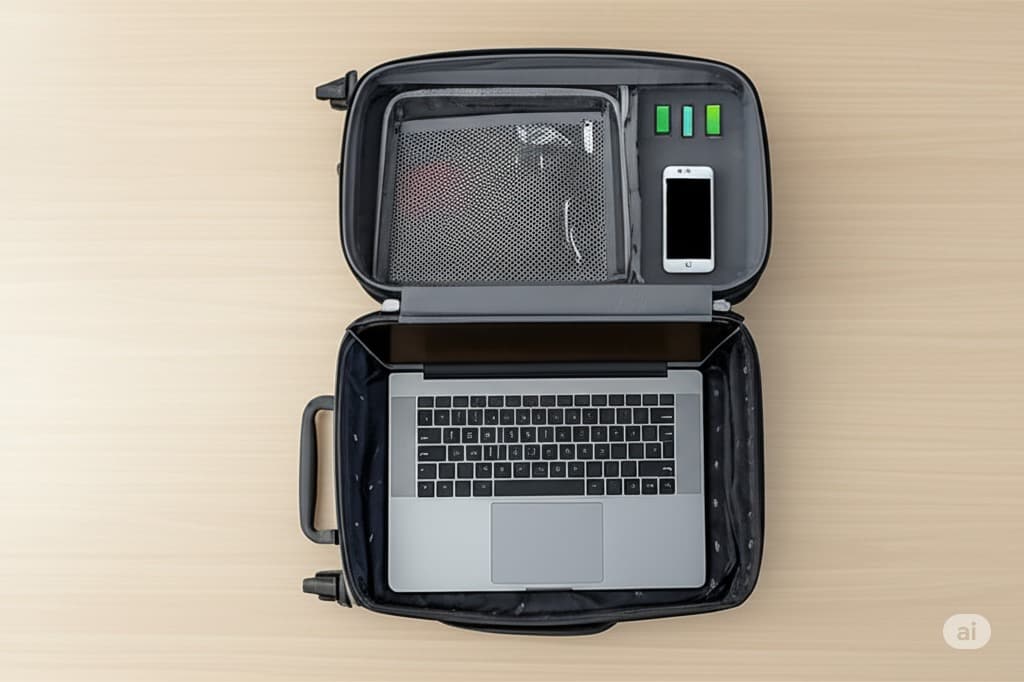
Spare lithium batteries, including power banks and spare batteries for laptops and cameras, must typically be carried in carry-on luggage. This requirement allows for quicker management of in-cabin battery fires.
Checked Baggage
Devices containing lithium-ion batteries may be allowed if powered off and adequately protected. Spare batteries must always travel in carry-on luggage — this rule applies regardless of airline or destination.
Comprehensive Lithium Battery Regulations for Air Travel
Battery Type | Watt-hour Rating | Carry-on Allowance | Checked Bag Allowance |
|---|---|---|---|
Lithium-ion (rechargeable) | Under 100 Wh | Unlimited | Only in devices |
Lithium-ion (rechargeable) | 101-160 Wh | Max 2 spares | Not allowed |
Lithium-ion (rechargeable) | Over 160 Wh | Not allowed | Not allowed |
Lithium metal (non-rechargeable) | Under 2g of lithium | Unlimited | Only in devices |
Lithium metal (non-rechargeable) | 2-8g lithium | Max 2 spares | Not allowed |
Lithium metal (non-rechargeable) | Under 2g of lithium | Not allowed | Not allowed |
Source: TSA and IATA guidelines, with airline-specific policies.
2. Lithium Metal Batteries
Generally, non-rechargeable batteries have stricter limits and must be carried onboard.
3. Battery Capacity Limits
Lithium-ion battery capacity is measured in Watt-hours (Wh), while lithium metal batteries are measured by lithium content (grams):
- Small Batteries (Under 100 Wh or ≤ 2 grams of lithium) are generally allowed in carry-on bags.
- Medium Batteries (101–160 Wh or 2–8 grams lithium) are allowed with Airline approval, but passengers are limited to two spare batteries per passenger.
- Large Batteries (Over 160 Wh or > 8 grams of lithium) are prohibited on passenger flights and must be shipped as cargo under dangerous goods regulations.
How to get airline approval for batteries?
Typically, Airline approval is required only for:
- Spare lithium-ion batteries rated between 101 Wh and 160 Wh.
- Spare lithium metal batteries containing 2–8 grams of lithium.
Batteries installed in devices generally do not need pre-approval if they fall.
1. Contact the Airline Directly
Contact the Airline well in advance — ideally when booking your ticket, or as soon as you know you’ll be carrying these batteries.
2. Multiple Contact Methods
Contact Method | Best For | Response Time |
|---|---|---|
Phone | Immediate questions | Immediate |
Documentation | 24-48 hours | |
Online Form | Simple requests | 24-72 hours |
Social Media | Quick queries | Varies widely |
3. Provide Necessary Information
Have these details ready:
- Flight or booking reference.
- Battery type (lithium-ion or lithium metal).
- Wh rating (for lithium-ion) or lithium content (for lithium metal).
- Intended use (e.g., laptop, camera, medical device).
- Number of batteries.
- Whether batteries are spare or installed in devices.
4. Follow the Airline’s Instructions
The Airline may:
- Add a notation to your reservation.
- Send written approval or confirmation.
- Provide packing and presentation guidelines for security checks.
5. Be Prepared at the Airport
- Keep written approval readily accessible.
- Ensure batteries are packed to prevent short circuits.
- Be prepared to display battery ratings and approvals at security.
Personal experience: “When traveling with my professional camera equipment, I always bring printed approval emails from the airline. During a recent international flight, security questioned my spare batteries, but having the airline’s written approval immediately resolved the issue.” – Sherjeel Sajid.
6. Important Considerations
- Act Early: Last-minute requests may not be accommodated.
- Policy Variance: Approval with one Airline doesn’t transfer to another.
- No Guarantees: The Final allowance is at the Airline’s discretion.
- Medical Devices: Separate approvals may apply — notify the Airline.
3. What To Avoid
- Never do these things: Store batteries loose with metal objects (keys, coins, etc).
- Pack multiple unprotected batteries together.
- Do not use damaged batteries or those showing signs of swelling.
- Attempt to charge batteries during flight.
Specific Device Regulations: Beyond Basic Batteries
1. E-cigarettes And Vaping Devices
These devices pose unique risks and have caused numerous incidents:
- Must be carried in the cabin (never in checked luggage).
- Must be completely powered off (not just in sleep mode).
- Cannot be charged during flight.
- It should be stored to prevent accidental activation.
2. Smart Luggage with Batteries
Smart luggage with tracking, charging, or motorized features requires special handling:
- Removable batteries: These must be taken out and carried inside the plane.
- Non-removable batteries: The Entire luggage cannot be checked and may be prohibited entirely.
- Airline policies vary widely: Some airlines have banned all smart luggage.
3. Mobility Devices And Medical Equipment
For wheelchairs, CPAP machines, and other medical devices:
- Advance notification: Contact the airline at least 48 hours in advance.
- Documentation: Bring medical necessity documentation.
- Special allowances: Medical devices often have different watt-hour limits.
- Backup batteries: Consider bringing spares (within limits) for essential medical equipment.
International Travel Considerations
Regulations can vary significantly between countries. When traveling internationally:
- Research destination country rules: Some countries have stricter limits.
- Consider transit countries: Your connecting flights may have different rules.
- Language barriers: Bring printed documentation in English and the local languages.
- Customs declarations: Some countries require a declaration of high-capacity batteries.
Shipping Lithium Batteries as Cargo
Shipping lithium batteries involves stringent regulations outlined primarily by the IATA Dangerous Goods Regulations (DGR), dependent on several factors:
- Battery Type: Lithium-ion vs. lithium metal.
- State of Charge (SoC): Typically limited to 30% maximum for loose batteries.
- Packaging: Requires specific UN-certified packaging.
- Marking and Labeling: Clear marking and labeling per IATA requirements.
- Documentation: Accurate declarations and documentation.
- Quantity and Weight Limits: Depending on battery type and configuration.
- Mode of Transport: Different rules apply for cargo vs. passenger aircraft.
- Training: Personnel must undergo specific training on dangerous goods handling.
Key Takeaways for Travelers
Always verify the specific lithium battery regulations with your Airline before traveling. Airline rules can be stricter than general guidelines. Visit your Airline’s website or contact customer service to avoid potential issues.
Understanding and adhering to these rules allows you to travel safely and efficiently with your lithium-powered devices, avoiding delays or confiscation at security checkpoints.
Conclusion
Flying with lithium batteries is generally permitted, provided the safety guidelines are followed.
- Know your batteries: Understand their capacity and classification.
- Pack properly: Keep spares in carry-on, protected against short circuits.
- Check with your airline: Verify specific policies, especially for larger batteries.
- Stay informed: Regulations evolve, so check for updates before each trip.
- Prioritize safety: These rules are in place to protect everyone on board.
