
Hyundai Kona Electric Battery: Complete Guide

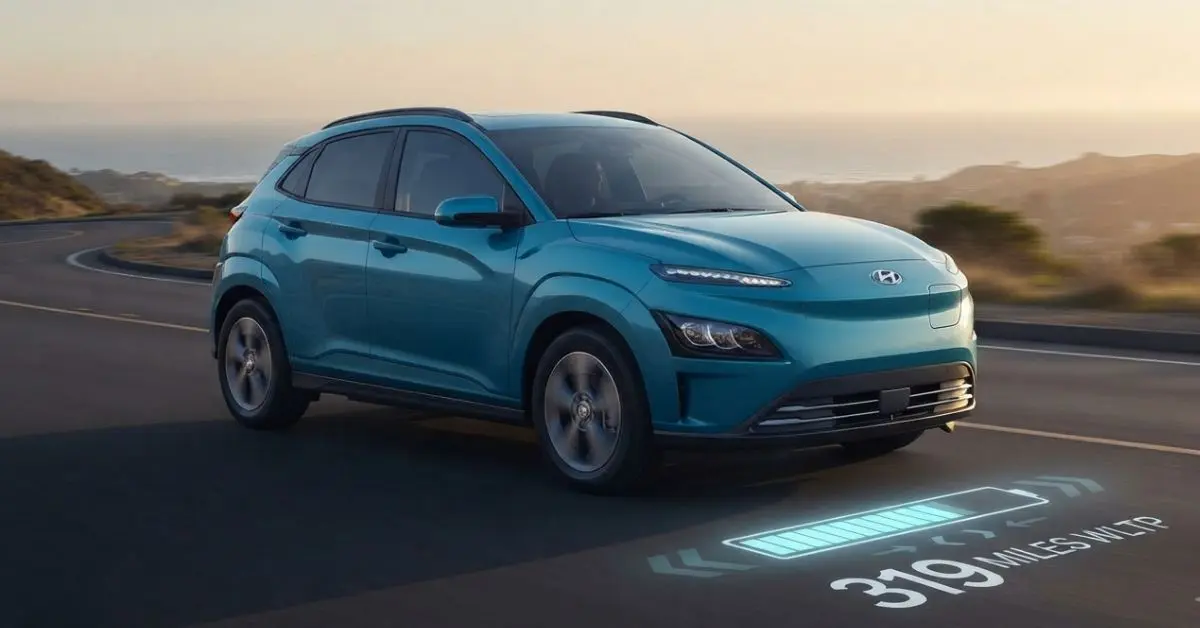
The Hyundai Kona Electric battery comes in two sizes in the US: a 48.6 kWh pack in the SE and a 64.8 kWh pack in the SEL, N Line and Limited, both lithium-ion NMC on a 400-volt architecture. The big pack is rated at up to 261 miles of EPA range, and both charge from 10 to 80 percent in about 43 minutes on a DC fast charger. The current car arrived for 2024, Hyundai skipped the 2026 model year in the US, and this guide also covers the first-generation car (2019-2023) — including the battery fire recall every used buyer needs to know about.
The current Hyundai Kona Electric (2024-2025) uses an NMC lithium-ion battery: 48.6 kWh in the SE (200 miles EPA) or 64.8 kWh in the SEL, N Line and Limited (up to 261 miles EPA). DC fast charging peaks at 100 kW and takes about 43 minutes from 10 to 80 percent. Hyundai covers the pack for 10 years or 100,000 miles, and there is no 2026 model in the US — the car returns for 2027.
Key figures:
Packs 48.6 kWh (SE) / 64.8 kWh (other trims) – EPA range 200 / 261 miles (N Line 230) – DC charging 100 kW peak, 10-80% in about 43 minutes – Warranty 10 years / 100,000 miles, 70% floor
Hyundai Kona Electric Battery: Full Specs
| Trim | Battery | EPA Range | Power | Peak DC Rate | 10-80% DC |
|---|---|---|---|---|---|
| SE | 48.6 kWh | 200 miles | 133 hp | 100 kW | ~43 min |
| SEL | 64.8 kWh | 261 miles | 201 hp | 100 kW | ~43 min |
| N Line | 64.8 kWh | 230 miles | 201 hp | 100 kW | ~43 min |
| Limited | 64.8 kWh | 261 miles | 201 hp | 100 kW | ~43 min |
What Changed in the Second Generation Kona Electric
The second-generation Kona Electric (2024 in the US) represents a significant improvement over the original model in every battery-related aspect. The previous Kona Electric used a 64 kWh battery capped at about 77 kW DC charging — already good for its time, but increasingly outpaced by competitors. The new model upgrades both numbers:

- Battery capacity: 64 kWh only → a choice of 48.6 kWh (SE) or 64.8 kWh — the smaller pack makes the Kona Electric one of the cheapest EVs in the US, from $32,975.
- DC fast charging: about 77 kW → 100 kW peak — the 10-80% stop drops to about 43 minutes on both packs.
- Battery preconditioning: now standard on US cars — the pack warms itself on the way to a fast charger for better cold-weather charging (European cars also get a standard heat pump).
- Body size: 145mm longer, 25mm wider, 20mm taller — significantly more interior space for passengers and luggage
- Aerodynamics: Cd of 0.275 — relatively low for a compact SUV — improving highway efficiency
Kona Electric Battery Chemistry and Architecture
Both Kona Electric generations use NMC (nickel manganese cobalt) lithium-ion pouch cells with active liquid cooling. The first-generation 64 kWh pack holds 294 LG pouch cells wired 98 in series and 3 in parallel (98s3p) at about 356 volts. The second-generation packs run at 269 volts (48.6 kWh) and 358 volts (64.8 kWh); European-built cars use LG Energy Solution cells made in Poland, with packs assembled at Hyundai’s plant in Nošovice, Czechia, while US cars are built in Ulsan, South Korea. Hyundai does not publish the newer pack’s cell count.
Efficiency is the Kona’s quiet strength: the 64.8 kWh car is EPA-rated at up to 261 miles and 116 MPGe combined, so it travels further per kWh than most small crossovers. A battery heater and preconditioning system protect charging speeds in cold weather, and the pack also supports vehicle-to-load (V2L) power for tools and devices on equipped trims.
Kona Electric Real-World Range
- 64.8 kWh (SEL / Limited), mild weather: about 240-280 miles — most owners land close to the 261-mile EPA rating in mixed driving.
- 64.8 kWh at a steady 70 mph: about 210-240 miles.
- 48.6 kWh (SE), mild weather: about 180-210 miles, around its 200-mile EPA rating.
- Wheel size matters: the N Line’s 19-inch wheels cut its EPA rating to 230 miles — the same pack loses 31 miles to wheels and tires alone.
- Cold weather (both packs): expect roughly 20-30% less range in deep cold; preconditioning protects charging speed, not range itself.
Kona Electric Charging Speeds
| Charging Method | Power | 48.6 kWh (SE) | 64.8 kWh (Long Range) |
|---|---|---|---|
| Level 1 (120V) | ~1.4 kW | ~35 hours full | ~46 hours full |
| Level 2 (240V, 11 kW) | 11 kW | ~5 hours (10-100%) | ~6 hours (10-100%) |
| DC Fast Charging | 100 kW peak | ~43 min (10-80%) | ~43 min (10-80%) |
Kona Electric Battery Warranty
Hyundai covers the Kona Electric battery with a 10-year / 100,000-mile warranty in the U.S. — the same class-leading coverage as the Ioniq 5 and Ioniq 6. This is 2 years longer than most competitors. The coverage carries a 70% capacity floor: if a Hyundai dealer’s state-of-health check shows the pack below 70% inside the warranty window, Hyundai repairs or replaces it.
The Kona Electric Battery Fire Recall: 2019-2020 Cars
Hyundai recalled 4,694 US Kona Electrics from model years 2019 and 2020 because some LG battery cells — made in Nanjing, China — had a folded anode tab that could cause an internal short and, in rare cases, a fire. More than a dozen fires were reported worldwide, none of them in the US, out of roughly 82,000 cars recalled globally.
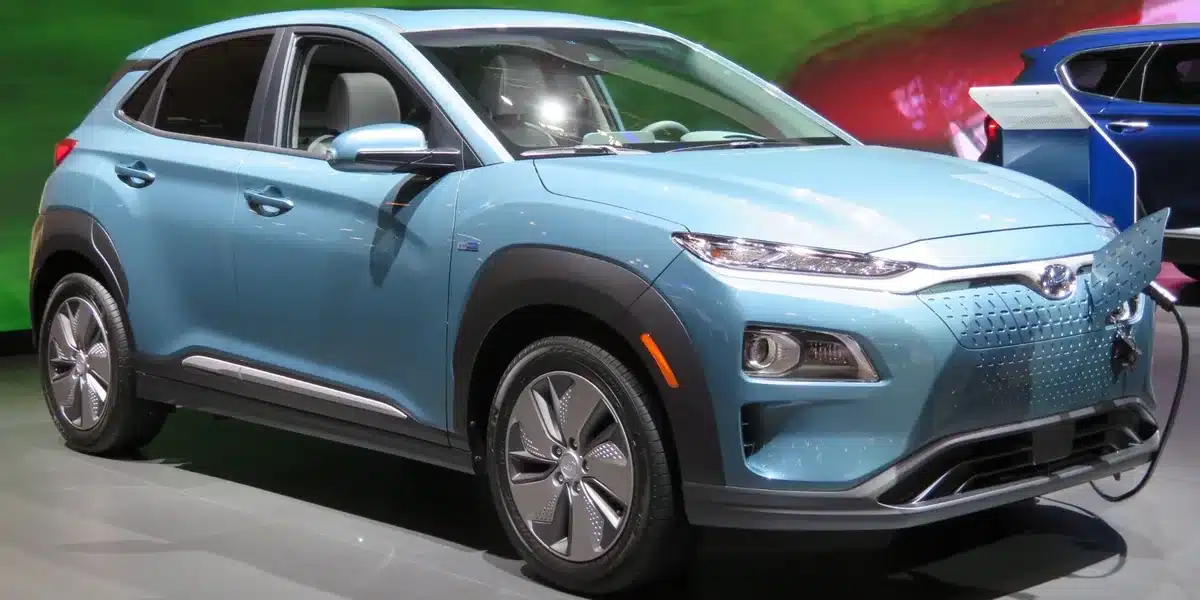
A 2020 software update that capped charging at 90 percent did not fully solve it, so Hyundai replaced the entire battery pack free of charge (Hyundai recall 200). Cars from 2021 onward are not affected. If you are buying a 2019 or 2020 car, enter its VIN in the NHTSA recall lookup to confirm the replacement was done — a recalled car on its new pack is effectively running a much younger battery.
Kona Electric Degradation Expectations
- Annual degradation rate: fleet data across 22,700+ liquid-cooled EVs averages about 2.3% capacity loss per year (Geotab), and the Kona’s liquid-cooled NMC pack sits in that class.
- First-generation Kona Electric (64 kWh): a strong real-world record — and many 2019-2020 cars now run on brand-new packs fitted free under the fire recall below, which restarted their degradation clock.
- Key habits: 80% daily charge limit; use navigation for DC charger routing to trigger preconditioning
As a rough guide, applying that fleet-average rate:
| Pack age | Typical capacity remaining |
|---|---|
| 2 years | ~95% |
| 4 years | ~91% |
| 6 years | ~87% |
| 8 years | ~83% |
| 10 years | ~79% |
Kona Electric Battery Replacement Cost
If a Kona Electric pack ever needs replacing outside warranty, owners are typically quoted about $5,000 to $8,000 installed, depending on pack size and local labor rates. In practice, very few owners pay it: the 10-year / 100,000-mile warranty covers US cars for a decade, and the recalled 2019-2020 cars received new packs free. Our full EV battery replacement cost guide breaks down what drives prices like these.
Kona Electric vs Competitors: Compact EV Battery Comparison
| Model | Battery | EPA Range | Peak DC Rate | Battery Warranty |
|---|---|---|---|---|
| Hyundai Kona Electric LR | 64.8 kWh NMC | 261 miles | 100 kW | 10 yr / 100k mi |
| Kia Niro EV | 64.8 kWh NMC | 253 miles | 85 kW | 10 yr / 100k mi |
| VW ID.4 Pro | 82 kWh NMC | 291 miles | 175 kW | 8 yr / 100k mi |
| Chevy Equinox EV | 85 kWh NMC | Up to 319 miles | 150 kW | 8 yr / 100k mi |
See our full Kia Niro EV battery guide for a detailed look at the closest sibling rival listed above.
Charging Tips for Hyundai Kona Electric Owners
- Set daily charge limit to 80%: NMC benefits significantly from this — Hyundai’s settings allow easy scheduling. At 80%, the 64.8 kWh pack holds about 52 kWh — enough for roughly 200 miles of daily driving.
- Choose 17-inch wheels for maximum range: the N Line’s 19-inch wheels cut EPA range from 261 to 230 miles — one of the largest wheel-size range penalties in the compact EV class.
- Precondition while plugged in: warm the cabin and battery from wall power before a winter departure, so the energy comes from the grid instead of your range.
- Route to DC chargers via built-in navigation: Battery preconditioning activates through the Kona’s navigation — always route to fast chargers via the car’s nav for best charging speeds, especially in cold conditions.
Frequently Asked Questions
What battery does the Hyundai Kona Electric have?
US models use an NMC lithium-ion battery in two sizes: 48.6 kWh in the SE and 64.8 kWh in the SEL, N Line and Limited — both liquid-cooled pouch-cell packs on a 400-volt architecture. The first-generation car (2019-2023) came only with a 64 kWh pack in the US.
What type of battery is in the 2026 Kona Electric?
There is no 2026 Kona Electric in the US — Hyundai paused the model for a year, dealers are selling through the 2025 car, and it returns as a 2027 model with the same battery lineup expected. The 2025 US car uses the 48.6 and 64.8 kWh NMC packs; European 2026 cars use the same NMC battery in 48.4 and 65.4 kWh sizes.
How long does a Kona Electric battery last?
Expect roughly 2% capacity loss per year — fleet data puts a liquid-cooled pack at about 83% after 8 years, and the Kona’s pack has a strong real-world record. Hyundai warranties it for 10 years or 100,000 miles down to 70% capacity. Many 2019-2020 cars also received brand-new packs under the fire recall, so their batteries are far younger than the car.
How many cells are in a Kona Electric battery pack?
The first-generation 64 kWh pack holds 294 LG pouch cells in a 98s3p layout — 98 in series, 3 in parallel — at about 356 volts. Hyundai has not published the cell count for the second-generation 48.6 and 64.8 kWh packs.
Was the Kona Electric recalled for battery fires?
Yes. Hyundai recalled 4,694 US Kona Electrics from 2019 and 2020 because some LG cells could short internally, and replaced the full battery pack free of charge. Cars from 2021 onward are not affected, and used buyers can check any car’s VIN on the NHTSA recall lookup.
How much does a Kona Electric battery replacement cost?
Out of warranty, a replacement pack is typically quoted at about $5,000 to $8,000 installed. Most owners never pay it — the battery is covered for 10 years or 100,000 miles, and the recalled 2019-2020 cars got new packs free.
Conclusion
The Hyundai Kona Electric battery is a well-rounded, well-warranted NMC pack — the 64.8 kWh Long Range delivers up to 261 miles of EPA range, 100 kW DC fast charging, and standard battery preconditioning at a price point where rivals often charge extra. It is also backed by a 10-year battery warranty that should reassure any owner. The Kona Electric remains a smart choice for value-conscious buyers who want a practical, efficient electric crossover.
