
Hyundai Inster / Casper Electric Battery: Complete Guide

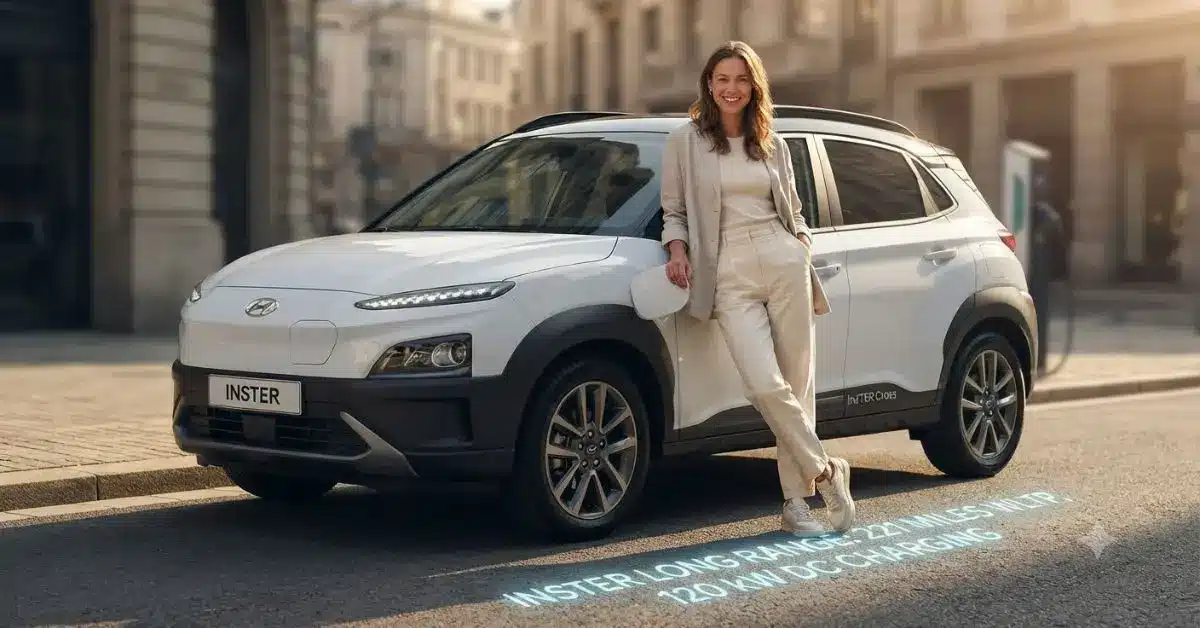
The Hyundai Casper Electric / Inster battery comes in 42 kWh (Standard Range) and 49 kWh (Long Range) — both NMC on a 400V platform. The Long Range delivers 355 km (221 miles) WLTP — the longest range in the A-segment mini-SUV class at launch. DC fast charging peaks at 120 kW across both variants, completing 10–80% in approximately 29 minutes. The car is sold as the Casper Electric in South Korea and as the Inster in Europe, Japan, and Australia — slotting below the Hyundai Kona Electric as the brand’s smallest EV. It won the 2025 World Car of the Year in the Urban Car category — confirming its class leadership.
Hyundai Casper / Inster Battery: Full Specs
| Specification | Standard Range (42 kWh) | Long Range (49 kWh) |
|---|---|---|
| Battery capacity | 42 kWh | 49 kWh |
| Battery usable | ~39 kWh | ~46 kWh |
| Chemistry | NMC | NMC |
| Architecture | 400V | 400V |
| WLTP range (15-inch wheels) | ~300 km (~186 miles) | 355 km (221 miles) |
| Motor power | 71 kW (95 hp) FWD | 84.5 kW (113 hp) FWD |
| Torque | 147 Nm | 147 Nm |
| 0–100 km/h | 11.7 sec | 10.6 sec |
| Top speed | 140 km/h (87 mph) | 150 km/h (93 mph) |
| Peak DC rate | 120 kW | 120 kW |
| 10–80% DC time | ~29 min | ~29 min |
| AC onboard charger | 11 kW | 11 kW |
| V2L capability | Yes (3.6 kW) | Yes (3.6 kW) |
| Wheelbase | 2,580 mm | 2,580 mm |
| Length | 3,825 mm | 3,825 mm |
| Starting price (Europe) | ~€23,900 | ~€27,000 |
World Car of the Year 2025: Urban Car Category
The Hyundai Inster won the 2025 World Car of the Year Urban Car award — global recognition for the best small city EV available. Judges highlighted the 355 km class-leading WLTP range, 120 kW fast charging (exceptional for a car this size), and V2L capability as standout achievements. The Inster was the first car in this segment to offer 120 kW DC charging — rivals like the Dacia Spring and Fiat Grande Panda max out at 30 kW. The combination of range, charge speed, and price made it a decisive winner.
120 kW DC Charging: Class-Leading for a City Car
The 120 kW DC peak rate is extraordinary for a sub-4-metre EV. The Renault 5’s 52 kWh model reaches 100 kW; the Citroën ë-C3 Standard also reaches 100 kW. The Inster beats both — 120 kW from a 49 kWh pack gives 10–80% in approximately 29 minutes. This means a genuine road trip capability that most micro-EVs cannot offer. At 120 kW, approximately 95 miles of range can be added in 20 minutes at a compatible fast charger.
The 11 kW onboard AC charger is standard across all Inster variants. This fills the 49 kWh Long Range fully in approximately 5 hours — convenient for workplace top-ups and public AC chargers. V2L (Vehicle-to-Load) is also standard — turning the 42–49 kWh battery into a portable power source for camping, tools, or appliances. V2L in this class is unusual — the Dacia Spring and Citroën ë-C3 do not offer it.
Inster Charging Speeds
| Method | Power | Standard (39 kWh usable) | Long Range (46 kWh usable) |
|---|---|---|---|
| Level 1 (120V) | ~1.4 kW | ~30 hours full | ~35 hours full |
| Level 2 (7.4 kW) | 7.4 kW | ~5.5 hours full | ~6.5 hours full |
| Level 2 (11 kW) | 11 kW | ~4 hours full | ~5 hours full |
| DC Fast (120 kW) | 120 kW peak | ~29 min (10–80%) | ~29 min (10–80%) |
Real-World Range
- Long Range (46 kWh usable), real-world: Approximately 187 miles (302 km) per Green Cars Compare fleet data — 4.05 miles/kWh average efficiency
- Standard Range (39 kWh usable), mild weather: Approximately 158 miles — efficient for its size but limited for road trips
- Cold weather: Approximately 130–155 miles (LR) — standard heat pump is confirmed in the Inster, limiting winter range loss vs cars without one
- Urban driving: Both variants excel in the city — slow speeds and frequent regen keep efficiency high, often matching or exceeding WLTP figures
Inster Cross: The Adventure Variant
The Inster Cross (called Casper Cross in South Korea) adds rugged cladding, roof rails, and increased ground clearance. It uses the same 42 and 49 kWh battery options as the standard Inster. The Cross variant launched in Japan in August 2025. It is not specifically designed for off-road use — the raised appearance is more styling than capability.
Battery Warranty
Hyundai covers the Inster battery with a 8-year / 160,000 km warranty in most markets. The vehicle warranty is 5 years in European markets. Annual NMC degradation is approximately 2–2.5% per year for a small pack with frequent cycling. The 10-year / 100,000 km coverage offered in some markets provides even more long-term security. Setting daily charge to 80–90% extends NMC longevity, though the small pack means this reduces available daily range more noticeably than in larger EVs.
Inster vs Competitors: Affordable Mini-EV Battery Comparison
| Model | Battery | WLTP Range | DC Rate | V2L | Starting Price |
|---|---|---|---|---|---|
| Hyundai Inster Long Range | 49 kWh NMC | 221 miles | 120 kW | Yes | ~€27,000 |
| Citroën ë-C3 Standard | 44 kWh LFP | 199 miles | 100 kW | No | ~€22,000 |
| Renault 5 E-Tech (52 kWh) | 52 kWh NMC | 252 miles | 100 kW | Yes (52 kWh) | ~€25,000 |
| Dacia Spring (26.8 kWh) | 26.8 kWh LFP | 142 miles | 30 kW | No | ~€15,000 |
See our Dacia Spring battery guide for full details on the budget rival listed above.
Charging Tips for Hyundai Inster / Casper EV Owners
- Set daily charge to 80–90%: NMC benefits from avoiding 100% daily — 90% of 46 kWh provides ~41 kWh covering approximately 165 miles, enough for most urban daily use
- Use 120 kW DC for road trips: The Inster’s class-leading 120 kW rate adds approximately 95 miles in 20 minutes — making longer journeys genuinely practical for a mini-EV
- Use V2L for outdoor activities: The 3.6 kW V2L output powers laptops, camping gear, or tools directly from the battery — a rare feature in this price class
- Precondition before DC charging: Use Hyundai’s BlueLink app to route to DC chargers via navigation — this activates battery preconditioning for consistent 120 kW peak speed
Conclusion
The Hyundai Inster / Casper EV battery sets a new benchmark in the mini-EV segment — 49 kWh NMC with 221 miles WLTP, 120 kW DC charging in 29 minutes, 11 kW AC, and V2L standard across the range. The 2025 World Car of the Year Urban Car award validates what the specs confirm: this is the most technically capable small city EV available in its price bracket. No rival combines this range, charging speed, and standard-spec V2L under €27,000. For urban buyers in Europe, South Korea, Japan, or Australia who want maximum capability in a sub-4-metre EV, the Inster battery is the clear class leader in 2026.
