
Mercedes EQS Battery: Complete Guide

Researched from Mercedes-Benz’s own launch technical data, fueleconomy.gov, EV Database, Edmunds and NHTSA records, checked November 2026.
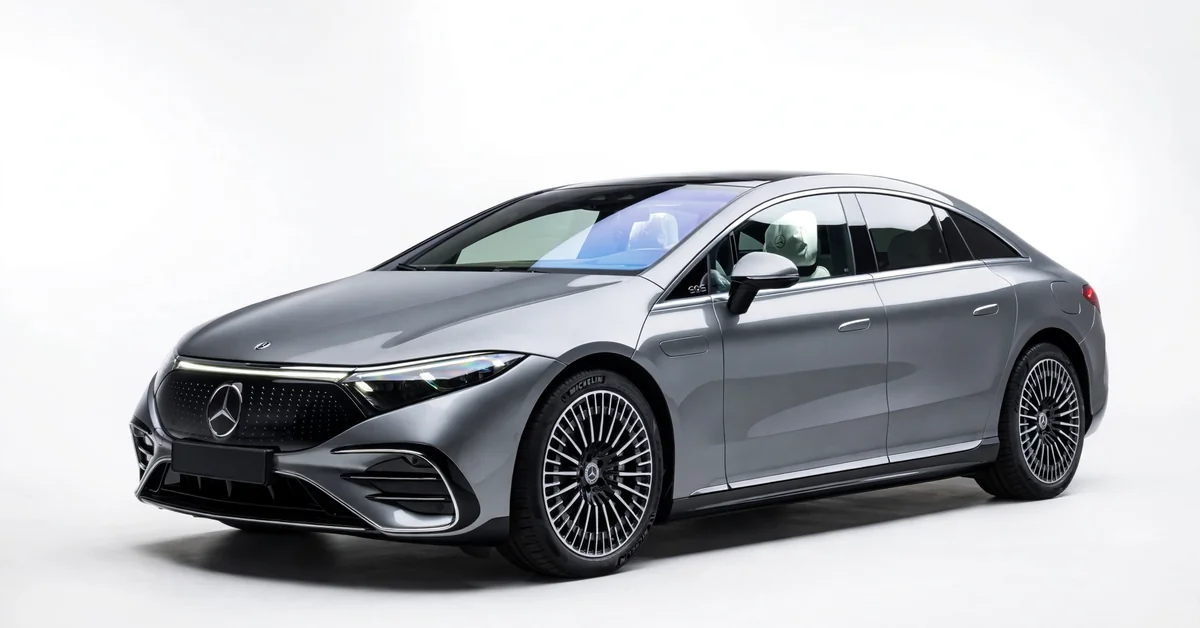
The Mercedes EQS sedan’s battery holds 107.8 kWh of usable capacity — the figure Mercedes itself publishes — in a 400-volt pack of 432 CATL cells. The launch cars (EQS 450+, 580 and AMG EQS 53) are EPA-rated at 350, 340 and 277 miles, charge at up to 200 kW, and carry a US battery warranty of 10 years or 155,000 miles. A 2025 facelift raised usable capacity to 118 kWh, and an 800-volt, 122 kWh successor has just been revealed.
• Usable capacity: 107.8 kWh (launch) · 118 kWh (2025 facelift) · 122 kWh (next generation)
• EPA range: 350 mi (450+) · 340 mi (580) · 277 mi (AMG 53)
• DC charging: 200 kW peak, ~28–31 min for 10–80%
• US battery warranty: 10 years / 155,000 miles
Mercedes EQS Battery: Full Specs
The launch EQS battery is a 107.8 kWh usable pack — and Mercedes has never officially published its gross capacity.
What are the EQS battery specs?
Mercedes’ own launch technical data sheet lists “battery energy content useable: 107.8 kWh” for both the EQS 450+ and the EQS 580 4MATIC, and EV Database agrees. The pack runs at a nominal 396 volts — a 400-volt-class architecture — and is built from 12 modules of roughly 9 kWh each.
Gross capacity is the number most articles invent. Mercedes does not publish it, and the estimates conflict: EV Database lists 120.0 kWh while flagging it as its own estimate, InsideEVs estimated about 115 kWh at launch, and EV Clinic — a Croatian workshop that has serviced these packs — states 111.8 kWh. Treat any single gross figure with suspicion; the usable 107.8 kWh is the number that matters for range and charging.
| Specification | EQS 450+ | EQS 580 4MATIC | AMG EQS 53 |
|---|---|---|---|
| Usable capacity | 107.8 kWh | 107.8 kWh | 107.8 kWh |
| Gross capacity | Not published (estimates ~112–120 kWh) | Not published | Not published |
| Voltage | 396 V (400V class) | 396 V | 396 V |
| Modules | 12 | 12 | 12 |
| Peak DC charging | 200 kW | 200 kW | 200 kW |
| 10–80% DC time | ~31 min (claimed) | ~31 min | ~31 min |
| AC charging (US) | 9.6 kW | 9.6 kW | 9.6 kW |
| EPA range | 350 miles | 340 miles | 277 miles |
| Power output | 329 hp (245 kW) | 516 hp (385 kW) | 649 hp (484 kW) |
Which cells does the EQS use — and who makes them?
The pack holds 432 cells in a 108-series, 4-parallel layout. EV Database lists the cathode chemistry as NMC811; Mercedes itself does not publish the nickel-manganese-cobalt ratio, so read any exact ratio as a database listing rather than a factory figure.
The supplier, unusually for Mercedes, is on the record. In an August 2020 joint press release, Mercedes-Benz stated plainly that “the Mercedes-Benz EQS will also be equipped with CATL cell modules,” with CATL’s Erfurt plant in Germany named as the European supply source. EV Clinic independently describes the first-generation pack it serviced as a CATL pack.
One complication belongs in the open. In Korea, the Fair Trade Commission fined Mercedes-Benz Korea about $7.6 million after finding that some EQ cars marketed as CATL-equipped actually contained cells from Farasis Energy — including, in the Korean press’s reporting, some higher-level Korean-market EQS models. Every source ties those cars to the Korean market; no evidence was found that any US-market EQS carries Farasis cells.
How heavy is the EQS battery?
EV Clinic puts the first-generation pack at roughly 700 kg — reported by the workshop that handled it, not a Mercedes figure. That weight is the honest trade behind the car’s range: the EQS carries one of the largest sedan packs ever fitted, and its efficiency, not just its size, is what turns it into miles.
What Makes the EQS Battery Stand Out
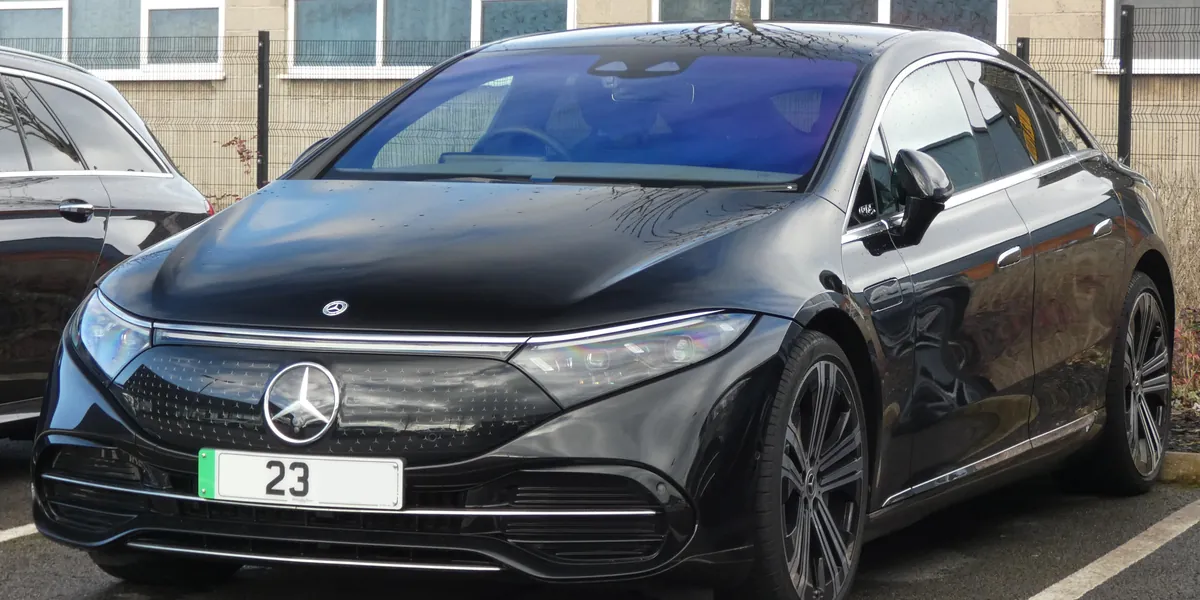
Size is the headline, but the EQS battery’s real distinction is how much car Mercedes built around protecting it.
Why is the EQS pack bigger than its rivals?
At launch, 107.8 kWh usable was roughly 25–30% more than BMW, Audi or Porsche offered in a flagship electric sedan. Mercedes could do it because the EQS sits on EVA2, a platform designed only for electric cars — the whole wheelbase floor is battery, with no transmission tunnel or exhaust packaging to work around. The smaller EQE SUV sits on the same platform logic and shares this car’s 10-year battery warranty structure.
The pack is liquid-cooled, and Mercedes ties its care directly into the navigation. Route to a DC fast charger with the car’s Electric Intelligence navigation and the battery is preconditioned — heated or cooled toward its best charging temperature — before you arrive. That matters more than the brochure peak: a cold or hot pack will not accept 200 kW, whatever the spec sheet says.
What about the solid-state EQS?
In September 2025 a modified EQS fitted with a lithium-metal solid-state battery from Factorial Energy drove 1,205 km (749 miles) from Stuttgart to Malmö on a single charge, with about 137 km (85 miles) of range still in hand at the finish. It was a development car proving the chemistry at road scale — no production EQS uses this battery, and Mercedes has announced no date for one that does. File it as a genuine milestone and a prototype, not a buying reason today.
Three Battery Generations: 107.8, 118 and 122 kWh
The EQS battery story is no longer one pack — there are now three, and used listings rarely tell you which one a car has.
What changed on the 2025 facelift?
For US model-year 2025, the EQS received a larger battery: 118 kWh usable. EPA range for the 450+ rose to up to 390 miles, with the 450 4MATIC rated at 367 miles. A heat pump became standard equipment on the updated cars, and charging hardware stayed in the 400-volt class — the DC peak remains 200 kW.
What is the next-generation EQS battery?
Revealed within days of this article’s research, the next EQS steps to 122 kWh usable on an 800-volt architecture, with DC charging up to 350 kW. Edmunds has already tested the car: 539 miles in its EV Range Test, an EPA rating of up to 467 miles, and a charging session that averaged 222 kW. US pricing and on-sale timing for this generation had not been published when this page was checked — treat any figure you see elsewhere as unconfirmed.
Does an EQS 350 exist?
Yes — Europe also received a smaller-battery EQS 350 variant. Its exact usable capacity was not verified from a primary source in our research, so this page does not print one; if you are importing or comparing European listings, confirm the pack from the car’s own build data rather than a spec aggregator.
EQS vs EQS SUV: Battery Differences
The sedan and the SUV use the same battery — the SUV simply spends more of it pushing a taller body through the air.
Green Car Reports states it directly: the EQS SUV “has the same 107.8-kWh battery pack as the EQS hatchback.” Charging hardware matches too — 200 kW DC peak, the same 10–80% time, and the same 9.6 kW onboard charger on US cars. (Some US coverage prints “108.4 kWh” for this pack; that figure appears to come from a software-related capacity reading on some cars, not a different battery.)
| EQS sedan | EQS SUV | |
|---|---|---|
| Usable capacity | 107.8 kWh | 107.8 kWh |
| Peak DC charging | 200 kW | 200 kW |
| EPA range (best) | 350 miles (450+) | 305 miles (450+) |
| EPA range (AWD) | 340 miles (580) | 285 miles (580) |
The range gap — about 45 to 55 EPA miles — is the entire battery difference between the two cars. If you are cross-shopping them used, buy on body and price, not on the pack.
EQS Battery: The Aerodynamics Connection
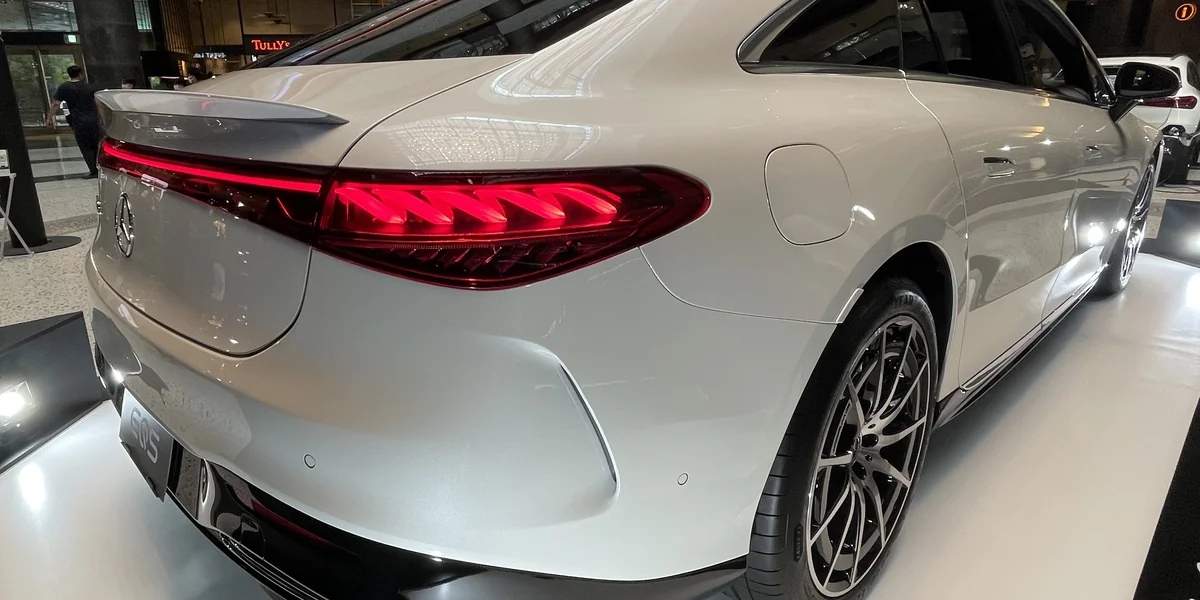
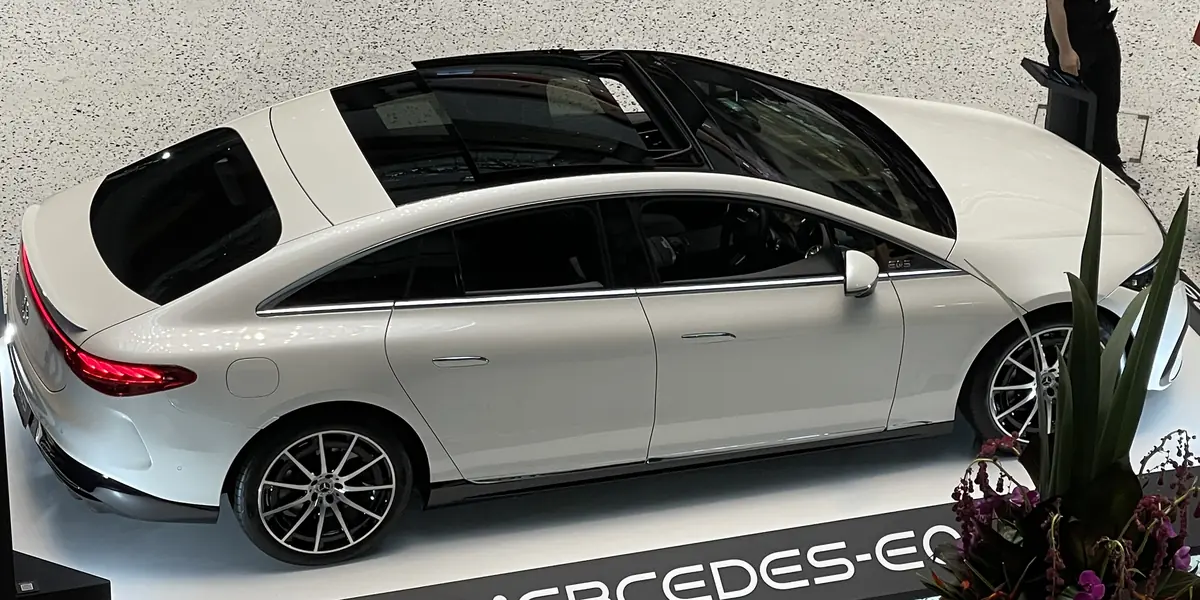
The EQS sedan’s drag coefficient of 0.20 — the lowest of any production car when it launched — is why its battery goes further than bigger packs in blunter cars.
How far does an EQS actually go?
The EPA ratings say 350 miles for the 450+. Independent testing says the car is better than that. Edmunds measured 422 miles in its mixed-loop EV Range Test at 29.5 kWh per 100 miles, against the EPA’s own 35 kWh per 100 miles figure. Car and Driver’s 75-mph highway test recorded 400 miles. Bjørn Nyland’s testing in Norway returned 711 km (about 442 miles) at a steady 90 km/h.
European WLTP figures run higher again — up to 784 km (487 miles) for the launch 450+ — because the WLTP cycle is gentler than the EPA’s. Compare like with like: EPA against EPA, WLTP against WLTP.
Why does efficiency beat size?
Run the comparison the other way. A GMC Hummer EV carries roughly twice the EQS’s battery and returns fewer EPA miles, because it spends its energy on weight and frontal area. The EQS gets roughly 2.9 miles per kWh on the EPA cycle and more in gentle driving; that efficiency is also kinder to the battery, since each mile asks less of every cell.
Charging the EQS: Claims vs Measured
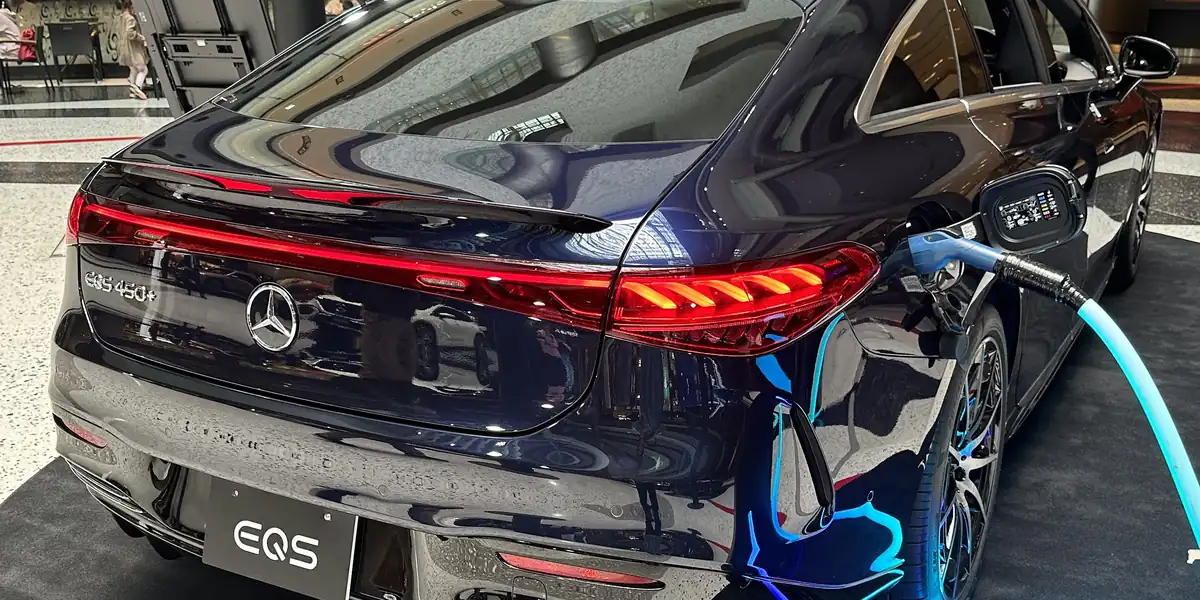
Mercedes claims 200 kW and 31 minutes for 10–80% — independent measurement says the car slightly beats both.
How fast does the EQS fast-charge in the real world?
EV Database’s charging data, drawn from Fastned sessions, records a 207 kW peak, a 169 kW average across 10–80%, and about 28 minutes for that window in the launch 450+. Mercedes’ own claim for adding range is WLTP-based: up to 300 km (186 miles) in 15 minutes for the 450+, and 280 km for the 580.
The facelift’s 118 kWh cars keep the 200 kW peak and take a little longer over 10–80% — about 33 minutes on EV Database’s figures — simply because the window holds more energy. The next-generation 800-volt car is the step change: 350 kW peak, a measured 222 kW session average in Edmunds’ testing, and roughly 100 miles added in just over seven minutes.
What about AC and home charging?
US cars carry a 9.6 kW onboard charger — a full charge from empty takes roughly 11 to 12 hours, and an overnight top-up is effortless. European cars charge at 11 kW as standard with a 22 kW option; US cars do not get the 22 kW option, whatever a listing claims.
Two ownership notes belong here. First, use the car’s own navigation on the way to a fast charger so preconditioning does its work. Second, the launch-era perk of two years of free 30-minute DC sessions was a 2022 sales offer, not a permanent feature of the car — do not pay a used premium for it.
EQS Battery Degradation and Ownership Data
No published study gives the EQS a degradation percentage — anyone quoting you one is guessing.
What does the real high-mileage evidence show?
The one named case is instructive. In November 2026, EV Clinic in Zagreb reported on a first-generation EQS 450+ that arrived at about 300,000 km (186,000 miles) with several cells damaged and discharging at different rates — a pack suffering serious imbalance and effectively at the end of its life. EV Clinic published no state-of-health percentage for the car, and no fleet dataset for the model exists. At 300,000 km the car was also beyond its European warranty limit of 250,000 km.
Set against the site’s wider chemistry guidance: well-managed NMC packs in fleet studies typically keep more than 80% of capacity at 100,000 miles, and the EQS’s deep buffer and liquid cooling are the right ingredients. That is context, not an EQS measurement — this page will print an EQS-specific number when a named source publishes one.
Which recalls touch the EQS battery?
Two US recalls are battery-adjacent. NHTSA 24V-372 (2024) covers 14,912 EQE and EQS cars from model years 2023–2025: battery-management software could fail to meet specification and shut the high-voltage system down, causing a loss of drive power without warning; the fix is a free dealer software update. NHTSA 23V-405 (2023) covers 8,281 cars for drivetrain software that could cause a loss of power. Both are software remedies — no hardware or fire component — and both are worth confirming as completed on any used car.
What does an EQS battery replacement cost?
Mercedes publishes no pack price for the EQS, in the US or Europe — there is no list figure to quote. The only hard numbers come from EV Clinic’s 2026 case: Mercedes no longer sells a new first-generation pack; a refurbished pack was quoted at €45,000–€55,000, and used packs change hands at €7,000–€14,000 before transport and labour. At 300,000 km, the refurbished quote approaches the value of the car — the arithmetic that ends most first-generation cars’ lives.
Note also that most search results quoting a few hundred dollars for “EQS battery replacement” are pricing the car’s 12-volt auxiliary battery, not the traction pack.
Mercedes EQS Battery Warranty
The EQS battery warranty is 10 years or 155,000 miles in the US — not the 8 years and 100,000 miles most articles repeat.
What exactly does the US warranty promise?
Mercedes-Benz USA’s EQ warranty booklet sets the EQS battery warranty at 10 years / 155,000 miles, and writes the capacity floor in amp-hours rather than percent: the EQS pack must maintain at least 192 Ah, which works out to roughly 70% of its original charge capacity. The booklet’s terms cover subsequent owners as well as the first, which is what makes the warranty the used buyer’s safety net.
What about Europe and the UK?
The Mercedes-Benz Battery Certificate covers the pack for up to 10 years or 250,000 km from first registration, with a 70% capacity floor, and it transfers with the car. Judge any European used EQS against both limits — the 300,000 km EV Clinic car, for instance, had outrun its kilometre cap regardless of its age.
EQS Prices: New Then, Used Now
The EQS has lost value faster than almost any luxury car of its era — which makes its battery warranty the most important line in a used listing.
What did the EQS cost new?
The 2022 EQS 450+ launched from $102,310 before destination; the 580 started at $119,110 and the AMG EQS 53 at $147,550. The facelift car undercuts its own launch price — a 2026 EQS 450+ is listed from $99,900 — because the original pricing never matched what buyers would pay.
What is a used EQS worth in 2026?
iSeeCars found the EQS lost 48.7% of its value in a single year — about $65,143 on average, the heaviest one-year drop in its study. Average asking prices for a 2022 EQS 450+ sit around $42,000, and KBB shows the AMG car that cost $148,700 new now starting at $57,100. In round terms, a three-year-old EQS changes hands for roughly $42,000–$65,000 depending on variant — about 40 to 60 cents on its original dollar.
That is precisely why the warranty correction above matters. A 2022 car bought in 2026 carries its 10-year battery warranty to 2032 (mileage permitting): the pack risk that crushes the price is, for most buyers, still Mercedes’ problem.
EQS Battery Charging Tips
Four habits cover almost everything an EQS owner needs to do for this battery.
How should you charge an EQS day to day?
- Set the daily charge target to 80%. On a 107.8 kWh pack that is still about 86 kWh — more than 280 miles of range in a 450+ — and NMC chemistry ages measurably slower when it is not held full.
- Use the car’s navigation to route to DC fast chargers, so the pack is preconditioned on arrival; it is the difference between seeing 200 kW and watching 80 kW.
- Keep software up to date. Mercedes ships battery-management improvements over the air, and two of this car’s recalls were software fixes.
- For storage beyond a week or two, park at around 50% charge rather than full; holding NMC cells at high charge is what ages them fastest when the car is not moving.
How the EQS Stacks Up Against Its Rivals
On capacity the EQS still leads its class; on charging speed it now trails it.
| Rival | Usable capacity | EPA range | DC peak | US starting price |
|---|---|---|---|---|
| Lucid Air Pure | 84 kWh* | 420 miles | 250 kW | $69,900 |
| BMW i7 eDrive50 | 101.7 kWh | ~321 miles | 200 kW | $105,700 |
| Porsche Taycan (Performance Battery Plus) | 97.0 kWh | 294 miles | 320 kW | From $99,400 (base Taycan) |
| Tesla Model S | ~95 kWh | 402–410 miles | 250 kW | — |
*Lucid publishes 88 kWh as the Air Pure’s total capacity; EV Database lists 84 kWh usable. The Taycan’s price is for the base car with the smaller standard battery; the Performance Battery Plus is an upgrade.
Read the table honestly: the facelift EQS’s 390-mile EPA rating closes most of the paper gap to the Model S and Lucid, and the EQS consistently beats its own rating in independent tests. Its 200 kW charging peak, though, is now the slowest in this company — the one specification where this flagship has been overtaken.
Frequently Asked Questions
How long does a Mercedes EQS battery last?
There is no published EQS degradation dataset, so any percentage is a guess. The honest anchors are the warranty — 10 years or 155,000 miles with a capacity floor of about 70% — and the one named high-mileage case: a first-generation car whose pack was effectively finished at about 300,000 km (186,000 miles). Well-managed NMC packs generally keep over 80% at 100,000 miles; expect the EQS to behave like its chemistry unless evidence says otherwise.
What battery does the Mercedes EQS use?
A 107.8 kWh usable lithium-ion pack of 432 CATL cells in a nominal 396-volt architecture, listed by EV Database as NMC811 chemistry. The 2025 facelift raised usable capacity to 118 kWh, and the next generation moves to 122 kWh on an 800-volt system.
Is the EQS battery warranty really 10 years?
Yes. Mercedes-Benz USA’s EQ warranty booklet gives the EQS (and EQE) a 10-year / 155,000-mile Battery Limited Warranty, with the capacity floor expressed as a minimum 192 amp-hours. The 8-year / 100,000-mile figure repeated online belongs to other EQ models. In Europe and the UK, the Battery Certificate runs up to 10 years or 250,000 km.
How much does it cost to replace an EQS battery?
Mercedes publishes no list price. The only firm figures are European, from a specialist workshop in 2026: a new first-generation pack is no longer sold, a refurbished pack was quoted at €45,000–€55,000, and used packs sell for €7,000–€14,000 before fitting. Under warranty, of course, the cost is Mercedes’ — and US cars are covered for 10 years or 155,000 miles.
Does the EQS have an 800-volt battery?
The launch and facelift cars do not — they are 400-volt-class systems (396 V nominal). The next-generation EQS, revealed in late 2026, moves to an 800-volt architecture with a 122 kWh usable pack and 350 kW charging.
Can the EQS use Tesla Superchargers?
Mercedes’ newer EQ cars gained North American Supercharger access with an official adapter. Confirm the arrangement for the specific car and model year you are buying — access was rolled out by model, and on a 400-volt car like the launch EQS, a roughly 500-volt Supercharger will not deliver the car’s full 200 kW regardless.
Is a used EQS a good buy?
On battery grounds, it is one of the strongest used-EV cases going: flagship range, a pack that beats its EPA rating in testing, and a 10-year warranty that still has years to run on most cars — at roughly half the original price. The checks that matter are the software recalls (24V-372 especially), a dealer battery-health readout rather than a dashboard guess, and the mileage cap: a high-mile car can exhaust the 155,000-mile warranty long before its ten years are up.
What is the difference between the EQS battery and the EQS SUV battery?
Nothing in the pack itself — both use the same 107.8 kWh usable battery and 200 kW charging. The SUV’s taller, heavier body returns about 45 to 55 fewer EPA miles (305 vs 350 miles in 450+ form).
Conclusion
The EQS battery is a 107.8 kWh CATL pack that out-ranges its rating, out-warranties its reputation, and has been overtaken on exactly one front: charging speed.
The corrections matter more than the superlatives. This car’s warranty is 10 years and 155,000 miles, not eight and 100,000. Its 580 is a 340-mile car, not 285. Its gross capacity is a number Mercedes never published. And its battery story now has three chapters — 107.8, 118 and 122 kWh — with the used market’s steep depreciation making the first of them, warranty and all, the bargain of the three.
Read more: how Lucid’s Gravity pairs a big pack with 900-volt charging.
