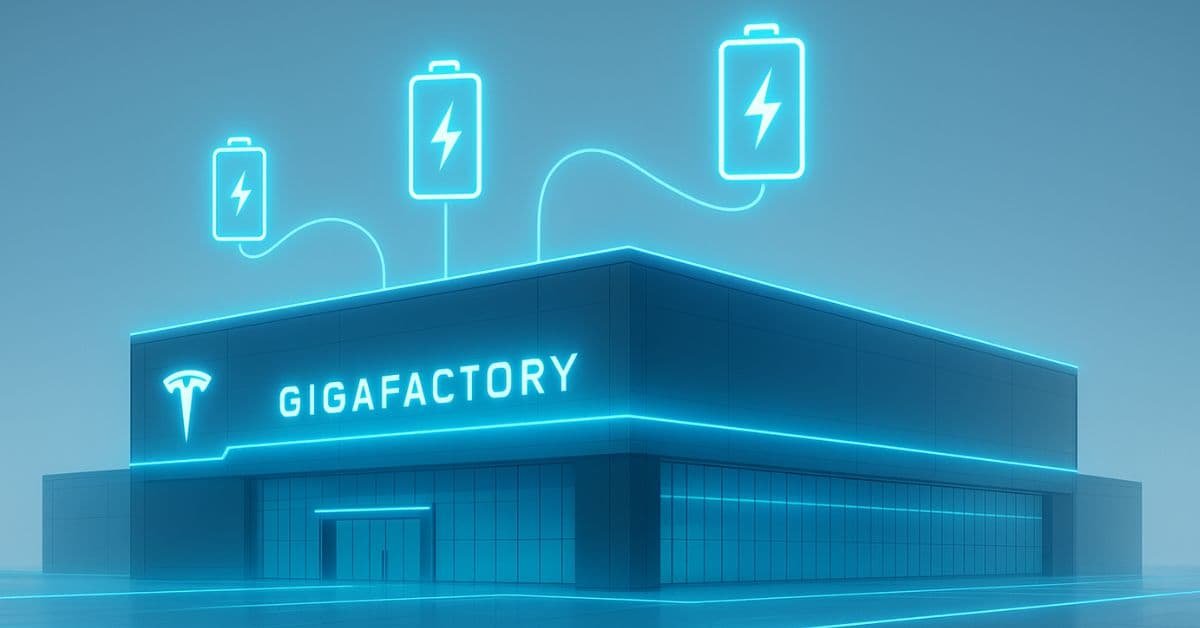
A gigafactory is more than just a large factory. It is a huge industrial building. It is for making many lithium-ion batteries and often the cars they power. The name “Giga” comes from the word Gigawatt-hour (GWh). That word shows the very high energy these places can produce. The world did not make enough batteries for a global move to electric transport.
Tesla chose to build these factories because of that problem. Tesla now makes its own batteries. That helps Tesla lower prices, develop new products faster, and gain an edge in the electric car business.
Tesla’s Gigafactories are changing how batteries are manufactured worldwide. The article will look at the new technology that factories are starting to use. It will also show how the changes affect every Tesla owner.
The Global Network: Where Tesla Batteries Are Made
Tesla operates a growing network of Gigafactories worldwide. Each factory is important to the company’s goal of accelerating the world’s transition to clean energy. The factories are not all the same. Workers build them to fit local needs and set goals. But they all have the same main job: increasing the number of batteries Tesla makes.
| Gigafactory Location | Primary Focus | Battery Production Role | Key Innovation |
|---|---|---|---|
| Gigafactory Nevada (GF1) | Battery Cells & Powertrains | Original mass production of 2170 cells and Powerwall/Powerpack energy storage | Partnership with Panasonic; early vertical integration model |
| Gigafactory Texas (Giga Texas) | Vehicles & 4680 Cells | Main hub for 4680 cell production and Cybertruck assembly | Scaling the 4680 tabless cell + dry-electrode process |
| Gigafactory Shanghai | Vehicles & Battery Packs | Efficient production of Model 3/Y and battery packs for Asian markets | Supply chain localization and rapid production scaling |
| Gigafactory Berlin-Brandenburg | Vehicles & Battery Cells | European vehicle production; future localized battery cell manufacturing | Regional supply chain & sustainable manufacturing focus |
1. Gigafactory Nevada (GF1) Battery Production
GF1 sits outside Reno, Nevada. It was the first Gigafactory. GF1 became the base of Tesla’s battery plan. Tesla built GF1 with Panasonic. The factory was made to hold everything in one place. Workers produce battery cells, modules, and packs under one roof. Putting everything together was important. It helped lower battery costs. Batteries are the most expensive part of an electric car. GF1 was very big. It quickly showed Tesla’s big goals. GF1 mainly makes the 2170 cell. The 2170 cell powers the Model 3 and Model Y. It also powers Tesla’s home and grid batteries, such as the Powerwall and Powerpack.
2. Gigafactory Texas 4680 Cell Production
Giga Texas is the most exciting factory today. The factory is very important for Tesla’s Gigafactory battery production. It is the main place where Tesla makes the new 4680 battery cell. The factory is a very big project. Tesla is working to make lots of its next-generation battery technology there. Making the 4680 cell at Giga Texas is very important for the Cybertruck and Future popular vehicles. The company is getting better at new ways to make batteries, like the dry electrode coating, right there in Austin.
3. Gigafactory Shanghai Battery Packs
Giga Shanghai shows how to make things very well. Workers built the factory very quickly. It quickly became Tesla’s best factory for making cars. The factory mainly puts cars together. Its job in making Tesla Gigafactory batteries is very important for Asia. The factory puts battery packs together. It uses parts from places nearby. This helps Tesla make cars and batteries faster and cheaper for people in Asia. The factory proves that speed and size can work together.
4. Gigafactory Berlin Battery Manufacturing
Giga Berlin helps the European market. Giga Berlin reduces the costs and environmental impacts of shipping cars and batteries across oceans. Making cars happens now, but the Future plan includes making battery cells there, too. Making batteries locally is a good idea. It lets Tesla change to fit European rules and energy needs. Tesla keeps making its factories bigger around the world.
Inside the Cell: Tesla’s Battery Technology
The physical size of the Gigafactories is impressive, but the real innovation lies in the technology they produce. Tesla is constantly pushing the boundaries of battery science and manufacturing.
4680 Battery Cell Design
The 4680 cell will change the game. The 4680 cell is a key part of Tesla’s Future. The name is easy to understand: the cell measures 46 millimeters across and 80 millimeters high. The bigger size matters, but the “tableless” design is the best part. In old batteries, a small tab joins the cell to the outside. The 4680 cell removes the tab. Removing the tab brings many good things:
- Higher Energy Density: It can store more energy, leading to longer driving ranges.
- Increased Power: It can release energy faster, improving vehicle performance.
- Simplified Manufacturing: The design is simpler, which should eventually lead to lower production costs.
The Gigafactories made the new design possible. Tesla controls the design and construction. Control lets Tesla make big changes. Relying on outside battery companies would make these changes impossible.
Dry Electrode Manufacturing Process
A dry electrode process is one of the hardest but best ideas for making batteries at the Tesla Gigafactory. Normal battery making uses a wet mix called a slurry to cover the electrode materials. That process uses a lot of energy because workers must dry the liquid, called a solvent, later.
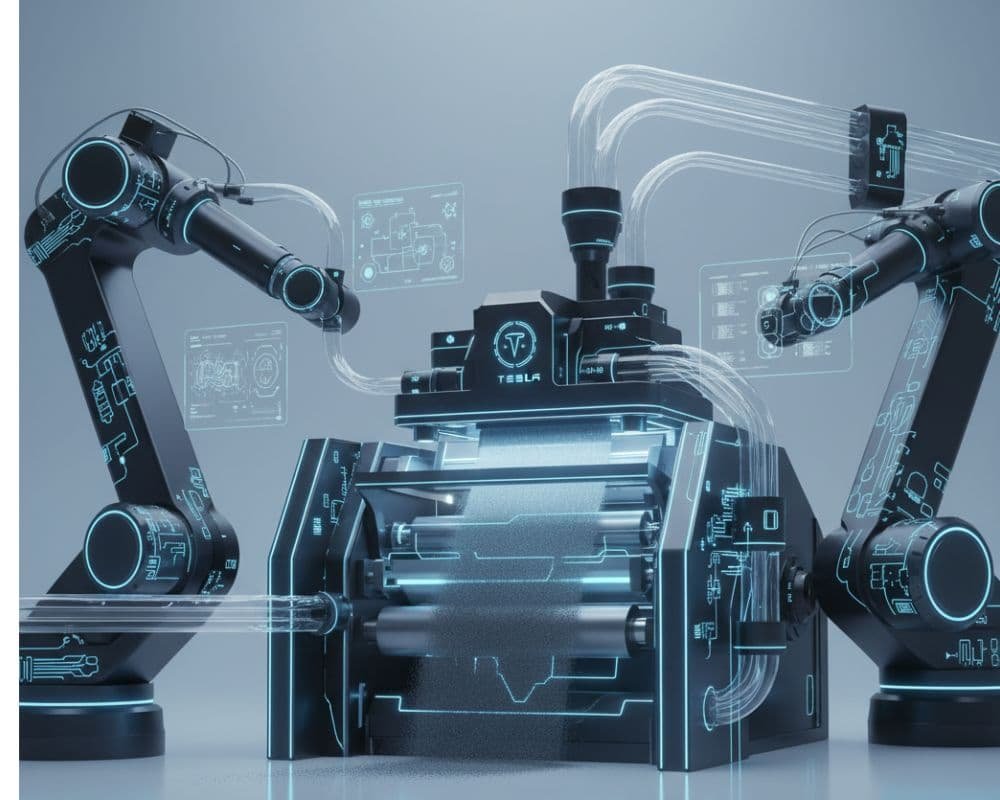
Tesla bought Maxwell Technologies and acquired the dry-electrode process. The process skips the solvent step. Skipping this step can:
- Reduce Factory Footprint: Less equipment is needed for drying.
- Lower Energy Consumption: Eliminates the need for massive drying ovens.
- Cut Production Costs: Significantly reduces manufacturing expenses.
Making this technology work for many batteries is very hard. Elon Musk even said that trying to use the dry battery electrode process was a huge problem to solve. Still, the long-term good results for cost and being good for the Earth are very big.
Battery Chemistry and Sourcing
Tesla is not tied to a single battery chemistry. The company uses different chemistries for different applications, a flexible approach that is managed through the Gigafactory network:
- Nickel-Cobalt-Aluminum (NCA): Used in high-performance and long-range vehicles.
- Lithium Iron Phosphate (LFP): Used in standard-range vehicles, especially in China, due to its lower cost, longer cycle life, and greater safety.
- Future Chemistries: Tesla is actively researching and developing new options, including a potential shift to sodium-ion technology for even cheaper, short-range applications.
Gigafactories and Tesla’s Competitive Advantage
The Gigafactories’ large size and big output give a competitive advantage. The real strength comes from the business plan: vertical integration.
Vertical Integration Benefits
Tesla uses vertical integration. They manage almost every step of the process. They design the battery cell. They put together the final car. Tesla does things very differently from old car companies. Old car companies depend on many other companies to supply parts.
Tesla’s control helps them:
Reduce Logistics Costs: They build battery cells, modules, and packs at the same facility where they make the cars. They do not have to pay to ship big, heavy parts. Shipping becomes easier.
Achieve Economies of Scale: The very large Gigafactories lower the cost of each battery.
Accelerate Innovation: Tesla can quickly change battery designs in the factory. They do not wait for another company to change its tools.
Elon Musk said, “Battery cell production is the fundamental rate-limiter slowing down a sustainable energy future. Very important problem.” The Gigafactories are Tesla’s answer to this problem. They remove the slowdown and make the change happen faster.
Scaling 4680 Cell Production
The start of making the 4680 battery cell at Giga Texas shows a good example of how hard it is to make batteries at a Tesla factory, and how the company wins.
When Tesla first talked about the 4680 cell, the company wanted to produce many cells quickly. But the new way of making the dry electrode was tough. Making the cells started slowly. The company had problems with the number of good cells the factory made.
The Challenge: Making the dry coating step perfect for the cathode material in huge amounts.
The Solution: Tesla engineers worked inside the factory and quickly changed the machines and the way cells were made. The close teamwork between the research and factory teams at Giga Texas helped fix problems rapidly.
The Result: By the middle of 2024, Giga Texas had made more than 50 million 4680 cells. These cells helped create over 1,000 Cybertrucks each week. Starting production was hard, but it shows how helpful it is to do all the work in one place. The company quickly applies what it learns at other factories to improve technology across the board.
Conclusion
Tesla Gigafactories are changing how EV batteries are made. These huge factories help Tesla build better, cheaper, and more powerful car batteries worldwide. From the new 4680 cells to smarter battery manufacturing, Tesla is pushing technology forward fast. For drivers, this means a more extended range, stronger performance, and batteries that last for many years. As Tesla continues to improve its factories and technology, the Future of electric cars looks even brighter.
FAQs
What is the main difference between the 2170 and 4680 battery cells?
The main difference involves size and design. The 4680 cell is bigger at 46mm wide and 80mm tall. The 4680 cell also has a tabless design. The tabless design greatly lowers the inner resistance. Lower resistance means the battery has more power, creates less heat, and uses a simpler way to build. This simpler process helps reduce the cost of making batteries at the Tesla Gigafactory.
Does Tesla make all its own batteries?
Tesla makes a large amount of its batteries, especially the newer 4680 cells, at its own Gigafactories. Giga Texas is one example. However, Tesla also works with other companies. It partners with Panasonic at Gigafactory Nevada and CATL for LFP cells. Partnering with other companies helps Tesla meet the huge worldwide demand. This mix of making and buying keeps the battery supply strong.
How does the dry electrode process save money?
The dry electrode process removes the need for big, energy-using drying ovens. Traditional battery making uses a wet paste and must dry it. Removing the liquid part and the drying step saves Tesla money. Tesla saves on factory room, energy use, and the cost of the liquid material. The dry process makes Tesla Gigafactory battery production cheaper.
What is the lifespan of a Tesla battery?
Tesla builds its batteries to last for the whole life of the car. The battery’s power will naturally go down over time. Tesla provides a warranty for 8 years or 100,000 to 150,000 miles, depending on the car. The warranty promises the battery will keep at least 70% of its power. With good care, many owners say their battery stays healthy long after the warranty ends.
What is the environmental impact of a Gigafactory?
Tesla wants its Gigafactories to use power from clean energy sources. For example, Gigafactory Nevada plans to use zero net energy. Tesla also lessens the environmental impact of moving parts around. It does this by putting the supply chain and building process together at the factory. This cuts down on the travel and shipping that normal factories need.