
What Makes CATL’s BMS Technology Different?

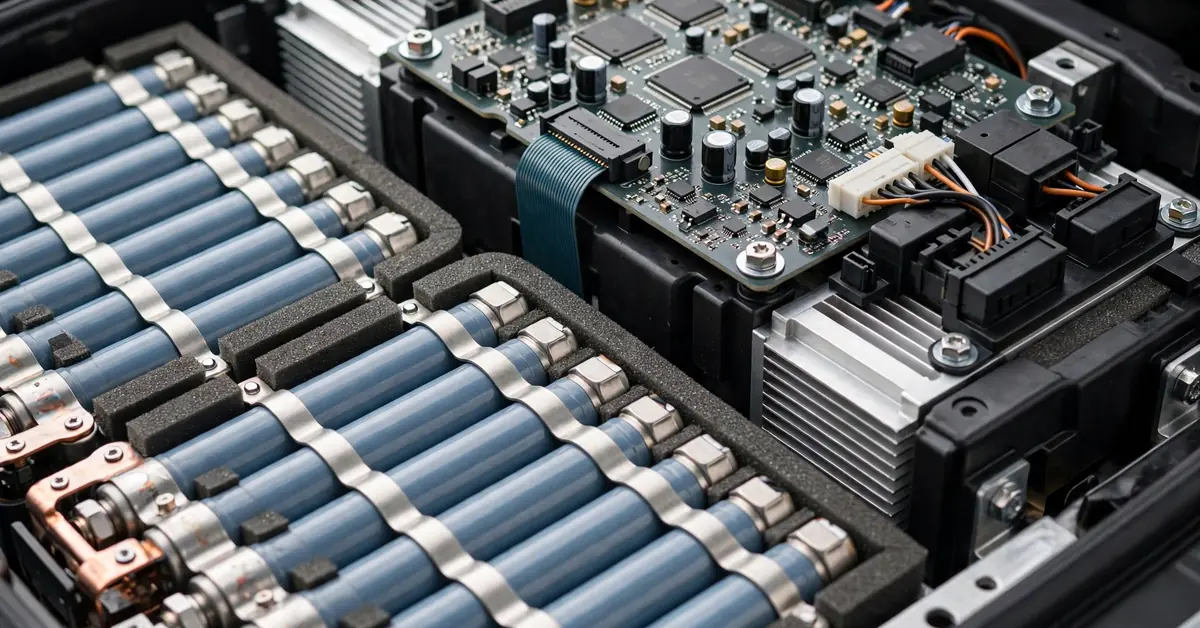
CATL’s BMS technology stands out for how tightly it’s integrated with the company’s cell-to-pack architecture, particularly the Qilin battery, using AI simulation and precise computing to coordinate thermal management functions built directly into the pack structure itself, rather than treating the BMS and physical pack design as separate systems. CATL’s approach treats battery management as inseparable from structural and thermal engineering, not a bolt-on control layer.
Why CATL’s Structural Approach Changes What the BMS Has to Coordinate
CATL’s Qilin battery, its third-generation cell-to-pack (CTP 3.0) design, integrates the internal crossbeam, liquid-cooling plate, and thermal pad into a single multifunctional elastic interlayer, rather than keeping these as separate components. This means CATL’s BMS and thermal management aren’t just monitoring a battery, they’re coordinating with a structure where cooling is built directly between adjacent cells rather than only at the pack’s base.
How This Structural Integration Changes Thermal Response
By placing liquid cooling functional parts between adjacent cells rather than using a traditional bottom-mounted design, CATL increased heat transfer area by roughly four times compared to earlier approaches, cutting thermal control time in half and enabling notably fast hot-start and fast-charging capability. This gives the BMS a fundamentally more responsive thermal system to work with than designs relying on more limited base-cooling contact.
AI Simulation in CATL’s Design and Management Approach
CATL has emphasized precise computing and AI simulation capabilities as core to how it explores battery design across the full application lifecycle, from material and cell level through to overall system structure. This computational approach extends to smart component arrangement within the pack, using simulation to optimize how structural protection, high-voltage connections, and thermal runaway exhaust systems share space efficiently without compromising safety.
Built-In Adaptability at the Cell Level
The Qilin design incorporates built-in micron bridges inside the elastic interlayer, specifically engineered to flexibly accommodate physical changes inside the cell over its lifecycle, improving reliability over time. This kind of structural adaptability works alongside the BMS’s own monitoring, addressing some physical stress factors at the design level rather than purely through electronic management alone.
Volume Efficiency as a Management Advantage
CATL’s cell-to-pack evolution progressed from over 50% volume utilization in its first generation to 72% with Qilin, the highest integration level achieved at that time. Higher volume efficiency within the same footprint means more usable energy capacity for the BMS to manage within a given pack size, directly benefiting range without requiring a larger physical pack.
Looking Ahead: Cell-to-Chassis Integration
CATL has continued pushing this structural integration philosophy further with cell-to-chassis (CTC) technology, embedding the battery cell with the vehicle body, chassis, drive systems, and thermal management even more comprehensively, aiming to extend range and reduce power consumption per distance traveled, representing the next evolution beyond even the Qilin architecture.
Why This Approach Represents a Distinct Philosophy
Where some manufacturers focus primarily on BMS software sophistication independent of pack structure, CATL’s approach treats structural design, thermal engineering, and battery management as one deeply interconnected system, using computational simulation to optimize across all these dimensions simultaneously rather than sequentially.
| CATL Innovation | Impact on Battery Management |
|---|---|
| Integrated elastic interlayer (cooling+structure) | 4x heat transfer area, faster thermal response |
| AI simulation-driven design | Optimized component arrangement and safety |
| Micron bridges | Physical adaptability to cell changes over lifecycle |
| High volume utilization (72%) | More usable capacity within the same pack size |
Conclusion
What makes CATL’s BMS technology different is how deeply integrated it is with the company’s structural and thermal engineering, particularly in the Qilin battery, where cooling, structure, and cell management are designed as one coordinated system rather than separate layers. Backed by AI simulation-driven design and industry-leading volume efficiency, this integrated philosophy reflects a genuinely distinct approach compared to treating BMS purely as an add-on software and monitoring layer.
FAQs
Is CATL primarily a battery cell maker or a BMS technology company?
CATL is best known as a battery cell and pack manufacturer, with its BMS and thermal management approach deeply integrated into its overall structural battery design.
Which automakers use CATL’s Qilin battery technology?
Early adopters have included several Chinese and international automakers integrating Qilin-based packs into their EV lineups.
Does CATL’s structural integration make repairs more difficult?
Higher integration levels generally trade some component-level serviceability for improved volume efficiency and thermal performance, a common tradeoff across highly integrated battery designs industry-wide.
