
How Does GM’s Ultium BMS Manage the Battery?

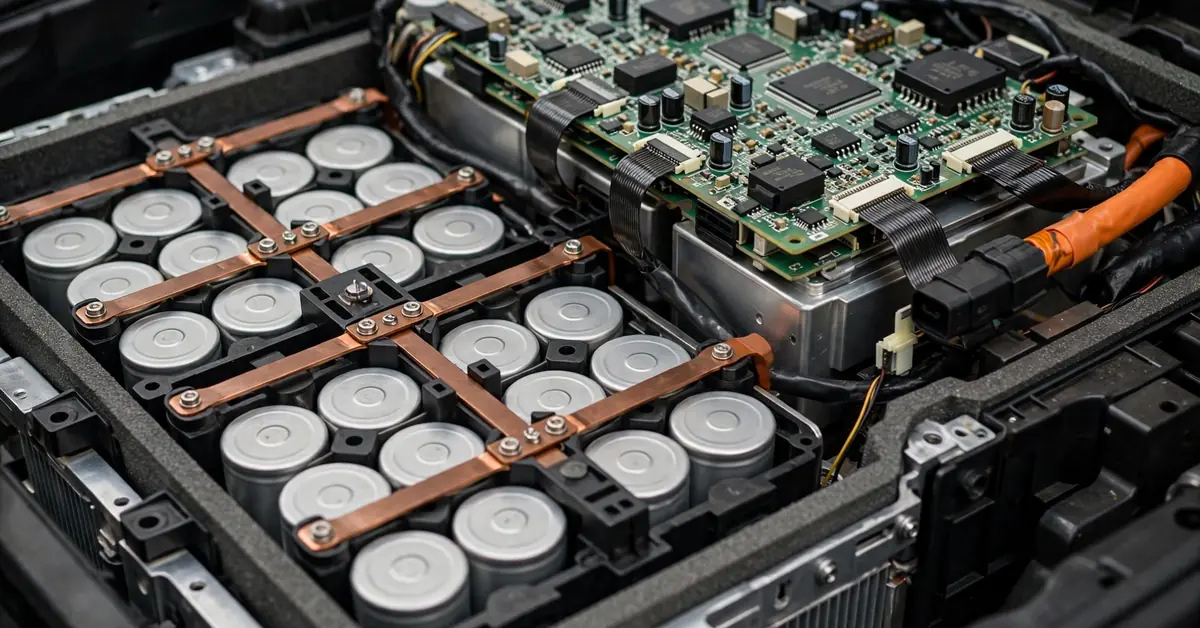
GM’s Ultium BMS manages the battery using an industry-first wireless system, developed with Analog Devices, that integrates management electronics directly into each module and communicates via radio frequency signals instead of a traditional wiring harness, allowing independent monitoring and control of each module rather than treating the whole pack uniformly. Cutting the wires wasn’t just a cost move, it fundamentally changed what the BMS could do.
Why GM Moved Management Into Each Module
Rather than managing everything at the pack level with uniform modules, GM integrated BMS electronics into each individual module. This module-integrated approach allows GM to manage the output of each module independently, a meaningful departure from a traditional design where every module would be populated with identical cells and expected to behave identically.
How the Wireless Communication Actually Works
A master BMS communicates wirelessly with the BMS embedded in each module, using RF signals to request state information, voltage, temperature, capacity, and to issue commands like balancing timing, all without a physical wired connection between modules. Some designs use separate wireless channels for state detection commands versus balancing operations, keeping different types of communication properly separated.
The Practical Benefits of Going Wireless
Eliminating the Wiring Harness
Removing the traditional wired harness saves a substantial amount of wiring and pack volume, freeing up physical space that can go toward larger batteries or more efficient packaging, directly benefiting range and design flexibility.
Scalability Across Vehicle Types
Because module-level wireless BMS doesn’t require a uniform, hardwired pack layout, this architecture makes it considerably easier to scale the same underlying battery platform across a wide range of vehicle types and sizes, exactly the flexibility GM has emphasized as foundational to the Ultium platform strategy.
Independent Cell and Module Isolation
The architecture supports isolating individual cells or entire modules within the pack separately, offering more granular fault response than a design where isolation options are more limited.
How GM Addressed the Obvious Security Concern
Wireless communication in a safety-critical system naturally raises cybersecurity questions. GM built in protective measures across both hardware and software layers, specifically including protection of the wireless communications themselves, and the system has been engineered to align with automotive cybersecurity standards covering the vehicle’s full lifecycle.
Signal Reliability Inside a Metal-Heavy Battery Pack
Sending RF signals reliably through a battery pack, an environment full of metal and other lossy materials, required specific engineering solutions, including signal-directing components like antennas or reflectors oriented to route signals through lower-loss regions of the pack rather than transmitting indiscriminately through the entire structure.
Supporting Over-the-Air Updates and Broader Platform Goals
This wireless architecture is part of GM’s broader third-generation Vehicle Intelligence Platform, and it directly supports over-the-air update capability for the battery system, aligning with the industry-wide shift toward connected, continuously improvable vehicle systems.
| Ultium BMS Feature | Benefit |
|---|---|
| Module-integrated management | Independent monitoring/control per module |
| Wireless communication (no harness) | Saves wiring/volume, improves scalability |
| Cell/module isolation capability | More granular fault response |
| Built-in cybersecurity layers | Protects wireless communication from threats |
Conclusion
GM’s Ultium BMS manages the battery through an industry-first wireless architecture, integrating management electronics into each module and communicating via RF signals rather than a traditional wiring harness. This approach enables independent module-level control, significant space and weight savings, and easier scalability across vehicle types, while built-in cybersecurity protections address the natural concerns that come with moving a safety-critical system to wireless communication.
FAQs
Is wireless BMS less reliable than traditional wired systems?
GM and its development partner designed the system specifically to maintain accuracy and reliability over the battery’s life, without compromising range or performance compared to wired approaches.
Does removing the wiring harness save meaningful weight and space?
Yes, eliminating the traditional harness can save a substantial percentage of wiring and pack volume, freeing space for larger batteries or better packaging.
Is GM’s wireless BMS approach unique in the industry?
GM has stated it was the first to implement this wireless approach at production scale in its Ultium-based vehicles, developed in partnership with Analog Devices.
