
XPeng G6 Battery: Size, Chemistry, Charging and Range

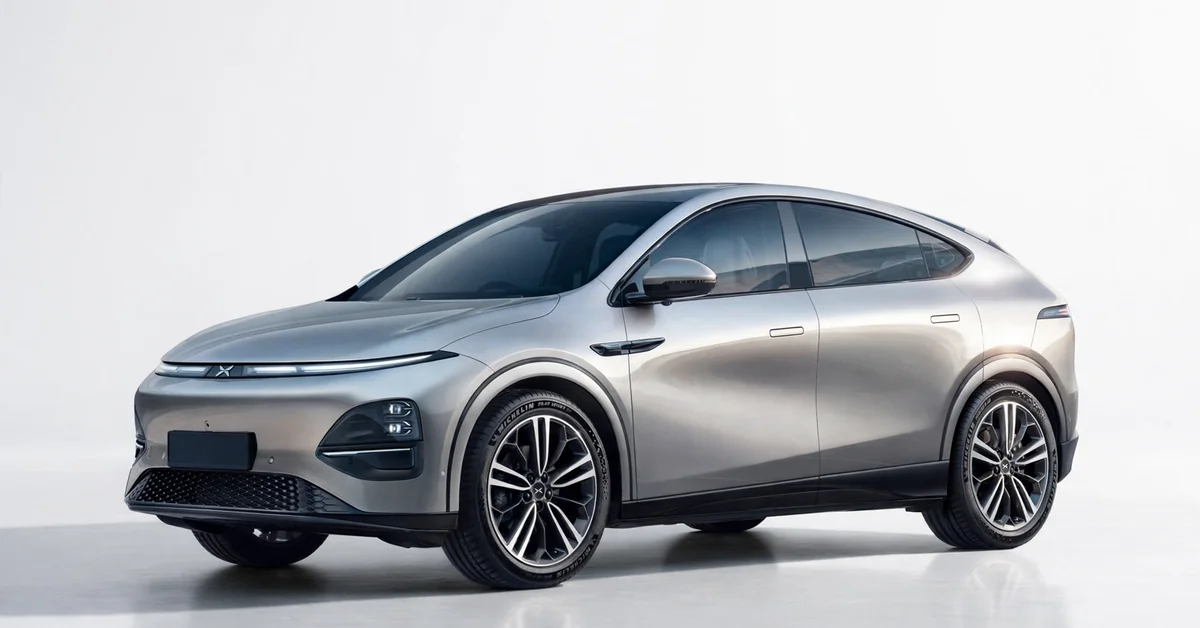
Researched from XPENG’s official market pages and regulatory filings, EV Database, electrive, Caradisiac, CarExpert, Zecar and CnEVPost, November 2026.
The XPeng G6 is one car with two completely different battery stories, and that is why the internet argues about it. The G6 that launched in 2023 paired an LFP Standard Range pack with an NMC Long Range pack. The facelifted car that replaced it in 2025 is LFP-only, charges far faster on paper, and uses different capacities again.
So when someone asks “what battery does the G6 have?”, the honest answer starts with a question back: which model year? This guide separates the two generations cleanly, names the cell supplier, and tests XPENG’s headline 451 kW charging claim against the stopwatch rather than the brochure.
Today’s XPeng G6 (2025 facelift) is all-LFP: a 68.5 kWh Standard Range pack or an 80.8 kWh pack in Long Range and Performance, both supplied by CALB. The 2023–2025 cars are different: 66 kWh LFP in the Standard Range and an NMC pack of about 87.5 kWh usable in the Long Range and Performance.
• Usable capacity: 67.8 kWh (Standard Range) / 80.0 kWh (Long Range, Performance)
• Peak DC charging: 382 kW / 451 kW claimed; about 290 kW average measured
• WLTP range: up to 525 km (326 miles), Long Range
• Battery warranty: 8 years — 160,000 km in the EU and Australia, 100,000 miles in the UK
Which XPeng G6 Battery Do You Have?
The G6 changed its battery more in two years than most cars change in a decade, so start with the generation, not the badge. XPENG launched the G6 in China on 29 June 2023 with two chemistries on one price list. The facelift that followed in China in March 2025, opened for European orders that July, and reached the UK for February 2026 sales, deleted the NMC option entirely.
| Variant | Years | Battery (gross / usable) | Chemistry | WLTP range |
|---|---|---|---|---|
| Standard Range | 2023–2025 | 66 / about 65 kWh | LFP | 435 km |
| Long Range | 2023–2025 | about 87.5 kWh usable | NMC | 570 km |
| Performance | 2023–2025 | about 87.5 kWh usable | NMC | 550 km |
| Standard Range | 2025– | 68.5 / 67.8 kWh | LFP | 480 km (18-inch wheels) / 470 km (20-inch) |
| Long Range | 2025– | 80.8 / 80.0 kWh | LFP | 525 km |
| Performance | 2025– | 80.8 / 80.0 kWh | LFP | 510 km |
The first G6: LFP below, NMC above
The launch range split the line-up by chemistry. Standard Range cars carried a 66 kWh LFP pack, while Long Range and Performance cars carried a much larger nickel-based (NMC) pack, officially 550-volt class hardware on the big pack against roughly 512 volts on the small one. One honest complication: sources label the big pack differently — EV Database and EVKX print 92.0 kWh gross and 87.5 kWh usable, while XPENG’s own export spec sheet labels 87.5 kWh as gross with 84 kWh net. The size class and the chemistry are not in dispute; the labels are.
The 2025 facelift: one chemistry, faster charging
The facelift simplified everything to LFP and pushed charging hard. Standard Range grew slightly to 68.5 kWh, while Long Range and Performance dropped to 80.8 kWh gross — a smaller pack than the old NMC car, traded for LFP’s cost, durability and charge-rate advantages. Australia relaunched the car as the “2026 G6” in July 2026 with the same packs. A newer China-only version with XPENG’s Turing chip (and an EREV variant) exists for 2026, but XPENG has announced no overseas launch for it.

How to tell which one you are looking at
Check the model year and the variant badge, in that order — nothing else decides the battery. A 2023 or 2024 Long Range is an NMC car; a 2025-onwards car of any variant is LFP. The paint colour does not change anything: questions about whether a particular colour “uses NMC” come up in search results regularly, and the answer is that the battery follows the year and the trim, never the paint.
XPeng G6 Battery Size and Chemistry, Variant by Variant
Every current G6 is LFP, every pack comes from one supplier, and the usable figures are unusually close to the gross ones. LFP (lithium iron phosphate) trades some energy density for a longer cycle life, better thermal stability and lower cost — the full chemistry comparison is in our guide to what LFP battery chemistry is. Here is what sits under each G6 variant.
Standard Range: 68.5 kWh LFP
The current Standard Range pack holds 68.5 kWh gross and 67.8 kWh usable — a buffer of barely 1%, which is typical of LFP packs that tolerate full charges well. It replaced a 66 kWh LFP pack of the same chemistry, so Standard Range buyers have had LFP from day one; what changed around it was the charging hardware, which jumped from the old car’s peak of 280 kW across the range to 382 kW for this pack.
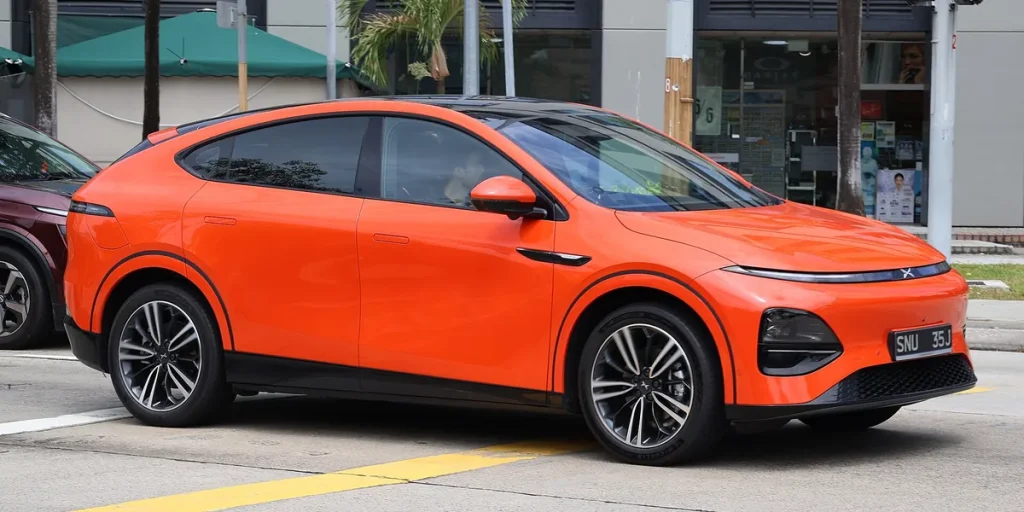
Long Range and Performance: 80.8 kWh LFP (and the NMC car before it)
The big current pack is 80.8 kWh gross, 80.0 kWh usable, again LFP. Against the old NMC car’s roughly 87.5 kWh usable it gives back some capacity and about 45 km of WLTP range (525 km against 570 km), and in return charges much faster and should age more slowly. That trade is the whole facelift story in one sentence, and for most drivers it is the right trade — the range gap shows up on a spec sheet far more than on a road.
Who makes the cells? CALB
Unusually for this industry, the supplier is not a rumour. XPENG’s regulatory filing at the G6’s 2023 launch names CALB (China Aviation Lithium Battery) as the cell supplier, industry reporting describes CALB as the G6’s exclusive supplier across both chemistries, and the packs are assembled at XPENG’s Wuhan plant. No credible source names a second supplier for any G6 variant, in either generation.
Charging the G6: the 451 kW Claim vs the Stopwatch
XPENG claims 10–80% in 12 minutes; the best independent test we found stopped the clock at 12 minutes 36 seconds — close enough that the claim survives, with conditions. The G6 runs an 800-volt-class architecture (XPENG publishes no exact nominal voltage for the facelift packs); what that buys in practice is explained in our 400V vs 800V architecture guide.
The claim, and what tests measured
XPENG rates the Standard Range at 382 kW peak and the Long Range and Performance at 451 kW, with 10–80% in 12 minutes under the right conditions. French magazine Caradisiac charged a Performance from 10 to 80% in 12 minutes 36 seconds — on a 300 kW charger, where the car peaked at 299 kW and averaged about 280 kW. EV Database puts the Long Range’s 10–80% average at about 290 kW. XPENG Switzerland’s own staged challenge recorded 11 minutes 37 seconds on a 600 kW charger; treat that one as a manufacturer demonstration, not an independent test.
On a 150 kW charger, and at home
Most public chargers are not 350 kW units, so the honest planning figure is this: on a 150 kW charger the G6 draws about 142.5 kW and needs roughly 24 minutes for 10–80% (Zecar’s figures) — still quick, just not the headline number. At home, the onboard charger is 11 kW three-phase (7.4 kW on single-phase). The battery preconditions automatically when a charger is set in the navigation, and a scheduled preheat helps in cold weather.
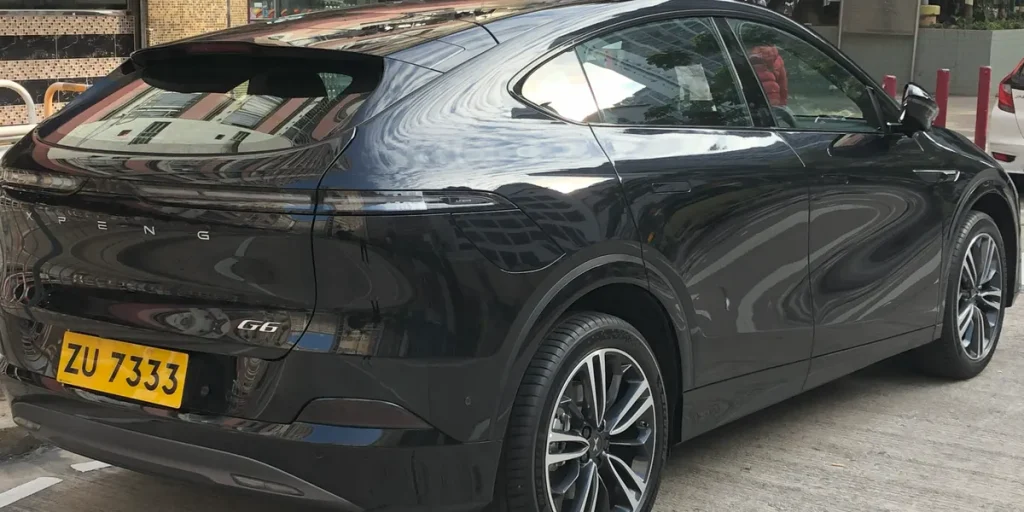
For comparison, the first-generation cars peaked at 280 kW and needed about 21 minutes for 10–80% by EV Database’s measure (XPENG claimed 19). Fast for 2023; the facelift simply moved the goalposts.
Range: WLTP Figures and What Drivers Actually Get
The Long Range’s 525 km WLTP figure is the headline, but plan your life around roughly 440 km of mixed real-world driving — and less in winter. WLTP numbers are laboratory results; the table below puts them next to EV Database’s real-range estimates for the current car.
| Current G6 variant | WLTP range | Real-world estimate |
|---|---|---|
| Standard Range (18-inch wheels) | 480 km (298 miles) | about 390 km combined |
| Standard Range (20-inch wheels) | 470 km (292 miles) | — |
| Long Range | 525 km (326 miles) | about 440 km combined |
| Performance | 510 km (317 miles) | — |
Cold weather: LFP’s honest weakness
LFP chemistry is more sensitive to cold than the NMC it replaced, and the G6’s numbers show it. EV Database estimates the Standard Range at about 325 km in cold combined driving and 280 km on a cold highway, against 445 km in mild weather. Preconditioning the battery before a fast charge — automatic when you navigate to the charger — is not optional in winter if you want anything near the quoted charging speeds.
V2L, Heat Pump and One Spec-Sheet Trap
The battery also works for you parked: vehicle-to-load output is 3.3 kW, and a heat pump is standard on every variant in both generations. The V2L figure is worth stating plainly because some market sheets print higher numbers we could not verify anywhere; 3.3 kW is the figure EV Database records, and it is enough for tools, camping kit or emergency home loads.
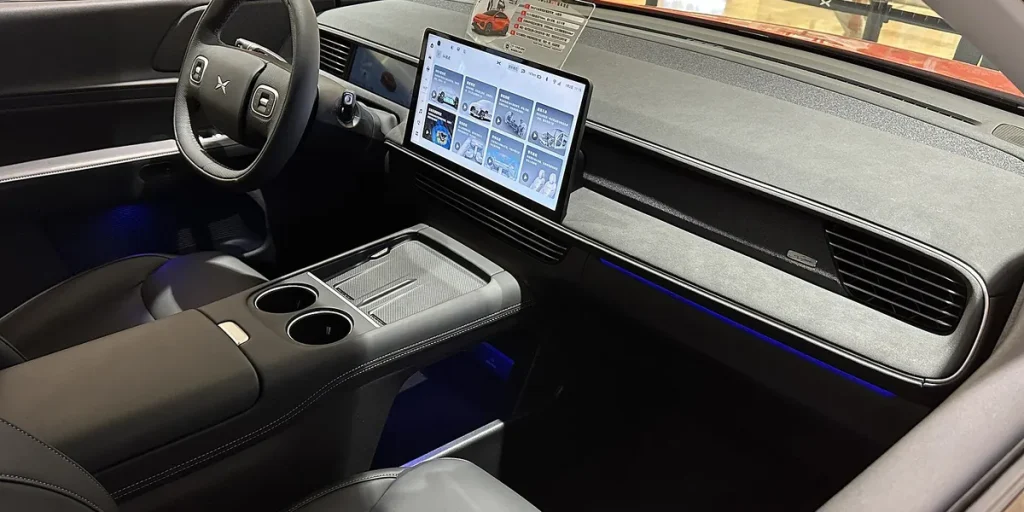
The trap is driver assistance. It is easy to read that “the G6 has XPILOT on NVIDIA Orin-X” and assume the whole range does. In Europe and the UK, the facelift’s Standard Range uses a Bosch-based assistance stack, and the Orin-X XPILOT hardware is fitted to Long Range and Performance. If the assistance system matters to you, check the exact car, not the model line.
XPeng G6 Battery Warranty, Market by Market
The battery warranty is eight years everywhere the G6 is officially sold — what changes is the distance limit and whether a capacity floor is written down.
| Market | Battery warranty | Capacity floor |
|---|---|---|
| United Kingdom | 8 years / 100,000 miles | 70% |
| European Union | 8 years / 160,000 km | Check your market’s terms |
| Australia | 8 years / 160,000 km | Check your market’s terms |
The UK terms are the clearest: eight years, 100,000 miles, and a written promise that the pack keeps at least 70% of its capacity. Vehicle warranties differ more — five years or 75,000 miles in the UK, while XPENG Germany lists seven years or 160,000 km. Read your own market’s document before assuming the German terms apply to you.
Looking After the G6 Battery
XPENG’s own guidance is printed on its Australian site and it is refreshingly specific: charge to 100% for the battery-management system, 80% for daily life. LFP voltage is so flat that the car needs occasional full charges to calibrate its state-of-charge estimate; XPENG pairs the advice with a full charge about every two weeks or 1,000 km, and the car’s software reminds you after 14 days or 1,000 km without one.
The same guidance quotes a typical LFP life of 3,000-plus charge cycles. Even at a conservative 350 km per cycle, that arithmetic passes a million kilometres — the pack’s calendar age, not its cycle count, is what will limit a normal owner’s car. How that ageing process works is covered in our explainer on EV battery degradation.
One ownership note that catches people out: the 12-volt battery. XPENG’s own manuals and Australian guide acknowledge that features like sentry mode draw power while the car is parked, and that a neglected 12-volt battery is the usual reason a G6 “loses charge” or will not wake up. If you park for a fortnight, turn sentry mode off.
Degradation and Replacement Cost: The Honest Answer
There is no published G6 degradation dataset and no published replacement pack price — anyone quoting you either figure is guessing. The car has only been on sale since 2023 and the LFP facelift since 2025; the fleet is too young for the kind of high-mileage state-of-health studies that exist for older EVs. What protects you today is the warranty floor above, and for a used purchase, a state-of-health readout at a dealer is worth more than any number on the internet.
What the G6 Costs
Prices differ by market and moved with the facelift, so here they are dated rather than blended. In the UK (announced December 2025, on sale February 2026): £39,990 Standard Range, £44,990 Long Range, £49,990 Performance. In Germany: €43,600, €47,600 and €51,600 respectively. French dealers list €42,990, €46,990 and €50,990. Australian launch pricing ran from A$51,800 to A$66,800 across the range.
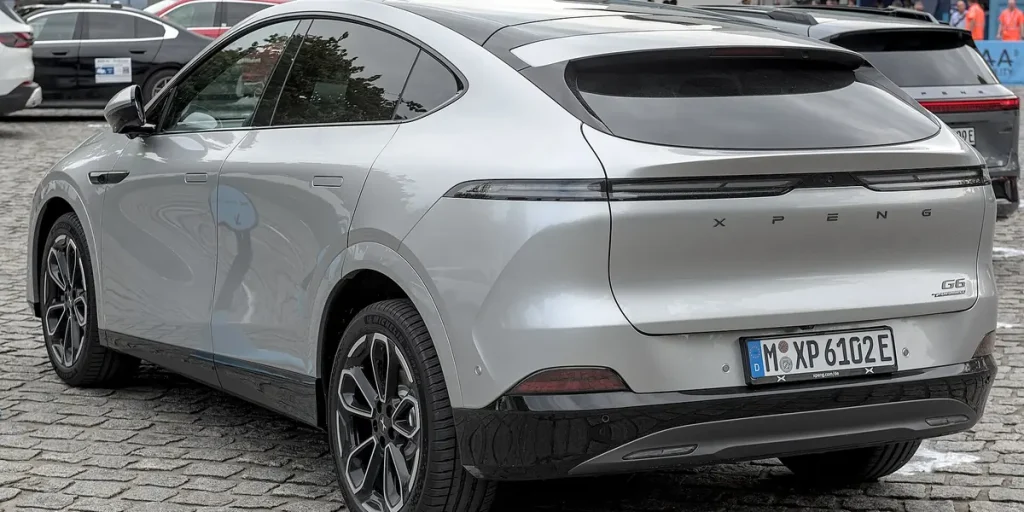
XPeng G6 vs Model Y, ID.4 and Ioniq 5 Batteries
On battery hardware alone, the G6’s party trick is charging: its measured average charge rate beats the peak figures of all three rivals below.
| Car | Battery (usable) | Peak DC charging |
|---|---|---|
| XPeng G6 Long Range | 80.0 kWh LFP | 451 kW claimed; about 290 kW average measured |
| Tesla Model Y Long Range | about 75 kWh | 250 kW |
| Volkswagen ID.4 Pro | 77 kWh | 175 kW |
| Hyundai Ioniq 5 Long Range | 84 kWh pack (about 80 usable) | 260 kW |
Two of those rivals will out-range the G6 on a charge in some versions, and the Tesla charges from a bigger network. But if your life involves regular motorway fast charging, a car that sustains roughly 290 kW through the middle of the charge is playing a different game from one that touches its peak for a minute.
Frequently Asked Questions
What battery does the XPeng G6 have?
It depends on the model year. Cars from the 2025 facelift onwards have an LFP pack — 68.5 kWh in the Standard Range, 80.8 kWh in the Long Range and Performance. The 2023–2025 cars have a 66 kWh LFP pack in Standard Range and an NMC pack of about 87.5 kWh usable in Long Range and Performance.
Does the XPeng G6 use an NMC battery?
Only the first-generation Long Range and Performance cars (2023–2025) use NMC. Every G6 sold new today is LFP, in every variant. The battery follows the model year and trim — not the paint colour, despite that question appearing in search results.
When did the G6 switch to LFP?
The all-LFP facelift launched in China in March 2025. European order books opened in July 2025, and the car went on sale in the UK in February 2026. Standard Range cars, however, were LFP from the very first 2023 production.
Who makes the XPeng G6’s battery cells?
CALB (China Aviation Lithium Battery), for both chemistries and both generations. XPENG’s launch regulatory filing names CALB, industry reporting describes the supply as exclusive, and the packs are assembled at XPENG’s Wuhan plant.
Should I charge my G6 to 100%?
Follow XPENG’s own split: 80% for daily use, 100% when the battery-management system needs it — about every two weeks or 1,000 km, and the car will remind you. LFP packs need those full charges to keep the range estimate honest; they are calibration, not a treat.
How much does a replacement G6 battery cost?
XPENG does not publish a pack price, and we found no verified owner invoice to quote. Any figure you see online for a G6 pack is an estimate dressed as a fact. With an eight-year battery warranty on every car, this is a theoretical question for current owners.
How long does the G6 battery last?
XPENG quotes a typical LFP life of more than 3,000 charge cycles, which in distance terms is far beyond a normal car’s life; calendar ageing will get there first. There is no G6-specific degradation dataset yet — the oldest cars are from 2023 — so be wary of precise state-of-health percentages quoted for this model.
Does the G6 lose charge when parked?
A small amount, mostly through features that stay awake — sentry mode is the one XPENG’s own documentation names. The bigger parked-car risk is the 12-volt battery draining, which can leave the car unresponsive even with charge in the main pack. Switch sentry mode off for long parking.
Is the G6’s LFP battery good in cold weather?
It is the car’s weak spot, honestly. LFP loses more in the cold than the old NMC pack did: EV Database estimates cold-weather highway range for the Standard Range at about 280 km against 445 km in mild conditions. Preconditioning before driving and before fast charging recovers a good part of the loss.
Conclusion
The G6’s battery story is two stories. The 2023 car was a split range — cheap, durable LFP below and a big NMC pack above — while the 2025 car bets everything on LFP and buys back the range difference with charging speed that independent tests largely confirm. If you are buying used, the model year matters more than the mileage for knowing what is under the floor; if you are buying new, you are getting one of the fastest-charging, longest-warranted packs in the class, with cold weather as the fair price. For XPENG’s sedan, see our XPeng P7 battery guide.
