
Tesla Battery Technology in 2026: The Future of Power

Per-model cells, chemistries and suppliers cross-checked against Tesla’s Q4/FY2025 update (January 2026), EPA listings, the peer-reviewed 4680 teardown literature and supplier reporting (November 2026). Tesla does not publish pack capacities; every kWh figure below is a labelled estimate.
“Tesla battery” sounds like one thing. In November 2026 it is at least three cell formats, three chemistries and four supply sources running in parallel — Panasonic cells from Nevada in most cars on the lot, Tesla’s own 4680 cells in the Cybertruck, LG cells in the stretched Model Y L, and a legacy 18650 line whose cars stopped being built this spring. It is also, despite a thousand articles to the contrary, not an LFP line-up in America: no new Tesla sold in the US today uses lithium iron phosphate, and the one that did was discontinued in October 2024.
This page is the current map: the per-model table first, then the formats, the chemistries, an honest verdict on the 4680 (the dry-electrode problem is solved; the density crown is not won), the supplier web behind it all, and what Tesla itself says comes next. The deep dives live on their own pages — pack internals, factories, cell comparisons — and are linked where they belong; this is the overview that keeps them honest.
Most Teslas sold in the US today run on 2170-format NCA cells made by Panasonic. The exceptions: the Cybertruck and some Austin-built Model Ys use Tesla’s own 4680 NMC cells; the Model Y L uses 2170 NMC cells from LG; the Model S and X (18650 NCA) ended production in spring 2026. No new US Tesla uses LFP.
Key figures: 3 formats (18650 · 2170 · 4680) · 232.5 Wh/kg — the 4680’s measured cell density, still below the best 2170’s ~269 · 40 GWh — 4680 capacity installed in Texas
The US Line-Up, Model by Model
The whole current range on one table — format, chemistry, supplier, and pack size as a labelled estimate (Tesla publishes none).
Model (US, Nov 2026) | Format | Chemistry | Supplier | Pack (est.) | EPA range |
Model 3 Standard RWD | 2170 | NCA | Panasonic | ~70 kWh (depopulated) | 321 mi |
Model 3 Premium / Performance | 2170 | NCA | Panasonic | ~82 kWh | 303–363 mi |
Model Y Standard | 2170 | NCA | Panasonic | ~70 kWh | 294–321 mi |
Model Y Premium / Performance | 2170 | NCA | Panasonic | ~82 kWh | 306–357 mi |
Model Y (some Austin builds) | 4680 | NMC | Tesla (in-house) | ~67.5–76 kWh reported | varies |
Model Y L | 2170 | NMC | LG Energy Solution | 88.2 kWh | ~325 mi |
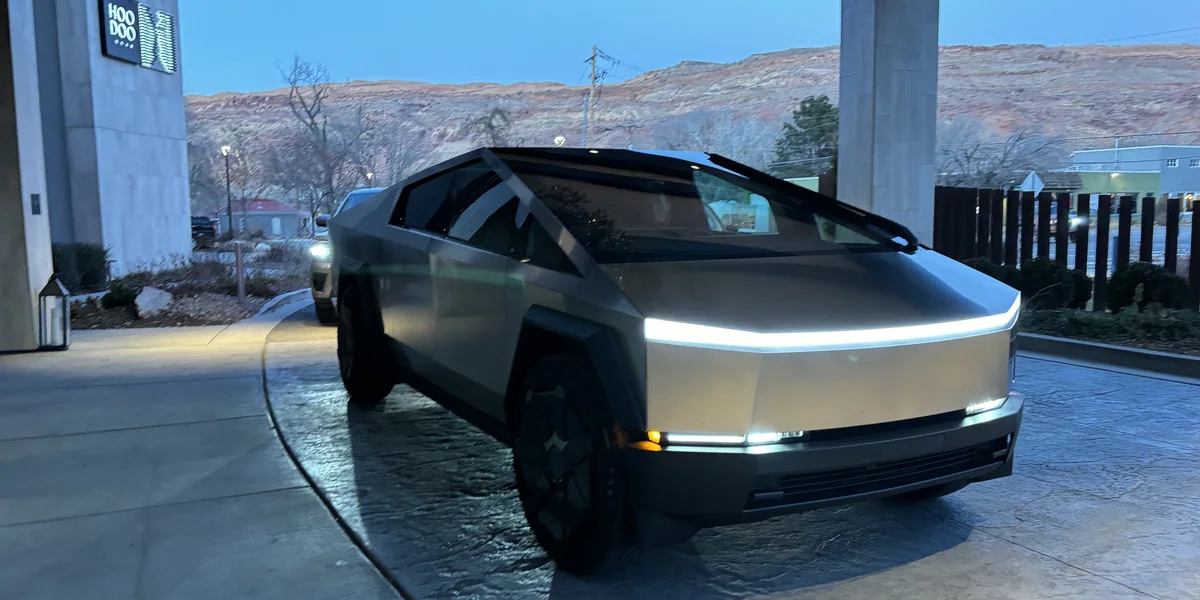
Cybertruck | 4680 | NMC | Tesla (in-house) | ~123 kWh | up to ~350 mi class |
Model S / Model X — production ended spring 2026 | 18650 | NCA | Panasonic (Japan) | ~100 kWh | legacy |
Estimates from teardown and EPA-derived reporting, not Tesla specifications. Prices at research time: Model 3 from $36,990; Model Y from $39,990; Model Y L $61,990 (Giga Texas, orders opened July 2, 2026).
Three Cell Formats, Three Eras
Tesla is the only maker running three cylindrical generations at once — 18650, 2170 and 4680 each tell you when a car was designed.
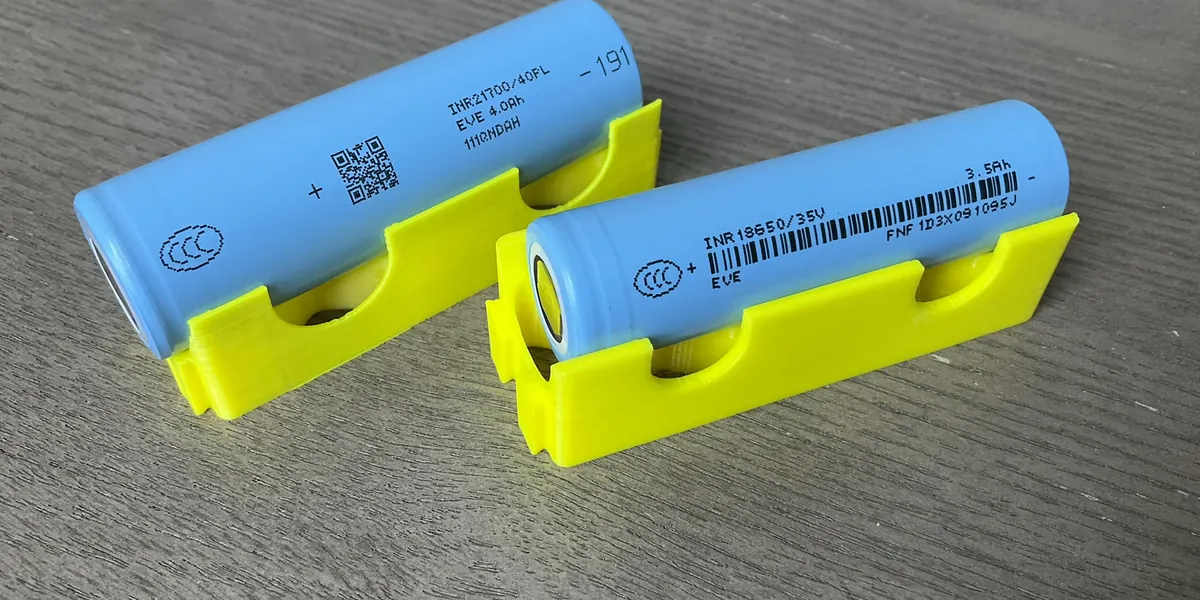
The 18650 (18 mm × 65 mm) is the laptop cell Tesla built its first empire on — it powered the Roadster, then the Model S and X until those lines closed this year. The 2170 (21 × 70) arrived with the Model 3 in 2017: roughly half again the energy per cell, fewer cells to weld, and it remains the volume format today, made by Panasonic in Nevada and by LG for the Model Y L.
The 4680 (46 × 80) is Tesla’s own — announced on Battery Day 2020 with a dry-electrode process that took five more years to solve, in production in Texas, and dissected in the verdict section below. How the formats compare as engineering trade-offs generally is our cell formats guide; the 4680’s own deep dive, including its structural-pack role, is the 4680 cells page.
The Chemistries: NCA Does the Volume, NMC Holds Two Beachheads, LFP Has Left
Ask “what chemistry does Tesla use?” and the honest answer is a split decision — with one chemistry absent entirely.
NCA (nickel-cobalt-aluminium) is the workhorse: every Panasonic 2170 in the Standard and Premium 3/Y lines, and the departed S/X’s 18650s. High energy density, proven at enormous scale, and the chemistry behind the longest-range cars in the table. NMC (nickel-manganese-cobalt) holds exactly two positions: Tesla’s own 4680 cells are NMC811, and the Model Y L’s LG 2170s are NMC — the group’s only LG-chemistry beachhead in the US. LFP is the correction this page exists to make: Tesla’s US LFP chapter was one car — the Model 3 Standard Range with CATL cells — and it closed in October 2024 when that car was discontinued.
The Model Y was never sold with LFP in the US (the American Model Y Standard is an NCA car), and no current US Tesla offers it. LFP still matters to Tesla — in storage: its Nevada LFP plant (built with CATL equipment) feeds Megapack production, and LG’s Michigan LFP plant joins from 2027 — but those are grid batteries, not car batteries, and any page that blurs the two is selling you a 2023 snapshot. The head-to-head chemistry verdict, with degradation and cost, lives on the Tesla battery comparison page.
The 4680 Verdict: Process Solved, Density Not Crowned
Six years after Battery Day, the fair summary is: the manufacturing bet landed, the energy-density bet has not — yet.
What is solved: the dry-electrode process now runs on both electrodes — Tesla disclosed it in its Q4/FY2025 update on January 28, 2026, closing the technical risk that hung over the program for five years. Texas has 40 GWh of installed 4680 capacity, and the cells run in every Cybertruck, some Austin-built Model Ys, and the Cybercab.
What is not (yet) delivered: the Battery Day promises — five times the energy per cell, six times the power, +16% range — were system projections, and the shipped cell (NMC811, pure graphite anode, no silicon) measures 232.5 Wh/kg in the peer-reviewed teardown literature and ~244 Wh/kg in About:Energy’s analysis, against ~269 for Panasonic’s best 2170. Read the 4680 as Tesla buying cost per kWh, a structural-pack architecture and freedom from suppliers — with the density roadmap (silicon, higher-nickel) still ahead of it. Factory-by-factory detail is the Gigafactory page; how the cells become a pack is the Tesla packs page.
Pack Architecture: The Skateboard, the Structural Pack, and One 800-Volt Outlier
Under every Tesla sits the same idea — a flat pack as the floor — with two important variations.
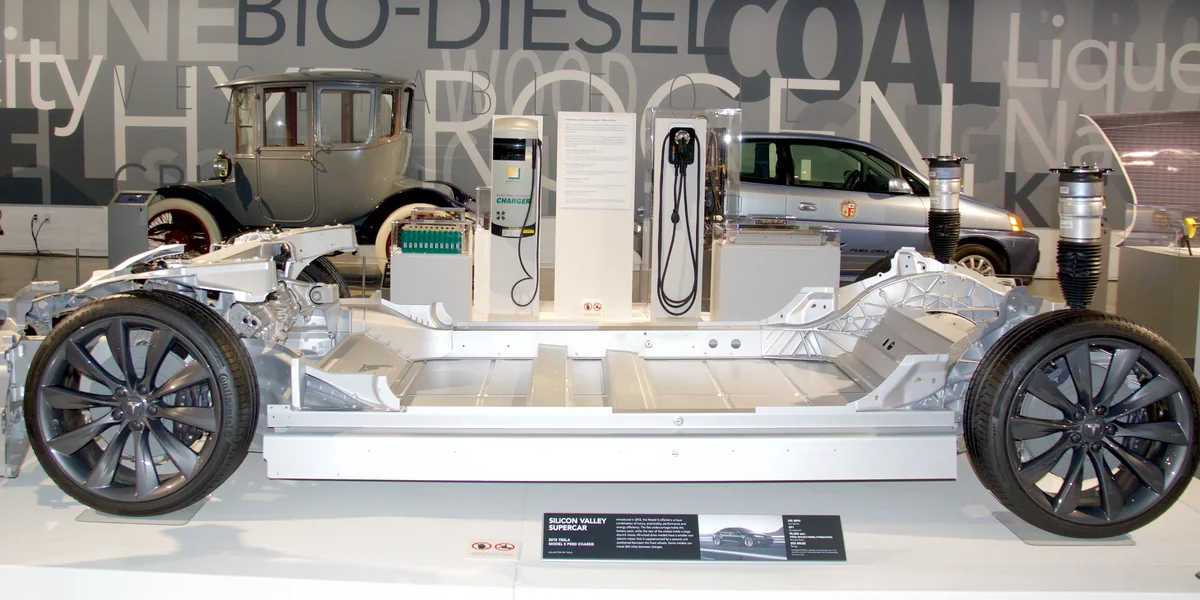
In the 2170 cars, the pack is a bolted floor of modules. In the 4680 cars, the pack is structural: the cells and pack structure carry load between the front and rear castings — note the mechanism correctly, because the internet usually gets it wrong: the pack is a stressed structural member sandwiched by the castings and the body, not “cells glued to castings” as a substitute for structure.
Electrically, the fleet is a 400-volt fleet with one exception: the Cybertruck runs at roughly 816 volts, which is how it posts the fleet’s fastest charging (below). Thermal management is the fleet-wide heat-pump/octovalve system — one loop serving cabin, motors and battery, which is why Tesla’s cold-weather charging behaviour is a software story as much as a hardware one.
The Supplier Map Behind the Badge
Four supply lines feed the cars — and keeping them straight is most of Tesla battery literacy.
- Panasonic (Nevada) — 2170 NCA for the volume 3/Y lines; the partnership that built the industry, running at roughly 41 GWh/yr by third-party estimates. Panasonic Japan supplied the S/X 18650s.
- Tesla in-house (Texas) — 4680 NMC for Cybertruck, some Model Y, Cybercab; Corpus Christi lithium refining reached full ramp in July 2026.
- LG Energy Solution — 2170 NMC for the Model Y L; separately, its Michigan plant will make LFP cells for Tesla storage products from 2027.
- CATL — the closed chapter (US Model 3 LFP, 2021–2024) and the equipment supplier behind Tesla’s Nevada LFP plant for Megapacks.
Charging: What the Architecture Allows
Peak numbers follow the voltage: the 400-volt cars top out around 250 kW; the Cybertruck’s 800-volt pack goes further.
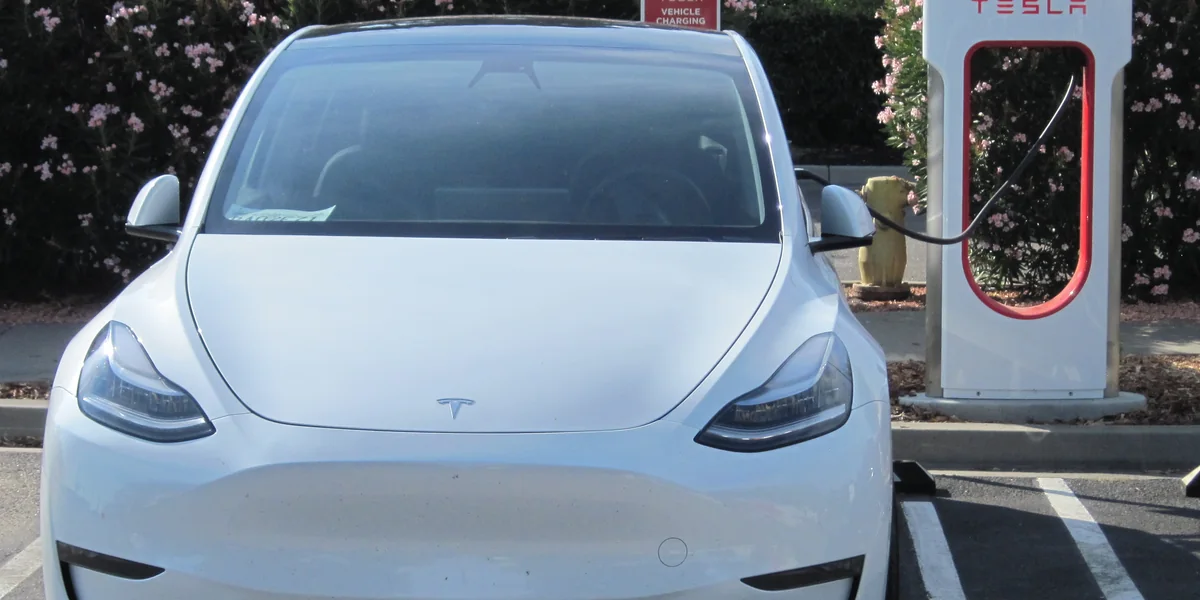
The practical spread: Model 3/Y cars peak near 250 kW on V3/V4 Superchargers, with the curve — how long the peak holds — set by pack size and preconditioning more than by the headline number. The Cybertruck’s ~816-volt architecture lifts its peak to roughly 350 kW on V4 cabinets, the fleet’s best, and the clearest demonstration of why the industry is migrating to 800 volts. (The stored version of this page promised Cybertruck figures beyond that; the verified V4 number is the one printed here.)
Warranty: The Verified Table (Replacing a Common Error)
Not “8 years or 150,000 miles” for everyone — Tesla’s warranty splits by model and trim, with a 70% capacity floor across the board.
Cars | Battery warranty | Capacity floor |
Model S / X (legacy) and Cybertruck | 8 years / 150,000 miles | 70% |
Model 3 / Y Premium & Performance; Model Y L | 8 years / 120,000 miles | 70% |
Model 3 / Y Standard | 8 years / 100,000 miles | 70% |
Per Tesla’s own warranty page, verified November 2026 — unchanged this year.
What’s Next, In Tesla’s Own Words Only
The roadmap items below are Tesla statements with dates — labelled as claims, because this page’s standard is that a promise is not a product.
Tesla’s disclosed direction: more 4680 ramp in Texas (installed capacity already 40 GWh); the Cybercab on 4680 cells; LFP growth on the storage side (Nevada in-house, LG Michigan from 2027); and lithium self-supply from Corpus Christi. What is not on Tesla’s roadmap, whatever the content farms say: there is no Tesla solid-state battery program — solid-state belongs to other makers’ pages on this site. And the Roadster’s flying-adjacent battery story is its own spectacle, told on the Roadster page.
Frequently Asked Questions
What battery does Tesla use?
Mostly Panasonic-made 2170 NCA cells (Model 3 and Y). The Cybertruck and some Austin Model Ys use Tesla’s own 4680 NMC cells; the Model Y L uses LG 2170 NMC cells; the discontinued Model S/X used 18650 NCA. No new US Tesla uses LFP.
Does Tesla use LFP batteries?
Not in any car it sells new in the US today. The only US LFP Tesla was the Model 3 Standard Range (CATL cells), discontinued in October 2024. Tesla does use LFP in its Megapack storage products.
Is the Model Y LFP or NMC?
In the US, neither rumour is right for the standard car: the Model Y Standard and Premium run NCA (Panasonic 2170). The stretched Model Y L runs NMC (LG 2170), and some Austin-built Model Ys run Tesla’s 4680 NMC. No US Model Y is LFP.
What is the 4680 battery, honestly?
Tesla’s in-house cell format (46 mm × 80 mm), NMC811 chemistry, built in Texas with a dry-electrode process that was fully solved only in January 2026. Measured energy density (~232.5 Wh/kg) still trails Panasonic’s best 2170 (~269); its advantages are cost, structural-pack design and supply independence.
How many cells are in a Tesla battery?
It depends on the format: a 2170 Model 3/Y pack holds roughly 4,000–4,400 cells; the old 18650 Model S pack about 7,000; a 4680 Cybertruck pack only ~800–900 much larger cells. Fewer, bigger cells is the whole 4680 idea.
Who makes Tesla’s batteries?
Panasonic (Nevada 2170s; Japan 18650s historically), Tesla itself (Texas 4680s), and LG Energy Solution (Model Y L 2170s). CATL supplied the discontinued US LFP Model 3 and the equipment for Tesla’s Nevada LFP storage plant.
Did Tesla stop making the Model S and X?
Yes — Tesla announced the end in January 2026 and the last Fremont builds ran around May 2026, closing the 18650 era. Their battery warranty (8 years/150,000 miles, 70% floor) continues for existing owners.
Which Tesla battery is best?
For range per charge, the big Panasonic NCA packs in the Premium cars. For cost and cycle life, LFP wins on paper — but Tesla no longer sells it in a US car. The 4680’s case is manufacturing cost and structure, not (yet) density. The full verdict is on the comparison page linked in the chemistry section.
Conclusion
Tesla’s battery story in 2026 is a portfolio, not a product: Panasonic’s NCA does the volume, the in-house 4680 owns the truck and the future tense, LG holds one important beachhead, and LFP has quietly exited the American car line-up while conquering the storage side. The overview discipline is the one this page now follows — per model, per supplier, dated, with promises labelled as promises and estimates labelled as estimates. When a row in the table changes, it will change here first.
