
Hyundai Ioniq 5 Battery: Complete Guide

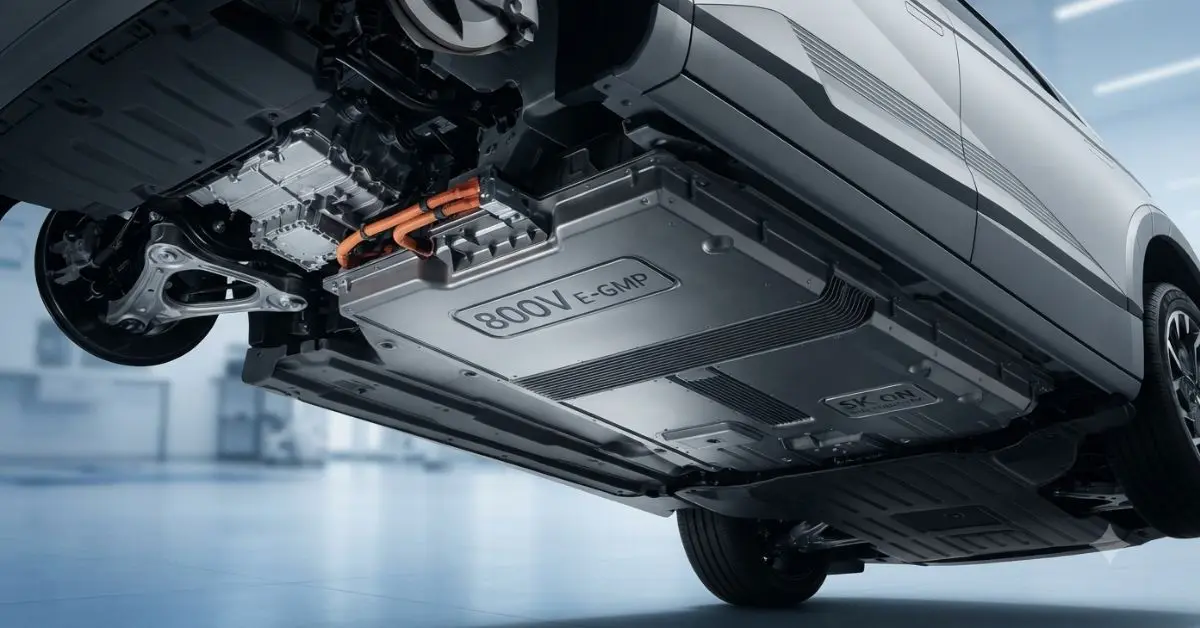
The Hyundai Ioniq 5 battery is one of the most advanced in any mainstream electric SUV — built on the 800V E-GMP platform with NMC chemistry from SK On, active liquid thermal management, and 10–80% fast charging in as little as 18 minutes — the larger packs peak at about 240 kW on a 350 kW charger, and even the 58 kWh pack peaks at 175 kW. Available in two sizes — 58 kWh Standard Range and 77.4 kWh Long Range (upgraded to 84 kWh for 2025) — the Ioniq 5 battery has also demonstrated exceptional real-world durability, with one Hyundai-studied example still showing 87.7% state of health at 360,000 miles (580,000 km).
Pack sizes: 58 / 63 / 77.4 / 84 kWh · Chemistry: NMC (SK On) · 800 V · Warranty: 10 yr / 100,000 mi · EPA range: 220–318 mi · 10–80% DC charge: ~18–20 min
Hyundai Ioniq 5 Battery: Full Specs by Model Year
| Model Year | Battery Option | Nominal Capacity | Usable Capacity | Drivetrain | EPA Range |
|---|---|---|---|---|---|
| 2022–2024 | Standard Range | 58 kWh | ~54 kWh | RWD only | 220 miles |
| 2022–2024 | Long Range | 77.4 kWh | ~74 kWh | RWD or AWD | 266–303 miles |
| 2025–2026 | Standard Range | 63 kWh | ~60 kWh | RWD only | 245 miles |
| 2025–2026 | Long Range | 84 kWh | ~80 kWh | RWD or AWD | 269–318 miles by trim (318 RWD) |
| 2025–2026 | Ioniq 5 N | 84 kWh | ~80 kWh | AWD (dual motor) | ~221 miles |
What Makes the Ioniq 5 Battery Stand Out
The Ioniq 5 is built on Hyundai’s E-GMP (Electric-Global Modular Platform) — an 800-volt architecture that sets it apart from virtually every other mainstream EV. Standard EVs use 400V systems; the Ioniq 5 runs at 800V. This matters for one primary reason: higher voltage means the same charging power arrives at half the current. Less current means less heat, less energy loss, and the ability to accept dramatically higher charging rates without overheating the cells.
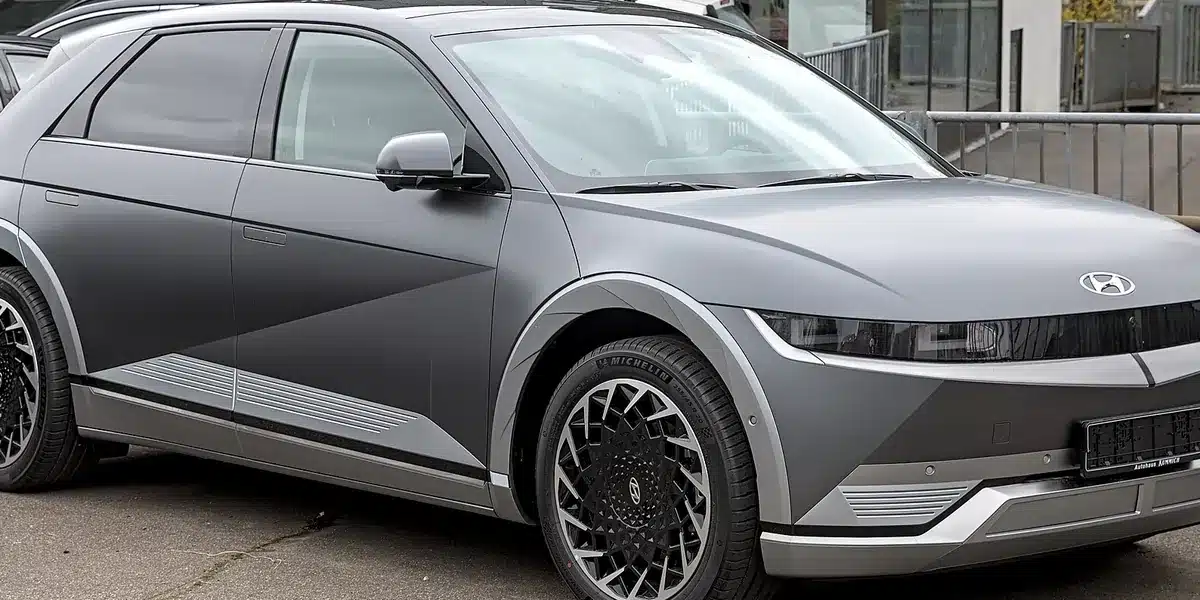
The battery pack contains NMC (Nickel Manganese Cobalt) pouch cells supplied by SK On — the battery subsidiary spun out of SK Innovation. Pouch cells in this application are arranged in 32 modules for the 77.4 kWh pack (384 cells total) and 24 modules for the 58 kWh pack. All Ioniq 5 battery packs use active liquid thermal management — coolant flows through plates between cell layers, keeping the battery in its optimal 25–40°C range regardless of ambient temperature.
Battery preconditioning is available from the 2022 spring refresh onward. When you navigate to a DC fast charger using the Ioniq 5’s built-in navigation, the car automatically heats or cools the battery to its optimal charging temperature before arrival — enabling full 350 kW peak charging even in cold weather.
The battery pack sits flat under the cabin floor between the axles — the E-GMP ‘skateboard’ layout — which keeps the floor flat, the center of gravity low, and the pack protected inside the body structure.
Ioniq 5 Charging Speed: 58, 77.4 and 84 kWh Packs
| Charging Method | 58 kWh Pack | 77.4 kWh Pack (2022–2024) | 84 kWh Pack (2025+) |
|---|---|---|---|
| Peak DC fast charge rate | 175 kW | 220–350 kW | 260–350 kW |
| 10–80% at peak rate | ~18 minutes | ~18 minutes | ~18 minutes |
| 50 kW DC charger (20–80%) | ~50 min | ~75 min | ~80 min |
| Level 2 (11 kW AC) | ~6 hours | ~8 hours | ~9 hours |
| Level 2 (7.2 kW AC) | ~9 hours | ~12 hours | ~13 hours |
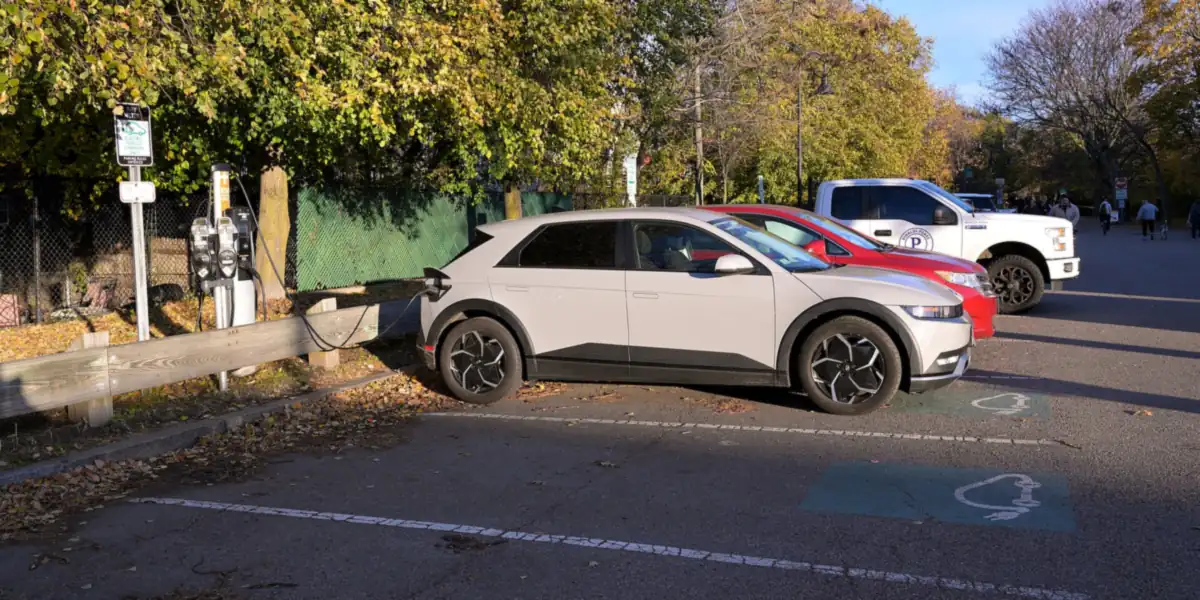
The 58 kWh Standard Range pack is limited to a 175 kW peak DC rate — useful on any CCS charger but unable to take advantage of ultra-high-power stations. The 77.4 kWh and 84 kWh Long Range packs support up to 350 kW on compatible stations like Electrify America and EVgo’s high-power locations, completing 10–80% in approximately 18 minutes.
Hyundai Ioniq 5 Battery Degradation: Real-World Data
How long is that in years? At typical US mileage of roughly 12,000 miles a year, the figures below work out to about 90% of original capacity remaining after 8 years, and around 85% at 12 years — comfortably beyond the 10-year warranty for most owners. Treat the much-quoted 87.7%-at-360,000-miles car as a best case, not the norm: it piled on highway miles quickly in gentle conditions, which is far kinder to a pack than the same miles spread over a decade of short trips, heat, and fast charging.
The Ioniq 5’s battery durability has been tested far beyond normal owner experience. A Hyundai-studied Ioniq 5 driven approximately 580,000 km (360,000 miles) in under 3 years still showed about 87.7% state of health — remarkable resilience under extreme use. For normal owners, the degradation picture is equally encouraging:
- Typical owner-reported degradation: 2–4% capacity loss after 2–3 years and 40,000–70,000 km in normal use
- Annual degradation rate: Approximately 1–1.5% per year in mild to moderate climates
- Hot climate performance: Active liquid cooling keeps heat-related degradation well below passive-cooled rivals — 2–2.5% per year in Arizona/Texas conditions
- High-mileage data point: 87.7% SOH at ~360,000 miles shows the pack’s longevity potential under extreme commercial use
| Mileage | Typical SOH (77.4/84 kWh) | Estimated Remaining Range |
|---|---|---|
| 0–20,000 miles | 97–100% | 294–303 miles |
| 20,000–50,000 miles | 94–97% | 285–294 miles |
| 50,000–100,000 miles | 88–94% | 266–285 miles |
| 100,000–150,000 miles | 83–90% | 251–273 miles |
Hyundai Ioniq 5 Battery Warranty
Hyundai backs the Ioniq 5 battery with an industry-leading 10-year / 100,000-mile warranty against defects and excessive capacity loss in the U.S. market. This is 2 years longer than Tesla, Ford, and most other brands’ standard 8-year coverage. The warranty covers the battery if it falls below 70% of original capacity within the coverage period.
Hyundai Ioniq 5 Battery Replacement Cost
Out of warranty, a full Ioniq 5 battery replacement at a US dealer or specialist typically runs $10,000 to $16,000 installed, depending on the pack — the 58 and 63 kWh packs sit at the lower end, the 84 kWh at the top — with labor alone accounting for roughly $750 to $2,000 of the bill. Remanufactured packs and module-level repairs can cost substantially less when only part of the pack has failed.
Two warnings about the numbers you may have seen elsewhere. Dealer parts-counter list prices for a brand-new pack can be quoted far higher — $40,000 reports circulate online — but those are list prices few owners ever actually pay, and accident or insurance cases are priced differently again. And almost no current owner is paying anything at all: every US Ioniq 5 is still inside Hyundai’s 10-year/100,000-mile battery warranty, which replaces a pack that fails or drops below 70% capacity free of charge.
See how every brand compares in our EV battery replacement cost guide.
Ioniq 5 Battery: 2022–2024 vs 2025+ Key Differences
- Larger Long Range pack: 77.4 kWh grows to 84 kWh in 2025 — adding approximately 6.6 kWh of usable capacity and roughly 20–25 miles of additional range in Long Range RWD configurations
- The Standard Range pack also grew, from 58 to 63 kWh (EPA range 220 → 245 miles).
- NACS charging port: 2025+ models include native NACS (Tesla) connector for Supercharger network access, in addition to CCS1 compatibility via adapter
- On Tesla Superchargers, the native NACS port runs at roughly 500 volts, so a 10–80% charge takes about 24 minutes (63 kWh) or 30 minutes (84 kWh) — use an 800-volt CCS charger for the full ~20-minute speed.
- U.S. assembly: 2025+ models assemble at Hyundai’s Metaplant in Bryan County, Georgia — which qualified them for the federal clean-vehicle credit before that credit ended on September 30, 2025.
- Battery conditioning refinement: 2025+ models include improved preconditioning algorithms that more aggressively prepare the pack for ultra-fast charging in cold weather
ICCU Recall: What Ioniq 5 Owners Need to Know
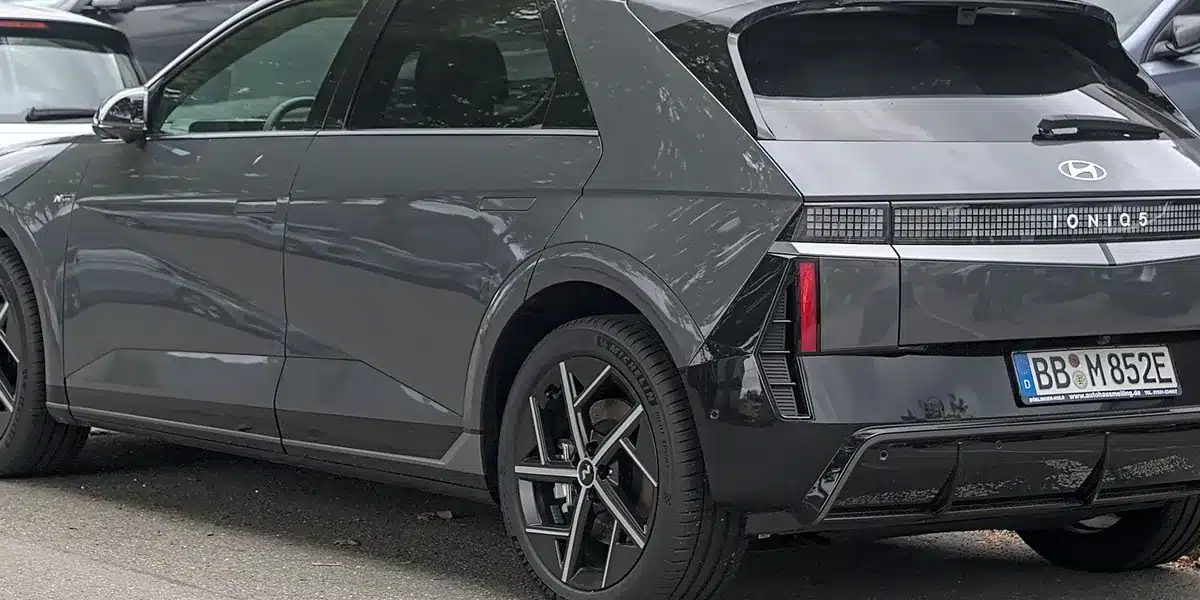
The most significant technical issue affecting 2022–2024 Ioniq 5 models is the ICCU (Integrated Charging Control Unit) recall. A defect in the ICCU — the unit managing 12-volt charging and auxiliary power functions — can cause it to fail, potentially leading to a dead 12-volt battery and complete loss of drive power. This is not a high-voltage battery defect but an auxiliary electronics failure that affects vehicle operation.
Hyundai issued a software remedy and in some cases hardware replacement for affected 2022–2024 Ioniq 5 models. Before purchasing a used Ioniq 5, verify that any open ICCU recall campaigns have been completed via the NHTSA VIN lookup tool or a Hyundai dealer check.
Separate from the ICCU issue, NHTSA recall 26V-432 covers certain 2023–2024 Ioniq 5 cars whose high-voltage battery cells may contain misaligned electrodes, which can lead to a fire while parked or driving. Until the repair is complete, owners are advised to park outside and away from structures and to limit charging to a maximum of 80%. Dealers will replace the high-voltage battery system assembly free of charge (Hyundai recall number 305).
Charging Habits That Protect the Ioniq 5 Battery
- Set daily charge limit to 80%: The Ioniq 5 allows a charging limit in the car’s EV settings menu. For NMC chemistry, 80% daily is the sweet spot for preserving long-term capacity — use the full 100% only for road trips where maximum range is needed.
- Always use navigation to a DC fast charger: Preconditioning only activates when you navigate to a charger using the built-in navigation, not a phone app. This single habit ensures the battery arrives at the optimal temperature for peak charging speed every time.
- Avoid parking fully charged in extreme heat: NMC chemistry ages faster at high state-of-charge and high temperature simultaneously. In summer, aim to charge shortly before departure rather than leaving the car at 100% overnight in a hot garage.
- V2L use is fine in moderation: The Ioniq 5’s Vehicle-to-Load (V2L) port exports up to 3.6 kW — useful for camping. Regular deep discharging purely for V2L use is worth monitoring, though the cells can handle occasional deep cycles without significant harm.
Hyundai Ioniq 5 Battery: Frequently Asked Questions
How long does the Hyundai Ioniq 5 battery last?
For most owners, longer than they’ll keep the car. Hyundai warrants it for 10 years or 100,000 miles down to 70% capacity, and real-world data shows typical packs holding about 90% at 100,000 miles and roughly 85% beyond 150,000 — a useful life of 12–15 years or more at average US mileage. Hyundai has documented one car still at 87.7% health after 360,000 miles.
What type of battery does the Ioniq 5 have?
A lithium-ion pack using NMC (nickel manganese cobalt) pouch cells made by SK On, liquid-cooled, on an 800-volt platform. Sizes: 58 kWh (Standard Range) and 77.4 kWh (Long Range) for 2022–2024, then 63 kWh and 84 kWh from 2025.
Does the Ioniq 5 use an LFP battery?
No. Every US Ioniq 5 uses NMC chemistry, in every trim and year, including the Ioniq 5 N. Hyundai reserves LFP for some entry models in other markets, not the US Ioniq 5.
How much does it cost to replace an Ioniq 5 battery?
Typically $10,000–$16,000 installed out of warranty in the US, depending on pack size. In practice almost nobody pays it: the 10-year/100,000-mile warranty covers failure or capacity below 70%, and every US Ioniq 5 is still within that window.
Where is the Ioniq 5 battery located?
Flat under the cabin floor, between the front and rear axles, as part of the E-GMP platform. The separate small 12-volt battery that runs the accessories sits under the hood (in the frunk area).
How fast does the Ioniq 5 charge?
On a high-power DC charger, 10–80% takes about 18 minutes for the 2022–2024 packs and about 20 minutes for the 2025+ packs — the 77.4 and 84 kWh packs peak around 240 kW, the 58 kWh pack at 175 kW. On a Tesla Supercharger (2025+ native NACS), expect roughly 24–30 minutes for the same charge.
Why does the Ioniq 5’s 12-volt battery keep dying?
Usually the ICCU — the unit that charges the 12-volt battery from the main pack. A known defect in 2022–2024 cars can stop 12-volt charging, drain the small conventional lead-acid battery, and in the worst case cut drive power. Hyundai’s recall remedy (software update, and ICCU/fuse replacement where needed) is free at dealers; check your VIN with the NHTSA lookup.
Conclusion
The Hyundai Ioniq 5 battery combines 800V charging architecture, NMC pouch cells from SK On, and active liquid thermal management into one of the most capable and durable EV battery systems available in a mainstream SUV. The 18-minute 10–80% charge time at 350 kW remains one of the fastest in any non-luxury EV. Real-world degradation data — including Hyundai’s own 580,000 km study showing 87.7% SOH — confirms the pack ages remarkably well under even extreme use. The 2025 battery upgrade to 84 kWh, U.S. assembly at Metaplant Georgia, and native NACS charging make the refreshed Ioniq 5 the most complete version of this battery system yet.
