
Porsche Taycan Battery: Complete Guide

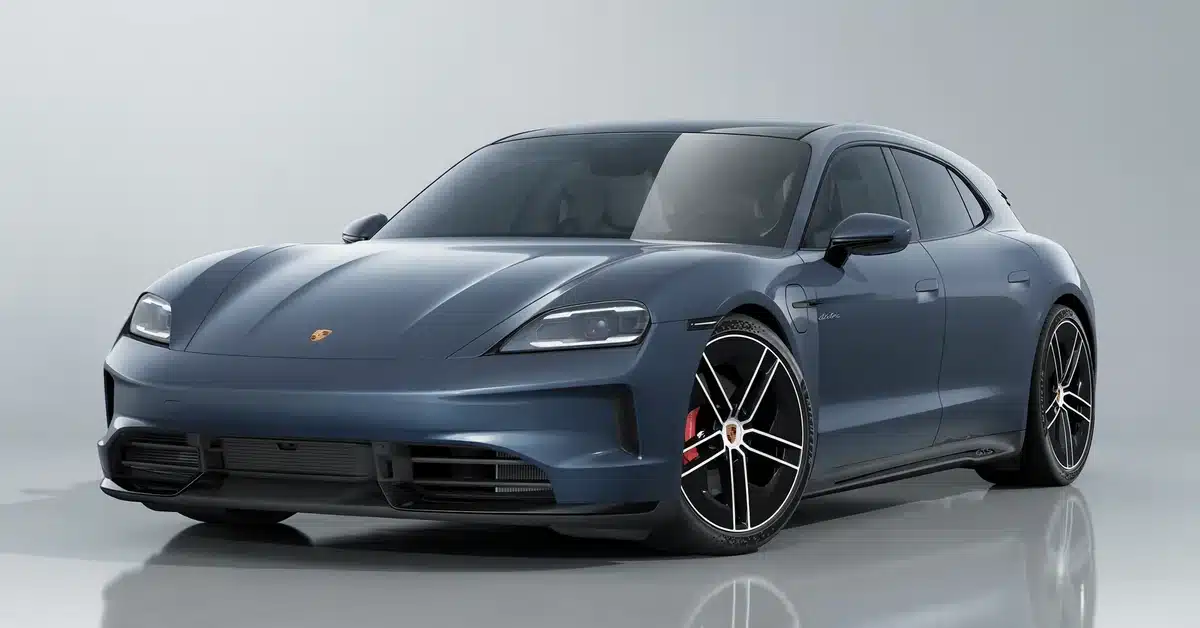
The Porsche Taycan battery is the most technically sophisticated in any volume-production luxury electric vehicle — running on a 800-volt architecture with a 105 kWh Performance Battery Plus (97 kWh usable), supporting up to 320 kW DC fast charging that completes 10–80% in as little as 18 minutes, and delivering up to 318 miles of EPA range in RWD base configuration. The 2025 facelift kept two battery choices: the 89 kWh Performance Battery is standard on the Taycan and 4S, while the larger 105 kWh Performance Battery Plus is optional on those trims and standard on the GTS, Turbo and Turbo S.
The Porsche Taycan battery comes in four sizes: 79.2 and 93.4 kWh (2020–2024) and 89 and 105 kWh (2025–2026), all 800-volt lithium-ion pouch-cell packs. The longest-range version is EPA-rated at 318 miles, charging runs from 10% to 80% in about 18 minutes at up to 320 kW, and most packs still hold about 90–95% of their capacity at 50,000 miles.
Key figures: Usable capacity 71.0–97.0 kWh · DC peak 225–320 kW · Warranty 8 years / 100,000 miles (70% minimum) · Full replacement roughly $25,000–$35,000
Porsche Taycan Battery: Specs by Generation
| Generation | Battery Option | Gross Capacity | Usable Capacity | EPA Range (RWD) | Peak DC Rate |
|---|---|---|---|---|---|
| Gen 1 (2020–2024) | Performance Battery | 79.2 kWh | 71.0 kWh | 199–200 miles | 225 kW |
| Gen 1 (2020–2024) | Performance Battery Plus | 93.4 kWh | 83.7 kWh | 225 miles | 270 kW |
| Gen 2 (2025–2026) | Performance Battery | 89.0 kWh | 82.3 kWh | 274 miles | 270 kW |
| Gen 2 (2025–2026) | Performance Battery Plus | 105.0 kWh | 97.0 kWh | 318 miles | 320 kW |
EPA figures are for the rear-wheel-drive sedan; all-wheel-drive and Cross Turismo versions rate slightly lower.
Read more: EV battery chemistry explained — how the Taycan’s pouch cells compare with other chemistries
The 105 kWh Battery: How Porsche Made It Lighter and Bigger Simultaneously
The Gen 2 Performance Battery Plus grew from 93.4 kWh (Gen 1) to 105 kWh (Gen 2) — adding 11.6 kWh — while the pack weight dropped from 634 kg to 625 kg. The gains came from several engineering changes Porsche introduced with the 2024 facelift.
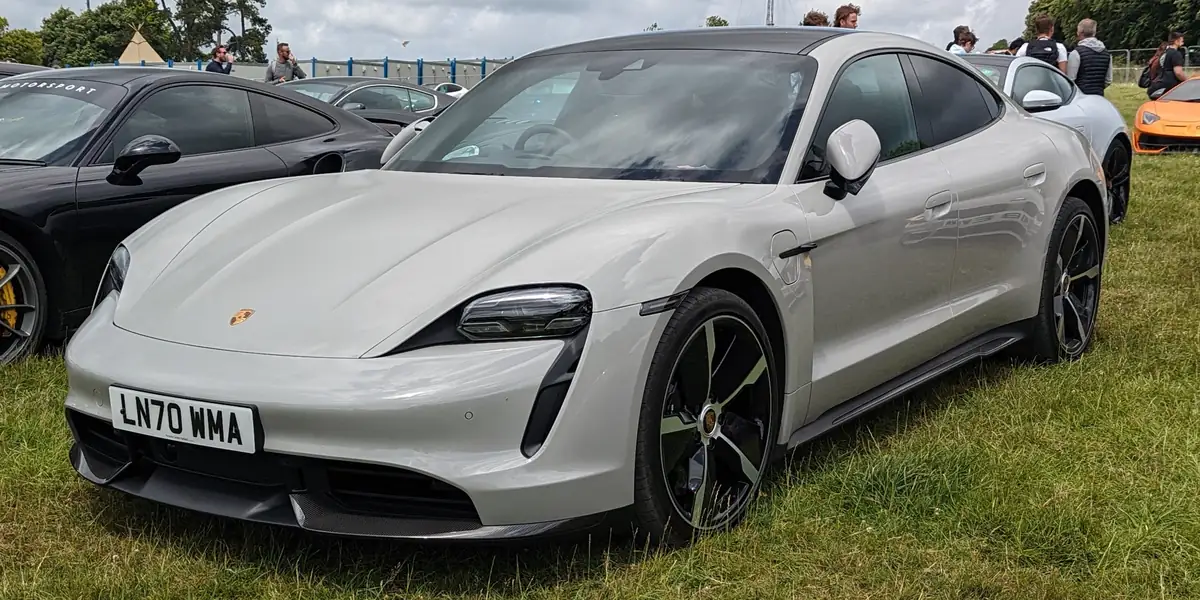
The pack keeps active liquid cooling, with a revised cooling strategy and a standard heat pump that bring the cells to their ideal temperature faster. Porsche trimmed weight from the pack and motors at the same time, which is how the bigger battery keeps the car’s total weight in check. Individual cell energy density also increased, allowing more capacity in the same cell format.
The usable state-of-charge window also improved — the Gen 2 pack uses 92.4% of gross capacity as usable capacity (97 kWh usable out of 105 kWh gross), compared to approximately 89% in Gen 1. This tighter buffer management maximizes accessible range without compromising the pack’s protected reserve margins for longevity.
Taycan 800V Architecture: Why It Matters
The Porsche Taycan pioneered 800V EV architecture in 2019 — years before Hyundai, Kia, and other manufacturers adopted similar approaches. The 800V system enables three specific advantages that define the Taycan ownership experience:
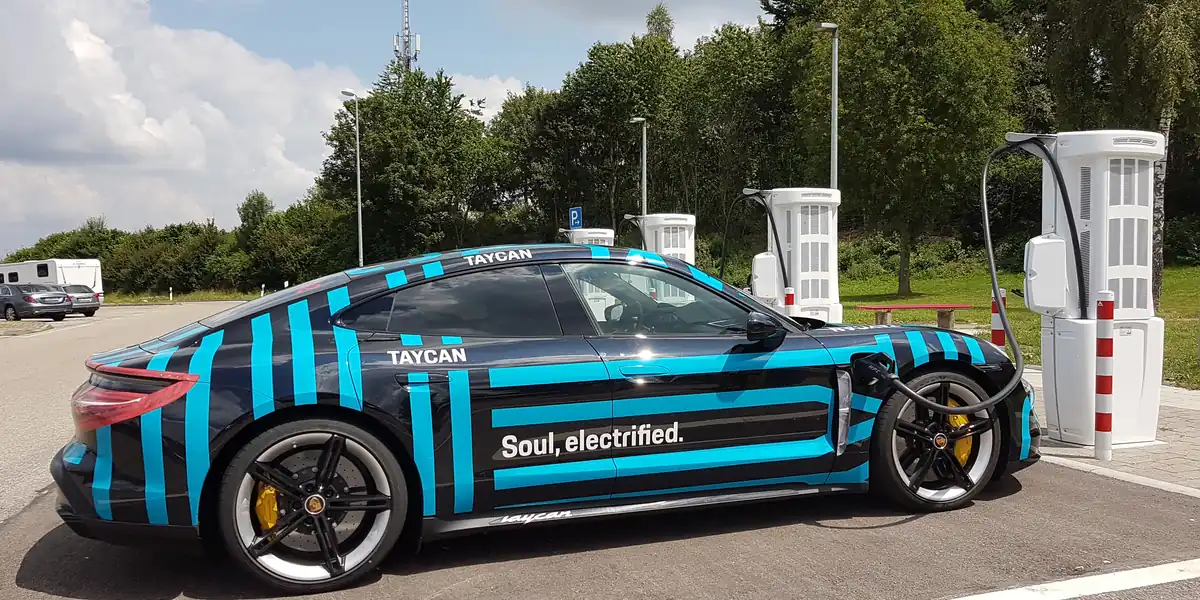
- 320 kW peak DC charging: The highest charging power of any standard production luxury EV in 2025–2026. At a compatible 350 kW charger, the Taycan reaches 80% from 10% in approximately 18 minutes — the same time as the more affordable Hyundai Ioniq 5, despite having a much larger battery.
- Lower cable gauge requirements: 800V at the same power level passes only half the current of a 400V system. Lower current means thinner, lighter charging cables and connectors — contributing to the slim, elegant charging cable design that distinguishes Taycan charging from bulkier competitors.
- Better sustained fast-charging performance: Lower current means less heat generation during charging, which means the thermal management system works less hard to prevent charge throttling. Taycan owners report more consistent full-speed charging across multiple consecutive sessions than in 400V competitors.
Taycan Battery Performance Across All Models
| Model (2025–2026) | Battery | Drivetrain | Peak Power | EPA Range | 0–60 mph |
|---|---|---|---|---|---|
| Taycan (base RWD) | 89 kWh (105 kWh optional) | RWD | 402 hp (429 hp with Plus battery) | 274–318 miles | 4.5 sec |
| Taycan 4S | 89 kWh (105 kWh optional) | AWD | 455–509 hp (up to 590 hp with Launch Control) | 252–295 miles | 3.5 sec |
| Taycan GTS | 105 kWh (+) | AWD | 596 hp (690 hp with Launch Control) | 293 miles | 3.1 sec |
| Taycan Turbo | 105 kWh (+) | AWD | 697 hp (871 hp with Launch Control) | 292 miles | 2.5 sec |
| Taycan Turbo S | 105 kWh (+) | AWD | 764 hp (938 hp with Launch Control) | 266 miles | ~2.3 sec |
Porsche Taycan Battery Degradation
Taycan battery longevity data has been accumulating since the 2019 launch. Owner reports and fleet monitoring consistently show the Taycan aging gracefully under typical luxury car use patterns — which typically involves fewer annual miles and cycles than mainstream EVs used for commuting:
- Annual degradation rate: Approximately 1.5–2.5% per year under typical ownership patterns
- 50,000-mile owners: Most report 90–95% SOH — remarkably strong for a high-performance NMC pack
- Charging habits impact: Taycan owners who routinely charge to 100% show faster degradation than those maintaining an 80% daily limit — consistent with NMC chemistry principles
- Sport Chrono impact: Frequent use of maximum-boost modes (requiring the battery to deliver 938 hp peaks in Turbo S) generates higher pack stress — these owners show slightly faster degradation than base Taycan owners in the same time period

Taycan drivers usually ask about one number: the degradation rate after 50,000 miles. Most Taycans still hold about 90–95% of their original capacity at that point, a loss of roughly 5–10%. After that first drop the curve flattens, and the loss slows to roughly 1–2% a year in normal use. Heat, high charge levels and frequent fast charging drive most of that loss — the same causes detailed in our Tesla battery degradation causes guide, which apply to every lithium-ion pack, Porsche’s included.
Porsche Taycan Battery Warranty
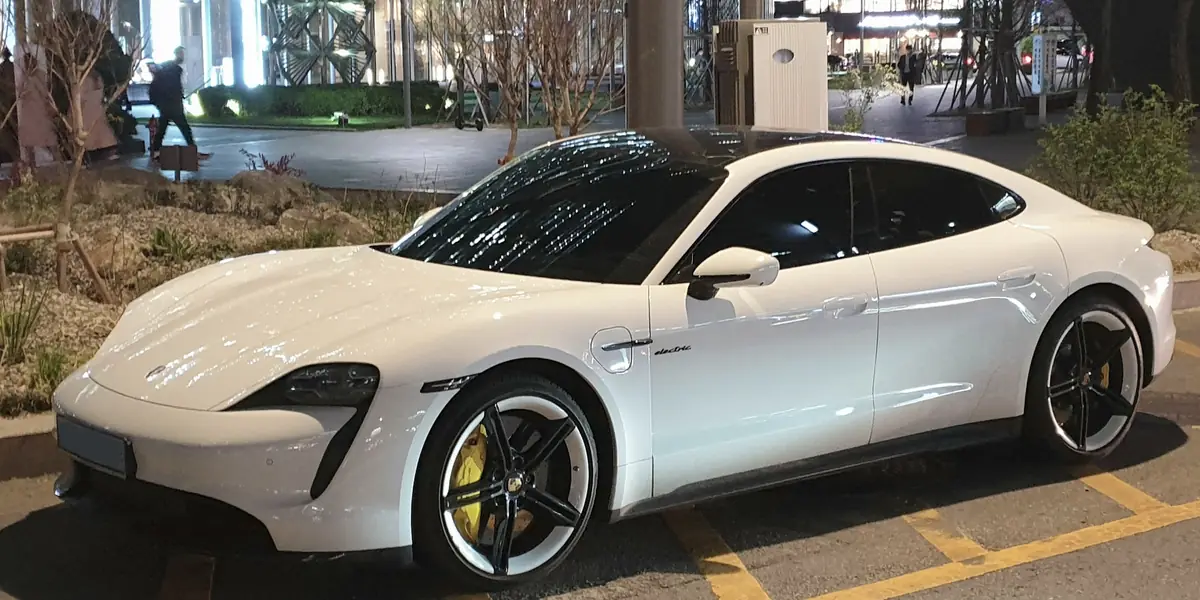
Porsche covers the Taycan battery with an 8-year / 100,000-mile warranty against defects and excessive capacity loss. The warranty triggers if the battery falls below 70% of original usable capacity. For the 97 kWh usable Performance Battery Plus, this means Porsche replaces or repairs the battery if it falls below approximately 68 kWh usable within the coverage period.
Porsche Taycan Battery Recalls: ARB6 and ARB7
In October 2024, Porsche recalled 27,527 Taycans in the United States (NHTSA campaign 24V-732), covering every model year from 2020 to 2024. A production fault in battery cells made by LG Energy Solution in Poland can, in rare cases, let a module short-circuit. Porsche estimated that only about 2% of the recalled cars actually carry the defect.
The recall runs under two codes. Cars under ARB6, where Porsche does not yet have enough battery data, were limited to an 80% maximum charge until checked. Cars under ARB7 already share their battery data with Porsche over the air, so they need no charge limit and are monitored continuously. The remedy is diagnostic software that watches the pack and warns the driver if a module misbehaves, with faulty modules replaced free of charge. Before buying a used Taycan, run its VIN through the NHTSA recall lookup.
Earlier, smaller recalls (APB5, ARA4 and ARA5) covered the same issue on fewer cars. ARB6 and ARB7 replace them, so a car that has completed the newest recall has the full fix.
Porsche Taycan Battery Replacement Cost
If the pack fails outside warranty, a full replacement at a Porsche Center is one of the most expensive repairs in the EV world. For 2025 and newer Taycans, parts catalogs and owner reports put a complete new pack at roughly $25,000 to $35,000 fitted, and quotes for early cars and the largest configurations have run as high as $45,000. The pack itself is most of the bill, and labor adds several thousand dollars because the battery is integrated into the car’s structure.
A full pack is not always the answer. The Taycan battery is built from modules — 28 in the 89 kWh pack and 33 in the 105 kWh pack — and Porsche Centers can replace individual faulty modules for a fraction of the full-pack price. That is also how most warranty and recall repairs are handled. For a wider comparison across brands, see our EV battery replacement cost guide.
The good news is that most owners will never pay it. Degradation alone rarely kills a Taycan pack, the 8-year warranty absorbs early failures, and a healthy used Taycan with a documented battery check is a far safer buy than a cheap one with no history.
Taycan Battery Charging Tips
- Use 80% as your daily charge limit: The Taycan’s charge planning screen allows setting a charge target. For daily use, 80% preserves NMC battery health — use 100% only before long drives where maximum range is needed.
- Always navigate to chargers via Porsche’s in-car navigation: The Taycan’s battery conditioning system activates automatically when you route to a charging station — warming or cooling the pack for peak 320 kW acceptance. Third-party navigation apps do not trigger this conditioning.
- Charge during off-peak electricity hours: Level 2 home charging (11 kW AC) fills the 97 kWh pack in approximately 10–11 hours — scheduling overnight charging (off-peak rates) is both cost-efficient and reduces the time spent at 100% SoC in the warmth of a garage.
- Monitor via the Porsche Connect app: The app provides real-time battery state, charge scheduling, remote preconditioning, and charge timer settings — making battery health management accessible without needing to access the car directly.
Conclusion
The Porsche Taycan battery represents the pinnacle of luxury electric vehicle battery engineering — a 105 kWh pack that weighs less than its predecessor while holding more energy, charges at 320 kW for 18-minute 10–80% sessions, and delivers up to 421 miles of WLTP range in base configuration. The 2025 update kept the smaller 89 kWh battery as the standard choice and made the 105 kWh Plus the long-range pick, so the right battery now depends on how far you actually drive.
Buyers cross-shopping other 800V performance EVs should also see our Hyundai Ioniq 5 N battery guide, which offers similar charging speed at a fraction of the price. For buyers who prioritize engineering excellence and charging speed in a premium package, the Taycan battery system has no equals in its segment.
Frequently Asked Questions
What size battery does the Porsche Taycan have?
Four sizes across two generations: 79.2 kWh (71.0 usable) and 93.4 kWh (83.7 usable) for 2020–2024, and 89 kWh (82.3 usable) and 105 kWh (97.0 usable) for 2025–2026. The 89 kWh Performance Battery is standard on the Taycan and 4S; the 105 kWh Performance Battery Plus is optional on those trims and standard on the GTS, Turbo and Turbo S.
What is the degradation rate of the Taycan battery after 50,000 miles?
Most Taycans keep about 90–95% of their original capacity at 50,000 miles, so expect roughly 5–10% loss by then. The drop is fastest in the first years and then flattens to about 1–2% a year.
How much does a Porsche Taycan battery replacement cost?
A full pack replacement at a Porsche Center runs roughly $25,000 to $35,000 for 2025 and newer models, with some earlier quotes as high as $45,000. Replacing a single faulty module costs far less, and the 8-year/100,000-mile warranty covers failures first.
How long does the Taycan battery warranty last?
Porsche covers the high-voltage battery for 8 years or 100,000 miles in the US. If the capacity falls below 70% in that period, Porsche repairs or replaces the pack.
How fast does the Taycan charge?
On a DC fast charger, the 2025 Taycan peaks at 320 kW (270 kW with the 89 kWh battery) and charges from 10% to 80% in about 18 minutes. Earlier cars peak at 225–270 kW and need about 22 minutes for the same charge. At home on an 11 kW wallbox, a full charge takes roughly 10–11 hours.
Is the Taycan battery affected by a recall?
Yes. Porsche recalled 27,527 US Taycans from model years 2020–2024 (recall codes ARB6 and ARB7) over a possible cell defect. The remedy is free diagnostic software, plus module replacement where needed; ARB6 cars were asked to charge to a maximum of 80% until checked.
