
Polestar 3 Battery: Complete Guide

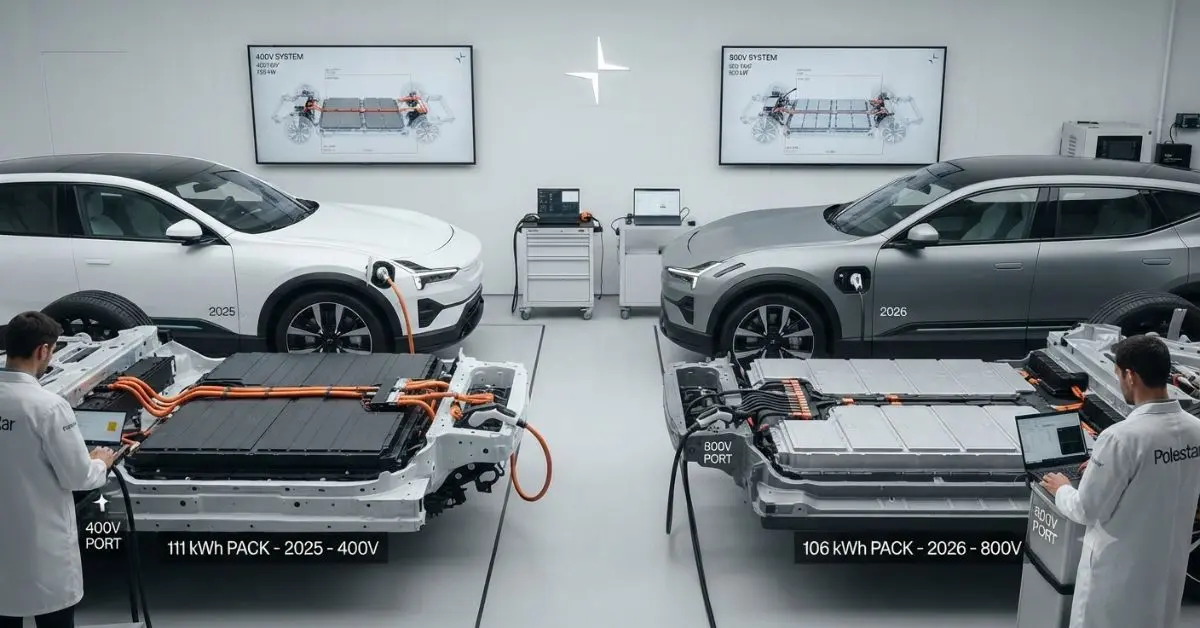
The Polestar 3 battery is a 111 kWh lithium-ion pack, and every version of the car sold in the United States uses the same one. It gives the Single Motor car an EPA range of up to 350 miles, charges at up to 250 kW, and is covered by an 8-year, 100,000-mile warranty. If you have read that the Polestar 3 switched to an 800-volt battery for 2026, that newer car is real, but it is the updated model for Europe and other markets. Polestar’s US range still runs on the 111 kWh, 400-volt car, and this guide covers that car first, then explains the 800-volt version honestly so the two are never mixed up.
The car also has a second, small 12-volt battery for its electronics, locks and lights, and this guide covers that too. One more thing matters before any spec: Polestar will stop selling new cars in the United States after the 2026 model year, so for most American buyers this is now a remaining-stock or used purchase. The sections below are written with that in mind, from real-world range and battery lifespan to recalls, replacement cost and the checks that matter on a used car.
Sources: Polestar US specifications and owner’s manual, fueleconomy.gov (EPA), NHTSA recall filings, the Edmunds EV Range Test and Geotab fleet research.
Quick answer
The Polestar 3 sold in the US has one battery: a 111 kWh CATL nickel manganese cobalt pack with 107 kWh usable, on a 400-volt system. It charges at up to 250 kW (10 to 80% in about 30 minutes) and is EPA-rated at up to 350 miles in Single Motor form. The battery warranty is 8 years or 100,000 miles with a 70% capacity floor.
Key figures: 111 kWh (107 usable) · 400V · 250 kW DC · EPA up to 350 miles · From $67,500 · Warranty 8 years / 100,000 miles
Polestar 3 Battery Specs (US Models)
Every Polestar 3 sold in America uses the same 111 kWh battery — the differences between versions are motors, wheels and price, not the pack.
Polestar kept the US range simple: one pack, three power levels. The Single Motor car is rear-wheel drive, the Dual Motor adds a front motor, and the Performance Pack turns the Dual Motor up. Range depends mostly on wheel size, so the table shows each version’s best EPA figure and the wheel split is explained underneath.
| Version | Power | EPA range (up to) | Price from |
|---|---|---|---|
| Long Range Single Motor | 299 hp | 350 miles | $67,500 |
| Long Range Dual Motor | 489 hp | 315 miles | $73,400 |
| Dual Motor Performance Pack | 517 hp | 279 miles | $79,400 |
| Battery (all versions) | 111 kWh, 107 usable | 400V, CATL NMC | — |
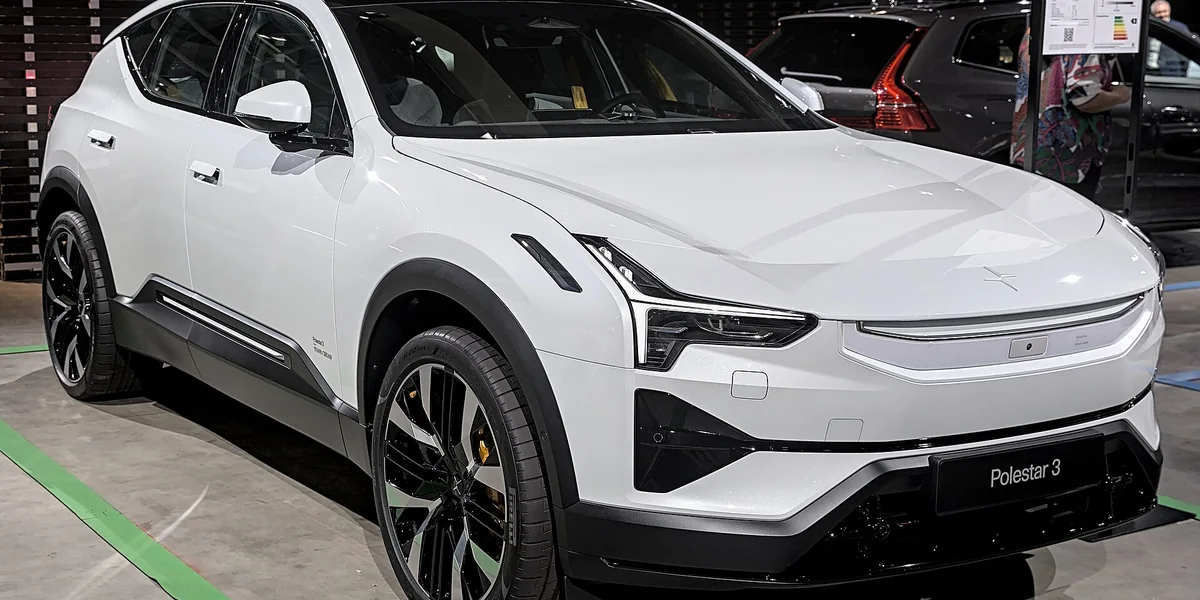
Prices exclude the $1,400 destination fee. Wheel choice moves the numbers more than most options do: the Single Motor car drops to 333 miles on 22-inch wheels, and the Dual Motor car is rated at 310 miles on 20-inch wheels and 287 miles on 22-inch wheels, against 315 miles on 21-inch wheels. The Single Motor’s official efficiency is 95 MPGe combined, which is strong for an SUV of this size and weight.
Did the Polestar 3 Switch to 800 Volts?
Not in the United States — the 800-volt Polestar 3 is the updated car for Europe and other markets, and Polestar has not confirmed it on sale in the US.
What did Polestar announce?
In early 2026 Polestar announced a heavily updated Polestar 3 with an 800-volt system, a smaller 92 kWh battery for the single-motor car and a 106 kWh battery for dual-motor versions, and DC charging up to 350 kW with a 10 to 80% charge in about 22 minutes. Order books for that car opened in Canada and Europe in May 2026. Polestar’s own US site, however, still presents the 111 kWh, 400-volt car, with 2025 pricing and a 350-mile EPA headline, and no US specification for an 800-volt car has been published.
What do the EPA listings show?
One complication deserves honesty: the EPA’s fueleconomy.gov listings do include 2026 Polestar 3 ratings, and they are lower than the 2025 car’s, with the Single Motor at 286 to 291 miles and the Dual Motor at 281 to 312 miles depending on wheels. Lower range is what a smaller battery would produce, but an EPA listing on its own does not prove which version was offered for sale in the US. Until Polestar publishes US specifications for the 800-volt car, treat any ‘800V Polestar 3’ claim in a US context as unconfirmed, including ours if you find older text on this page.
What does this mean for US owners?
For US owners the practical answer is simple. Your car is the 400-volt car, its 250 kW charging is genuinely fast, and the 800-volt hardware cannot be retrofitted. What existing owners do get free is the newer NVIDIA core computer, covered in the warranty section below, which is a processor upgrade and not a battery change.
Inside the Polestar 3 Battery
The pack is built from 204 CATL prismatic cells in 17 modules, using nickel manganese cobalt chemistry chosen for range.
How is the pack put together?
The cells are arranged as 102 in series with 2 in parallel, which is how the pack reaches its roughly 400-volt operating level, and the whole unit is liquid-cooled so it can hold high charging power and protect the cells in hot and cold weather. Of the 111 kWh total, 107 kWh is usable for driving. The remaining buffer is held back by the battery management system, which is one reason large packs like this one tend to age gently: a normal day’s driving uses only a shallow slice of the total capacity.
What platform does it use?
The Polestar 3 sits on Polestar and Volvo’s SPA2 platform, the same base as the Volvo EX90, and the two cars share their battery philosophy of one big pack across the range. If you are cross-shopping the two, our Volvo EX90 battery guide covers its 111 kWh sibling in the same detail. What the Polestar 3 does not have is a smaller or cheaper battery option in the US: every American car, at every price, carries this same pack.
Polestar 3 Charging: 250 kW DC and 11 kW at Home
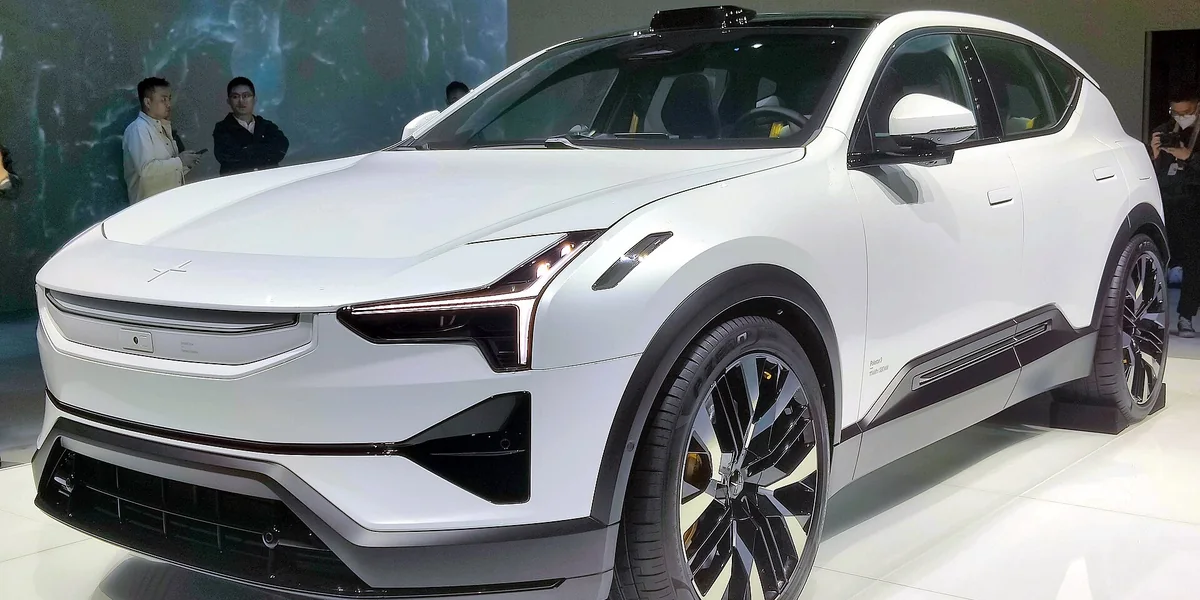
A healthy Polestar 3 charges from 10 to 80% in about 30 minutes on a 250 kW DC fast charger, and fully overnight at home.
| Charging method | Power | Time |
|---|---|---|
| Home / destination AC | 11 kW | About 11 hours, empty to full |
| DC fast charging | Up to 250 kW | 10 to 80% in about 30 minutes |
How does cold-weather charging work?
A heat pump is fitted as standard, which helps range and charging in cold weather. Polestar’s manual gives the cold-weather routine directly: in low temperatures, keep the car connected and activate preconditioning so it heats the battery before driving. A warm battery charges faster and gives back more of the range that cold weather takes away, so preconditioning matters most on winter road trips with fast-charging stops.
Can it use Tesla Superchargers?
The US car has a CCS1 charge port. Since October 2024, Polestar drivers have also had access to Tesla’s Supercharger network in the US and Canada, more than 17,800 stations at the announcement. That access needs Polestar’s NACS-to-CCS adapter, which is bought through a Polestar Service Point for $230; it is not included with the car. Sessions run through the Tesla app, and the car’s Google Maps can show the NACS chargers it can use.
Polestar 3 Real-World Range
In independent testing the Polestar 3 lands very close to its EPA ratings — and the Performance version beat its rating outright.
What did Edmunds measure?
Edmunds ran both ends of the range through its EV Range Test. The Single Motor car on 21-inch wheels covered 344 miles against its 350-mile EPA rating, using 34.8 kWh per 100 miles, almost exactly its official figure. The Dual Motor car with the Performance Pack covered 303 miles against an EPA rating of just 279 miles, a result most big electric SUVs never manage.
What happens in cold weather?
MotorWeek’s road test adds the winter warning every owner should expect: in cold weather its car covered 193 miles using 72% of the charge, a reminder that range in freezing conditions can fall well short of the label figure in any EV. Warm weather, sensible wheels and normal speeds keep the Polestar 3 close to its ratings, and the Single Motor’s 350-mile label is realistic rather than optimistic.
How Long Does the Polestar 3 Battery Last?
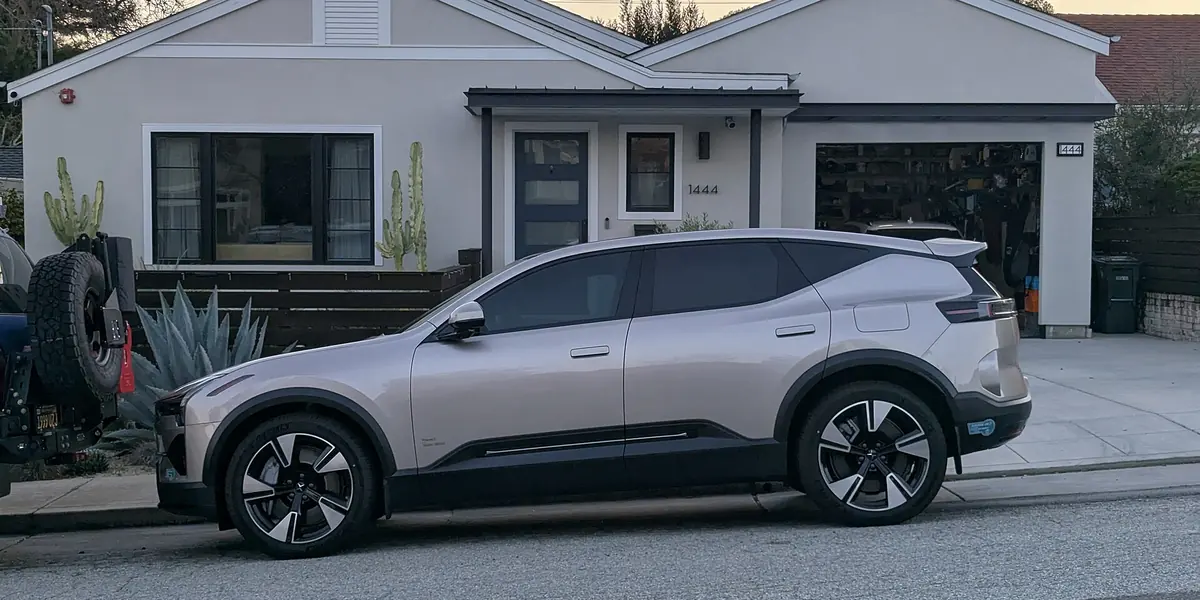
There is no Polestar 3 degradation dataset yet — the car is too new — but the evidence from large EV fleets points to a long, slow decline rather than a cliff.
What does the fleet research show?
Any page quoting an exact yearly percentage for this car is guessing, including older versions of this one. What does exist is fleet-scale research: Geotab’s study of more than 22,000 electric vehicles found average degradation of about 2.3% per year across modern EVs, which works out to roughly 82% of original capacity after eight years. Cars charged mostly on AC age slowest, while heavy use of very fast DC charging in hot climates wears a pack measurably quicker.
What do older Polestars show?
Context from the car’s own brand is encouraging but must be labelled honestly: battery-health specialists AVILOO measured a median of about 93% state of health at 100,000 km across a large sample of Polestar 2 cars. That is the smaller, older Polestar, not this one, but it shares CATL nickel-based chemistry and liquid cooling with the Polestar 3. Our guide to how long EV batteries last explains the habits that move these numbers most, and they matter more than the brand on the bonnet.
Why does a big pack age gently?
The Polestar 3 also has one built-in advantage: its pack is big. A 40-mile day uses well under half of the usable capacity even in winter, and shallow daily cycles are gentler than deep ones. Combined with the 8-year warranty’s 70% floor, an owner should expect the battery to outlast their time with the car, not define it.
Polestar 3 Battery Warranty
The battery is covered for 8 years or 100,000 miles, and if its state of health falls below 70% in that period, Polestar repairs or replaces it free.
What does the battery warranty cover?
That matches the cover on every other Polestar sold in the US, and it is the term that matters most to a used buyer, because the remaining years transfer with the car in practice: Polestar’s certified pre-owned programme sells used cars with the remainder of the 8-year battery warranty included. The main vehicle warranty is 4 years or 50,000 miles, so on an older used car the battery cover will usually outlive the rest of the warranty by years.
What is the free NVIDIA computer upgrade?
One promise in the stored version of this page sounded too good to be true and turned out to be real: every existing Polestar 3 owner gets the car’s newer NVIDIA DRIVE AGX Orin core computer free. Polestar announced the upgrade in late 2025, with the hardware change carried out at a service point from early 2026. It speeds up the car’s computers only; it does not change the battery, the range or the charging.
Polestar 3 Battery Replacement Cost
Polestar does not publish a US price for a Polestar 3 battery pack, and no credible fitted cost exists — any exact figure quoted for this car is invented.
Why is there no pack price?
That is the honest answer, and it is also less frightening than it sounds. A full pack replacement outside warranty is a rare event, the 8-year, 100,000-mile warranty covers capacity below 70% and defects, and modern packs are assessed and repaired at module level where possible rather than swapped whole. If a car outside warranty ever does need major battery work, the cost will be set by a Polestar Service Point after diagnosis, not by a price list.
Where can I compare replacement costs?
For the wider picture of what EV battery replacement costs across brands, and why the numbers vary so much, see our EV battery replacement cost guide. Treat any website that quotes a precise Polestar 3 pack price with suspicion: without a published parts price or a dealer quote behind it, the number is a guess dressed as a fact.
Polestar 3 Recalls: No Battery Pack Recall
No NHTSA recall covers the Polestar 3’s high-voltage battery pack — the car’s recalls are for cameras, wiring, trim and seats, all fixed free.
Which recalls affect the most cars?
The largest campaign is the rearview camera recall (25V-293), covering 3,664 US cars built in South Carolina in 2024 and 2025 whose reverse image might not appear; the fix is a software update. A second software-era item (24V-940) concerns the high-to-low voltage converter module, a small power-electronics part rather than the battery itself, on a very small number of cars. A wiring-harness recall (25V-453) covers 969 earlier China-built cars where water could enter a front-bumper connector, and the remedy is a new harness and connector.
What about the smaller recalls?
The remaining campaigns are small and physical: a panoramic sunroof that may not be properly secured (25V-420, a few dozen cars), a front bumper hood wing possibly missing bolts (25V-555, 68 cars), and loose rear-seat backrest brackets (26V-037, 213 cars). Every fix is free at a Polestar Service Point, and any car’s open recalls can be checked by VIN on the NHTSA recalls site before you buy.
Polestar 3 Battery Problems and Software Updates
The Polestar 3’s battery hardware has a clean record so far; the problems owners actually report are software-shaped — drain while parked, charging behaviour, and one frightening fault message.
What problems do owners report?
Owner forums carry a steady thread of reports about the car using charge while parked, with some updates improving the drain and others making it worse for a while. A smaller number of owners have met a ‘Battery System Fault’ warning that stopped the car from being driven, in a few cases within days of delivery, with repairs handled under warranty at Volvo and Polestar workshops. These are owner reports rather than measured defect rates, and they are exactly why the used-buying checks below include the car’s software version and service history.
How does software improve the battery?
The other side of software is that it keeps improving the battery it manages. Polestar’s updates have revised the charging curve and preconditioning behaviour on this car, and the free NVIDIA computer upgrade in the warranty section gives the newest software faster hardware to run on. A Polestar 3 kept on current software is a different ownership experience from one left on its delivery version, and sellers should be asked which version the car is running.
The Polestar 3’s 12-Volt Battery
Alongside the big pack, the Polestar 3 runs a small 12-volt AGM battery — an H5, 60 amp-hour unit — for everything except driving the wheels.
What battery is it?
Polestar’s own manual gives the specification: an H5 AGM battery, 12 volts, 60 amp-hours, with 680 amps of cold-start capacity. It powers the locks, lights, screens and computers, and it is maintenance-free. The traction battery keeps it charged while the car is in use, which is why it is easy to forget it exists until the day it runs flat.
What if the 12-volt battery goes flat?
That day matters more than in a petrol car, because the locks are electric: with a completely flat 12-volt battery the car cannot be unlocked or woken normally. Polestar provides an emergency power terminal behind a small panel by the left front wheel housing, and is clear it is a technician’s tool: it takes a charger only, never another car’s battery, at under 30 amps, and only briefly. If the 12-volt battery needs replacing, Polestar’s instruction is equally plain: contact Polestar support and let the workshop do it.
Buying a Polestar 3 in 2026: Remaining Stock and Used Checks
Polestar stops selling new cars in the US after the 2026 model year, so American buyers are choosing between discounted remaining stock and a growing used supply.
Why is it a remaining-stock buy?
Polestar announced the US exit on 25 June 2026: its connected-vehicle authorisation was not granted, and from model year 2027 it will sell no new vehicles in America, while service, parts and software support continue for existing owners. In practice the exit has made the remaining new cars cheap — Polestar’s own US offers in November 2026 carry a $25,000 clean-vehicle incentive on the 2025 car — and it makes the used checks below worth doing properly, because the car you buy will be supported by service points, not by a growing dealer network.
What should I check on a used car?
On any used Polestar 3, start with the warranty clock: the 8-year battery cover is the asset, so confirm the in-service date and the remaining years. Ask for the car’s battery state of health to be shown or measured at a service point, check its VIN for open recalls, and confirm it is running current software, since updates changed both charging behaviour and parked drain. Finally, treat the 12-volt battery as a consumable on an older car: a weak one causes exactly the ‘dead car’ symptoms that fill the owner forums.
Looking After the Polestar 3 Battery
Polestar’s own manual guidance is simple: charge on AC day to day, keep the target below 100% unless you need the range, and never leave the car sitting nearly empty.
How should I charge day to day?
For regular charging, the manual advises selecting a target battery level lower than 100% and charging fully only when the whole range is needed, and where the car offers a recommended level in its charging view, to use it. AC charging is the recommended everyday mode because DC fast charging causes more wear, so save the 250 kW stops for journeys that need them. If the car is parked with less than 20% charge, the manual’s instruction is to connect it for charging as soon as possible rather than leaving it low.
What about parking and cold weather?
For a car parked longer than a month, Polestar recommends holding the charge between 40 and 60%, and keeping it plugged in with a 50% limit if it will sit for more than three months. In cold weather, connect the car and activate preconditioning so the battery is warm before driving, which protects both range and charging speed. None of this is exotic, and that is the point: the habits that keep this pack healthy are the standard ones, done consistently.
Polestar 3 Battery FAQs
What battery does the Polestar 3 have?
The Polestar 3 sold in the US has a 111 kWh lithium-ion battery made by CATL, with 107 kWh usable. It uses nickel manganese cobalt prismatic cells, 204 of them in 17 modules, and runs at about 400 volts. Every US version, Single Motor, Dual Motor and Performance Pack, uses this same pack.
Is the 2026 Polestar 3 an 800-volt car in the US?
No US specification for an 800-volt Polestar 3 has been published. The 800-volt car with 92 and 106 kWh batteries and 350 kW charging is the updated model announced for Europe and other markets in 2026. Polestar’s US site still presents the 111 kWh, 400-volt car, so American buyers should treat 800-volt claims as unconfirmed for the US.
How long does the Polestar 3 take to charge?
On a DC fast charger the car peaks at 250 kW and charges from 10 to 80% in about 30 minutes. At home on its 11 kW AC charger, a full charge takes about 11 hours, which suits overnight charging. Using Tesla Superchargers needs Polestar’s $230 NACS adapter, bought through a Service Point.
What warranty covers the Polestar 3 battery?
The battery is covered for 8 years or 100,000 miles, whichever comes first. If the battery’s state of health falls below 70% of its original capacity in that period, Polestar repairs or replaces it free of charge. On used cars the remaining cover runs with the car, including through Polestar’s certified pre-owned programme.
How long will the Polestar 3 battery last?
The car is too new for a Polestar 3-specific answer, and any exact figure would be a guess. Large fleet studies of modern EVs find average degradation of about 2.3% per year, and the warranty guarantees at least 70% capacity for 8 years or 100,000 miles. Gentle habits, AC charging most days and avoiding long periods at very low charge, give the best long-term result.
What 12-volt battery does the Polestar 3 use?
It uses an H5 AGM battery, 12 volts and 60 amp-hours, with 680 amps of cold-start capacity, as specified in Polestar’s manual. The battery is maintenance-free and powers everything except propulsion. Polestar advises having it replaced by a workshop, and a completely flat 12-volt battery can leave the car unable to unlock.
Conclusion
The Polestar 3’s battery story in America is simpler than the internet makes it sound. There is one pack, 111 kWh of CATL nickel manganese cobalt cells with 107 kWh usable, and it delivers up to 350 miles of EPA range, 250 kW charging and an 8-year warranty in every version of the car. The faster 800-volt successor is real but belongs to other markets for now, and Polestar’s US exit makes this a remaining-stock and used buyer’s car, where the warranty clock and software version matter as much as the spec sheet.
If you like the Polestar formula in a smaller, cheaper shape, our Polestar 4 battery guide covers the coupe-SUV that shared this car’s showrooms, including its different 100 kWh pack and its own US story. Whichever one you choose, judge the battery by the verified numbers — capacity, charging, warranty and health — rather than by the loudest claim on the page.
