
Jaguar I-PACE Battery: Complete Guide

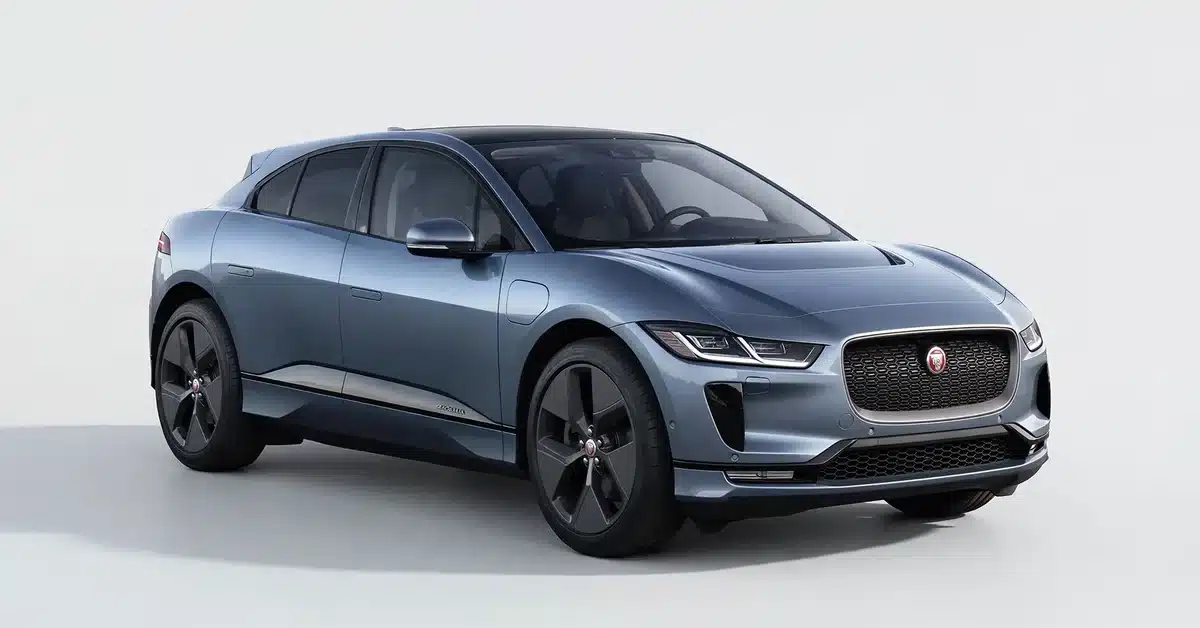
The Jaguar I-PACE battery is a 90 kWh lithium-ion pack (85 kWh usable) from LG Energy Solution — powering what was Jaguar’s first modern purpose-built electric vehicle when it launched in 2018. With 423 liquid-cooled lithium-ion cells arranged in a skateboard layout beneath the floor, dual permanent magnet motors producing 394 hp, and a claimed WLTP range of up to 292 miles, the I-PACE broke new ground. Now a discontinued model (Jaguar ended production to focus on a full EV brand relaunch), the I-PACE is an exclusively used-market purchase in 2026. This guide covers the battery’s complete specs, critical recall history every buyer must know, real-world degradation data, and the charging speed limitations that potential owners should understand.
Jaguar I-PACE Battery: Complete Specs
| Specification | Detail |
|---|---|
| Battery capacity (gross) | 90 kWh |
| Battery capacity (usable) | 85 kWh |
| Cell count | 423 lithium-ion cells |
| Cell supplier | LG Energy Solution |
| Chemistry | NMC lithium-ion |
| Thermal management | Active liquid cooling |
| Voltage architecture | 400V |
| Motor configuration | Dual permanent magnet (front + rear) |
| System power | 294 kW (394 hp) |
| System torque | 512 lb-ft |
| Drivetrain | AWD only |
| WLTP range | 292 miles (best, smaller wheels) |
| EPA range | 222–246 miles (by model year) |
| Peak DC fast charging | 100 kW |
| 10–80% DC charge time | ~40–45 min |
| Level 2 (7 kW) | ~13 hours full |
| Weight | ~2,133–2,236 kg (4,702–4,929 lb) |
Why the I-PACE Matters in EV History
When Jaguar revealed the I-PACE in March 2018, it was the first legitimate challenge to Tesla from a major European premium automaker — a purpose-built electric luxury SUV with real performance (0–60 mph in 4.5 seconds), a large 90 kWh battery, and a price tag placing it directly against the Tesla Model X. It won the 2019 European Car of the Year award — the first and still one of very few electric vehicles to win that prestigious title.
Its liquid-cooled NMC battery arranged in a skateboard beneath the floor gave it a low centre of gravity unusual for an SUV, contributing to handling that reviewers consistently praised as genuinely engaging. The flat floor also created a spacious interior free of the tunnel and packaging constraints of converted combustion platforms.
The Battery Fire Recall: Critical Information for Every Used Buyer
The single most important fact about buying a used I-PACE in 2026 is the battery fire recall history. NHTSA records show an escalating series of overheating and fire-risk recalls on I-PACE models using LG Energy Solution battery cells — beginning with recall 23V369 in 2023 and continuing through fresh campaigns filed in early 2026, covering model years 2019 through 2024 across various campaigns.
- What went wrong: LG Energy Solution cells in certain I-PACE models showed a risk of thermal runaway (overheating leading to fire) under specific conditions
- Early remedies: Software updates that capped charging state-of-charge to 80% (later raised to 90%) and required parking/charging outdoors away from structures
- Serious cases: Some 2019 model year cars were slated for battery module replacement or repurchase by JLR — the most severe remedy in the recall history
- Ongoing campaigns: Fresh NHTSA recall filings as recently as early 2026 mean this issue has not been fully resolved across all affected VINs
Action required before any I-PACE purchase: Run the specific VIN through the NHTSA VIN lookup tool (nhtsa.gov) and confirm that the final remedy — not just an interim software cap — has been completed. A Jaguar dealer can provide documented recall completion history for a specific VIN. This is non-negotiable for any used I-PACE evaluation.
I-PACE Real-World Range: What to Expect
The I-PACE’s WLTP range of up to 292 miles is optimistic for most real-world driving. The car is heavy (over 2,133 kg) and not particularly aerodynamic for an EV — efficiency is typically 2.2–2.8 miles per kWh in real use:
- Mild weather, moderate speeds: 200–250 miles real-world
- Highway at 70–75 mph: 180–220 miles
- Cold weather: 160–190 miles — the liquid-cooled pack helps, but heavy weight still reduces efficiency significantly
- Large wheels: Earlier models with bigger alloys lose 20–30 miles vs smaller wheels
- Software updates matter: Jaguar released OTA updates improving efficiency — verify all software is current, as updates added up to 12 miles of additional range on some cars
I-PACE Battery Degradation and Health
- Annual degradation rate: Approximately 2–3% per year for the NMC cells under liquid cooling — somewhat higher than newer EVs with improved chemistry
- Used I-PACE battery health: Older 2019 models may now show 75–85% SOH at high mileages — Electrifying.com notes some oldest examples could be at 80% original capacity
- Battery health check: Any Jaguar dealer can run a full battery diagnostics check — request this before any purchase to confirm actual SOH percentage
- Charging habits matter more than most: I-PACE owners who regularly charged to 100% show faster degradation than those maintaining 80% daily limits
I-PACE Charging: Understanding the 100 kW Limitation
| Charging Method | Power | I-PACE (85 kWh usable) |
|---|---|---|
| Level 1 (120V) | ~1.4 kW | Multiple days (impractical) |
| Level 2 (7 kW wallbox) | 7 kW | ~13 hours full |
| Level 2 (11 kW, 3-phase) | 11 kW | ~8 hours full |
| DC Fast (100 kW peak) | 100 kW | ~40–45 min (10–80%) |
The I-PACE’s 100 kW DC fast charging was fast in 2018 — but by 2026 it is one of the slowest charging speeds in the premium EV segment. The Kia EV6 charges at 240+ kW, the Porsche Taycan at 320 kW. A 40–45 minute 10–80% stop is workable for occasional road trips but requires more planning than faster competitors. For daily local driving with home Level 2 charging, the 100 kW limitation is largely irrelevant.
I-PACE Battery Warranty and 2026 Ownership Realities
Jaguar backed the I-PACE battery with an 8-year / 100,000-mile warranty against defects and capacity loss below 70%. For a 2019 I-PACE, the battery warranty expired in approximately 2027 — so some of the oldest used examples are approaching or past warranty expiration. 2021–2024 model year cars have warranty running through 2029–2032 respectively, providing more remaining coverage.
Additional ownership realities for 2026 used buyers: Jaguar has discontinued the I-PACE as part of a full brand relaunch. Parts availability and qualified service technicians are increasingly a consideration — factor in a Jaguar service contract or identify a specialist independent before committing to purchase. Depreciation has been steep, making a well-sorted, fully-remedied I-PACE an attractive used luxury EV value — but only with documented recall completion and a battery health check.
Conclusion
The Jaguar I-PACE battery is a pioneer — 90 kWh of NMC energy in a purpose-built luxury EV that rewrote the rules of what an electric SUV could be in 2018. By 2026, its 100 kW charging speed and 200–250 mile real-world range have been surpassed by newer rivals. But the car’s low centre of gravity, liquid-cooled battery, 394 hp AWD performance, and premium cabin remain genuinely compelling used propositions — particularly as depreciation has pushed prices to accessible levels. The non-negotiable due diligence: verify every battery recall is fully remedied, obtain a battery health check from a Jaguar dealer or specialist, and confirm remaining warranty coverage. A sorted I-PACE with all recalls closed is a rewarding piece of EV history. One with unresolved battery recalls is not.
