
Volvo EC40 Battery: Complete Guide

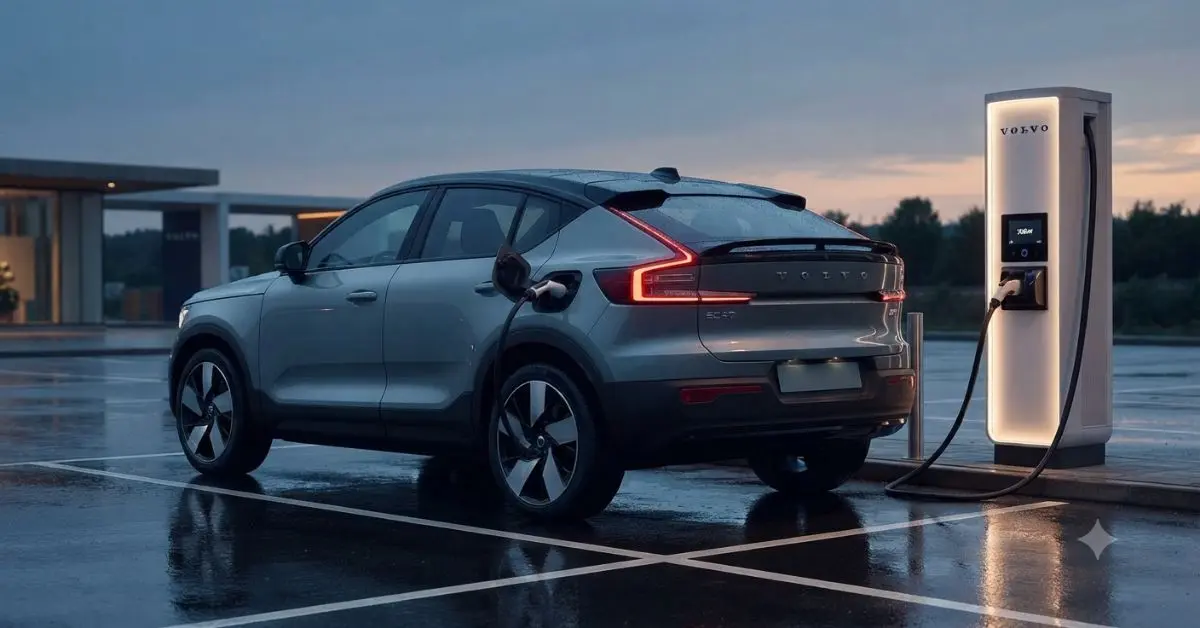
The Volvo EC40 battery is an 82 kWh lithium-ion pack in the US-market car, good for up to 298 miles of EPA range in Single Motor Extended Range form, with DC fast charging up to 205 kW and a battery warranty of 8 years or 100,000 miles. The car launched in the United States as the C40 Recharge in 2022 and was renamed EC40 for the 2025 model year — same car, same packs, new badge.
Two things confuse EC40 shoppers. The first is that most battery figures quoted online for this car are European WLTP numbers for versions never sold in America, including a smaller 69 kWh car. The second is that “EC40 battery” searches are split between two different batteries: the high-voltage pack under the floor, and a conventional 12-volt battery that dominates the parts counters. This guide covers both, using US figures only.
One honest note on the car’s status: the EPA still lists a 2026 EC40 with the same ratings as the 2025 car, but Volvo’s US website no longer shows the model — treat 2025 as the last confirmed US model year until Volvo says otherwise.
Figures from EPA ratings, Volvo’s own US technical specifications and warranty manual, NHTSA records and the Volvo US parts catalogue
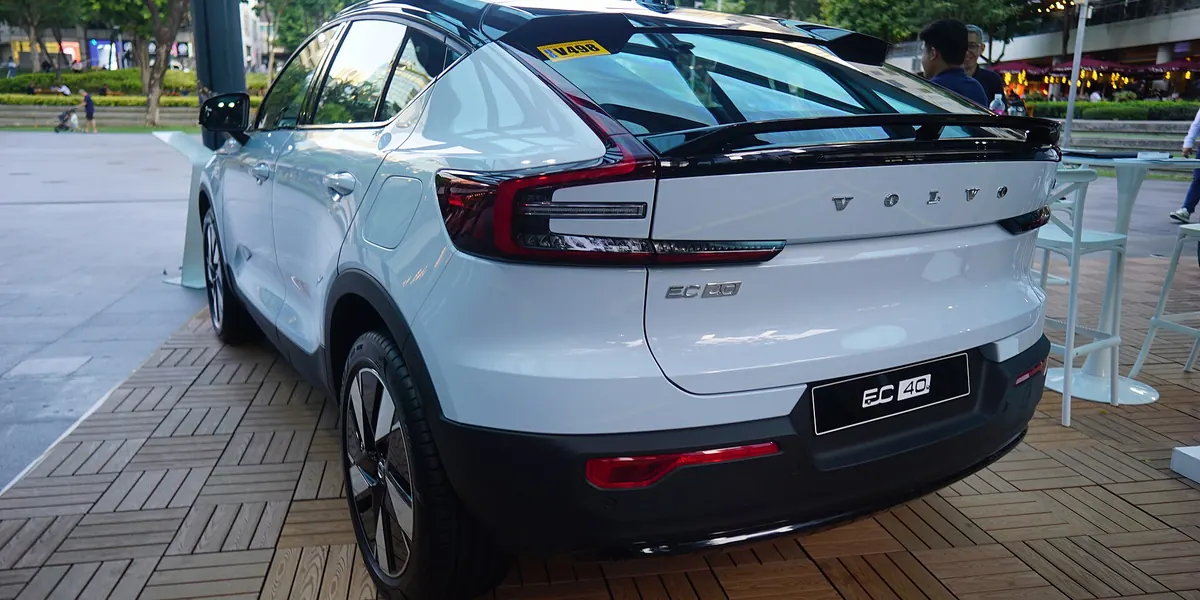
Every US-market EC40 (and C40 Recharge) carries either a 78 kWh pack (Twin Motor, 2022–2024) or an 82 kWh pack (2024–2025), with up to 298 miles of EPA range and DC fast charging up to 205 kW on the newest cars. Volvo covers the battery for 8 years or 100,000 miles, down to 70% of its original health.
Key figures: 78 kWh (Twin Motor 2022–2024) · 82 kWh (2024–2025) · 298 mi best EPA range · 205 kW peak DC (2025) · 8 yr / 100,000 mi warranty, 70% floor
Volvo EC40 Battery Specs (US Models)
In the US the EC40 story is simple: a 78 kWh Twin Motor car first, then an 82 kWh pack that took range from 226 miles to nearly 300.
Every US-market version is in the table below — the car was sold as the C40 Recharge through 2024 and as the EC40 from 2025. Note what is not here: the 69 kWh base car and the high-output Twin Motor Performance variant sold in Europe were never offered in the United States.
| Model years / Variant | Battery (gross) | Usable | EPA range | Peak DC rate |
|---|---|---|---|---|
| 2022–2023 C40 Recharge Twin Motor | 78 kWh | 75 kWh | 226 mi | 150 kW |
| 2024 C40 Recharge Single Motor Extended Range | 82 kWh | 79 kWh | 297 mi | 200 kW |
| 2024 C40 Recharge Twin Motor | 78 kWh | 75 kWh | 257 mi | 150 kW |
| 2025 EC40 Single Motor Extended Range | 82 kWh | 79 kWh | 298 mi | 205 kW |
| 2025 EC40 Twin Motor | 82 kWh | 79 kWh | 268 mi | 205 kW |
Where do the usable figures come from?
A note on the usable figures: the 79 kWh usable capacity for the 82 kWh pack comes from Volvo’s own US technical specification sheet for the 2025 car, and the 75 kWh figure for the earlier 78 kWh pack comes from dealer technical documents. Volvo does not publish a usable figure for every model year, so treat usable numbers elsewhere on the web with care.
EC40 vs EX40: Same Battery, Different Body
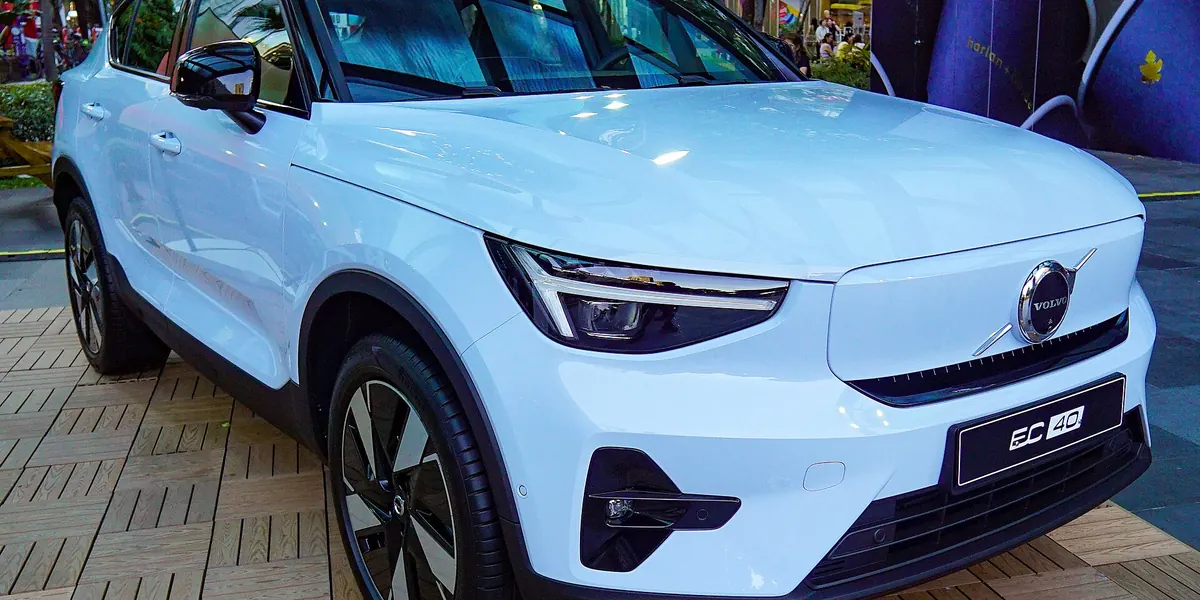
The EC40 and EX40 are the same electric car underneath — identical packs, motors and charging — wearing two different bodies.
Is the EC40 the same car as the EX40?
The EX40 is the renamed XC40 Recharge: a conventional upright SUV. The EC40 is its coupe-roofed twin, launched as the C40 Recharge. Both sit on Volvo’s CMA platform, both use the same 78 and 82 kWh packs, and Volvo’s own parts catalogue lists the same replacement battery for both cars — the high-voltage pack literally fits either badge.
What is different between the EC40 and the EX40?
The differences that matter to a battery shopper are small: the sloped roof costs the EC40 a little cargo space and buys it a small aerodynamic edge, and trim and wheel choices move the EPA rating a few miles either way. If you are cross-shopping used examples, shop condition and price, not the badge — the battery story is the same.
What about the newer EX60?
The newer car to know about is the EX60, Volvo’s next-generation midsize EV on an 800-volt platform with much faster charging. Our Volvo EX60 battery guide covers it in full.
Inside the EC40 Battery
Volvo publishes the EC40’s pack sizes but not its chemistry — any site that names the exact cathode for this car is going further than Volvo does.
What is documented about the EC40 battery?
What is documented is the hardware layout: a flat lithium-ion pack under the floor on Volvo’s CMA platform, working at roughly 400-volt-class architecture, liquid-cooled, and shared across the EC40, EX40 and their Recharge predecessors. Volvo’s US technical sheet confirms the capacities and usable figures in the specs table above; it does not name a cell supplier or a cathode chemistry for this model.
What is known about the EC40’s battery chemistry?
That silence matters because the internet fills it confidently. Volvo signed long-term battery supply agreements with CATL and LG Chem back in 2019, but those are company-level deals covering many models — they do not prove which cells sit in a given EC40. The honest summary is that the pack is a conventional lithium-ion design of its era; claims that specific US variants use a specific chemistry are not backed by a Volvo document.
What does the usable window tell us?
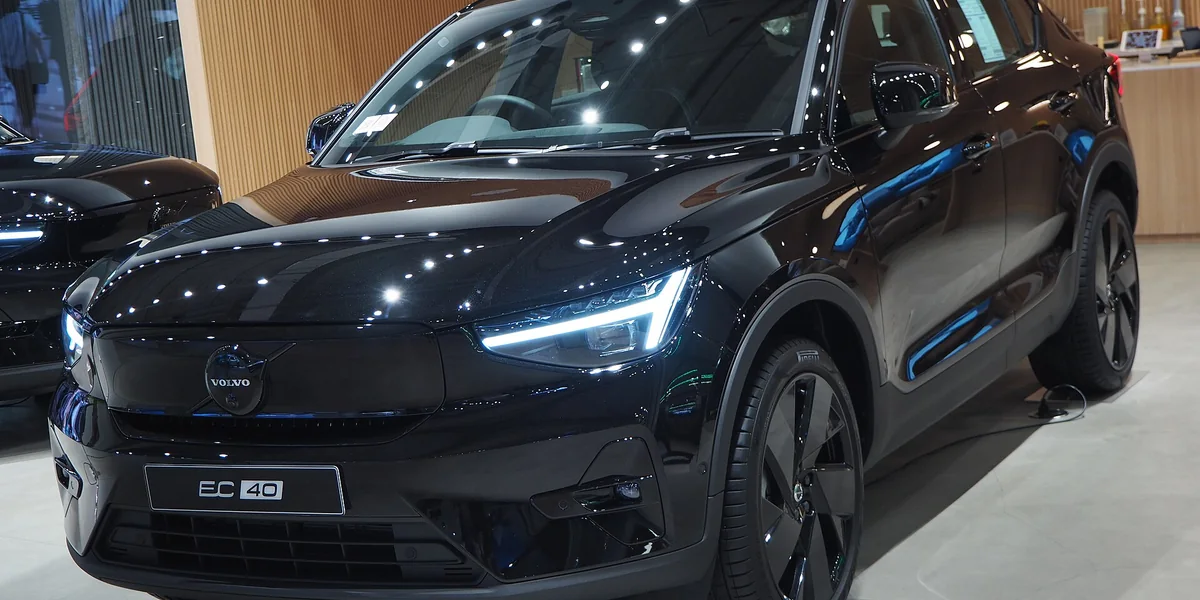
The pack’s conservative usable window — 79 of 82 kWh on the big pack, 75 of 78 on the early one — is the visible part of Volvo’s durability strategy: a buffer at the top and bottom of the charge range keeps the cells away from the voltage extremes that age lithium-ion fastest. It is the same approach Volvo takes across its CMA electric cars.
EC40 Charging Speeds and Times
Charging improved every generation: 150 kW on the first cars, 200 kW for 2024, and 205 kW with a 28-minute 10–80% charge on the 2025 EC40.
| Charging | 2022–2023 Twin Motor | 2024 models | 2025 EC40 |
|---|---|---|---|
| Level 2 AC (11 kW) | About 8 hours, 0–100% | About 8 hours, 0–100% | About 8 hours, 0–100% |
| DC fast charging, peak | 150 kW | 200 kW (Single Motor ER) / 150 kW (Twin Motor) | 205 kW |
| DC fast charging, 10–80% | About 37 minutes | About 28 minutes (Single Motor ER) | About 28 minutes |
Can the EC40 charge at Tesla Superchargers?
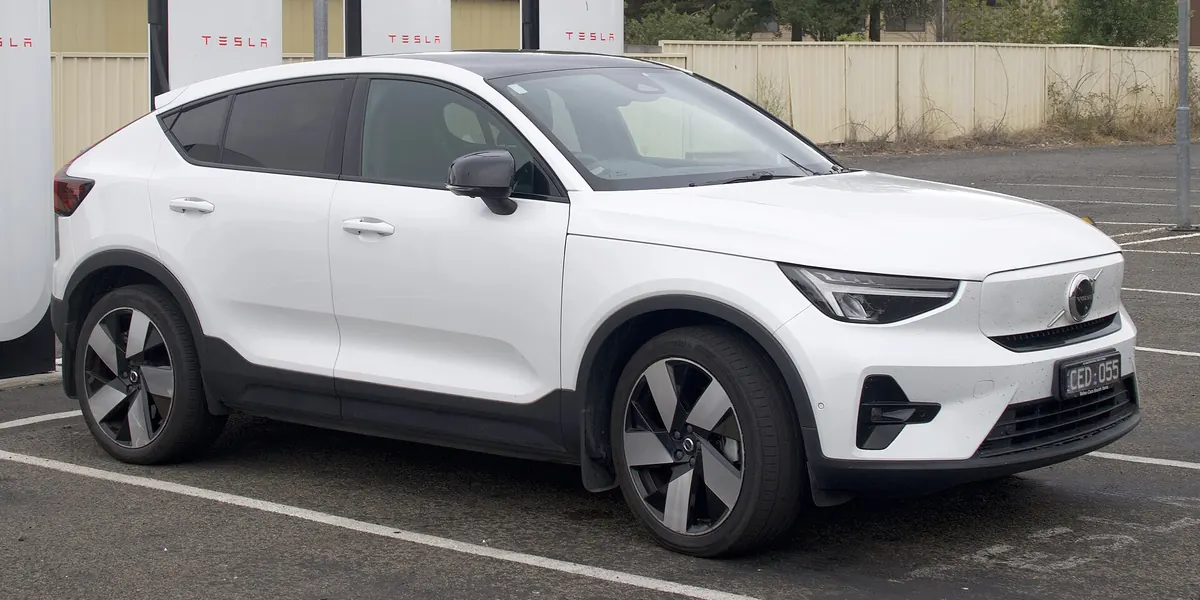
Every US car charges through a CCS port — no EC40 or C40 Recharge has a native Tesla-style NACS port. Tesla Supercharger access comes through Volvo’s own NACS adapter: it was included free with a new 2025 EC40, and owners of earlier cars could order one from Volvo retailers for $230 from November 2024. The adapter works on DC fast chargers only, never on AC charging.
What does Volvo advise about charging?
Volvo’s own charging guidance is plain: AC charging is the gentle everyday default, and DC fast charging causes more wear, so save it for trips. The car also benefits from arriving at a fast charger with a warm battery in winter — Volvo’s manual advises preconditioning while plugged in during cold weather so the pack starts the session near its ideal temperature.
EC40 Real-World Range
EPA ratings span 226 to 298 miles depending on year and motors — and the single biggest jump came from efficiency, not from a bigger battery.
How does EC40 range vary by version?
The ladder from the specs table tells the story: the 2022 Twin Motor car is a 226-mile EV, the 2024 Twin Motor improved to 257 miles on the same 78 kWh pack, and the single-motor cars do best of all — 297 miles for the 2024 and 298 for the 2025. Wheel and trim choices move individual ratings a few miles either way, so check the exact rating for the car in front of you.
What happens to range in winter and on the highway?
In winter, expect the usual EV drop on short trips, when the pack and cabin start cold; Volvo’s manual notes cold temporarily reduces performance without harming the battery, and recommends preconditioning while charging. Highway running at a steady high speed will also land below the EPA figure, as it does in every car in this class.
EC40 Battery Lifespan and Degradation
No EC40-specific degradation dataset exists yet — the honest evidence is fleet data, Volvo’s buffer strategy, and a health certificate Volvo will give you for free.
What does fleet data say about EC40 degradation?
Neither Recurrent nor Geotab publishes a battery-health figure for the EC40 or C40 Recharge itself; volumes are too small. The fleet context is Geotab’s study of more than 22,700 EVs, which found average degradation of about 2.3% per year across modern EVs, with liquid-cooled packs at the durable end. Treat that as the landscape this car lives in, not as a measurement of it — and be wary of the high-mileage anxiety on owner forums, which runs well ahead of any published data for this model.
What care rules does Volvo’s manual give?
Volvo’s own manual gives the care rules that matter most, and they are specific. If the car will sit below 20% charge, plug it in as soon as you can; avoid keeping it at a very high charge for long periods; and for parking longer than a month, Volvo advises a 40–60% charge level, or a 50% limit if the car stays plugged in beyond three months. Following the manufacturer’s own storage rules is worth more than any aftermarket battery-care ritual.
How can I check a used EC40’s battery health?
The EC40 also has a check most rivals do not offer: because these cars do not show a battery State of Health figure in the centre display, Volvo’s warranty manual says owners can request a free Battery State of Health Certificate from an authorized Volvo retailer. On a used purchase, that certificate is the closest thing to a verified battery report card this car has.
EC40 Battery Warranty
Volvo covers the EC40’s high-voltage battery for 8 years or 100,000 miles, and replaces it free if its health falls below 70% of original within that period.
The terms come from Volvo’s current US warranty manual for its fully electric cars. The High Voltage Battery and System warranty runs 8 years or 100,000 miles from the in-service date. If the battery’s State of Health drops below 70% of its original status inside that window, Volvo replaces the battery free of charge — in some cases with a module repair or a reconditioned pack of the same or better health, rather than a brand-new one.
Two smaller terms are worth knowing. The 12-volt battery is covered for 4 years or 50,000 miles under the new-vehicle warranty — shorter than the traction battery’s cover, which matters because the 12-volt battery is the one owners actually replace. And the free State of Health Certificate described above is a warranty-manual provision for the EC40 and EX40, not a dealer favour — any authorized retailer can be asked for one.
EC40 Battery Replacement Cost
A complete EC40 traction battery lists in Volvo’s own US parts catalogue between about $14,200 and $21,300, plus a $7,500 core charge — before labour.
What does a complete EC40 battery cost?
Unlike most EVs, the EC40 has real published pack prices, because Volvo sells the complete battery through its parts network on an exchange basis. Listings vary by part number: complete packs appear at $17,171.56 and $21,280.09, an exchange pack at $14,221.85, and a refurbished complete pack at $6,215.47 — every one carrying the same $7,500 core charge and a note that prior approval is needed before ordering. The catalogue does not say which part number matches which pack size, so do not let a seller map them by price alone.
Will owners actually pay those prices?
In practice, almost no owner pays these figures today: the cars are young, the 8-year warranty absorbs genuine failures, and a below-70% pack inside the warranty is replaced free. The prices matter for accident damage, out-of-warranty cars and insurance decisions — and the refurbished listing shows Volvo already runs a reconditioning route that undercuts a new pack by a wide margin.
Read more: our complete guide to EV battery replacement cost across every major brand.
EC40 Battery Recalls
No recall has ever targeted the EC40 or C40 Recharge’s high-voltage battery or charging system in the United States — the car’s recalls are about other systems.
Checked against NHTSA records for every US model year, the model’s recalls cover a brake-system software issue and an emergency-call fault on some 2023 cars, a driver airbag inflator on 2023–2024 cars, and rearview-camera plus brake-assist software items on the 2025 EC40. None involves the traction battery, the charging port or the onboard charger — a genuinely clean record for the battery itself.
Recall status changes, and coverage is by individual VIN rather than model year alone. Check any specific car at nhtsa.gov/recalls.
EC40 12-Volt Battery: Size, Life and Replacement
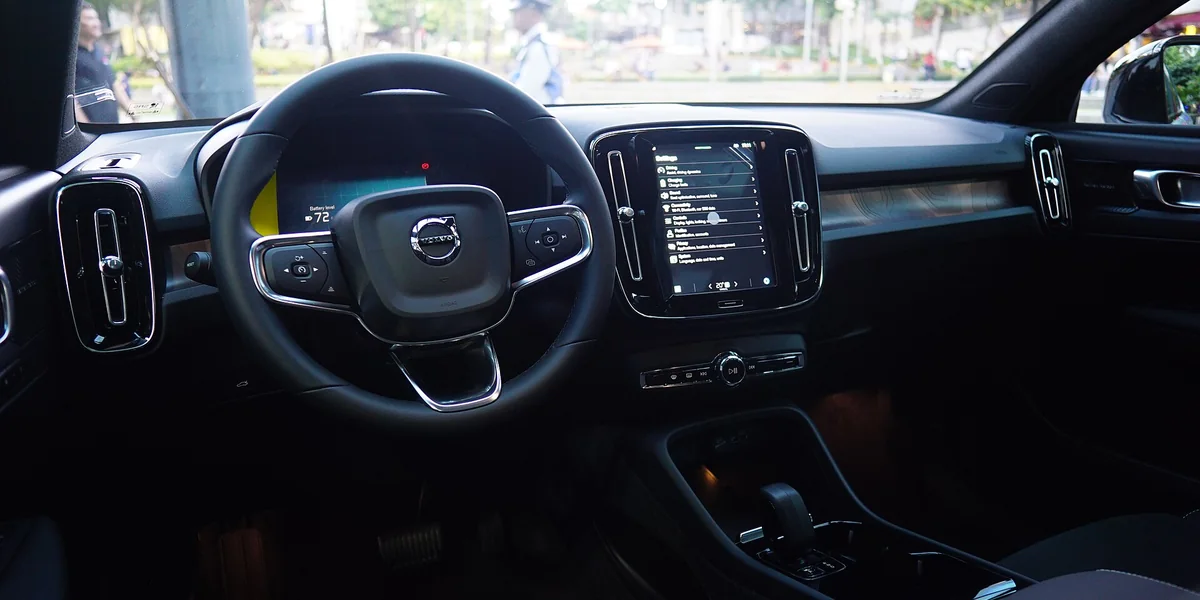
The battery EC40 owners actually shop for is the 12-volt one: it runs everything except propulsion, and Volvo’s manual sends you to a workshop when it needs replacing.
What does Volvo say about the 12-volt battery?
Volvo’s own support pages describe the 12-volt battery plainly: it powers everything in the car except the electric propulsion, it is maintenance-free, and if it needs replacing you should contact an authorized Volvo workshop. Volvo does not publish a group size or a do-it-yourself procedure for this car — the workshop route is the manufacturer’s whole answer, and the warranty backs it for the first 4 years or 50,000 miles.
What aftermarket 12-volt battery fits the EC40?
If you buy outside the Volvo network, know what the aftermarket fits: retailer catalogues such as AutoZone’s list a Group H6 (Group 48) AGM battery at 760 cold-cranking amps for this car, at around $250 for a quality unit — that is a retailer fitment, not a Volvo-published specification, so confirm it against your car before ordering. Owners searching whether a Volvo battery “needs programming” are usually asking about this swap; Volvo’s published guidance does not offer an owner procedure at all, which is why the workshop visit is the default answer.
How does the 12-volt battery fail?
The failure pattern is the familiar EV one: the 12-volt battery ages quietly for three to five years, then the car that showed a healthy main battery in the evening will not wake in the morning. Because the traction battery keeps the 12-volt charged while the car is in use, regular driving is the best maintenance — and a first no-start morning is the signal to replace it, not to keep jump-starting it.
EC40 vs Competitors
Against its luxury-crossover rivals the EC40’s 205 kW charging is competitive, but its pack is smaller — it answers with price and efficiency, not capacity.
| Model | Battery | EPA range | Peak DC rate | Architecture |
|---|---|---|---|---|
| Volvo EC40 Single Motor ER | 82 kWh (79 usable) | 298 mi | 205 kW | 400V-class |
| Audi Q4 e-tron 45 (2025) | 82 kWh (77 usable) | 288 mi | 175 kW | 400V-class |
| Lexus RZ 350e (2026) | 74.69 kWh | 301 mi | 150 kW | 400V-class |
| Cadillac Lyriq RWD | 102 kWh | 326 mi | 190 kW | 400V-class |
The honest read: the EC40 is the small-pack car in this company, and its EPA numbers stay close to rivals carrying more battery because the single-motor car is efficient. If your life is long highway days between fast chargers, the bigger-pack rivals travel further per stop; if it is home charging and commuting, the EC40’s numbers are enough and its used prices are friendlier.
Charging Tips for Volvo EC40 Owners
Volvo’s own manual is unusually specific about battery care — the tips below follow it rather than generic EV folklore.
What is the best daily charging routine?
For daily use, charge on AC and keep the car away from the extremes: Volvo advises plugging in promptly if the car will sit below 20%, and not leaving it at a very high state of charge for long stretches. A daily routine inside that wide middle band is what the pack’s buffer strategy is designed around, and it asks nothing exotic of the owner.
How should I charge on trips?
For trips, the generation matters: a 2025 car on a 200 kW-class charger finishes a 10–80% session in about 28 minutes, while a 2022–2023 Twin Motor needs roughly 37 minutes at its 150 kW peak. In cold weather, precondition the battery while plugged in before a fast charge, as Volvo’s manual advises — a warm pack is the difference between the advertised rate and a disappointing one.
How do I store the EC40?
For storage, follow the manual’s numbers exactly: 40–60% charge for parking longer than a month, a 50% charge limit if the car stays plugged in beyond three months, and shade or a plug in extreme heat so the car can cool its battery. These are the manufacturer’s own figures, and they are the whole storage routine.
Frequently Asked Questions
What size battery does the Volvo EC40 have?
In the US, one of two packs: 78 kWh (75 usable) in the Twin Motor cars of 2022–2024, or 82 kWh (79 usable) in the 2024–2025 cars, including the Single Motor Extended Range. The smaller 69 kWh version sold in Europe was never offered in the United States.
What type of battery does the Volvo EC40 use — LFP or NMC?
Volvo does not publish the cathode chemistry for the EC40 or C40 Recharge — only that the pack is lithium-ion. Sites that name a specific chemistry for this car are going beyond Volvo’s own documents. Volvo’s published supply agreements with CATL and LG Chem are company-level deals and do not confirm the cells in this model.
How long does the Volvo EC40 battery last?
There is no EC40-specific degradation dataset yet. Fleet studies of modern liquid-cooled EVs average about 2.3% capacity loss per year, and Volvo backs the pack to stay above 70% of its original health for 8 years or 100,000 miles. Owners can request a free Battery State of Health Certificate from a Volvo retailer to check a specific car.
What is the warranty on a Volvo EC40 battery?
In the US, 8 years or 100,000 miles for the high-voltage battery and system. If the battery’s State of Health falls below 70% of original within that period, Volvo replaces it free of charge — sometimes as a module repair or a reconditioned pack of equal or better health. The 12-volt battery is covered for 4 years or 50,000 miles.
What 12V battery does the Volvo EC40 take?
Volvo does not publish a group size for the EC40’s 12-volt battery and directs owners to an authorized workshop for replacement. Aftermarket catalogues list a Group H6 (Group 48) AGM battery at 760 cold-cranking amps, around $250 — confirm fitment against your car before ordering, since that is a retailer listing, not a Volvo specification.
Can you charge a Volvo EC40 at a Tesla Supercharger?
Yes, with Volvo’s NACS adapter — every US EC40 and C40 Recharge has a CCS port, not a native Tesla-style port. The adapter was included free with new 2025 EC40s and sold to earlier owners for $230 from November 2024. It works on DC fast chargers only, never for AC charging.
Conclusion
The EC40’s battery story is one of steady improvement under a confusing badge: the car got faster-charging and longer-legged every year while its name changed around it.
The 2022 C40 Recharge was a 226-mile, 150 kW car; by 2025 the EC40 reached 298 miles and 205 kW on an 82 kWh pack, with an 8-year, 100,000-mile warranty and a 70% health floor behind it. What never improved is the paperwork trail — Volvo still does not publish the pack’s chemistry, and the 2026 model’s US status is unclear even though the EPA lists it.
Judge the car on its verified numbers and it holds up well: competitive charging, honest range, real published replacement prices, and a free health certificate for used buyers. Just remember it has two batteries — and the small one, as on so many EVs, is the one most likely to interrupt your morning.
