
VW ID.7 Battery: Complete Guide

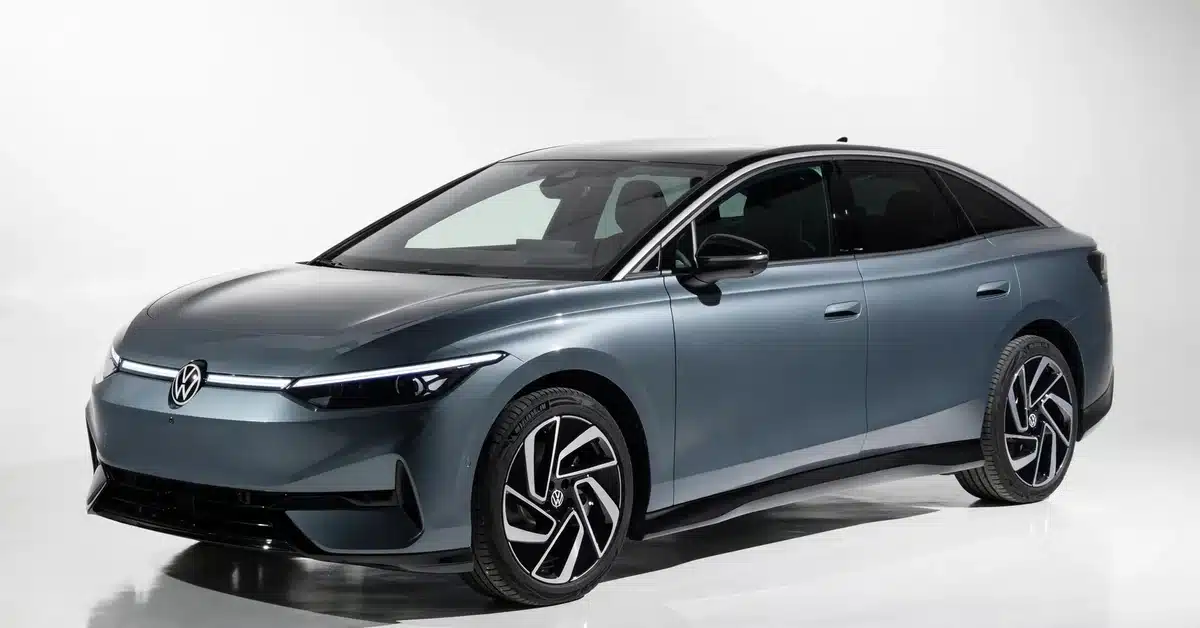
The Volkswagen ID.7 battery is available in 77 kWh (82 kWh gross) and 86 kWh (91 kWh gross) NMC options — both on the MEB platform, the same architecture underpinning the VW ID. Buzz. The 86 kWh Pro S delivers up to 434 miles WLTP — one of the longest ranges of any executive-class electric car in Europe. DC fast charging peaks at 175–200 kW depending on battery size, with 10–80% in approximately 26–30 minutes. The ID.7 comes as a fastback liftback (sedan) or Tourer estate — and is currently a Europe-only model, withdrawn from the U.S. market.
VW ID.7 Battery: Full Specs by Variant
| Variant | Battery (Net) | Battery (Gross) | WLTP Range | Power | DC Rate | 10–80% |
|---|---|---|---|---|---|---|
| Pro (RWD) | 77 kWh NMC | 82 kWh | ~380–386 miles | 282 hp | 175 kW | ~28–30 min |
| Pro S (RWD) | 86 kWh NMC | 91 kWh | ~434–440 miles | 282 hp | 200 kW | ~26 min |
| GTX (AWD) | 86 kWh NMC | 91 kWh | ~357–366 miles | 335 hp | 200 kW | ~26 min |
| Tourer Pro (RWD) | 77 kWh NMC | 82 kWh | ~372 miles | 286 hp | 175 kW | ~30 min |
| Tourer Pro S (RWD) | 86 kWh NMC | 91 kWh | ~422–424 miles | 286 hp | 200 kW | ~26 min |
| Tourer GTX (AWD) | 86 kWh NMC | 91 kWh | ~357–364 miles | 340 hp | 200 kW | ~26 min |
The Aerodynamic Advantage: Why the ID.7 Has Such Long Range
The ID.7’s standout achievement is its extraordinary aerodynamic efficiency. The long fastback body has a drag coefficient of just 0.23 Cd — among the slipperiest of any production VW Group vehicle, and notably better than the boxier VW ID.4 body style. This low drag allows the 77 kWh pack to achieve up to 386 miles WLTP — more than many rivals with larger batteries. Autocar’s real-world touring test returned 3.6 miles/kWh in the 77 kWh Pro — translating to approximately 277 miles of sustained motorway range.
The Pro S 86 kWh further exploits this aerodynamic efficiency. VW’s Nardò efficiency record confirmed 941 km (585 miles) in a controlled test with the 86 kWh ID.7 Pro S. Real-world tests consistently return 300+ miles for the 86 kWh variant. The Tourer estate version shows similar efficiency despite the longer body, with the longer roofline helping airflow. This makes the ID.7 Pro S one of the most range-efficient executive electric cars available in Europe in 2026.
Standard Heat Pump from 2025
Early ID.7 models (2023–2024) offered the heat pump as an optional extra — a criticism shared with many early MEB vehicles. From April 2025, VW made the heat pump standard on all ID.7 models. This meaningfully improves cold-weather range — real-world winter efficiency improves approximately 15–25% vs resistance heating alone. All 2025 and 2026 ID.7 models come standard with this upgrade.
ID.7 Charging Speeds
| Method | Power | ID.7 Pro (77 kWh) | ID.7 Pro S (86 kWh) |
|---|---|---|---|
| Level 1 (120V) | ~1.4 kW | ~60 hours full | ~65 hours full |
| Level 2 (11 kW) | 11 kW | ~8 hours full | ~9 hours full |
| DC Fast (175 / 200 kW) | 175 / 200 kW peak | ~28–30 min (10–80%) | ~26 min (10–80%) |
Real-World Range
- 77 kWh Pro, motorway at 70 mph: Approximately 270–300 miles — exceptional for a 77 kWh pack at sustained speed
- 86 kWh Pro S, mixed driving: Approximately 340–380 miles in mild conditions — consistently beating the Hyundai Ioniq 6 and BMW i5 in range tests
- Winter driving (with heat pump, 0°C): Approximately 55–65% of WLTP — approximately 240–280 miles for Pro S in cold conditions
- Efficiency record (Nardò, controlled): 941 km (585 miles) from 86 kWh — confirms the aerodynamics deliver genuine real-world range gains
Battery Warranty
VW covers the ID.7 battery with an 8-year / 160,000 km warranty in European markets against capacity falling below 70%. Annual NMC degradation is approximately 1.5–2.5% per year. The 86 kWh pack’s extra capacity means even significant degradation leaves substantial usable range. VW’s three-year vehicle warranty (60,000 miles) is shorter than BMW’s three-year unlimited mileage — a minor criticism noted by UK reviewers.
ID.7 vs Competitors: European Executive Electric Car Battery Comparison
| Model | Battery | WLTP Range | DC Rate | Starting Price |
|---|---|---|---|---|
| VW ID.7 Pro S | 86 kWh NMC | ~434 miles | 200 kW | ~£54,000 |
| BMW i5 eDrive40 | 84 kWh NMC | ~343 miles | 205 kW | ~£64,000 |
| Mercedes EQE 350+ | 90.6 kWh NMC | ~380 miles | 170 kW | ~£73,000 |
| Hyundai Ioniq 6 LR RWD | 84 kWh NMC | ~361 miles EPA | 233 kW | ~£44,000 |
Full specs for the BMW rival listed above are in our BMW i5 battery guide, and the related SUV body style is covered in our Mercedes EQE SUV battery guide.
Charging Tips for VW ID.7 Owners
- Set daily charge to 80%: NMC benefits from avoiding constant 100% — 80% of 86 kWh gives approximately 69 kWh, covering 250+ miles daily without stressing cells
- Confirm heat pump is installed: If you have a 2023 or early 2024 model without the heat pump option, real-world winter range will be significantly lower — verify this before purchase
- Use VW Navigation for preconditioning: Routing to a DC charger via the built-in navigation activates battery preconditioning — critical for maintaining the full 175–200 kW peak rate in cold weather
- Choose Pro S for road-tripping: The 86 kWh pack’s 434-mile WLTP range and 200 kW charging make the Pro S the clear choice for drivers who regularly cover 250+ miles between stops
Conclusion
The Volkswagen ID.7 battery is a masterclass in aerodynamic efficiency — the 86 kWh Pro S achieves 434 miles WLTP, beating every rival in its class without resorting to a larger battery. Standard heat pump from April 2025, 200 kW peak DC charging, and a 26-minute 10–80% session make it a genuinely capable long-distance companion. The Tourer estate variant adds class-leading boot space to the same drivetrain. For European buyers who want maximum real-world range, competitive charging speed, and VW’s proven MEB reliability — at a price below the BMW i5 and Mercedes EQE — the ID.7 Pro S battery is one of the best executive EV propositions in 2026.
