
MINI Aceman Battery: Sizes, NMC Type, Range & Charging


Researched from MINI UK’s official technical data and price lists, EV Database, Just Auto’s production analysis and Motor1’s launch reporting. Where sources disagree — one charging figure — both numbers are shown.
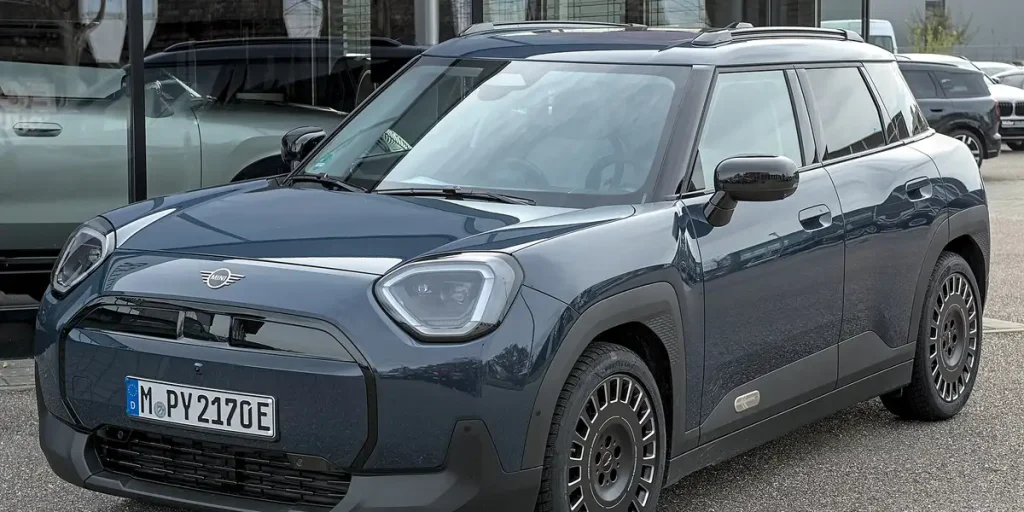
The MINI Aceman’s battery is an NMC (nickel manganese cobalt) lithium-ion pack — not LFP — with cells supplied by SVOLT, Great Wall Motor’s battery arm. Two sizes: 42.5 kWh (38.5 usable) in the Aceman E, and 54.2 kWh (49.2 usable) in the SE and JCW. WLTP range runs 189–192 miles (E) and up to 252 miles (SE); the battery warranty is 8 years or 100,000 miles down to a 70% capacity floor.
- Aceman E: 42.5 kWh · 184 hp · up to 192 miles WLTP
- Aceman SE: 54.2 kWh · 218 hp · up to 252 miles WLTP
- Aceman JCW: 54.2 kWh · 258 hp · up to 243 miles WLTP
- Charging: 75 kW DC (E) / 95 kW DC (SE, JCW) · 11 kW AC
MINI Aceman battery specs by variant
One platform, two packs, three power outputs — the variant names map cleanly onto the battery sizes.
MINI’s own technical data lists usable capacities; the gross figures come from EV Database.
| Variant | Battery (gross) | Usable | Motor | WLTP range | DC peak |
|---|---|---|---|---|---|
| Aceman E | 42.5 kWh | 38.5 kWh | 184 hp | 189–192 miles | 75 kW |
| Aceman SE | 54.2 kWh | 49.2 kWh | 218 hp | up to 252 miles | 95 kW |
| Aceman JCW | 54.2 kWh | 49.2 kWh | 258 hp | up to 243 miles | 95 kW |
All three are front-wheel drive with a single-speed gearbox, and all three are built on the Spotlight EV platform — the dedicated electric architecture of Spotlight Automotive, the joint venture between BMW and Great Wall Motor that manufactures the Aceman in Zhangjiagang, China.
Is the Aceman battery LFP or NMC?
NMC — and the choice was deliberate.
Motor1’s launch reporting is blunt about it: MINI does not install an inexpensive LFP battery in the Aceman, because only NMC’s higher energy density gets a small crossover to 250 miles. Just Auto’s production analysis confirms both packs use ternary (NCM) chemistry. The cells come from SVOLT, the battery subsidiary of Great Wall Motor — BMW’s partner in the joint venture that builds the car. That supply arrangement is the Aceman’s whole industrial story in miniature: a British-branded, German-engineered car, built in China around Chinese cells — if you are weighing the two chemistries as a buyer, our LFP vs NMC comparison lays out what each gives up.
Aceman E vs SE: what is the difference?
One pack size, one motor step, and about £2,200.
The SE’s 54.2 kWh battery buys roughly 60 more WLTP miles and a stronger motor (218 hp against 184 hp); the JCW then keeps the SE’s battery and spends the difference on power — 258 hp — trading a little range back (up to 243 miles against the SE’s 252). For most buyers the E-versus-SE question is really a range question: if your routine fits inside the E’s real-world reach, the cheaper car gives up nothing in charging speed worth mourning (75 kW against 95 kW peak) and identical warranty cover. If you regularly drive beyond 150 miles between charges, the SE is the honest pick.
Range: WLTP claims vs the real world
Plan around the estimate, not the headline.
MINI’s WLTP figures are 189–192 miles for the E and up to 252 for the SE, but EV Database’s real-range modelling lands at roughly 140 miles for the E and 180 miles for the SE in mixed driving — falling to about 120 and 150 miles in cold weather.
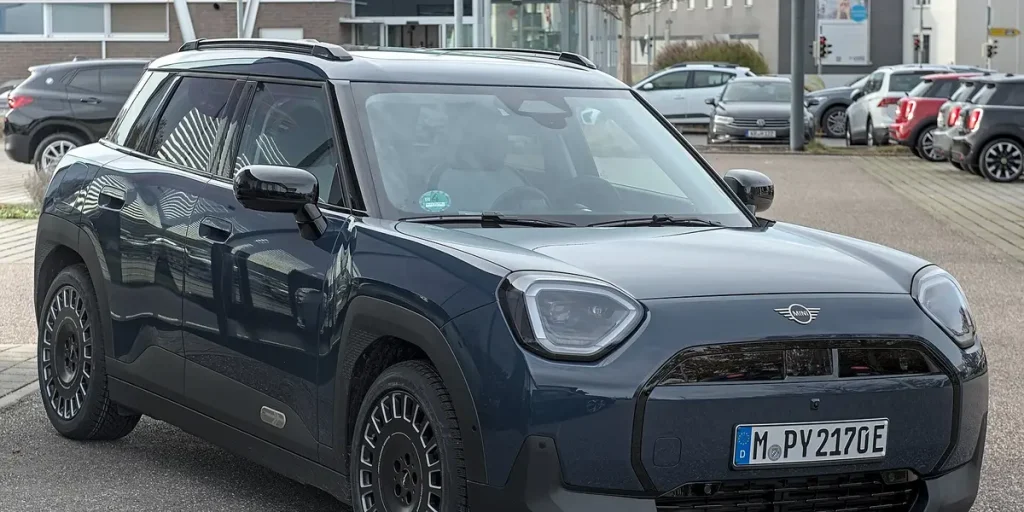
The one long instrumented test available supports the gap: Business Car’s long-term JCW averaged 3.0 miles per kWh over 2,550 miles against an official rating nearer 4 — on a 49.2 kWh usable pack, that consumption implies about 148 real miles. Spirited driving in the performance model is the worst case, but the direction is consistent: expect 70–75% of the WLTP figure as a planning number, less in winter.
Charging the Aceman
Charging is competent rather than quick, and the numbers differ slightly by source — both are given.
MINI UK quotes the E’s DC peak at 75 kW; EV Database lists 70 kW. The SE and JCW charge at up to 95 kW on both sources, with 10–80% taking about 29–31 minutes. Home charging is 11 kW AC on every variant (there is no 22 kW option), filling the E in about 4 hours 15 minutes and the bigger pack in about 5 hours 30.
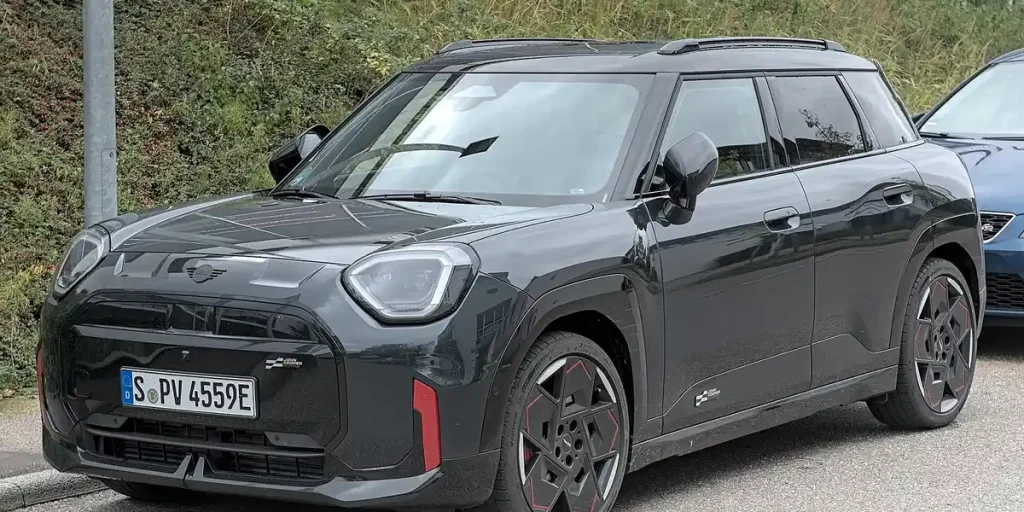
Two standard-fit items deserve credit: a heat pump is standard on both packs, and the battery precondition itself automatically using the navigation route — features rivals still bundle into option packs at this price.
Can you upgrade the Aceman’s battery?
No — there is no factory or dealer path from the E’s 42.5 kWh pack to the SE’s 54.2 kWh pack, and no larger pack exists for the car.
The two batteries are fitted at build; an after-the-fact swap is not offered by MINI and would not be economic if it were. If range is the concern, the decision has to be made at purchase: the SE is the upgrade.
Battery warranty in plain terms
MINI UK covers the high-voltage battery for 8 years or 100,000 miles, whichever comes first, guaranteeing usable capacity stays above 70% of its original level.
If it drops below that floor inside the term, MINI’s Battery Degradation Warranty applies. The cover runs with the car, not the first owner — Approved Used MINI states the eight-year battery warranty’s remaining balance passes to the next owner. For a used buyer that makes the warranty one of the Aceman’s stronger arguments: a three-year-old car carries five years of capacity guarantee with it.
How long will the Aceman’s battery last?
Honestly: nobody has Aceman-specific data yet, and any site quoting you a precise figure for this car is guessing.
The Aceman launched in 2024; no Recurrent or Geotab breakout exists for it, and the SVOLT NMC packs have no long public track record in European cars. What can be said: NMC packs in modern liquid-cooled cars (the Aceman’s is liquid-cooled) generally track the fleet-wide pattern of roughly 2% capacity loss a year in Geotab’s data, and the warranty floor means a pack that fell below 70% within 8 years or 100,000 miles would be MINI’s problem, not yours. Beyond that, the calendar will have to answer.
Replacement cost: what is actually known
MINI publishes no price for an Aceman traction battery — full stop.
The £110–£190 figures quoted on repair-cost sites for “MINI Aceman battery replacement” are for the small 12-volt battery, not the high-voltage pack; do not let them anchor your expectations. Generic UK EV pack replacements run into five figures at dealer rates, and the Aceman’s realistic routes inside its life are a warranty claim, a module-level repair, or — for an older car — a refurbished pack from a written-off SE. A verifiable dealer quote for this specific pack does not exist in public sources as of this writing.
The Aceman and the Cooper Electric
Same bones, one shared pack, one different one.
The Aceman sits on the same Spotlight EV platform as the electric MINI Cooper (J01), and the 54.2 kWh battery is literally shared — SE versions of both cars carry the identical pack — the Cooper’s own figures are in our MINI Cooper Electric battery guide. The entry cars differ, though: the Cooper E uses a smaller 40.7 kWh (36.6 usable) battery, while the Aceman E gets 42.5 kWh (38.5 usable) — a slightly bigger pack for the slightly bigger car. Cross-shopping the two, treat the SE models as battery-identical and the E models as close cousins, not twins.
Why you cannot buy one in America — and the Oxford question
The Aceman is a China-built car, and that single fact explains both absences.
MINI halted its plan to import the Aceman (and the electric Cooper) to the United States in 2025, telling Automotive News the tariffs on Chinese-built cars made the sums impossible; there is no announced return date. The UK production story changed too: BMW’s plan to build the electric MINI models at Oxford from 2026 was paused in 2025 and, as of mid-2026 reporting, remains on hold — so every Aceman on a British road is a Chinese-built import, at least for now. UK prices, for reference: E from £29,060, SE from £31,260, JCW from £37,060.
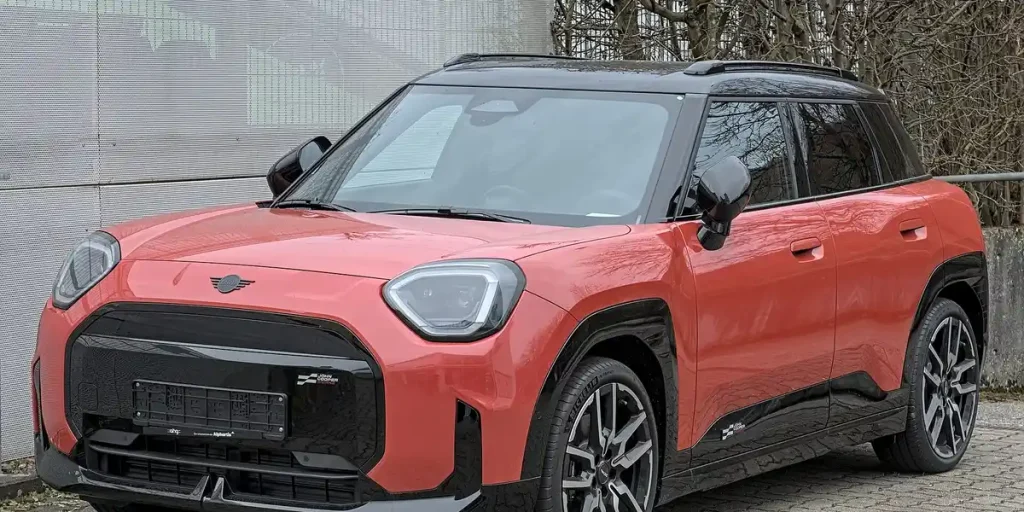
Against its closest rival on this site — the Volvo EX30, whose battery guide covers a similarly China-linked supply story — the Aceman’s pitch is character and warranty transferability rather than charging speed or price.
Frequently asked questions
What is the battery size of the MINI Aceman SE?
54.2 kWh gross, of which 49.2 kWh is usable. The JCW uses the same pack; the entry-level Aceman E has a smaller 42.5 kWh battery (38.5 kWh usable).
What type of battery is in the MINI Aceman — LFP or NMC?
NMC (nickel manganese cobalt) lithium-ion in both pack sizes, with cells supplied by SVOLT, Great Wall Motor’s battery arm. MINI deliberately chose NMC over cheaper LFP for its higher energy density.
What is the real-world range of the MINI Aceman?
EV Database estimates about 140 miles for the E and 180 miles for the SE in mixed conditions, against WLTP figures of up to 192 and 252 miles. Cold weather trims the estimates to roughly 120 and 150 miles.
How long does the Aceman battery warranty last?
Eight years or 100,000 miles in the UK, with a guaranteed capacity floor of 70% — and the remaining cover transfers to the next owner when the car is sold.
Can I upgrade my Aceman E to the bigger battery?
No. MINI offers no upgrade path between the two factory packs, and no larger battery exists for the car. The SE is effectively the upgrade, chosen at purchase.
Conclusion
The Aceman’s battery story is a deliberate trade: NMC density and a transferable 8-year warranty, bought with Chinese supply and modest charging speeds.
The chemistry question that brings most readers here has a clean answer — NMC, SVOLT cells, two sizes — and the ownership questions have honest ones, including the two nobody can answer yet: how these packs age, and what a replacement will cost. Buy the SE if your miles demand it; buy either with more warranty confidence than most rivals offer.
