
Fiat Grande Panda Electric Battery: Complete Guide

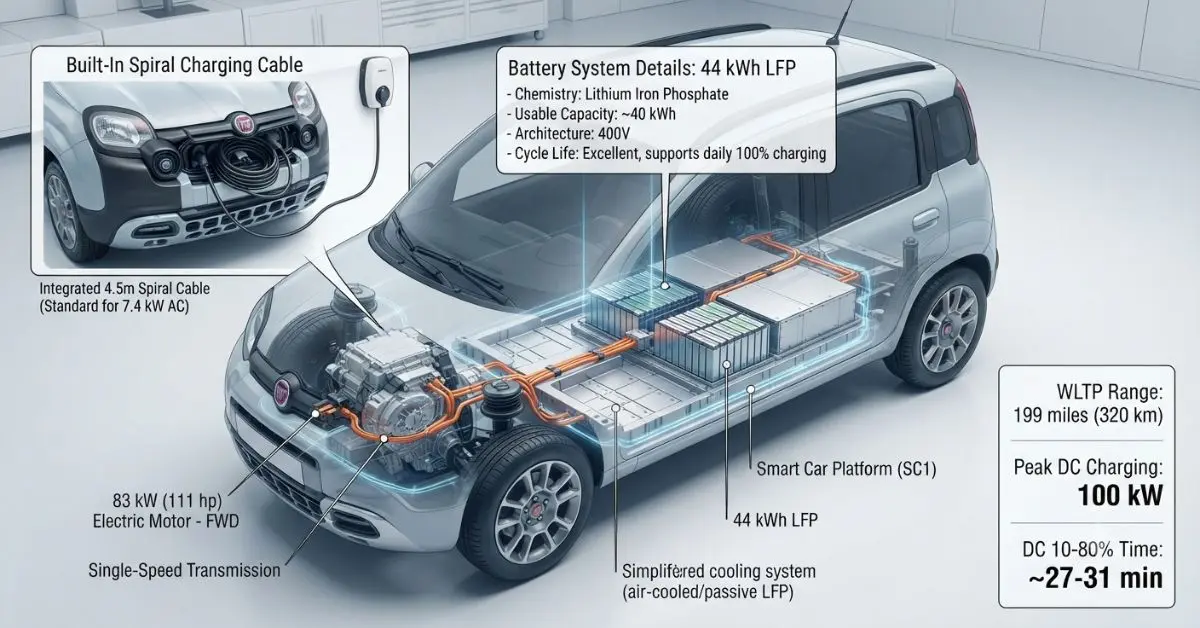
Battery and specification figures are Fiat’s and Stellantis’s published data and price lists, cross-checked against EV Database; measured range and efficiency figures are the named testers’; recall details are KBA-derived records; the safety position is Euro NCAP’s.
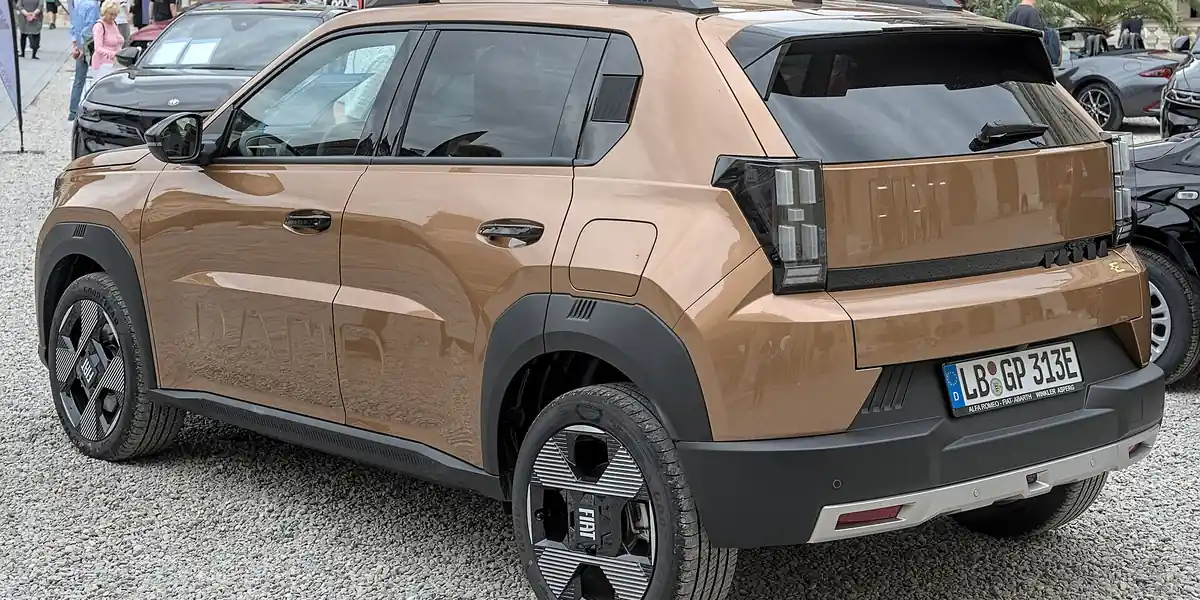
The Grande Panda is Fiat’s new B-segment car, revealed in 2024 as the larger successor to the classic Panda and built in Kragujevac, Serbia, on Stellantis’s Smart Car platform. The Electric version pairs a modest LFP battery with an 83 kW motor and one feature no rival offers: a charging cable built into the car’s nose. It is sold across Europe and the UK, and in neither the United States nor Australia.
Until October 2026 the electric range was simple — one battery, one motor. A second, larger battery has now joined it in the first continental markets, and it changes more than the range: the bigger-battery car gives up the built-in cable. This guide covers both versions with their figures kept separate, because mixing them is how most of the errors about this car start.
Key figures: 43.8 kWh usable (44 kWh car) · 320 km WLTP · DC 100 kW · built-in 4.5 m AC cable · warranty 8 yr / 160,000 km.
Battery Sizes and Specifications
One LFP battery powered the car from launch — 44 kWh gross, 43.8 kWh usable — and a 54 kWh pack has now joined it in the first markets.
| 44 kWh version | 54 kWh version (from Oct 2026) | |
|---|---|---|
| Gross capacity | 44.0 kWh | 54.0 kWh |
| Usable capacity | 43.8 kWh | 52.8 kWh |
| Chemistry | LFP | LFP |
| WLTP range | 320 km (199 mi) | 392–400 km (up to 249 mi) |
| Motor | 83 kW (113 hp), 120 Nm | 83 kW (113 hp) |
| 0–100 km/h · top speed | 11.0 s · 132 km/h | 11.0 s class |
| DC charging | 100 kW | 100 kW |
| AC charging | 7.4 kW with built-in cable (11 kW option deletes the cable) | 11 kW, separate cable |
| First markets | Europe incl. UK | Netherlands & France; no UK announcement yet |
What is the 44 kWh battery made of?
The 44 kWh car’s usable figure deserves emphasis because it is so often understated: 43.8 of the 44.0 kWh is usable, an unusually small buffer, which is part of how a modest pack returns a 320 km rating. The cells are LFP prismatic units supplied by SVOLT, per specialist reporting on this Smart Car pack — Fiat does not name the supplier in its consumer material. The architecture is 400 V. Fiat does not publish a cell count or configuration for the pack, and this guide does not invent one.
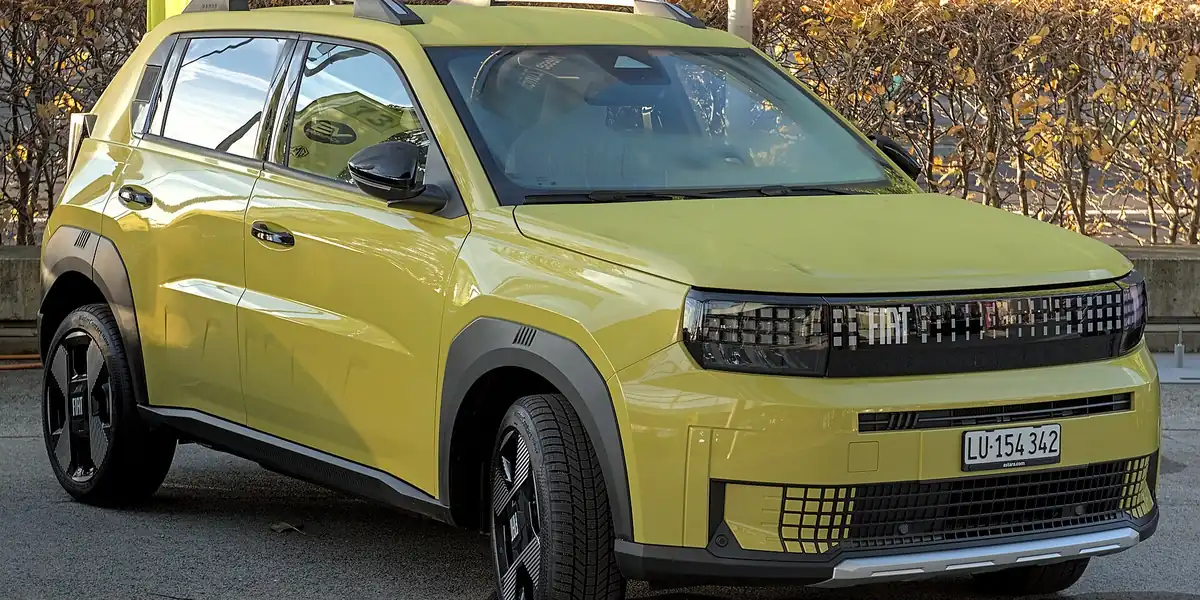
The New 54 kWh Version
Announced on 28 October 2026, the 54 kWh Grande Panda trades the built-in cable for roughly 80 km more range.
What does the 54 kWh version offer?
Stellantis announced the larger battery for the Netherlands and France first, priced from €25,800 in France and €27,499 in the Netherlands — about €1,000 above the 44 kWh car. Its 54.0 kWh pack (52.8 kWh usable) is the same unit offered in the Citroën ë-C3 Aircross Extended Range, and it lifts the WLTP range to 392–400 km depending on trim. The motor is unchanged.
What changes on charging — and what is still unconfirmed?
What changes is the charging hardware: the 54 kWh car uses an 11 kW onboard charger with a conventional separate cable, and the retractable grille cable is not fitted. No UK announcement for the 54 kWh car had been made at the time of writing, and reports of a cheaper short-range version remain unconfirmed — treat both as developing stories, not specifications.
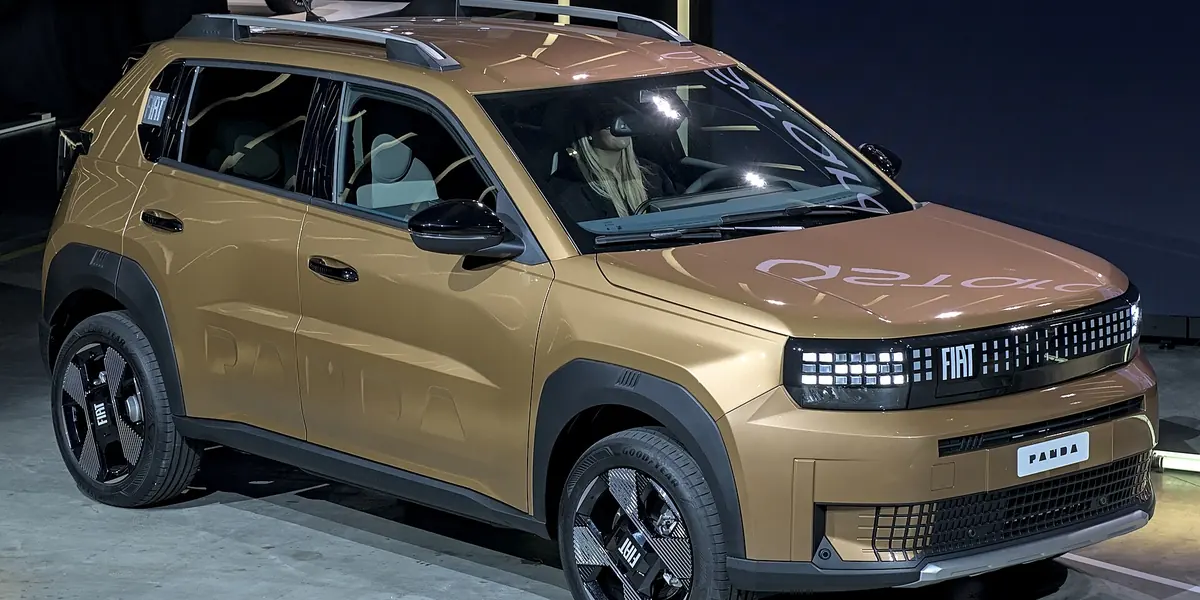
Real-World Range
Expect roughly 140–155 miles in typical mixed use — less in winter, because this LFP car has no heat pump.
What range do the estimates and tests give?
EV Database’s estimate for the 44 kWh car is about 155 miles combined, with a cold-weather combined estimate of about 135 miles and a cold motorway figure near 110 miles. Measured results cluster where the estimate says they should: Carwow recorded 3.2 miles per kWh on its test route, equal to 141 miles, and about 150 miles across its time with the car; EV Powered returned 140 miles over a week of mixed driving; Auto Express averaged 3.1 miles per kWh, roughly 136 miles, in a run including substantial motorway work. Electrifying estimates about 140 miles in winter running and around 180 in summer.
Where is the Grande Panda most efficient — and where does it struggle?
Gentle town driving is this car’s home ground — Carwow saw 4.8 miles per kWh in town — while a cold motorway is its worst case, and the absence of a heat pump is the reason the winter figures fall as far as they do.
What did ADAC’s Ecotest say?
ADAC’s Ecotest nonetheless rated the car five stars with 91 points, a verdict on its overall efficiency and environmental performance rather than on any single range figure.
Charging and the Built-In Cable
The grille cable is the car’s party trick — a 4.5-metre retractable AC cable you can never forget to pack — and choosing the faster AC charger deletes it.
How does the built-in charging cable work?
Behind a panel in the front grille sits a spiral cable, 4.5 metres long, that pulls out, plugs into a home wallbox or public AC post, and retracts when done. Fiat bills the car as the first on the market with an integrated, retractable charging cable — its own claim, and a fair one for a mainstream car. The cable serves AC charging only, at up to about 7 kW through the standard 7.4 kW onboard charger.
A conventional rear charge port is fitted as well and handles everything else, including DC. The buyer’s decision is this: specify the optional 11 kW three-phase charger and the car is built rear-port-only, without the integrated cable. Fiat quotes 20–80% in 4 hours 20 minutes on the 7 kW setup against 2 hours 50 minutes at 11 kW; full charges take about 7 hours at 7.4 kW and 4 hours 45 minutes at 11 kW (EV Database).
How fast is DC rapid charging?
On a DC rapid charger the peak is 100 kW. Fiat’s claim is 20–80% in 27 minutes; EV Database puts 10–80% at about 31 minutes, with an observed average of roughly 62 kW across that window — respectable for the class, and the two figures are both printed here with their windows because merging them is the standard error.
What else should owners know about charging?
There is no battery preconditioning and no vehicle-to-load function, and — the question readers ask about this car more than any other — no heat pump is offered in any market. As an LFP car it is happy to be charged to 100% regularly, and periodic full charges help its battery management keep the state-of-charge reading honest; that is guidance for use, not a promise that the pack will not age. Like every electric car, it also recovers energy through regenerative braking whenever it slows — useful in town driving, though it supplements plugging in rather than replacing it.
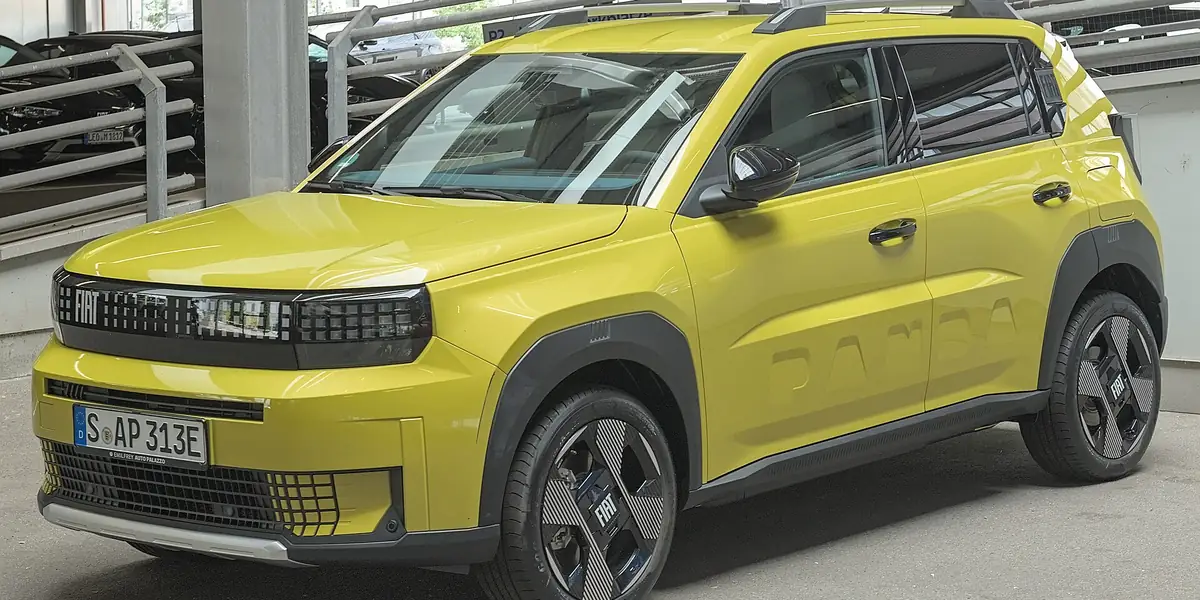
Prices in the UK and Europe
UK prices opened at £21,035 in September 2025, the headline £20,995 dates from November 2025, and Fiat’s UK site had moved to £21,495 by October 2026 — the date is part of the price.
What does the Grande Panda Electric cost in the UK?
Order books opened on 1 September 2025 with the (RED) trim at £21,035 before Fiat’s reintroduced £1,500 E-Grant; when the Pop trim replaced (RED) on 28 November 2025 the starting price became the widely quoted £20,995, with the La Prima at £24,035. First right-hand-drive cars were expected in UK showrooms from spring 2026.
What does it cost in Europe?
On the continent the car launched under €25,000 in the Netherlands and France in October 2024, and the new 54 kWh version starts at €25,800 in France and €27,499 in the Netherlands. Even at its highest quoted figure the Grande Panda sits among the most affordable five-seat electric cars in Europe.
Battery Replacement Cost: No Published Price
Fiat has not published a replacement price for the Grande Panda’s battery, and no dealer price has surfaced.
That is the honest answer, and for this car it matters less than for most: capacity failure is a warranty question for the car’s first 8 years or 160,000 km, with at least 70% of capacity guaranteed. Figures quoted online for “Panda batteries” price the old Panda Hybrid’s small 48V battery or an ordinary 12-volt battery — different components in different cars. For how replacement pricing works across EVs in general, see our EV battery replacement cost guide.
How Long Will the Battery Last?
There is no Grande Panda degradation dataset — the car is too new — so the honest evidence is the warranty floor and LFP’s track record in the sibling cars.
The pack’s chemistry is the durable kind: LFP is the chemistry chosen across this price class precisely because it tolerates deep, frequent cycling and regular full charges better than nickel-based packs. What cannot be offered is a measured percentage-per-year for this car, because nobody has one yet. Owners can help the pack in the usual ways: the regular full charges LFP likes for calibration, and some sympathy in deep cold, where this car’s range — not its longevity — is what suffers.
Warranty and Recalls
The battery warranty is 8 years or 160,000 km (100,000 miles in the UK) with at least 70% capacity guaranteed, and continental buyers get Fiat’s service-activated extension on top.
What warranty does the Grande Panda Electric have?
The UK vehicle warranty is 3 years or 60,000 miles. In mainland Europe, the Fiat Special Warranty — launched in June 2025 — renews cover free at each scheduled service in the Fiat network, up to the same 8 years or 160,000 km; no UK equivalent programme was found, so the name belongs only with its market label.
Are there any recalls?
No recall touches this car’s battery or charging system. The model’s recorded recalls are software and equipment matters — an Intelligent Speed Assist malfunction (cars built October 2024 to October 2025) and a windscreen-defrosting issue — and one widely reported fire-risk campaign of some 700,000 cars concerns the Grande Panda Hybrid’s 48V system, not the Electric; it does not involve this car.
Safety Rating: Not Yet Tested
Euro NCAP has not tested the Grande Panda, so the car has no star rating — anyone quoting one is rating a different car.
No Smart Car platform car had been rated at the time of writing, and Green NCAP has not assessed the car either. The old Panda’s zero-star re-test in 2018 and the Fiat 500e’s four stars from 2021 belong to those cars alone and say nothing about this one.
The Hybrid and the Sibling Cars
Three relatives cause most of the confusion around this car: the Grande Panda Hybrid, the Citroën ë-C3, and the Frontera Electric.
What is the Grande Panda Hybrid?
The Hybrid is the same body with a 1.2-litre petrol engine, a 21 kW electric motor in its gearbox and a 48V battery of roughly 0.9 kWh that charges only from regenerative braking — it is not a plug-in and its battery figures never belong in the Electric’s story.
How do the Citroën ë-C3 and Frontera Electric compare?
The Citroën ë-C3 battery guide covers the closest sibling: the same platform and the same 44 kWh pack, but no built-in cable, a 20–80% claim of 26 minutes, and comfort-tuned suspension. The larger Vauxhall and Opel Frontera Electric uses the same pack family in a bigger body, so its ranges differ — 186 miles for its 44 kWh version and up to 253 miles for the 54 kWh Extended Range — and should never be quoted for the Panda.
Is the Fiat 500e the same car?
A final coincidence to fence off: the Fiat 500e, a different car entirely, also quotes 199 miles WLTP from its 42 kWh nickel-based pack. Same headline number, unrelated battery.
Frequently Asked Questions
What size battery does the Fiat Grande Panda Electric have?
44 kWh gross with 43.8 kWh usable in the original version, and 54 kWh gross with 52.8 kWh usable in the version announced in October 2026 for the Netherlands and France. Both are LFP (lithium iron phosphate).
What is the real range of the Grande Panda Electric?
About 140–155 miles in typical mixed use. Testers measured 141 miles (Carwow) and 140 miles (EV Powered); winter mixed use falls to roughly 130–140 miles and cold motorway driving to about 110 miles, because the car has no heat pump. The WLTP rating is 199 miles.
How long does the Grande Panda Electric take to charge?
Fiat claims 20–80% in 27 minutes at up to 100 kW DC; EV Database puts 10–80% at about 31 minutes. At home, a full charge takes about 7 hours on the standard 7.4 kW charger or 4 hours 45 minutes on the optional 11 kW charger.
How does the built-in charging cable work?
A 4.5-metre spiral cable lives behind a panel in the front grille. It pulls out for AC charging at home or public posts (up to about 7 kW) and retracts afterwards. Cars specified with the 11 kW charger — and the 54 kWh version — do not have it; they use a conventional rear port and a separate cable.
Does the Grande Panda Electric have a heat pump?
No. No heat pump is offered in any market, which is the main reason its winter range falls further than some rivals’. There is also no battery preconditioning.
What does a replacement Grande Panda battery cost?
There is no published price — Fiat does not quote one and no dealer price has surfaced. Capacity problems are covered by the 8-year, 160,000 km battery warranty with a 70% floor.
How long is the battery warranty?
Eight years or 160,000 km (100,000 miles in the UK), guaranteeing at least 70% of original capacity. The UK vehicle warranty is 3 years or 60,000 miles; in mainland Europe the Fiat Special Warranty renews cover at each network service up to the same 8-year span.
What is the difference between the 44 and 54 kWh versions?
Range (320 km vs up to 400 km WLTP), the charger (the 54 kWh car has 11 kW AC as standard-fit in its launch markets) and the cable: the 54 kWh car does not have the built-in retractable cable. Motor and DC charging are the same.
Is the Grande Panda Electric the same as the Citroën ë-C3?
They share the Smart Car platform and the same 44 kWh LFP battery, but they are different cars: the ë-C3 has no built-in cable, quotes 26 minutes for 20–80%, and rides on comfort-tuned suspension. The Fiat is the one with the cable.
Is the Grande Panda Electric sold in the United States?
No. It is a Europe-and-UK car, built in Serbia; Fiat’s US electric offer remains the 500e. It is not sold in Australia either.
Conclusion
The Grande Panda Electric’s battery story is a study in honest small numbers: 43.8 usable kWh, a 100 kW charge rate, a cable you cannot forget, and winter figures that admit what the missing heat pump costs. Get those numbers right — and keep the new 54 kWh version’s separate — and the car makes its own case as one of Europe’s most likeable cheap EVs. For its French platform-mate’s smaller sibling, our Peugeot e-208 battery guide covers the e-CMP hatchback in the same detail.
