
What Is Level 1 EV Charging? Complete Guide

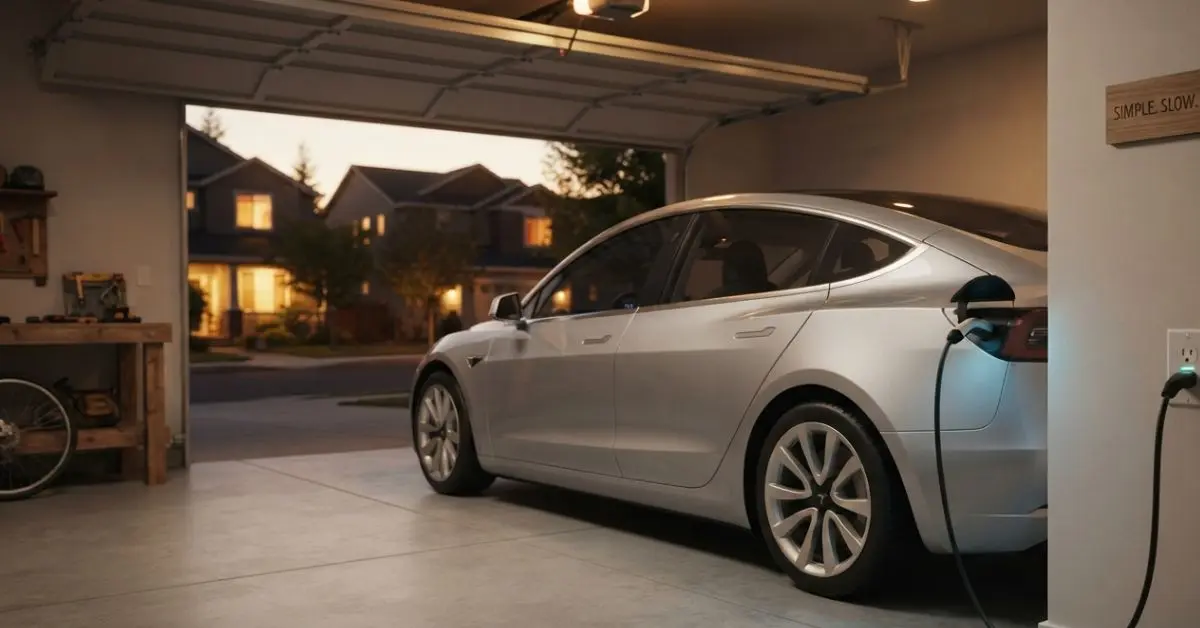
Level 1 charging uses a standard 120-volt household outlet to slowly refill an electric vehicle’s battery. This is the same type of outlet you use to charge your phone. It adds about 3 to 5 miles of range each hour, making it the slowest, simplest, and cheapest way to charge.
You do not need special equipment. You only need the portable charging cable that comes with every electric car.
This guide explains what Level 1 charging is, when to use it, and what to expect.
Level 1 EV Charging: Key Facts
| Specification | Detail |
|---|---|
| Voltage | 120V AC (standard US household outlet) |
| Amperage | 12–15 amps (most circuits) |
| Power output | 1.4–1.9 kW |
| Miles added per hour | 3–5 miles |
| Charge time (40 kWh EV) | ~28–32 hours (full) |
| Charge time (75 kWh EV) | ~52–60 hours (full) |
| Equipment needed | Portable EVSE (included with car) |
| Connector (US) | J1772 or NACS (depending on car) |
| Installation required? | No — standard wall outlet |
| Cost per charge session | ~$5–$10 (full charge at national avg rate) |
How Level 1 Charging Works
Every electric car includes a portable cable called a Level 1 EVSE. You plug one end into a standard 120V wall outlet. You connect the other end to your car’s charging port. Power travels through the cable to the car’s onboard charger. The charger converts AC power into DC to charge the battery.
The EVSE acts as a safety device. It talks to your car to make sure the connection is secure. It allows power to flow only after confirming that everything is safe.
A standard 120V outlet on a 15-amp circuit gives you about 1.4 kW of charging power. If you use a 20-amp dedicated circuit, this power rises to about 1.9 kW. The actual difference in speed is small. You get about 4.5 miles of range per hour instead of 3.5 miles. Most garages and outdoor outlets use 15-amp circuits.
Level 1 Home Charging Limits
Level 1 charging adds about 24 to 40 miles of range during an 8-hour overnight charge. This speed provides 3 to 5 miles of range per hour. It works well for drivers who commute less than 30 miles each day, as it replaces the energy they use.
However, Level 1 charging often fails to meet the daily needs of drivers who travel more than 50 miles. Larger electric vehicles will gradually lose battery charge over the week if they rely solely on this method.
Who Should Use Level 1 Charging?
Plug-in Hybrid (PHEV) Owners
Most PHEVs have 15–50 mile batteries. Level 1 fills them in 2–6 hours, making overnight Level 1 charging perfectly adequate for full daily EV driving.
Low-Mileage EV Drivers
If you drive under 25–30 miles daily, Level 1 overnight charging consistently replenishes the energy you use.
Renters or Apartment Dwellers
Drivers with access to an outdoor 120V outlet but no option to install a home wall charger can still use Level 1 as a practical daily charging solution.
Backup Charging
Even Level 2 owners should keep their Level 1 EVSE cable in the car. It serves as a reliable emergency charger when a home wall charger is unavailable.
Level 1 Charging Safety
Level 1 charging is extremely safe when done correctly. The built-in EVSE constantly monitors for electrical faults, ground faults, and overheating and stops charging immediately if any are detected.
Never Use an Extension Cord
Extension cords add resistance, generate heat, and can create a fire risk. Always plug the EVSE directly into a wall outlet.
Use a Dedicated Circuit When Possible
Running a Level 1 charger on the same circuit as other high-power appliances can trip breakers and reduce charging performance.
Level 1 vs Level 2: Is It Worth Upgrading?
| Feature | Level 1 | Level 2 |
|---|---|---|
| Miles added per hour | 3–5 miles | 15–35 miles |
| Full charge time (75 kWh) | ~55–60 hours | ~7–10 hours |
| Equipment cost | $0 (included with car) | $200–$800 |
| Installation cost | $0 (uses existing outlet) | $200–$800 (electrician) |
| Ideal for | PHEVs, low-mileage drivers | Most EV drivers |
Most electric vehicle owners should upgrade to a Level 2 charger. This upgrade costs between $400 and $1,600 for the charger and installation. A Level 2 charger works 7 to 8 times faster than a standard Level 1 charger. It shrinks a 55-hour charging time down to just 7 to 10 hours.
If you drive a full electric vehicle and commute more than 30 miles every day, a Level 1 charger may not charge your car fast enough. You need the extra speed of a Level 2 charger to keep your battery ready for daily use.
Conclusion
Level 1 charging is the easiest way to charge an electric car. You plug your car into any standard 120V wall outlet. It adds 3 to 5 miles of range every hour. This speed works well for owners of plug-in hybrid cars or people who drive short distances each day.
If you own a full electric car and drive more than 30 miles daily, you should choose Level 2 charging. It provides much faster overnight charging and is worth the cost of installation. You should always keep your Level 1 charger in your car. It serves as a great emergency tool whenever you find a standard outlet.
FAQs
Can I charge an EV every day with Level 1 charging?
Yes. If you drive about 25–30 miles or less each day, Level 1 charging can usually replace the energy you use overnight.
Does every electric car come with a Level 1 charger?
Most new electric vehicles include a portable Level 1 EVSE that plugs into a standard 120V household outlet, although some manufacturers now sell it as an optional accessory.
How long does it take to fully charge an EV with Level 1 charging?
It depends on battery size. A 40 kWh EV typically takes about 28–32 hours, while a 75 kWh EV usually needs around 52–60 hours.
