
Tesla Model X Battery: Complete Guide

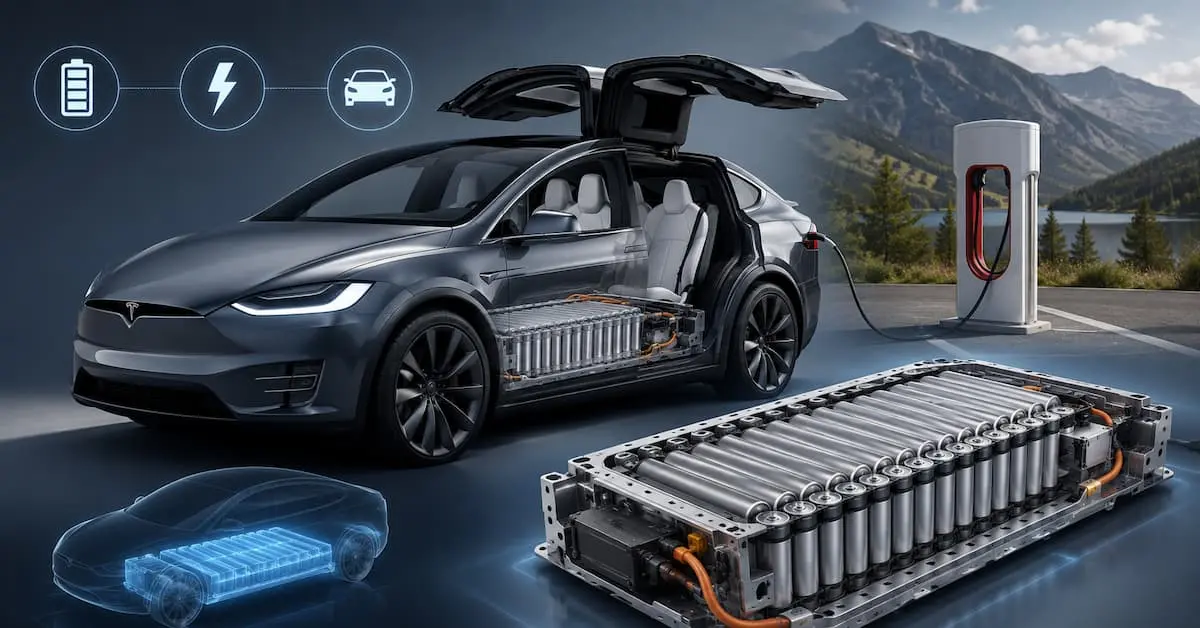
The Tesla Model X battery uses a 100 kWh lithium-ion pack with NCA chemistry. This pack uses the same high-energy cells as the Tesla Model S. The Model X AWD delivers 352 miles of range, while the Plaid tri-motor delivers 335 miles.
Quick answer
The Tesla Model X uses one battery across both trims: a 100 kWh NCA pack with about 95 kWh usable, built from 8,256 small 18650 cells. It weighs roughly 1,200 pounds and gives the final-year Model X 352 miles of EPA range in dual-motor form, or 335 miles as a Plaid. Tesla ended Model X production in spring 2026, so every Model X on sale today is used or leftover stock.
Key figures: 100 kWh gross · ~95 kWh usable · ~1,200 lb (545 kg) · 250 kW peak charging · Warranty 8 years / 150,000 miles
DC fast charging peaks at 250 kW, charging from 10% to 80% in about 24 minutes. Tesla stopped production of the Model X to use the factory for Optimus robots. Buyers can now only find this vehicle on the used market or through remaining inventory.
Tesla Model X Battery Specifications
| Variant | Battery | EPA Range | Power | 0–60 mph | DC Rate |
|---|---|---|---|---|---|
| Model X AWD (Long Range) | 100 kWh NCA (about 95 usable) | 352 miles | 670 hp (dual motor) | 3.8 sec | 250 kW |
| Model X Plaid | 100 kWh NCA (about 95 usable) | 335 miles | 1,020 hp (tri-motor) | 2.5 sec | 250 kW |
How Heavy Is the Tesla Model X Battery?
Tesla does not publish an official pack weight, but teardown-based estimates put the 100 kWh Model X pack at roughly 1,200 pounds (about 545 kg) — around a fifth of the car’s total weight. The pack is a flat slab under the floor, holding 8,256 cylindrical 18650 cells wired in a 96s86p layout, and its weight is a big reason the Model X tows 5,000 pounds yet still needs careful tire and suspension checks on a used example.
Why Tesla Discontinued the Model X
Tesla announced the end of the Model X on January 28, 2026, during its Q4 2025 earnings call, with Elon Musk calling it an ‘honorable discharge’ for the S and X programs. Custom orders stopped in spring 2026, and the final cars — a farewell Signature Edition run of just 100 Model Xs — were built at Fremont in April and May 2026. The Fremont floor space is being converted to build Tesla’s Optimus humanoid robot, with a planned capacity of one million robots a year, and there is no Model X successor.
The Model X discontinuation ended an 11-year run that started in September 2015. A refresh added a front bumper camera, new wheel designs, dynamic ambient lighting, and adaptive headlights shortly before production stopped. Buyers can now find the Model X only through the used market or remaining inventory.
Tesla Model X Battery and Design Overview
The Tesla Model X uses NCA cylindrical cells for its 100 kWh battery pack. This chemistry gives the SUV high energy density. An active liquid cooling system keeps the cells at the right temperature during driving and charging.
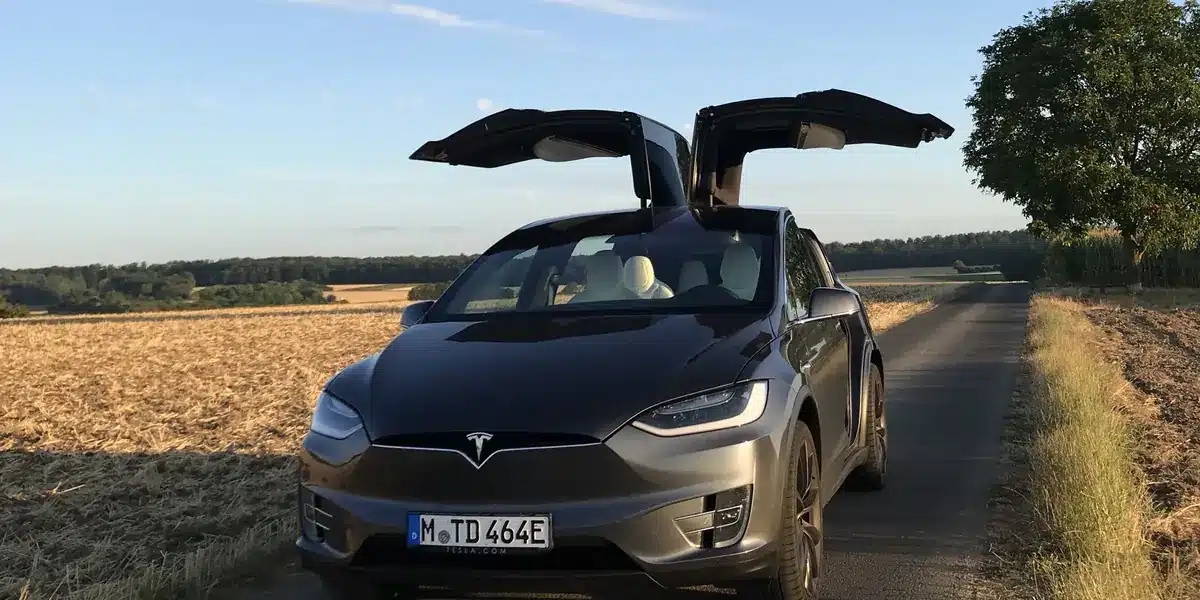
The battery pack sits flat in the floor between the axles. This design gives the Model X a low center of gravity and strong body rigidity. The heavy battery helps the SUV earn top safety ratings.
Other parts like the Falcon Wing doors and panoramic windshield sit above this layout. Buyers can also compare this setup to the Rivian R1S for a similar three-row electric SUV.
Read our Tesla battery chemistry to understand the differences between NCA, NMC, and LFP batteries.
Model X Charging Speeds
| Method | Power | Model X (100 kWh) |
|---|---|---|
| Level 1 (120V) | ~1.4 kW | ~75 hours full |
| Level 2 (11.5 kW) | 11.5 kW | ~44 miles per hour; ~10 hours full |
| Supercharger V3/V4 | 250 kW peak | ~30 min (10–80%) |
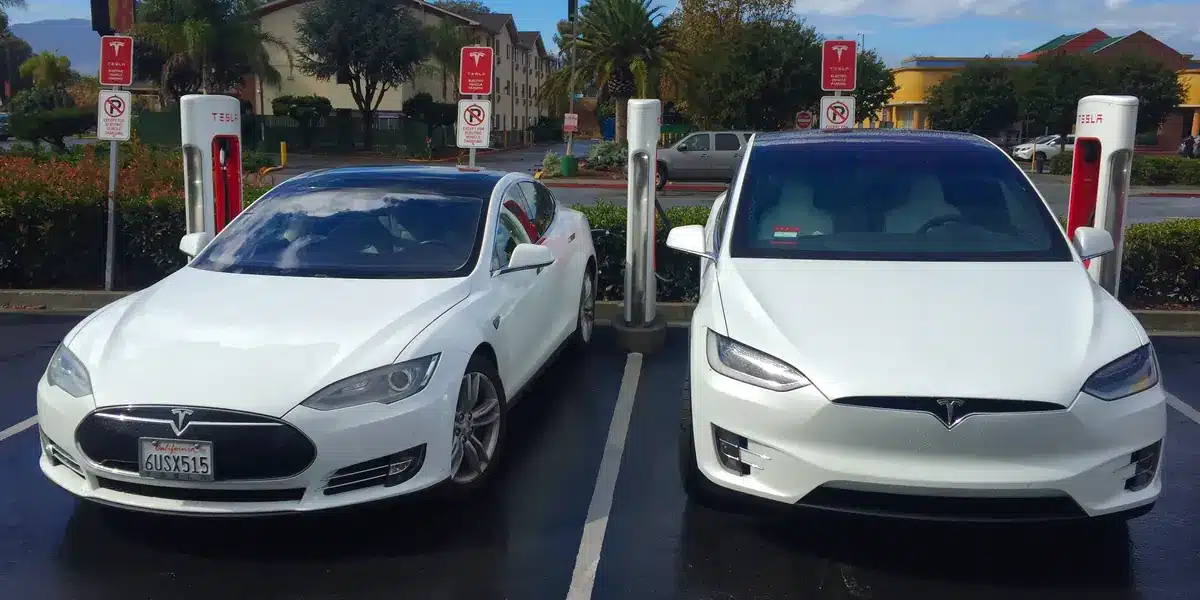
The 250 kW peak charging speed matches the Tesla Model S. Both models are limited by Tesla’s 400-volt architecture, making them slower than newer 800-volt EVs like the Porsche Taycan and Hyundai Ioniq 5 during peak charging. However, Tesla’s extensive Supercharger network helps reduce charging delays for most owners. The charging session averages about 129 kW from 10% to 80%, allowing the battery to recharge in roughly 24 minutes.
Read more: How Fast Can You Charge a Tesla Battery?
Tesla Model X Real-World Range
- AWD (352 miles EPA), highway at 70–75 mph: Approximately 290–310 miles with 20-inch wheels in mild conditions
- AWD, 22-inch wheels: Approximately 270–290 miles — larger wheels add aerodynamic drag and rolling resistance
- Plaid, highway: Approximately 270–300 miles — the extra motor adds weight but high-speed efficiency remains strong
- Cold weather: Approximately 220–250 miles for AWD — Tesla’s NCA chemistry performs reasonably well in cold with active battery heating
Compare how the Model X stacks up against every Tesla model in our Tesla battery range guide.
Tesla Model X Plaid Performance
The Model X Plaid uses three electric motors, one at the front and two at the rear, producing a combined 1,020 horsepower. It accelerates from 0 to 60 mph in just 2.5 seconds despite weighing more than 5,400 pounds.
The Plaid version draws more peak current from the same 100 kWh battery pack, which explains its 17-mile EPA range reduction compared to the AWD model. During normal daily driving, energy consumption remains similar when performance modes are not used.
Tesla Model X Battery Warranty and Degradation
Tesla covers the Model X battery with an 8-year or 150,000-mile warranty. The warranty guarantees that battery capacity will remain above 70% during the coverage period.
For used vehicles, buyers should verify the remaining warranty using the vehicle’s VIN because the battery warranty transfers to the next owner. Long-term owner reports show battery degradation of about 5% to 10% after the first 100,000 miles, which remains well within Tesla’s warranty limits.
Learn what causes long-term capacity loss and how to slow it down in our Tesla battery degradation guide.
Tesla Model X Battery Replacement Cost
A full out-of-warranty pack replacement for a Model X is a market-estimated $15,000–$22,000 installed. Tesla does not publish a price list, so treat that range as a planning figure drawn from owner invoices and repair-market data, not a quote.
In practice, very few owners ever pay it. The battery warranty runs 8 years or 150,000 miles with at least 70% capacity retention, most packs degrade slowly (Tesla’s own data shows about 12% loss at 200,000 miles on Model S and X), and many faults can be fixed with a module repair for far less than a whole pack. See how quotes break down in our EV battery replacement cost guide.
Buying a Used Tesla Model X in 2026
- Check battery degradation via OBD2 or Tesla app: The Tesla app shows estimated battery range — compare to original EPA figure to calculate approximate capacity retention
- Verify Supercharging credits: Some Model X units were sold with lifetime Supercharging — confirm this transfers with the vehicle history documents
- Confirm NACS port: All current Model X units use native NACS — no adapter needed for Superchargers; CCS1 requires the included adapter
- Check for active recalls: Use NHTSA’s VIN lookup — the March 2025 horn recall and other minor campaigns should all show as resolved

Frequently Asked Questions
What size battery does the Tesla Model X have?
One size across both final trims: 100 kWh gross, about 95 kWh usable, using NCA 18650 cells. Older Model Xs came with 60, 75, 90 and 100 kWh packs.
How heavy is the Tesla Model X battery?
About 1,200 pounds (545 kg) for the 100 kWh pack, by teardown-based estimates. Tesla does not publish an official figure.
How long does a Tesla Model X battery last?
Tesla’s own fleet data shows about 12% capacity loss at 200,000 miles for Model S and X, and the warranty guarantees at least 70% capacity for 8 years or 150,000 miles.
How much does it cost to replace a Tesla Model X battery?
Out of warranty, market estimates run $15,000–$22,000 installed. Module repairs cost far less, and full replacements are rare.
Is the Tesla Model X discontinued?
Yes. Tesla announced the end in January 2026 and built the last cars in May 2026, closing with a 100-car Signature Edition run. The Fremont line now builds Optimus robots.
How fast does the Model X charge?
Up to 250 kW at a Supercharger, adding a 10–80% charge in about 30 minutes. At home on an 11.5 kW Wall Connector, a full charge takes about 10 hours.
Which Model X battery is most reliable?
The later 100 kWh packs (2019 Raven and 2021+ Palladium cars) are the safest bet: they benefit from years of refinement, show the slowest degradation in owner data, and the newest cars still carry factory battery warranty.
Conclusion
The Tesla Model X battery delivers 100 kWh of NCA energy inside a unique electric SUV. This vehicle features Falcon Wing doors, a panoramic windshield, seating for seven people, and up to 1,020 hp Plaid performance.
The 352-mile EPA range and 24-minute Supercharger session remain strong. Discontinuation makes new inventory scarce, but an 8-year / 150,000-mile battery warranty protects used buyers. Shoppers can also compare the Tesla Cybertruck battery and the Tesla Model Y battery.
Following the best practices to extend your Tesla battery life can help preserve range, charging performance, and long-term battery health.
