
BYD Atto 2 Battery: Complete Guide


Specifications are BYD’s European and UK launch material (2025–2026) and its Australian specification; real-range estimates are EV Database’s, and prices are the launch prices for each market, dated in their section.
Every battery-electric BYD Atto 2 runs on an LFP Blade Battery — there is no NMC version of this car, in any market. What does change is the size of the pack and the market it is sold in: continental Europe launched with 45.1 kWh, the UK and Australia use 51.1 kWh, and a larger 64.8 kWh version (the Comfort) joined the range in late 2025. The Atto 2 — sold in China as the Yuan Up — is BYD’s small electric SUV, and it is not sold in the United States.
That market split is where almost every wrong figure about this car comes from, including summaries that list two of those sizes as if they were different batteries in the same car. This guide keeps the three packs, and the markets they belong to, separate throughout — and it treats the Atto 2 DM-i plug-in hybrid, which uses much smaller batteries of its own, in its own section at the end.
The electric Atto 2 uses an LFP Blade Battery with cell-to-body construction, in three sizes by market: 45.1 kWh (continental Europe, 312 km WLTP), 51.1 kWh (UK and Australia, 344–345 km WLTP) and 64.8 kWh (Comfort, 430 km WLTP). DC charging peaks at 65, 82 and 155 kW respectively; a heat pump and 3.3 kW vehicle-to-load are standard on the electric car.
Key figures: LFP only · WLTP 312 / 345 / 430 km · DC 65 / 82 / 155 kW · battery warranty 8 years / 250,000 km in Europe, 160,000 km in Australia.
BYD Atto 2 Battery Specifications: Three Packs, Three Markets
The Atto 2’s battery depends on where the car is sold — the table below is the whole range, with each pack tied to its markets. All three are the same technology: BYD’s Blade Battery with lithium iron phosphate (LFP) chemistry, integrated into the car’s structure using cell-to-body construction. The Atto 2 was BYD’s first compact model built that way.
| 45.1 kWh | 51.1 kWh | 64.8 kWh (Comfort) | |
|---|---|---|---|
| Sold in | Continental Europe (Active, Boost) | UK (Boost); Australia (Dynamic, Premium); NZ, SE Asia | Europe + UK (Comfort) |
| WLTP range | 312 km (194 mi) | 344 km UK / 345 km AU | 430 km (261 mi UK) |
| Motor | 130 kW, FWD | 130 kW, FWD | 150 kW, FWD |
| DC charging peak | 65 kW | 82 kW | 155 kW |
| DC charge time (BYD) | 10–80% in 37 min | 10–80% in 38 min | 10–80% in 25 min |
| AC charging | 11 kW (EU) | 11 kW (UK) · 7 kW (AU) | 11 kW |
A note on the numbers themselves, because they are routinely misread. The sizes above are the capacities BYD rates each car with — for the Comfort, BYD states 64.8 kWh as the usable capacity outright — and EV Database estimates slightly higher total (nominal) capacities of about 46.5, 53.0 and 67.0 kWh. Claims that the Australian car’s 51.1 kWh is a “gross” figure with only 45.1 kWh usable cannot be right: the Australian car is rated at 345 km WLTP, well beyond the 312 km of the genuinely 45.1 kWh European car. The 45.1 and 51.1 are different packs for different markets, not two names for one battery.
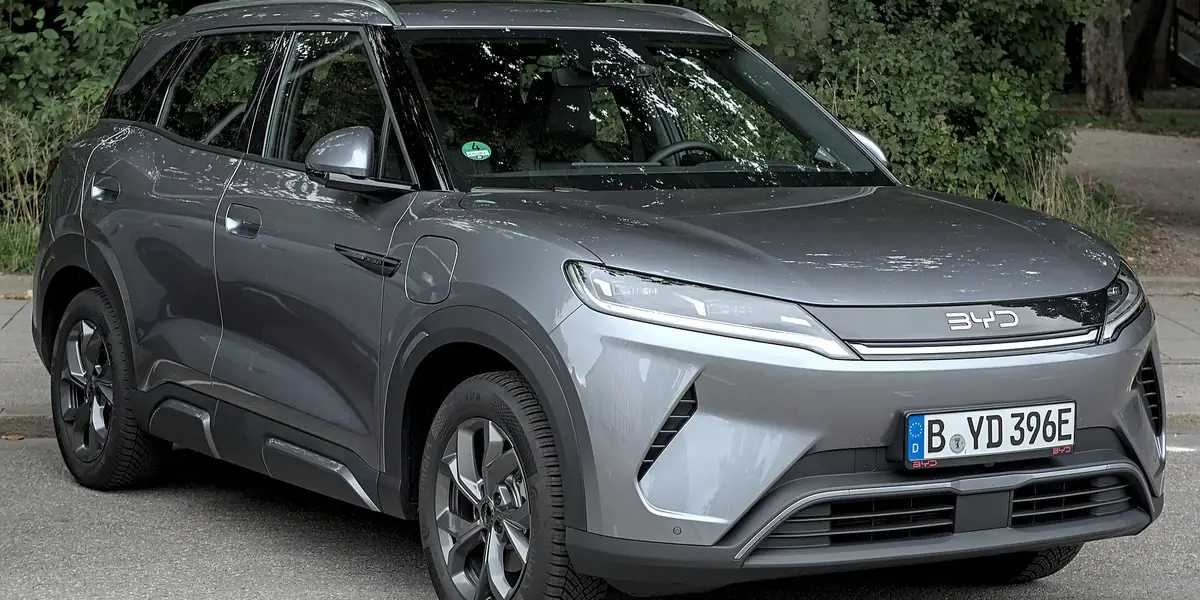
Real-World Range
Expect about 245 km from the 45.1 kWh car, 275 km from the 51.1 and 340 km from the Comfort in mixed real-world driving. Those are EV Database’s estimates, and independent testing points the same way: Germany’s ADAC measured 20.4 kWh per 100 km in its Ecotest of the 45.1 kWh car, against a 16.0 official figure, which works out to roughly 250 km. In the UK, What Car? achieved 174 miles from the 51.1 kWh car against its 214-mile WLTP rating — about 81 percent, a normal result for a small EV.
Australian testing of the 51.1 kWh car came out kinder, at 16.1 kWh per 100 km against a 17.1 claim. City driving stretches every version considerably — BYD quotes city-cycle figures above 460 km for the small car and over 600 km for the Comfort — but those are slow-traffic numbers, not mixed-use range. A standard heat pump on every electric version helps protect the winter figures.
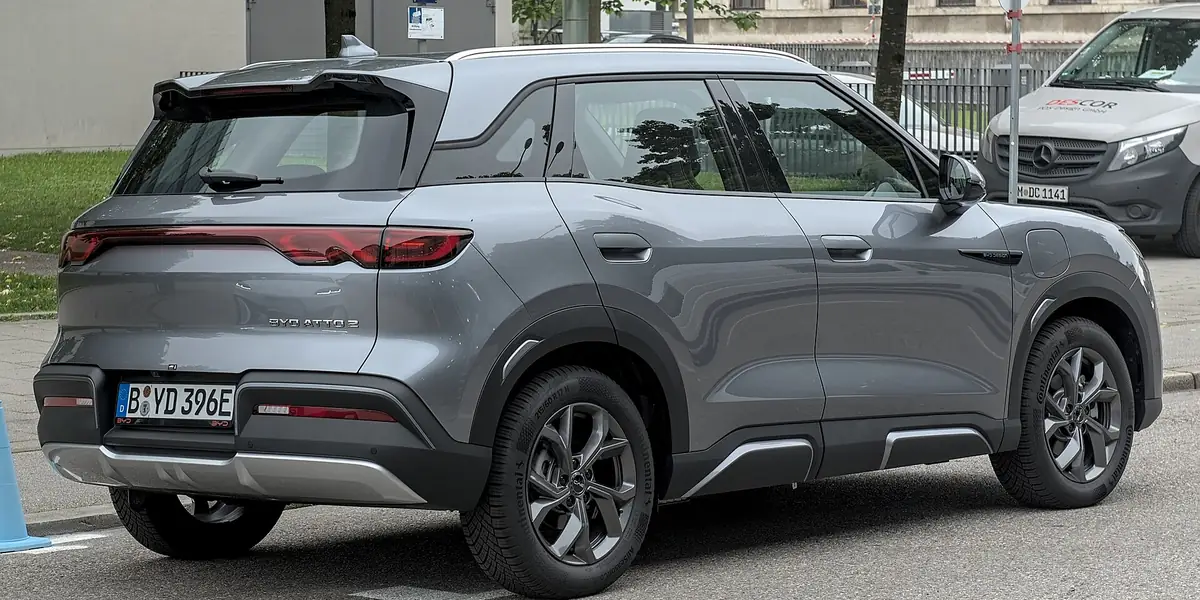
Charging the Atto 2
Charging speed is the sharpest difference between the three packs: 65 kW DC for the European 45.1 kWh car, 82 kW for the 51.1, and 155 kW for the Comfort. BYD’s claimed 10–80% times are 37, 38 and 25 minutes respectively; EV Database’s modelled average power across that window (about 51, 60 and 100 kW) is the honest reminder that the peaks are brief. No version offers battery preconditioning or Plug & Charge, which owners planning winter fast-charging should know.
Home charging splits by market too. European and UK cars have an 11 kW three-phase onboard charger — BYD UK rates a full charge at 5 hours 42 minutes for the 51.1 kWh car and 7 hours 12 minutes for the Comfort — while Australian cars are limited to 7 kW single-phase. Vehicle-to-load is standard on the electric car at up to 3.3 kW through a Type 2 adapter, although in some markets the adapter itself is a paid extra. As with BYD’s other LFP cars, the guidance is to charge to 100 percent regularly and to run a low-to-full recalibration charge every few months. The Blade Battery design behind all three packs is covered in its own guide.
BYD Atto 2 Prices
The Atto 2 is one of the cheapest electric SUVs in its markets, but its price varies by thousands between countries, so every figure here is market-labelled. Continental Europe launched in February 2025 with the German list at €31,990 (Active) and €34,990 (Boost); Spain undercuts that at €30,740. The Comfort launched in November 2025 at €41,990 in Germany but €36,200 in Spain — there is no single “European price” for this car.
The UK sells only the 51.1 kWh Boost at £30,850 and the Comfort at £34,950 (BYD UK’s August 2025 announcement prices; current listings sit about £25 higher). Australia’s two versions, Dynamic and Premium, cost A$31,990 and A$35,990 before on-road costs — both with the 51.1 kWh pack, the difference being equipment. New Zealand starts at NZ$40,990. The plug-in hybrid DM-i undercuts the electric car in several markets (UK: £26,995 and £29,995).
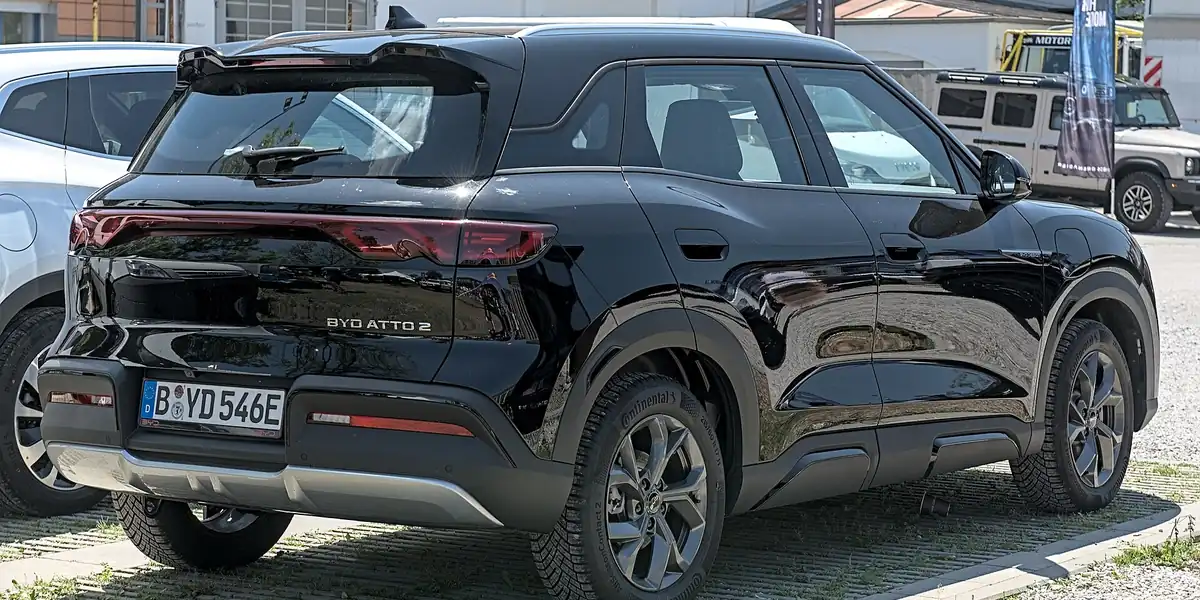
The Atto 2 DM-i Plug-in Hybrid Is a Different Car Underneath
The DM-i is not an electric Atto 2 with a smaller battery option — it is a plug-in hybrid with its own two battery sizes, its own drivetrain and AC-only charging. It pairs a 1.5-litre petrol engine, working mainly as a generator, with an electric drive motor. The base version (Active in Europe, Essential in Australia) has a 7.8 kWh battery, a 40 km WLTP electric range and a 930 km combined range in Europe (845 km in Australia). The Boost (Premium in Australia) carries an 18.0 kWh battery, 90 km of electric range and a combined range of up to 1,000 km (895 km in Australia).
Three things DM-i owners most often ask, answered plainly: the hybrid cannot fast-charge — its AC maxima are 3.3 kW (base) and 6.6 kW (Boost) — and the engine does maintain the battery’s charge while driving in hybrid mode, which is the system’s normal operation rather than a fault. Vehicle-to-load is fitted to the Boost but not the base car. The DM-i was announced in October 2025, launched that November and went on sale in Europe in early 2026; it is not sold in China.
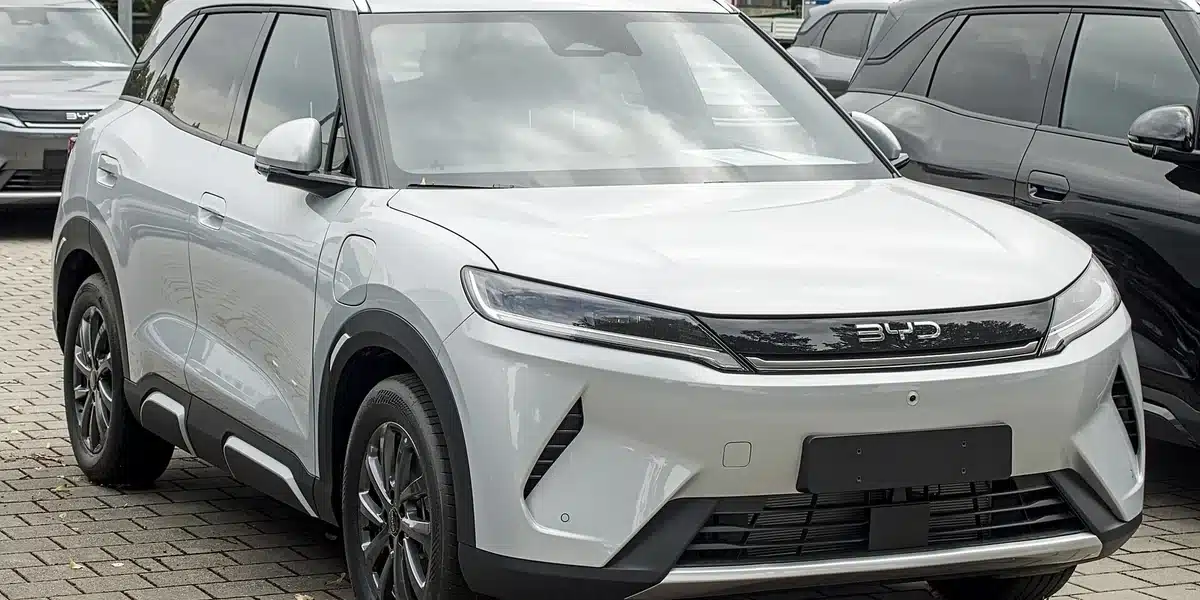
Battery Replacement Cost
No replacement price for an Atto 2 battery exists — BYD publishes none, and no dealer price could be verified in any market. The car is new and every pack on the road is inside its eight-year battery warranty. Figures quoted on forums and aggregator sites for this car are not BYD or dealer prices; the A$8,000–15,000 range that appears in search answers has no official source behind it, and the widely quoted A$18,000–26,000 range belongs to the larger Atto 3, a different pack in a different car. For replacement costs that are actually documented, see our EV battery replacement cost guide.
How Long Will the Atto 2’s Battery Last?
There is no Atto 2 degradation dataset yet — the oldest cars are under two years old — so the honest anchors are the chemistry and the warranty. LFP is the long-life chemistry among current EV batteries, and BYD’s Blade Battery design is framed by the maker at more than 3,000 charge cycles. The warranty floor below is the enforceable version of that expectation: if the pack’s measured health falls under 70 percent inside the term, BYD has to act.
BYD Atto 2 Battery Warranty
In Europe and the UK the battery is covered for eight years or 250,000 km with a guaranteed minimum 70 percent state of health. That distance limit is BYD’s brand-wide European term, raised in January 2026 and applied to existing owners as well as new cars; the vehicle warranty is six years or 150,000 km, and the drive unit eight years or 150,000 km. The DM-i carries the same battery terms in Europe.
Australia’s terms differ and the European figure does not apply there: the battery is covered for eight years or 160,000 km, and the vehicle for six years or 150,000 km. The Atto 2 also has a small 12-volt auxiliary battery for its low-voltage systems, replaced as a routine service item (typically a few hundred dollars fitted) and covered by the vehicle warranty rather than the battery warranty.
Atto 2 vs Atto 3: Which Battery Story Fits You?
The Atto 2 is the smaller, cheaper car with the smaller packs — the Atto 3 sits a size class above it. The Atto 2 is 4.31 metres long against the Atto 3 Evo’s larger body, and its biggest battery (64.8 kWh, 430 km WLTP) roughly matches where the Atto 3 range starts; the Evo’s single 74.8 kWh pack reaches 510 km and charges at up to 220 kW. Both use LFP Blade batteries with long European warranties; the choice between them is size and budget, not battery technology.
Frequently Asked Questions
What battery does the BYD Atto 2 have?
An LFP Blade Battery with cell-to-body construction, in three sizes by market: 45.1 kWh in continental Europe, 51.1 kWh in the UK, Australia and several Asian markets, and 64.8 kWh in the Comfort sold in Europe and the UK. There is no NMC version of the Atto 2.
Is the Atto 2 battery LFP or NMC?
LFP — lithium iron phosphate — in every version and every market, including the DM-i plug-in hybrid’s smaller packs. Any source describing an NMC Atto 2 is wrong.
What is the real range of the Atto 2?
EV Database estimates about 245 km for the 45.1 kWh car, 275 km for the 51.1 and 340 km for the 64.8 kWh Comfort, against WLTP ratings of 312, 344–345 and 430 km. ADAC’s test of the small car (~250 km) and What Car?’s 174 miles from the 51.1 kWh car support those estimates.
How long does the Atto 2 take to charge?
On DC, BYD claims 10–80% in 37 minutes for the 45.1 kWh car (65 kW), 38 minutes for the 51.1 (82 kW) and 25 minutes for the Comfort (155 kW). At home, the 51.1 kWh car takes 5 hours 42 minutes on an 11 kW wallbox in Europe and the UK; Australian cars charge at up to 7 kW single-phase.
Does the Atto 2 DM-i fast-charge?
No. The DM-i plug-in hybrid charges on AC only, at up to 3.3 kW for the 7.8 kWh version and 6.6 kW for the 18.0 kWh Boost. Its petrol engine also maintains the battery’s charge while driving in hybrid mode, by design.
Does the Atto 2 have flash charging?
No. BYD’s flash charging belongs to its newer Blade Battery 2.0 cars in China. The fastest-charging Atto 2 is the electric Comfort at 155 kW.
What is the difference between the Atto 2 and the Yuan Up?
Nothing mechanical — Yuan Up is the car’s Chinese name, and Atto 2 is its export name (in parts of Latin America it is sold as the Yuan Pro). Be careful with Chinese figures, though: the Yuan Up’s ranges (301–501 km) are CLTC test-cycle numbers, not WLTP, and China’s range includes a 32 kWh version not sold in Europe.
Is the Atto 2 sold in the United States?
No. BYD does not sell passenger cars in the US, so the Atto 2 has no US price or EPA rating. All figures in this guide are WLTP ratings and European, UK, Australian and New Zealand prices.
How much does an Atto 2 battery replacement cost?
There is no published price. The car is new, all packs are within their eight-year warranty, and BYD lists no pack price in any market. Figures on forums and aggregator sites are not official prices.
Conclusion
The Atto 2’s battery story is simple once the markets are separated: one LFP Blade design in three sizes, with charging speed rising steeply with pack size. The 51.1 kWh car most buyers outside continental Europe will meet is the balanced one; the Comfort adds real long-distance ability with its 430 km rating and 155 kW charging. And if a source tells you this car has an NMC battery, or quotes one market’s figures for another, it is not a source worth trusting on the Atto 2.
