
What Is Level 2 EV Charging? Complete Guide

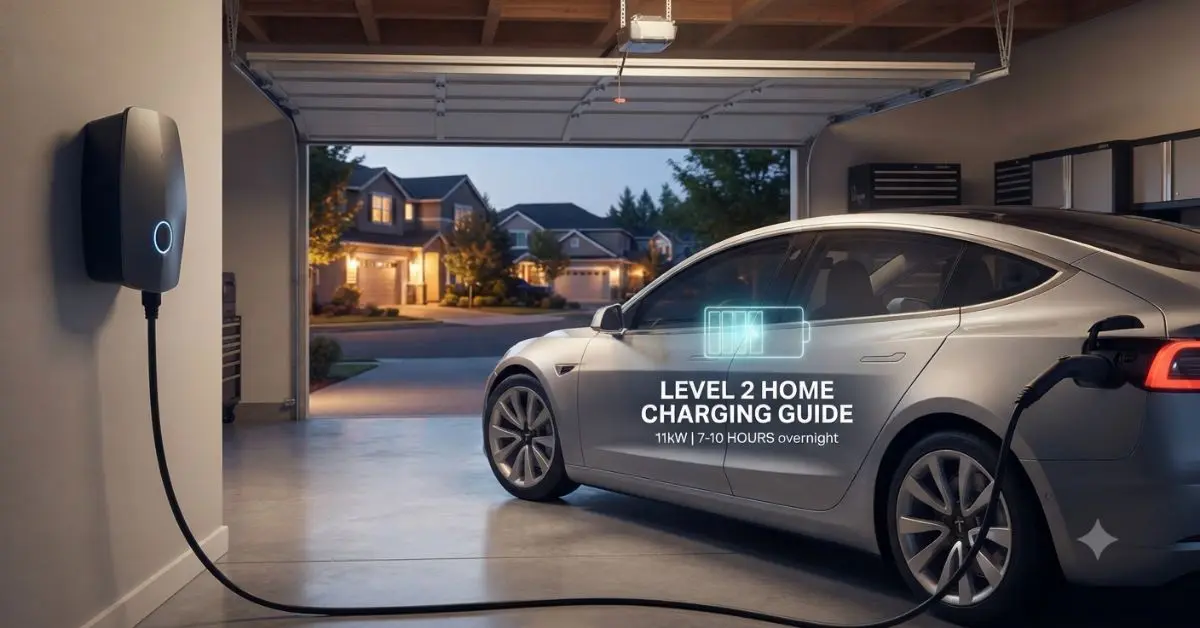
Charging your EV should be simple, fast, and affordable. Level 2 charging gives you enough power to start every morning with a full battery.
Level 2 EV charging uses a 240-volt circuit, which is the same power level as a clothes dryer. This method adds 15 to 35 miles of driving range every hour. It is the most popular way for electric vehicle owners to charge their cars in the United States, making up 80% of all charging.
Most drivers install a Level 2 wallbox at home. This allows them to wake up each morning with a fully charged battery. This guide explains what Level 2 charging is, how it works, what it costs, and how to set it up.
Level 2 EV Charging: Key Facts
| Specification | Detail |
|---|---|
| Voltage | 240V AC (US) / 230V AC (Europe) |
| Amperage range | 16–80 amps (most home units: 30–50 amp) |
| Power output | 3.3–19.2 kW |
| Typical home wallbox power | 7.2–11.5 kW (most common) |
| Miles added per hour | 15–35 miles (depending on EV and charger) |
| Charge time (75 kWh EV, 11 kW) | ~7.5 hours full; ~4 hours (20–80%) |
| Connector (US) | J1772 or NACS (depending on car) |
| Equipment cost | $200–$800 (home wallbox) |
| Installation cost | $200–$800 (electrician, no panel upgrade) |
| Federal tax credit | 30% (Form 8911) — up to $1,000 |
How Level 2 Charging Works
A Level 2 charger, also called a wallbox or EVSE, connects to a dedicated 240V circuit. This is the same type of outlet used by a clothes dryer or an air conditioner. The wallbox sends AC power to your car. The car’s onboard charger then converts that AC power into DC power to store in the battery. Unlike DC fast charging, Level 2 charging always uses AC, so the conversion happens inside the car.
You should match your wallbox to your car’s maximum AC charging rate. If your car only accepts 11 kW, installing a 19.2 kW wallbox will not make it charge faster. The car will limit the power to 11 kW. Most people use a 32-amp wallbox, which provides about 7.7 kW, or a 48-amp wallbox, which provides about 11.5 kW. These options match the limits of most electric vehicle onboard chargers.
How Much Does Level 2 Charging Installation Cost?
- Wallbox unit: $200–$800 depending on brand and features (smart WiFi units cost more)
- Electrician installation: $200–$600 for a simple installation on an existing panel
- Panel upgrade (if needed): $1,500–$3,000 — required if your electrical panel doesn’t have capacity for a new 240V 40–60A circuit
- 30% federal tax credit: Applies to both equipment and installation costs — reduces total cost significantly (Form 8911, Alternative Fuel Vehicle Refueling Property Credit)
- State and utility rebates: Many utility companies offer $100–$500 rebates for Level 2 wallbox installation — check your utility’s website
Level 2 Charging Speed by EV Model
| EV Model | Max AC Rate (Onboard Charger) | Miles Added Per Hour (Level 2) | Full Charge Time (from 20%) |
|---|---|---|---|
| Tesla Model 3 LR | 11.5 kW | ~35 miles/hr | ~7 hours |
| Hyundai Ioniq 5 LR | 11 kW | ~32 miles/hr | ~8 hours |
| Kia EV6 GT | 11 kW | ~30 miles/hr | ~7.5 hours |
| Ford Mustang Mach-E | 10.5 kW | ~28 miles/hr | ~8.5 hours |
| Chevy Equinox EV | 11.5 kW | ~30 miles/hr | ~7.5 hours |
| Toyota bZ4X | 6.6 kW | ~18 miles/hr | ~13 hours |
| Renault Scenic E-Tech | 22 kW | ~55 miles/hr | ~4 hours (3-phase only) |
Public Level 2 Charging
You can find public Level 2 charging stations at shopping centers, parking garages, hotels, offices, and restaurants. These stations usually provide 6.2–7.7 kW of power. This adds about 15–22 miles of range for every hour you plug in. A two-hour lunch stop adds roughly 30–45 miles of range to your vehicle.
Costs vary significantly for these chargers. Many retail stores and hotels offer them for free, while others charge $1–$3 per hour or $0.25–$0.40 per kWh. ChargePoint, Blink, and EVgo operate the largest networks of these public chargers in the U.S.
Smart Level 2 Chargers
WiFi and Mobile App Features
Most modern home wallboxes are “smart” — they connect to your home WiFi and communicate with an app on your phone.
Smart Charging Features
- Scheduled charging (start at 11 pm for off-peak rates)
- Energy monitoring (track kWh used and charging costs)
- Load balancing (coordinate with other home appliances)
- Remote start and stop
Popular Smart Level 2 Chargers
- Grizzl-E Smart
- ChargePoint Home Flex
- Emporia EVSE Gen 3
- JuiceBox 48
Level 2 vs DC Fast Charging: Quick Comparison
| Feature | Level 2 | DC Fast Charging |
|---|---|---|
| Speed | 15–35 mi/hr | 100–350+ miles in 20–45 min total |
| Best for | Daily home/work charging | Road trips and emergencies |
| Battery health impact | Minimal — recommended daily method | More heat stress; limit to 1–2x/week |
| Home installation | Yes (with electrician) | Not practical for homes |
| Cost per session | ~$3–$15 at home / $5–$20 public | ~$15–$45 per session |
Conclusion
Level 2 EV charging acts as the backbone for electric car owners. A home wallbox that delivers 11 kW fills most electric vehicles overnight in 7 to 10 hours. This turns your garage into a personal charging station.
Installation costs range from $500 to $1,200. You can lower this price using a 30% federal tax credit and local utility rebates. At home, charging costs about $35 to $60 each month, which is much cheaper than gas.
For every electric vehicle owner who drives over 30 miles daily, a Level 2 home wallbox is the most important upgrade. It makes your daily driving more practical and affordable.
FAQs
What is the difference between Level 1 and Level 2 EV charging?
Level 2 charging uses a 240V outlet and charges much faster than Level 1, which uses a standard 120V household outlet.
Can I install a Level 2 EV charger at home?
Yes. Most homeowners can install a Level 2 charger with a dedicated 240V circuit and a licensed electrician.
Is Level 2 charging safe for daily EV charging?
Yes. Level 2 charging is designed for everyday use and is the recommended charging method for most EV owners.
