
How Often Can You DC Fast Charge Without Hurting the Battery?

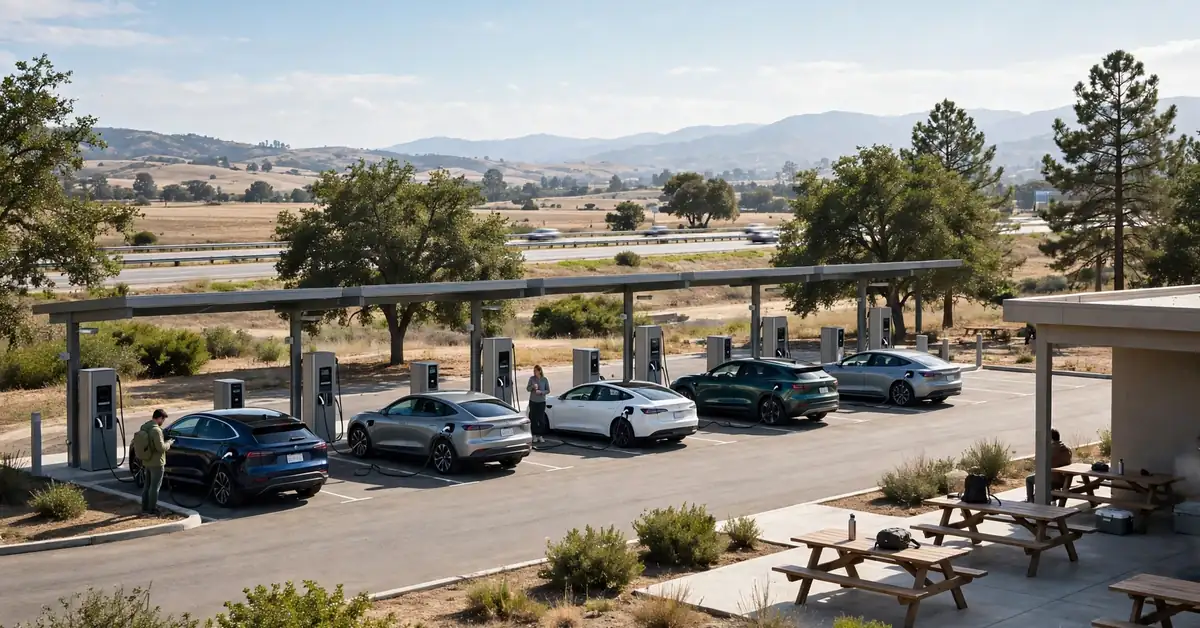
Most EV manufacturers recommend limiting DC fast charging to 1–2 times per week for optimal long-term battery health. This recommendation comes from real-world degradation studies showing that daily DC fast charging accelerates battery capacity loss by approximately 2–4x compared to predominantly Level 2 home charging. However, the specific frequency that is safe varies by your EV model, whether it has liquid cooling, and how you charge. Here is exactly how often you can DC fast charge without significantly hurting your battery.
Manufacturer Recommendations: What the Automakers Say
| Automaker | Official DC Fast Charging Guidance |
|---|---|
| Hyundai | Recommends avoiding daily DC fast charging; use Level 2 as primary charging method |
| Kia | Same as Hyundai — DC fast charging “as needed”; Level 2 preferred daily |
| Tesla | Supercharging recommended for road trips; home Level 2 preferred daily; no specific weekly limit stated |
| Nissan (Leaf) | Recommends limiting DC fast charging for models without liquid cooling — most critical for 2011–2022 Leaf |
| BMW | No specific limit stated; recommends Level 2 for daily use |
| VW / Audi / Porsche | No specific frequency limit; preconditioning strongly recommended before every DC session |
| General (industry standard) | 1–2 times per week widely cited as safe limit by battery engineers |
Why Frequency Matters: The Science Behind the Limit
Each DC fast charging session generates heat inside the battery cells through resistance to the high current flow. Heat is the primary driver of lithium-ion battery degradation — it causes electrolyte decomposition, accelerates lithium plating, and increases internal resistance over time. At Level 2 (7–11 kW), the heat generated is minimal and easily managed. At DC fast charging rates (100–350 kW), heat builds much more rapidly — even with liquid cooling working to remove it.
The 1–2 times per week recommendation gives the battery time to stabilize between high-stress sessions. Each session allows the thermal management system to restore the battery to its normal operating temperature range. Cells that stay at elevated temperatures for extended periods (from back-to-back daily fast charging) experience compounding degradation — similar to how running a car engine at high RPM constantly wears it faster than normal mixed driving.
What Happens If You DC Fast Charge Daily?
Daily DC fast charging does not immediately destroy your battery — the degradation is gradual. A 2019 Idaho National Laboratory study found EVs using DC fast charging daily lost approximately 3x more capacity over 50,000 miles than identical vehicles using only Level 2. However, this study used older air-cooled technology. Modern liquid-cooled EVs show significantly less difference — approximately 2–4% additional loss over 5 years rather than 3x overall.
In practical terms: an EV that retains 92% capacity after 5 years with Level 2-only charging might retain approximately 88–90% with daily DC fast charging. This is noticeable but not catastrophic — and still well within most manufacturers’ 8-year / 70% warranty thresholds. The real concern is at 10 years and beyond, where the compounding effect of extra degradation becomes more meaningful for resale value and daily range.
Which EVs Are Most Resistant to Frequent DC Fast Charging?
- Most resistant: Hyundai Ioniq 5/6, Kia EV6/EV9 — 800V architecture with very sophisticated thermal management; Tesla Model 3/Y — excellent BMS designed around Supercharger use; Porsche Taycan — 800V engineered for track-day fast charging
- Moderately resistant: VW ID.4, BMW i4, Ford F-150 Lightning, Chevy Equinox EV — all liquid-cooled but 400V systems with slightly higher thermal stress at peak DC rates
- Most vulnerable: 2011–2022 Nissan Leaf (all versions) — air-cooled with no active thermal management; DC fast charging in hot climates causes significant accelerated degradation
The Best Practice: How Often to DC Fast Charge
- Ideal frequency: 1–2 times per week maximum for long-term battery health — this is the sweet spot endorsed by most battery engineers and auto manufacturers
- Road trips: Multiple DC fast charges in a single day on a road trip are fine — this is exactly what DC fast chargers are designed for; one-off high-frequency use is different from daily habit
- Home charging default: Charge at Level 2 every night — this should be your daily habit, with DC fast charging reserved for when you genuinely need it away from home
- Air-cooled Leaf owners: Limit DC fast charging to 1–2 times per week maximum — and avoid charging when the battery temperature indicator shows overheating (some 2019+ Leafs have a battery temperature gauge)
Conclusion
DC fast charging 1–2 times per week causes minimal long-term battery damage in modern liquid-cooled EVs. Daily DC fast charging adds approximately 2–4% more degradation over 5 years versus predominantly Level 2 charging — real but not catastrophic with modern thermal management. The safest strategy is to charge at home on Level 2 every night and use DC fast charging for road trips and genuine needs away from home. If you commute long distances and must use DC fast charging frequently, ensure you always precondition the battery via navigation beforehand — this single habit reduces fast-charging stress more than any other action.
