
How to Reduce EV Charging Costs at Home

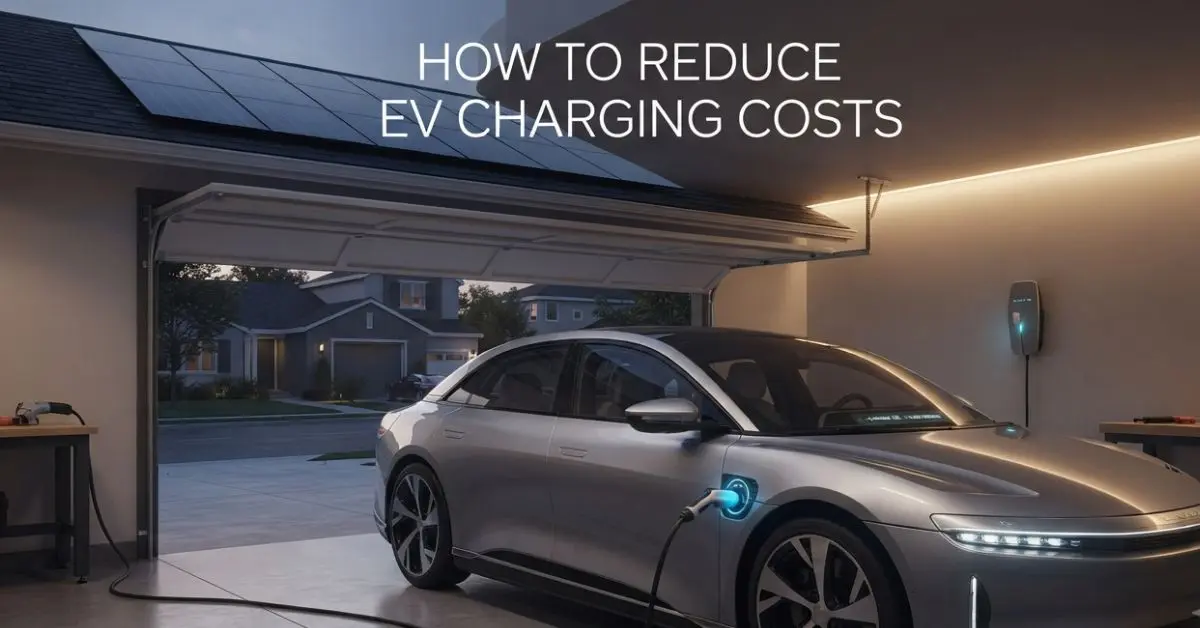
Your EV can cost much less to charge than you think. A few simple changes can save you hundreds of dollars every year.
The most effective ways to reduce EV charging costs at home are enrolling in a Time of Use electricity plan, charging overnight during off peak hours, installing solar panels, and using a smart charger that automates scheduling.
Together, these strategies can cut your monthly home charging cost by 40 to 80%, from approximately $50 per month down to $10 to $30 per month for a typical EV driver. Here are the most impactful steps you can take right now to lower your EV charging bill.
Charging more than one car? These strategies work even better alongside our guide to charging two EVs on one home charger.
Reduce EV Charging Costs With a Time-of-Use Electricity Plan
1. Switch to a Time-of-Use Electricity Plan
The single biggest way to reduce EV charging costs is enrolling in a Time of Use (TOU) electricity plan. TOU plans charge different rates at different times of day, typically very low overnight (11 pm to 7 am) and higher in the afternoon and evening. Off peak overnight rates average $0.07 to $0.12 per kWh compared to $0.25 to $0.45 per kWh during peak hours. For an EV using 286 kWh per month, switching to off peak overnight charging saves approximately $25 to $40 per month.
Contact your utility and ask specifically about their EV rate plan or Time of Use plan. Most major utilities now offer dedicated EV plans with steep overnight discounts. Some examples include California’s E TOU C plan, which offers off peak rates as low as $0.27 per kWh compared to $0.54 per kWh during peak hours. Florida Power & Light also offers reduced overnight rates for EV charging. Some deregulated electricity markets in Texas even provide free overnight electricity, making EV charging almost free.
2. Schedule Overnight Charging (11 pm–7 am)
Once you have a TOU plan, schedule your EV to charge only during off-peak hours. Set a departure time, such as 7:30 am, in your vehicle settings or charger app. The system automatically starts charging at the latest possible time to ensure your target battery level is reached before you leave. This helps you take advantage of the lowest electricity rates without any daily effort. Most smart chargers, including ChargePoint, JuiceBox, and Emporia, can automate the process after a one-time setup.
3. Install Solar Panels
Solar panels reduce EV charging costs to almost zero once the system pays for itself, which usually takes 6 to 10 years. A 7 kW solar system in a sunny U.S. state produces about 28 to 35 kWh per day. That is enough to charge most EVs for more than 100 miles each day.
Smart chargers such as the Emporia and Wallbox Pulsar Plus include solar charging modes that automatically charge your EV only when solar production exceeds your home’s electricity use. When combined with net metering, solar can greatly reduce, or even eliminate, the increase in your electricity bill from owning an EV.
4. Use a Smart Charger With App Scheduling
A smart Level 2 wall charger with scheduling features is one of the easiest ways to automatically reduce charging costs. Smart chargers such as the ChargePoint Home Flex, JuiceBox 48, and Emporia Smart Level 2 let you create charging schedules, monitor energy costs for each session, and receive charging alerts.
The JuiceBox can automatically find the cheapest charging period each night based on your TOU plan. The Emporia charger tracks your charging cost per mile, helping you understand your actual electricity expenses. A standard non-smart charger delivers the same charging speed but cannot automate cost-saving features.
5. Use Free EV Charging Opportunities
- Workplace Level 2 charging: Many employers offer free Level 2 charging as an employee benefit. Charging for eight hours at work can add 120 to 250 miles of range, covering most weekly driving needs without paying for home charging.
- Retail and hotel destination chargers: Many shopping centers, hotels, and restaurants provide free Level 2 charging for customers. Apps such as PlugShare and ChargePoint can help you find free charging locations.
- New-car purchase perks: Many automakers include free DC fast-charging credits with new EV purchases. Tesla referral programs, Hyundai complimentary charging sessions, and similar offers from other brands can reduce or eliminate public charging costs during the first year.
6. Improve EV Efficiency to Reduce Electricity Use
- Use Eco mode: Most EVs include an Eco driving mode that softens throttle response and increases regenerative braking. It can improve efficiency by about 10-15%.
- Precondition the cabin while plugged in: Heat or cool the cabin before unplugging your EV. This uses grid electricity rather than the battery, so you start driving with a full charge.
- Reduce highway speeds: Air resistance increases quickly at higher speeds. Driving at 65 mph instead of 75 mph can improve efficiency by about 15 to 20%, reducing monthly charging costs.
- Keep tires properly inflated: Low tire pressure increases rolling resistance and reduces efficiency by 1 to 3% for every PSI below the recommended level. Check your tire pressure every month.
Cost Reduction Summary: How Much Each Strategy Saves
| Strategy | Monthly Savings (1,000 mi/mo at $0.17/kWh baseline) | Effort Required |
|---|---|---|
| TOU plan + overnight charging | $20–$35/month | One-time setup — call your utility |
| Smart charger scheduling | $5–$15/month | One-time app configuration |
| Solar panels | $30–$50/month (after payback) | Installation investment ($15,000–$25,000) |
| Free workplace charging | $20–$50/month | Depends on employer offering |
| Network membership plans (DC fast) | $5–$15/month on road trips | $4–$8/month subscription |
Timing matters as much as the plan itself — see our guide on the best time of day to charge an EV at home.
Conclusion
Reducing EV home charging costs starts with a Time-of-Use electricity plan and overnight charging, saving $20 to $35 per month with one phone call to your utility. A smart charger makes scheduling automatic, while solar panels can eliminate charging costs over time. Free workplace and destination charging can reduce how much you charge at home. By combining TOU pricing, smart charging, solar power, and free charging opportunities, many EV owners lower their home charging costs to less than $20 per month, making electric driving much cheaper than driving a gas-powered vehicle.
Want to see the full impact on your bill? Read does charging an EV increase your electric bill for a complete breakdown.
FAQs
What is the cheapest time to charge an EV at home?
The cheapest time is usually during off peak hours, often between 11 pm and 7 am, if you have a Time of Use electricity plan.
Does a smart charger really save money?
Yes. A smart charger automatically schedules charging during periods of the lowest electricity rates, helping to reduce monthly charging costs.
Are solar panels worth it for EV charging?
Yes. After the system pays for itself, solar panels can reduce the cost of charging your EV to almost zero, especially when paired with a smart charger.
