
What Is Electrify America and How Does It Work?

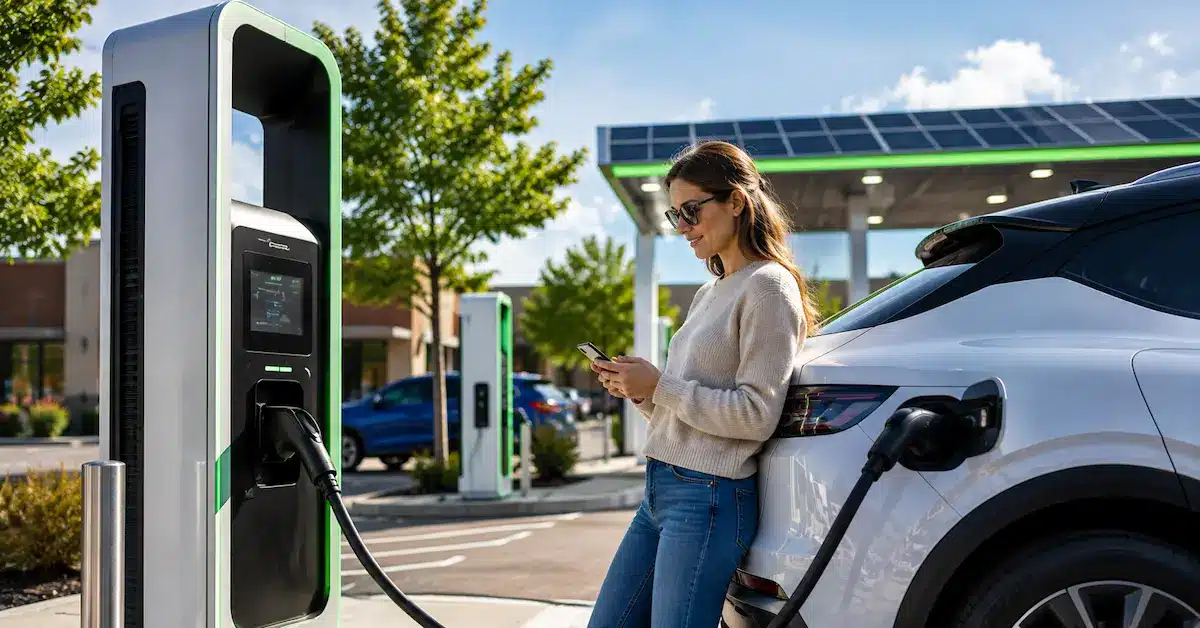
Electrify America runs the largest public DC fast-charging network outside of Tesla. This network features about 1,000 stations and 5,800 ports across all 50 U.S. states. The company began in 2017 as part of Volkswagen.
These high-power charging stations deliver up to 350 kW. This speed ranks as the highest widely available rate in the country. The network accepts all EVs using CCS1 and NACS connectors, making it a top choice for road trips.
Wondering how it compares to the Tesla network in size and speed? See our guide on what the Tesla Supercharger network is.
Electrify America: Key Facts
| Specification | Detail |
|---|---|
| US stations | ~1,000 (mid-2026) |
| US charging ports | ~5,800+ |
| Peak charging power | Up to 350 kW (HPC stations) |
| Standard charging power | 50–150 kW (non-HPC stalls) |
| Connectors | CCS1, NACS (2025+ stations) |
| Cost (no membership) | ~$0.48–$0.56/kWh |
| Pass+ membership | $4/month — 25% discount on all sessions |
| Payment methods | Credit card, app, RFID card, Plug & Charge |
| Location types | Walmart, highway corridors, urban commercial |
| Parent company | Volkswagen Group (founded 2017) |
How to Use Electrify America
Pay With a Credit Card
Tap a contactless credit card on the charger screen to start charging. No app or account is required. The standard pay as you go rate of approximately $0.48 to $0.56 per kWh applies.
Use the Electrify America App
Download the app, create an account, and add your payment method. You can start charging remotely, monitor your charging session, and receive updates directly on your phone.
Join the Pass+ Membership
Pass+ costs $4 per month and provides a 25% discount on every charging session. For many EV owners, the monthly fee is recovered after only one or two fast charging sessions.
Charge With Plug & Charge
Compatible vehicles, including the Hyundai Ioniq 5, Kia EV6, and selected Volkswagen Group models, support Plug & Charge. Simply plug in the charging cable, and billing starts automatically without using a card or mobile app.
Activate Charging With an RFID Card
Electrify America also offers an RFID card. Tap the card on the charger to begin your session without using your smartphone.
350 kW HPC Stations
Electrify America provides High Power Charging stalls that deliver up to 350 kW. These stalls give drivers the fastest charging sessions in the United States for 800V vehicles.
A Hyundai Ioniq 5 charges from ten to eighty percent in about eighteen minutes at an EA HPC stall. The same car takes about twenty-two minutes at a Tesla Supercharger V3 that delivers 250 kW.
Long-distance travelers with 800V EVs save meaningful time on trips by finding these fast 350 kW stalls.
Drive a car with a native NACS port instead? See our guide on whether non-Tesla cars can use Tesla Superchargers.
Where Can You Find Electrify America Stations?
Walmart Locations
Electrify America is expanding its charging network at Walmart stores across the country. Drivers can charge their vehicles while shopping for groceries or other essentials.
Highway Corridors
Many stations are installed along major interstate highways, typically every 70 to 150 miles, making long distance travel much easier for EV owners.
Urban and Suburban Areas
Electrify America also places charging stations at shopping centers, entertainment venues, and mixed use commercial properties throughout major metropolitan areas.
Reliability and Network Performance
Electrify America’s reliability faced major challenges between 2021 and 2023. During that period, several J.D. Power studies ranked the network among the lowest for customer satisfaction and charger uptime.
Current Performance
Between 2024 and 2026, the company invested heavily in new hardware, software improvements, and faster maintenance services. Newer stations now report uptime above 95%, representing a significant improvement over previous years.
Comparison With Tesla
Although reliability has improved, Electrify America stations usually have between four and ten charging stalls, while many Tesla Supercharger sites offer eight to twenty four stalls. Because of the smaller station size, a single unavailable charger has a greater impact on overall capacity. Planning an alternative charging stop remains a good idea during busy travel periods.
Is Pass+ Membership Worth It?
Pass+ costs $4 per month and reduces charging costs by 25%.
At a standard charging price of approximately $0.50 per kWh, Pass+ lowers the effective cost to about $0.375 per kWh. For a typical 75 kWh EV charging from 10% to 80%, drivers can save around $7 during a single charging session.
If you use Electrify America once or twice each month, the membership usually pays for itself after your first charging session. Frequent road trip drivers will likely receive the greatest value from Pass+.
Conclusion
Electrify America operates as the main public DC fast-charging network in the U.S. outside of Tesla. The network provides 350 kW HPC stations, covers all fifty states, and supports many plug types. A Pass+ membership costs $4 each month and lowers session prices by 25 percent for regular users.
Reliability has improved over time, but the service still trails the Tesla Supercharger network. 800V EV owners use these 350 kW stations to get the fastest charging speeds in the U.S. For all drivers, the network serves as a key backup and road trip tool.
New to public charging in general? See our guide on how public EV charging works.
