
CCS vs NACS in 2026: Which Port Your Car Has, Adapters & Supercharger Access

Researched from Tesla’s Supercharging support pages, the US Joint Office of Energy and Transportation, SAE J3400 records, UL Solutions, Car and Driver’s charging tests and the networks’ own announcements — November 2026.
Quick answer
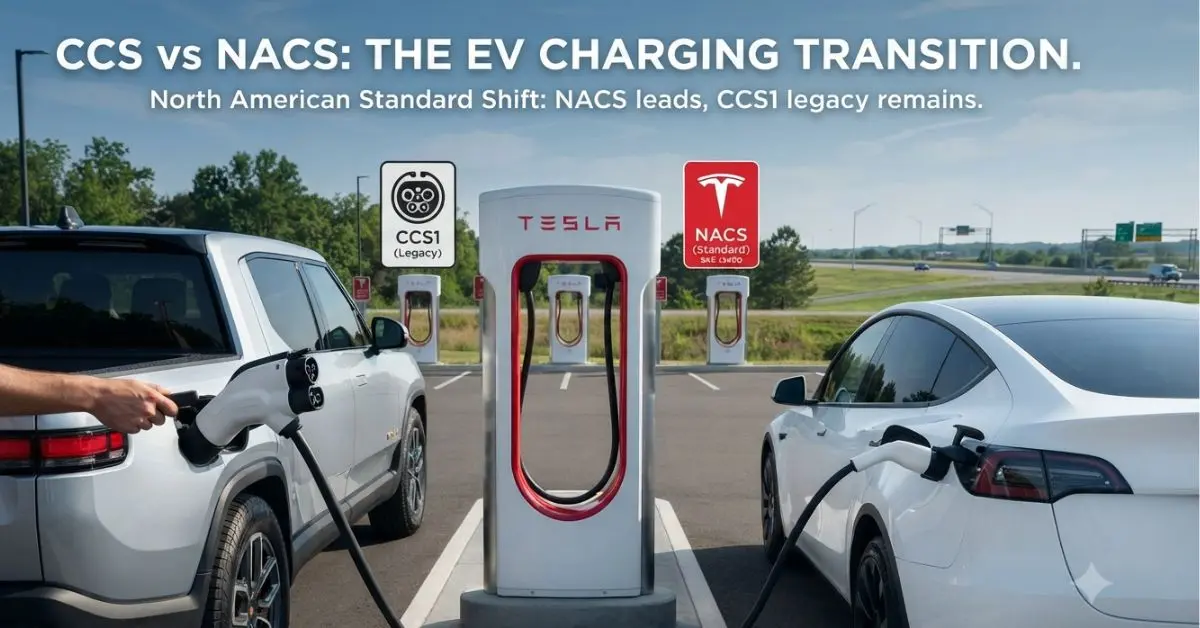
The plug war is over. Tesla’s connector became the SAE J3400 standard in December 2023, every major brand has adopted it, and most new EVs sold in North America now ship with a native NACS port. If your car has CCS1, you are not stranded: 21 brands have Tesla Supercharger access through an approved adapter, and every big charging network is adding NACS cables alongside CCS, not instead of it. The two catches that matter: use only an adapter your carmaker supplied or approved (Tesla’s rule), and if your car is an 800-volt model, today’s Superchargers will charge it at roughly half its best CCS speed.
- NACS = SAE J3400, the North American standard since 2023–24
- CCS1 = the legacy port on most non-Tesla EVs built before 2025–26
The two plugs, side by side
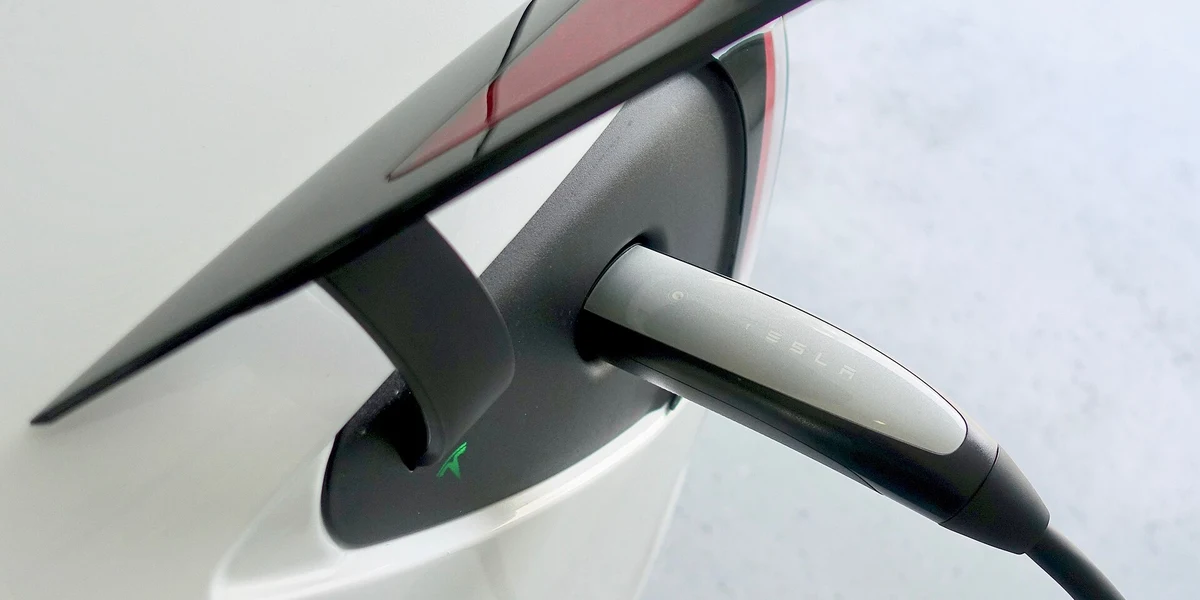
One is a single slim connector that does everything; the other is an AC plug with two DC pins bolted underneath. That physical difference is most of the story.
| NACS (SAE J3400) | CCS1 (Combo 1) | |
|---|---|---|
| Design | 2 power pins shared for AC and DC | J1772 AC plug + 2 large DC pins below |
| Standardised | SAE J3400 — TIR Dec 2023, Recommended Practice 2024 | SAE J1772 / CCS |
| DC ceiling | 1,000 V; Tesla cites up to 1 MW | 1,000 V / 500 A (≈500 kW) |
| AC ceiling | 80 A (typical home use 48 A / 11.5 kW) | 80 A via the J1772 half |
| Communication | ISO 15118 — the same language as CCS | ISO 15118 / DIN 70121 |
| Found on | Tesla; most new North American EVs 2025–27 | Most non-Tesla EVs built up to ~2025 |
Why can an adapter be so simple?
The last row of the table is why adapters work at all: because NACS speaks CCS’s protocol (ISO 15118), a NACS-to-CCS adapter converts only the shape of the connection — UL’s adapter standard, UL 2252, describes adapters exactly that way — and converts no voltage or signaling. Nothing about the NACS plug makes a car charge faster by itself. Speed is decided by the car’s voltage and the charger’s cabinet, which is where the real-world catch later in this page lives.
Which cars have which port in 2026
The switch happened in waves: Hyundai and Kia first, GM and the Japanese brands through 2026–27 — and the company that started it all still hasn’t shipped one.
Which brands ship native NACS now?
Native NACS, shipping now or dated:
- Hyundai/Kia/Genesis — first movers: 2025 Ioniq 5 (the first non-Tesla with a factory NACS port), 2025 EV6, 2026 Ioniq 9 and EV9.
- Lucid — the Gravity SUV (2025+). The Air sedan stays CCS for now.
- Rivian — R1S/R1T from 2026; the R2 launches on NACS.
- Nissan — the 2026 Leaf.
- Toyota/Lexus/Subaru — the 2026 bZ range, C-HR, Lexus ES/RZ, Solterra and its siblings.
- GM — the 2026 Cadillac Optiq leads; Lyriq, Blazer EV, Equinox EV, Silverado EV and the returning Bolt follow as 2027s.
- Mercedes/Porsche/BMW/Volvo — CLA (2026), Cayenne Electric (2026), then iX3/EX60-class cars through 2027.
Who is still in the adapter era?
Still in the adapter era — no native-NACS car on sale yet: Ford (the irony of the transition: first to announce adoption in 2023, its Mach-E and Lightning still ship CCS), VW and Audi, Honda and Acura, Polestar. Their owners charge at Superchargers with adapters, below.
Supercharger access: who is in, and since when
Tesla’s own support page lists 21 manufacturers with access to NACS Superchargers — effectively the entire industry.
How does Supercharger access work?
Ford opened the door on February 29, 2024; Rivian, GM, Volvo/Polestar and Nissan followed that year; Lucid, Mercedes, Hyundai, Kia, Honda, JLR, Toyota/Subaru and VW Group through 2025; BMW in December 2025 and Stellantis in March 2026. Mazda and Mitsubishi are the announced remainders. Access works through the Tesla app (or plug-and-charge where enabled), at NACS-designated stalls — and at Magic Dock stations, where the adapter is built into the charger, any CCS car can plug in with no adapter of its own. Our full explainer on the Tesla Supercharger network covers pricing, congestion fees and etiquette; for how the networks compare in size, see the counts in our charging network ranking.
Adapters: the rules that actually matter
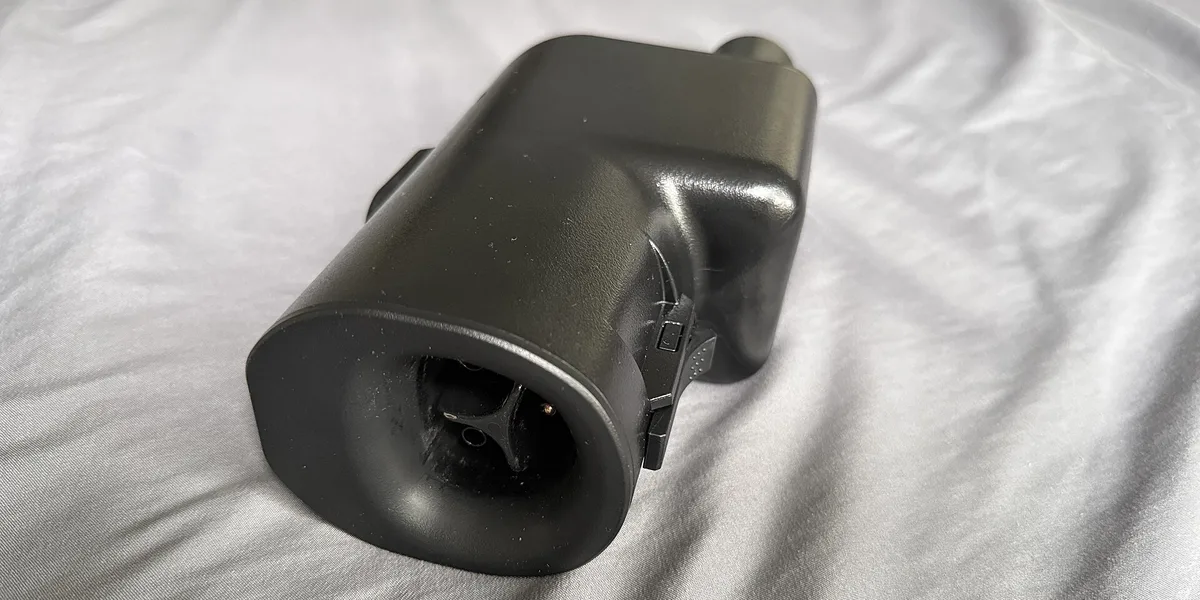
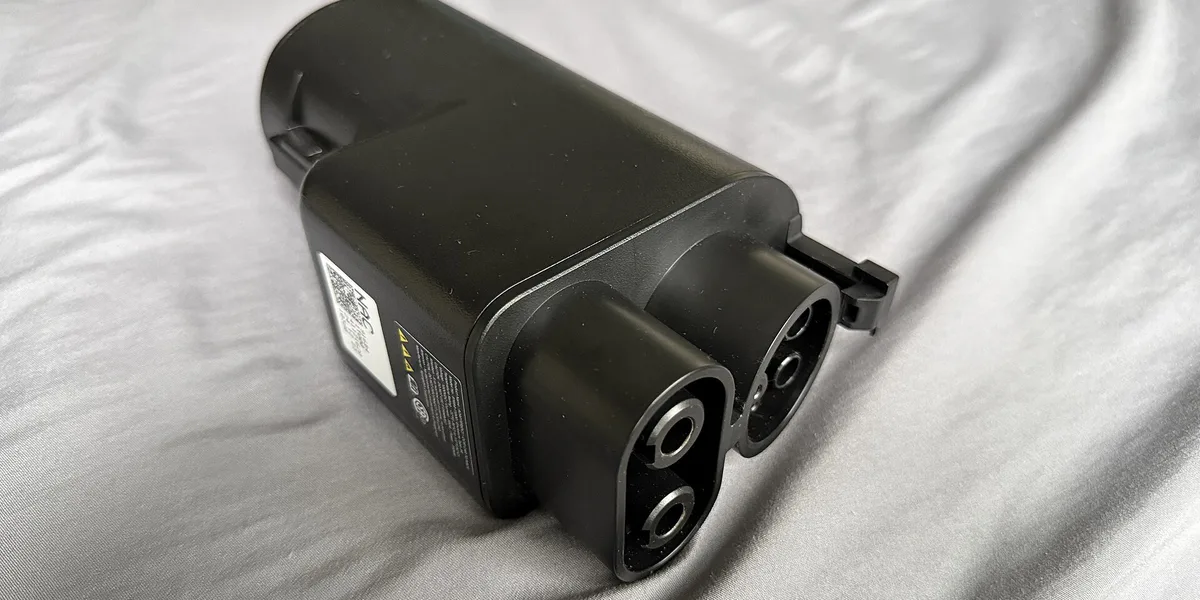
Tesla’s rule is unambiguous, and it is printed on its own support page: Supercharging is open to CCS1 cars only with “an NACS DC adapter provided by Tesla or your vehicle’s manufacturer”, and third-party adapters are prohibited “for safety reasons”.
What does the adapter landscape look like?
The practical landscape behind that rule:
- Get the carmaker’s adapter. Ford gave out roughly 140,000 free adapters before its program ended (now $200); GM’s approved adapter is $225; Hyundai and Kia supplied free adapters to eligible owners; Rivian’s program is still free. If your brand offers one, that is the adapter to use.
- Certification now exists. Since March 2025, UL 2252 is the official standard for EV charging adapters, and A2Z, Amphenol and Lectron have certified products rated to the J3400 envelope (500 A / 1,000 V). Certified third-party adapters are legal products — but they remain against Tesla’s stated policy on its network, and your carmaker’s warranty stance is the other half of the question. Know both before you save $50.
- DC adapters are DC-only. A NACS DC adapter does nothing for AC charging and must never be used with one; home AC adapters (J1772↔NACS) are a separate, simpler product. New to public charging generally? Start with how public EV charging works.
The 800-volt catch
Here is the number this page exists to give you: on today’s Superchargers, an 800-volt Hyundai or Kia charges at roughly half the speed it manages on a good CCS charger.
Why do 800-volt cars charge slower on Superchargers?
Most Superchargers in the ground are V3 cabinets built for ~400-volt cars. An 800-volt car must boost that voltage on board, and the booster’s size sets the cap. Car and Driver measured the pre-2025 Ioniq 5/EV6 generation at about 100 kW on a Supercharger; the 2025 Ioniq 5, with an improved booster, held 127 kW — while the same car on an 800-volt CCS charger covered 10–60% in nearly half the time (about 11 minutes against 20). Tesla’s true V4 cabinets (up to 500 kW, 800-volt capable) fix this in principle, but as of early 2026 only two full V4 sites were live in the US. Until V4 is common, the fastest road-trip charging for an 800-volt car is still an 800-volt CCS station — Electrify America, IONNA and their peers.
Is CCS1 dying?
No. It is becoming the legacy plug — supported everywhere, specified on fewer new cars. Those are different things.
What keeps CCS1 alive?
Federal rules still require a CCS1 connector on federally funded chargers (NACS is allowed alongside). The networks are behaving accordingly: Electrify America runs mixed and fully-NACS pilot sites while keeping CCS across its network; EVgo had about 100 NACS stalls live in January 2026 with 500+ planned; ChargePoint’s Omni Port dispenses either connector from one station. Tesla’s plugs account for roughly 58% of US DC fast chargers — a majority, not a monopoly. If you own a CCS car, your planning horizon is adapters and availability, not obsolescence. (One question this page will not invent an answer to: whether a CCS port hurts resale value. No credible dataset isolates the connector’s effect, so anyone quoting you one is guessing.) Europe, for completeness, is a separate world: CCS2 is the legally mandated standard there and NACS is not adopted — this entire transition is North American.
Frequently asked questions
Is Tesla’s plug called NACS or J3400?
Both. NACS (North American Charging System) is the common name; SAE J3400 is the published standard, maintained by SAE International since December 2023. Tesla’s own support page confirms they are the same thing.
Can a CCS car use a Tesla Supercharger?
Yes, if your brand is on Tesla’s access list (21 manufacturers are) and you use an adapter provided by Tesla or your carmaker — or any station with a Magic Dock, which has the adapter built in. Check your brand’s app or Tesla’s support page for your model’s status.
Will an adapter slow my charging down?
The adapter itself, if it is a proper 500 A / 1,000 V unit, does not. The charger can: on ~400-volt V3 Supercharger cabinets, 800-volt cars (Hyundai/Kia/Genesis e-GMP models, Porsche Taycan, Lucid) are limited by their onboard boosters to roughly 100–127 kW, well below their CCS best.
Should I buy a CCS car in 2026?
If the car suits you, the port alone is not a reason to refuse it: Supercharger access via adapter plus every network adding NACS alongside CCS means both plugs are served. Do check that your brand’s adapter program exists and what it costs before you sign.
Is NACS coming to Europe?
No. Europe’s DC standard is CCS2 by law, including at Tesla’s own European Superchargers. NACS/J3400 is a North American standard.
Conclusion
In 2026, “CCS vs NACS” is no longer a contest to pick a winner in — it is a checklist: know your port, know your adapter, know your car’s voltage.
NACS won the standard and the new-car market. CCS1 keeps the larger installed base, a federal guarantee on funded chargers, and a place on every major network’s posts. The drivers who get caught out are the ones who assume access means full speed — it doesn’t, yet, for 800-volt cars — or who buy the cheapest adapter on the internet against both Tesla’s rule and their carmaker’s. Avoid those two mistakes and the plug on your car is, honestly, a minor detail.
Quick view: NACS won the standard; CCS1 keeps the installed base and a federal guarantee — know your port, your adapter and your voltage, and the plug is a minor detail.
